Artwork
Untitled
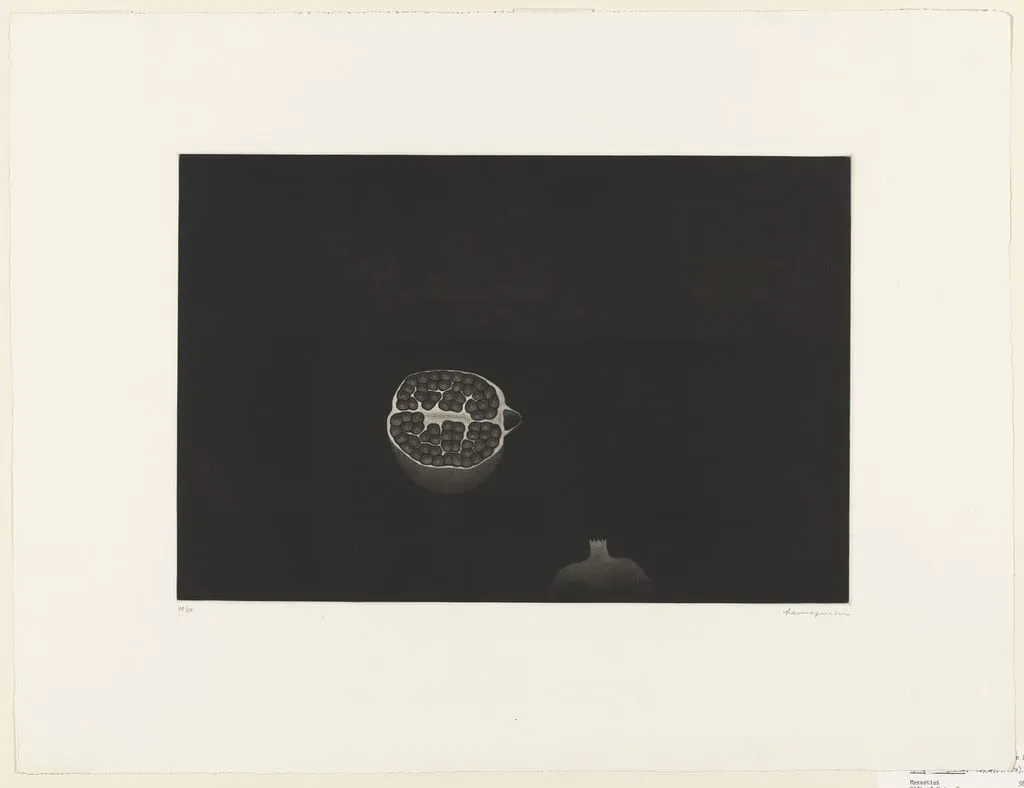
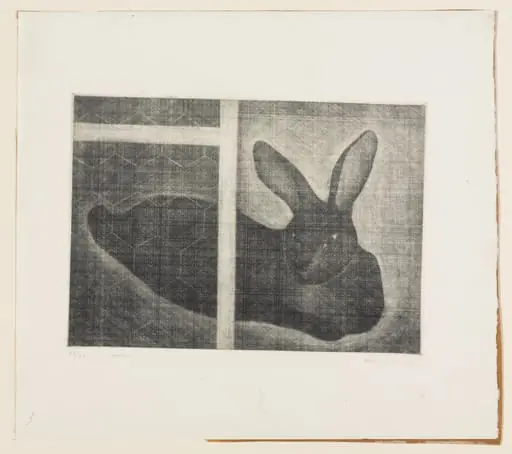
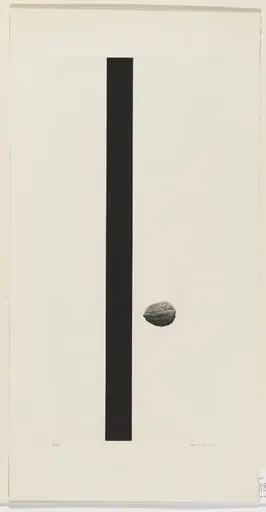
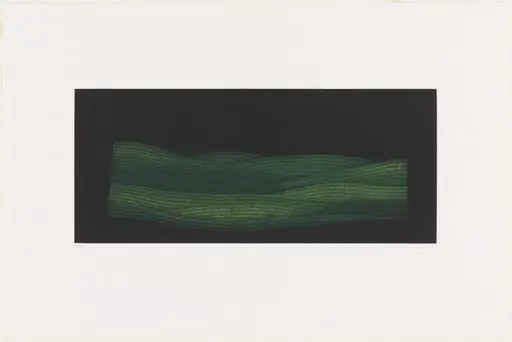
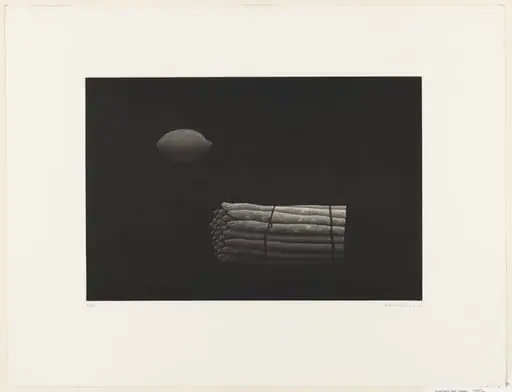
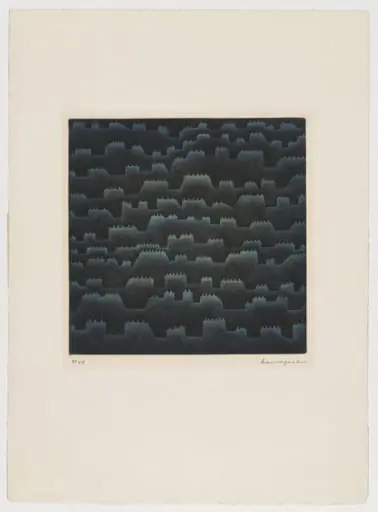
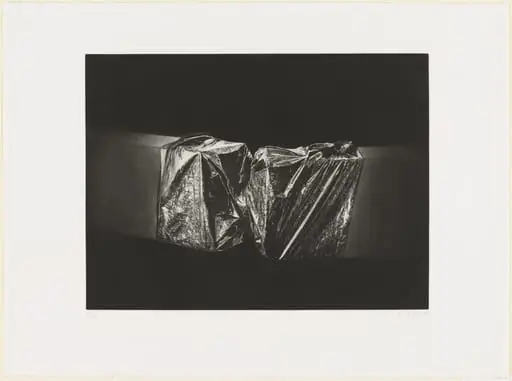
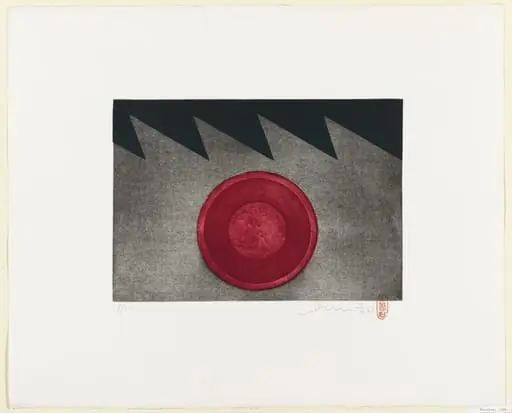
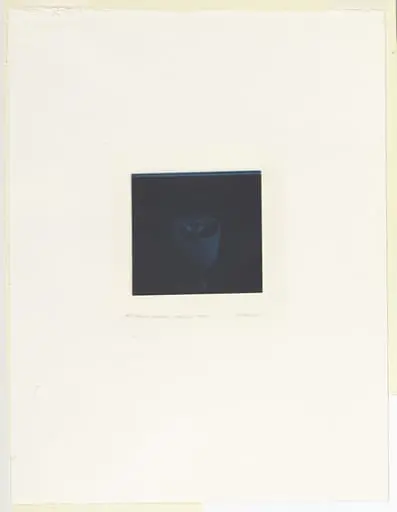
Untitled is an ink print by Yozo Hamaguchi. It dates from 1958 and is held in the collection of the Museum of Modern Art.
About this work
Overview
Created in 1958, this mezzotint by Yozo Hamaguchi is a monochromatic print depicting a halved pomegranate. The work is part of the collection at The Museum of Modern Art. Its composition centers the fruit against a deep black field, isolating it with stark contrast. The medium’s capacity for subtle tonal gradation allows for a quiet intensity, characteristic of Hamaguchi’s approach to still life.
Subject & Meaning
The fruit’s interior is rendered with precision, inviting contemplation of natural form without overt symbolism.
The pomegranate, split open to reveal its clustered seeds, evokes themes of abundance and fragility. Its placement—half on each side of the frame—suggests division and cohesion simultaneously. The fruit’s interior is rendered with precision, inviting contemplation of natural form without overt symbolism. The absence of context or environment focuses attention solely on the object’s physical presence.
Technique & Style
Hamaguchi employed mezzotint, a labor-intensive printmaking process that builds tone from dark to light by roughening the plate. Here, he exploited its capacity for velvety blacks and delicate mid-tones to model the pomegranate’s surface. The seeds vary in grayscale, suggesting texture and volume without line. The result is a tactile realism achieved through nuanced light modulation rather than detail.
History & Provenance
The print was made during a period when Hamaguchi was refining his technique in postwar Japan, often drawing from Western print traditions while maintaining a distinctly Japanese sensibility. It entered The Museum of Modern Art’s collection in the late 20th century, recognized for its quiet mastery of tone and form. No earlier ownership records are publicly documented beyond its acquisition by the museum.
Context
In the 1950s, Japanese artists like Hamaguchi were redefining printmaking beyond traditional ukiyo-e, embracing modernist abstraction and Western techniques. Mezzotint, rare in Japan at the time, became a vehicle for exploring subtlety and materiality. This work reflects a broader interest among artists in elevating still life through technical precision and emotional restraint.
Legacy
Hamaguchi’s mezzotints, including this one, are noted for their quiet influence on later generations of Japanese printmakers. His ability to convey depth and texture with minimal means set a precedent for tonal experimentation in postwar print media. The work remains a reference point for its balance between realism and abstraction, and its emphasis on the poetic potential of shadow.
Artist & collection

Artist
Yozo Hamaguchi was a Japanese copper printmaker who specialized in mezzotint and was responsible for its resurgence as a printmaking medium in the mid-20th century.