Artwork
Untitled
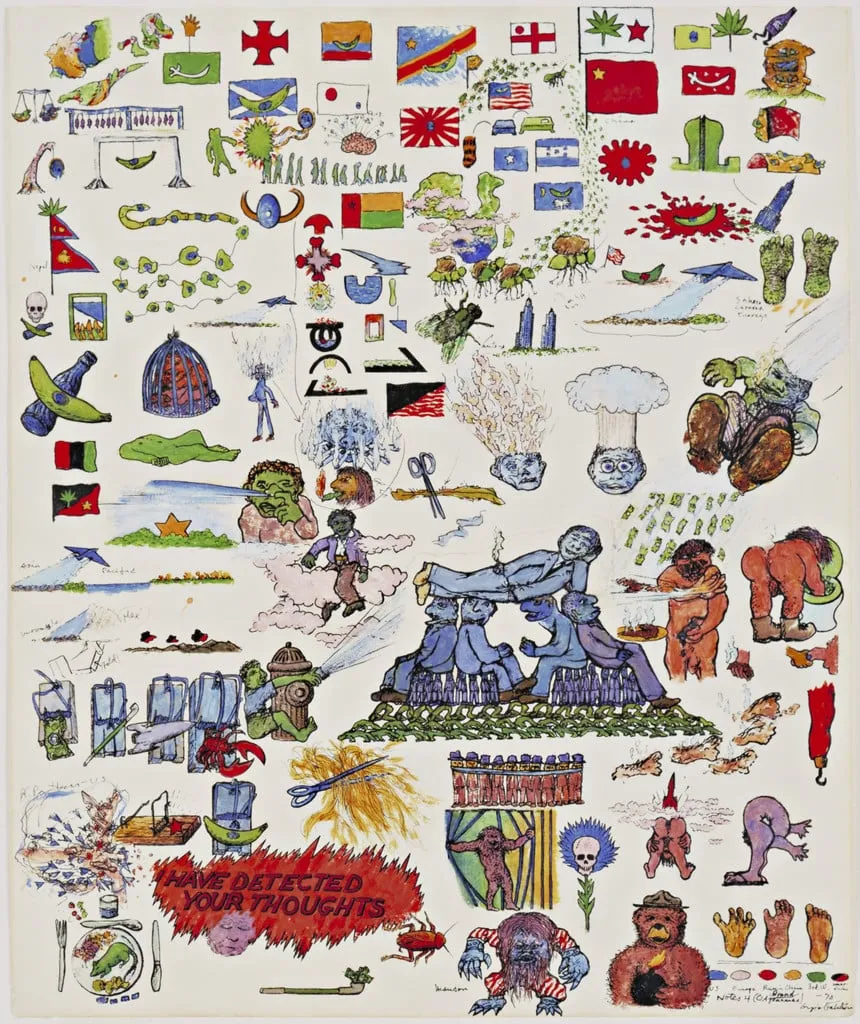
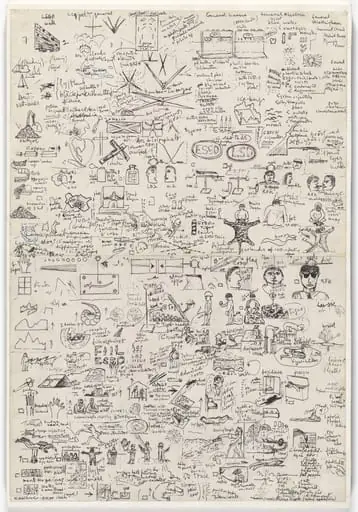
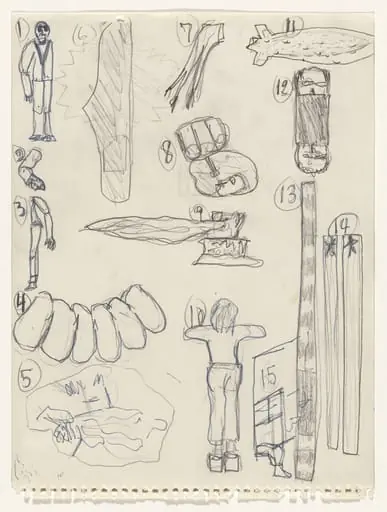
Untitled is an ink drawing by Öyvind Fahlström. It dates from 1970 and is held in the collection of the Museum of Modern Art.
About this work
Overview
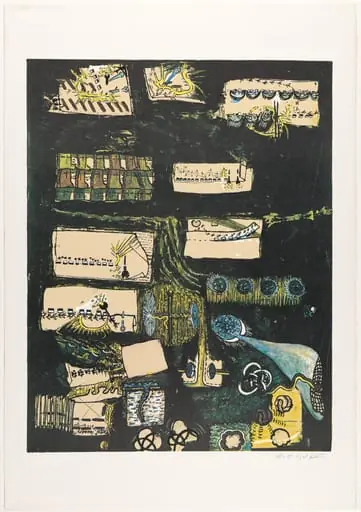
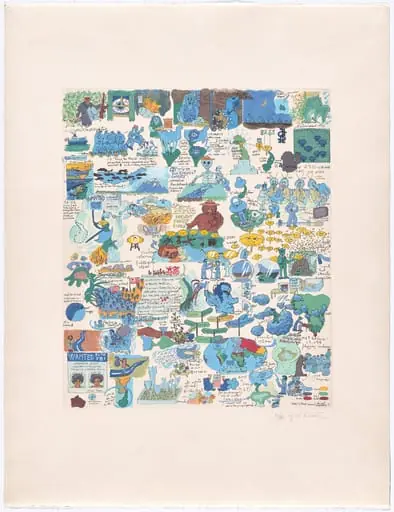
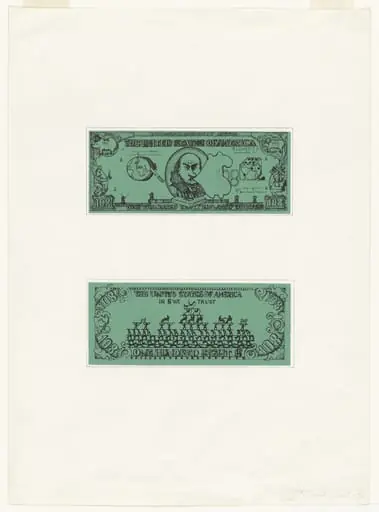
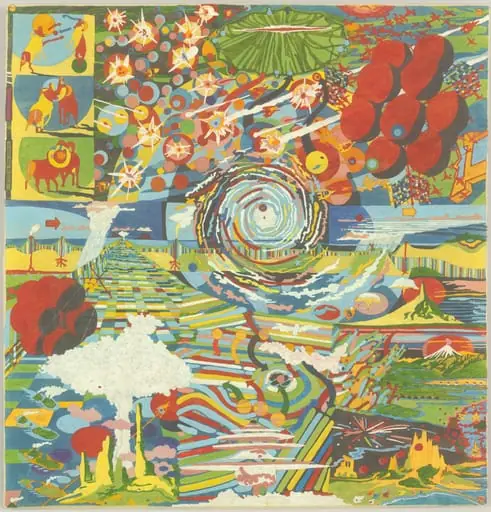
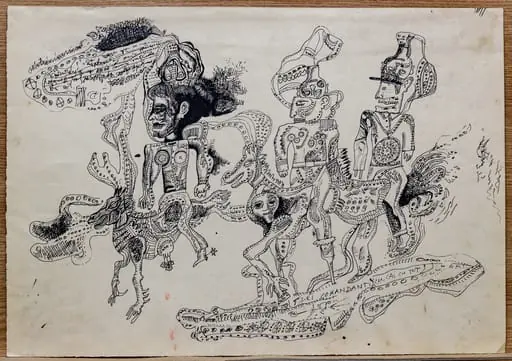
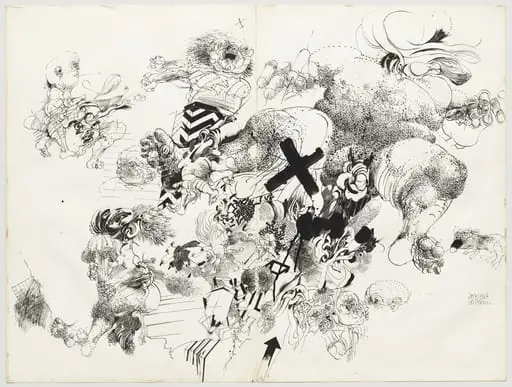
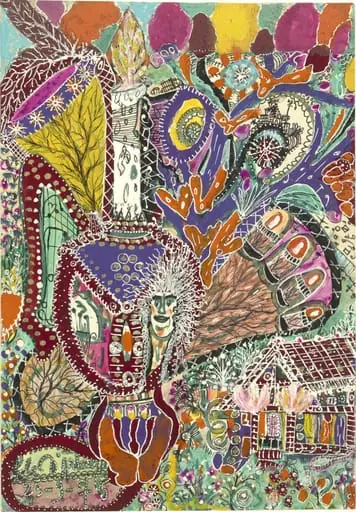
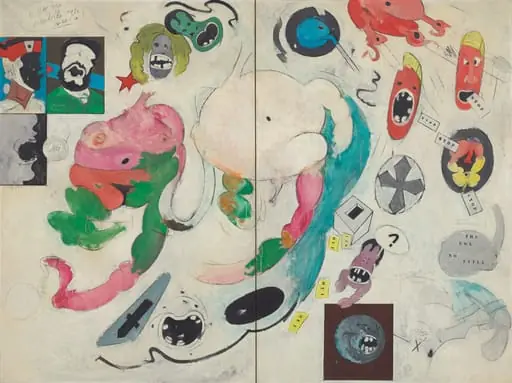
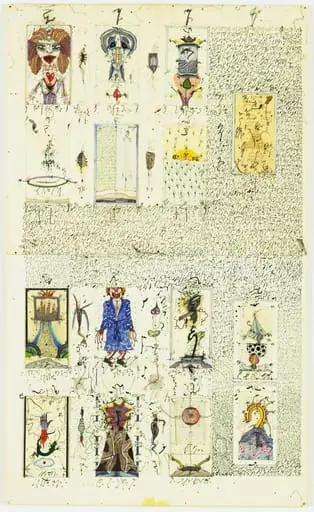
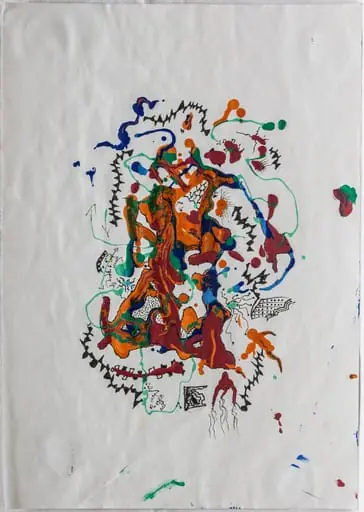
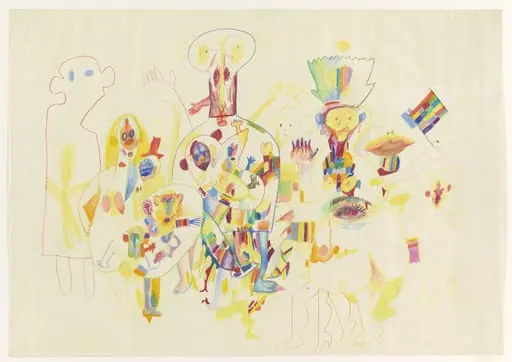
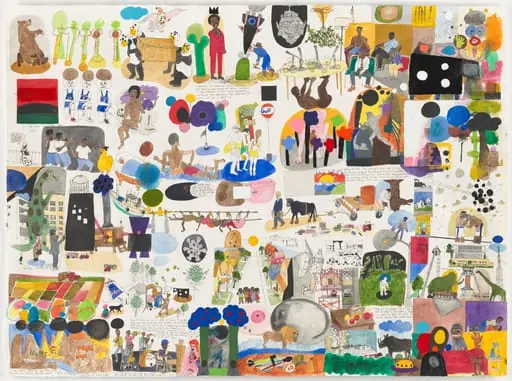
The composition is densely packed with fragmented imagery, combining text, symbols, and abstract forms in a chaotic yet deliberate arrangement.
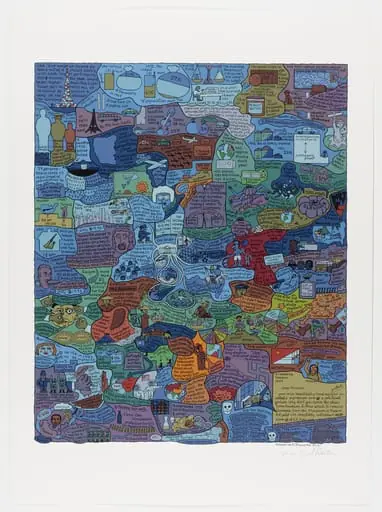
Created in 1970, this drawing by Öyvind Fahlström is executed in synthetic polymer paint and ink on paper. It is part of The Museum of Modern Art’s collection. The composition is densely packed with fragmented imagery, combining text, symbols, and abstract forms in a chaotic yet deliberate arrangement. The work resists linear interpretation, inviting viewers to navigate its visual noise without a fixed narrative.
Subject & Meaning
The piece layers political, cultural, and personal references through fragmented icons: floating flags, distorted faces, and surreal figures. A large blue hand cradles a miniature human, suggesting power dynamics or surveillance. Bold red text such as 'HAVE DETECTED YOUR THOUGHTS' introduces themes of control and intrusion. The imagery evokes Cold War anxieties and media saturation, though no single message dominates.
Technique & Style
Fahlström applied synthetic polymer paint and ink with rapid, layered strokes, creating a sense of immediacy and accumulation. Colors are vivid but unmodulated, overlapping without hierarchy. Lines are loose and gestural, blending cartoonish elements with abstract shapes. The surface resembles a collage of spontaneous marks, where precision and chaos coexist, reflecting his interest in systems and disorder.
History & Provenance
The work was produced during a period when Fahlström was deeply engaged with political satire and conceptual art. It entered The Museum of Modern Art’s collection shortly after its creation, reflecting institutional recognition of his experimental approach. No earlier ownership records are publicly documented, suggesting it was likely retained by the artist until acquisition.
Context
Made during the height of Cold War tensions and rising media culture, the drawing reflects Fahlström’s engagement with information overload and institutional power. His work often merged pop aesthetics with political critique, drawing from Dada and Fluxus traditions. Unlike purely abstract works of the era, this piece insists on symbolic content, even as it obscures meaning through density and absurdity.
Legacy
Fahlström’s layered, text-heavy compositions influenced later artists exploring information aesthetics and political collage. This drawing exemplifies his unique ability to fuse humor with critique, using visual overload to mirror societal complexity. While not widely exhibited, it remains a key example of his contribution to postwar conceptual drawing practices.
Artist & collection