Artwork
Untitled
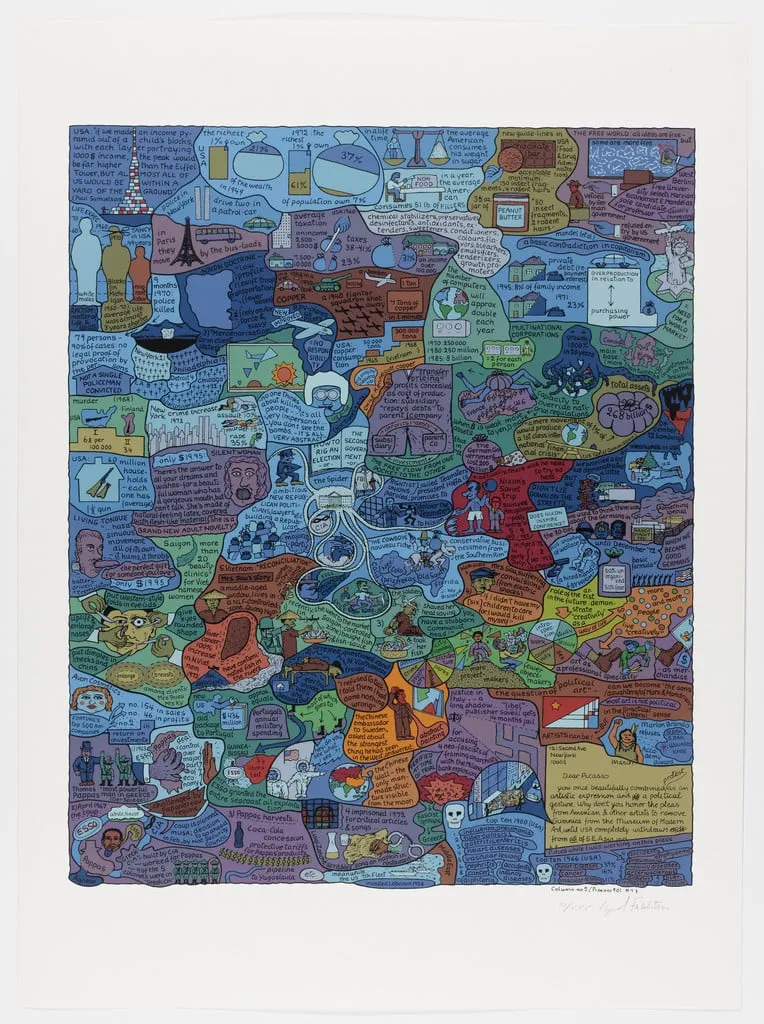
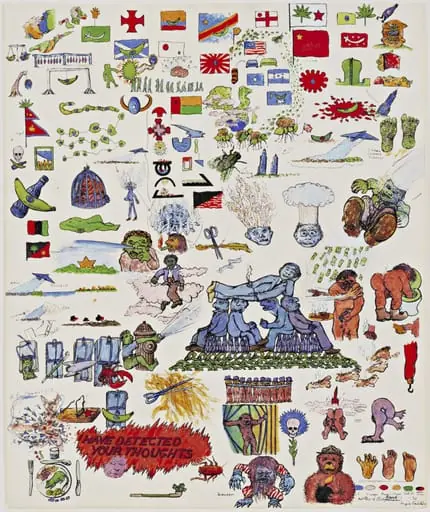
Untitled is an ink print by Öyvind Fahlström. It dates from 1973 and is held in the collection of the Museum of Modern Art.
About this work
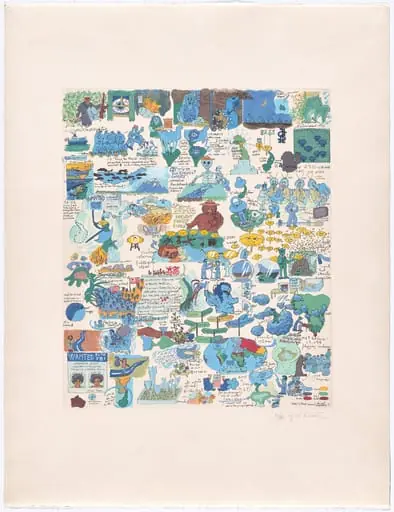
The artist stuffed in stats like "USA: 1972" and "17% of population own 90% of wealth," mixing serious topics with silly cartoons.
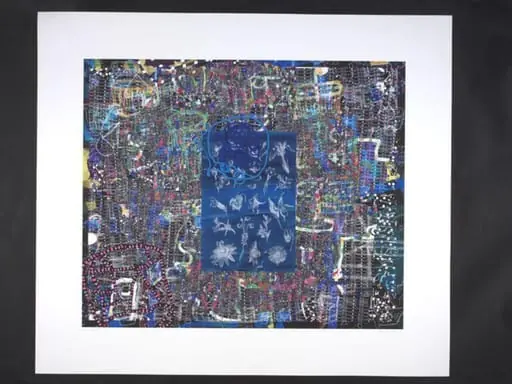
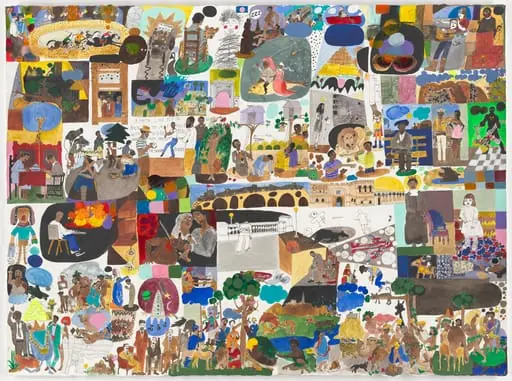
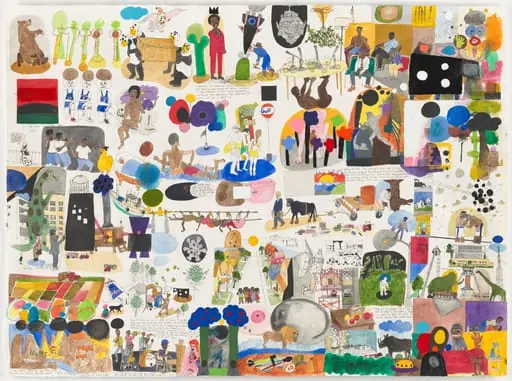
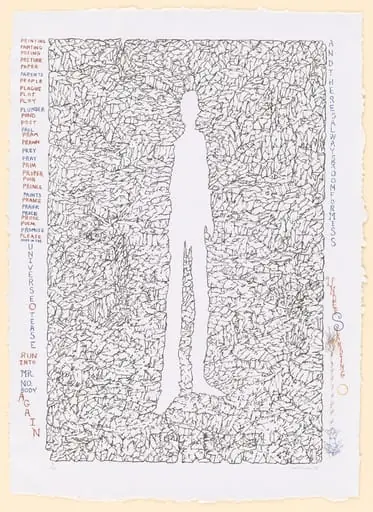
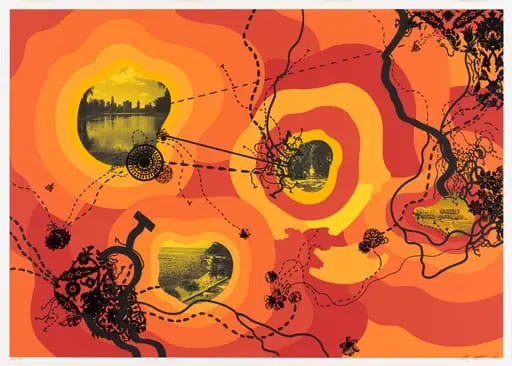
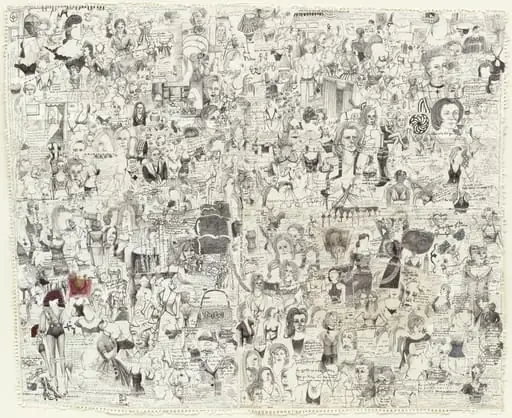
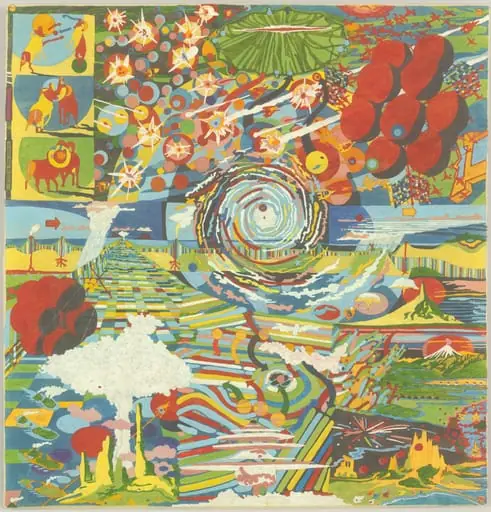
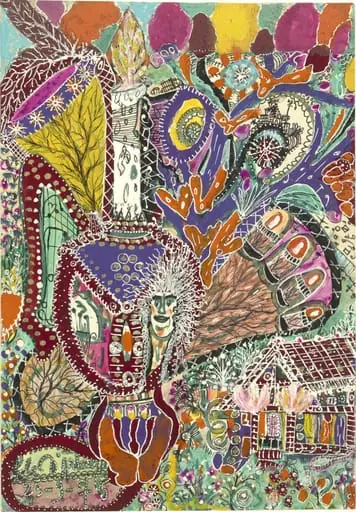
This painting is a wild, colorful mess of words, numbers, and tiny drawings all crammed together. You see maps, faces, buildings, and random facts written in different fonts. Some areas look like charts, others like doodles—it’s packed with so much stuff it’s hard to focus on one thing. Bright blues, reds, and yellows clash in a busy, chaotic way.
The artist stuffed in stats like "USA: 1972" and "17% of population own 90% of wealth," mixing serious topics with silly cartoons. It feels like a brain dump—maybe about money, politics, or just life’s clutter.
Next, check out lithography to see how this kind of printmaking works.
Overview
Öyvind Fahlström’s untitled work, produced in 1973, is a complex print composition held in the collection of the Museum of Modern Art. The piece combines a multitude of print techniques—screenprinting, lithography, etching, aquatint, woodcut, and others—within a single sheet, reflecting the artist’s experimental approach to reproducible media.
Subject & Meaning
The surface is densely populated with an array of textual fragments, numerical data, and miniature illustrations. Maps, portraiture, architectural sketches, and statistical notes intermingle, creating a visual overload that suggests commentary on contemporary society, wealth distribution, and the fragmentation of information in modern life.
Technique & Style
Fahlström employs a collage of print processes: screenprints provide bold, flat color fields; lithographic elements introduce varied line work; etching and aquatint contribute tonal depth; woodcut sections add texture. The juxtaposition of fonts, colors—bright blues, reds, yellows—and graphic motifs generates a chaotic, almost diagrammatic aesthetic.
History & Provenance
Created in the early 1970s, the work entered the Museum of Modern Art’s collection shortly after its completion, where it remains accessible to the public. Its inclusion reflects MoMA’s interest in avant‑garde printmaking and the artist’s role in expanding the possibilities of graphic art.
Context
Fahlström’s practice often merged political critique with playful visual language. This untitled piece aligns with the era’s experimental print culture, where artists used mixed techniques to challenge conventional narratives and to comment on the rapid flow of data and media in the post‑industrial world.
Artist & collection