Artwork
Eventail plié
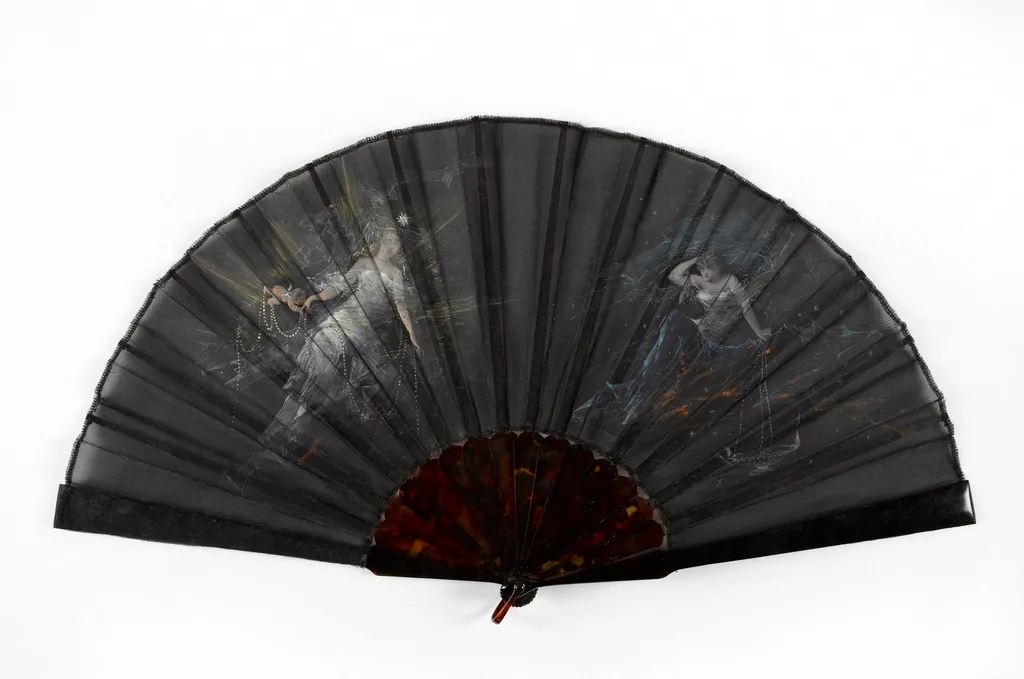
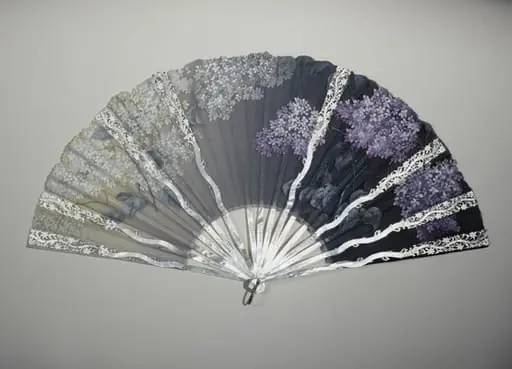
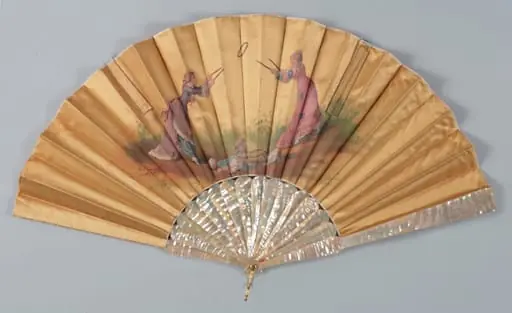
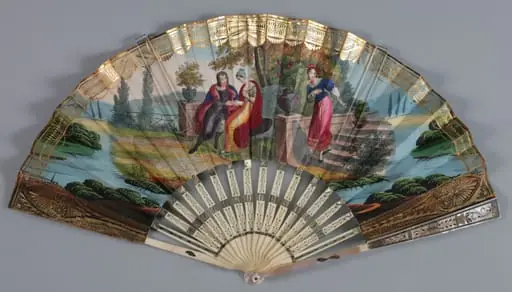
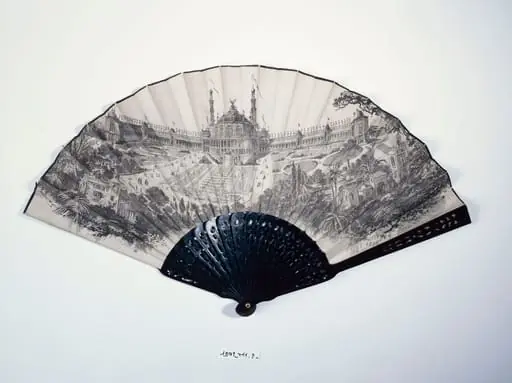
Eventail plié is an unspecified work on paper by Gabrielle Zaborowska-Eylé. It dates from 1850 and is held in the collection of the Palais Galliera - Musée de la Mode de la Ville de Paris.
About this work
Overview
Created around 1850 by Gabrielle Zaborowska-Eylé, this folded fan is part of the Museum of Ethnography’s collection.
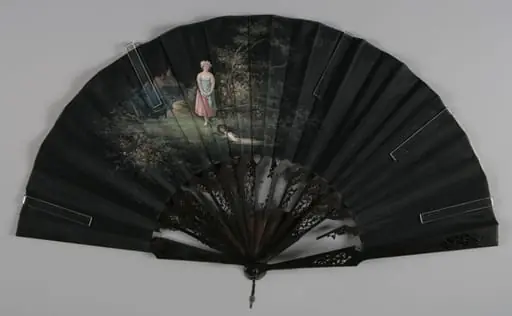
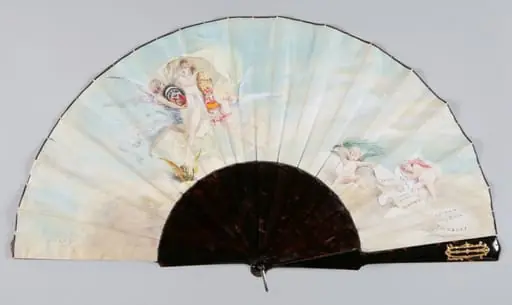
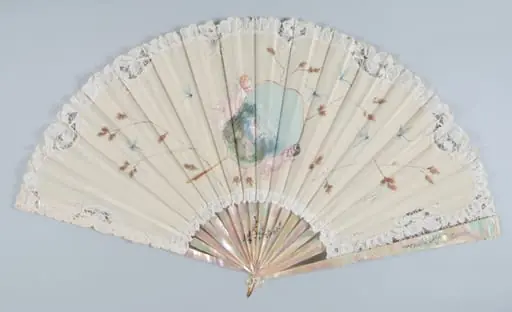
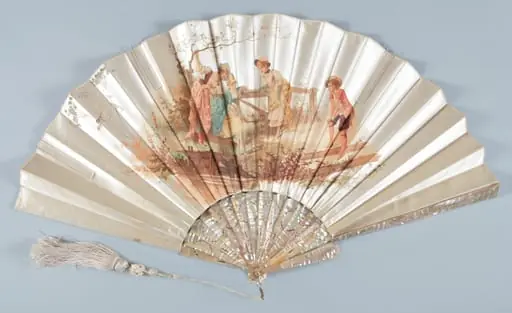
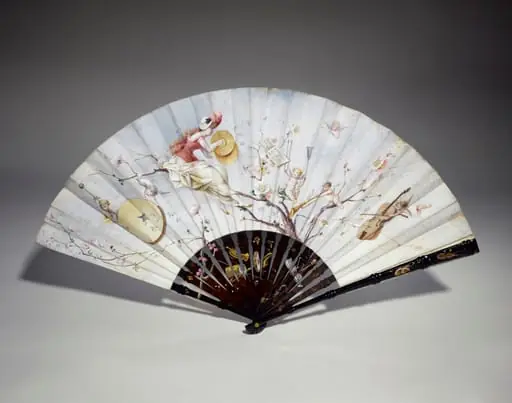
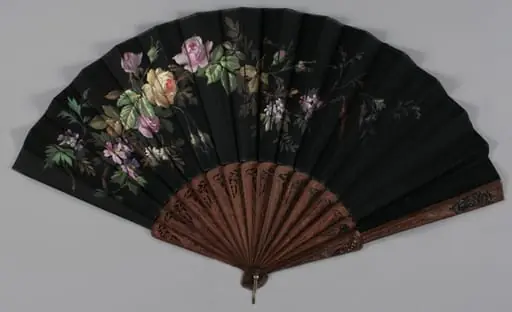
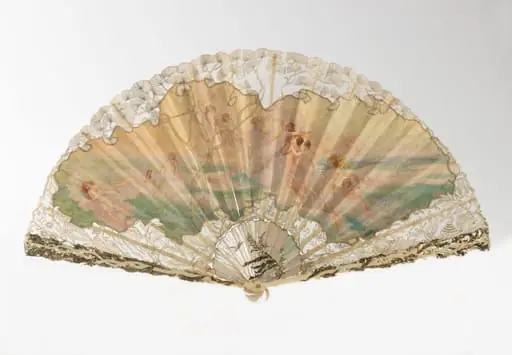
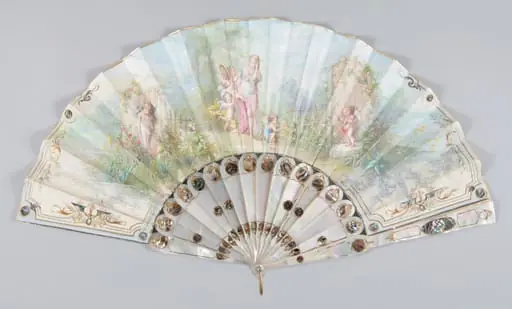
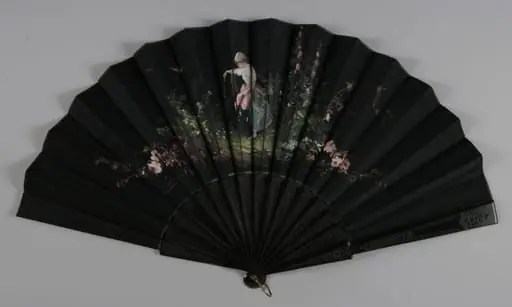
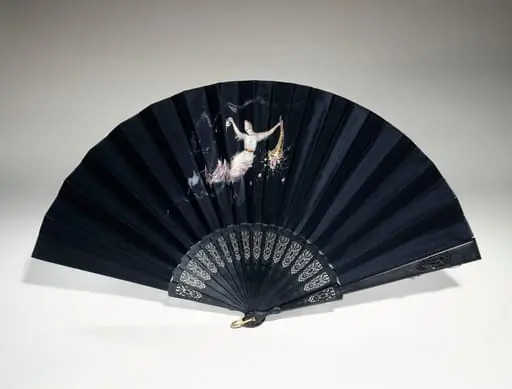
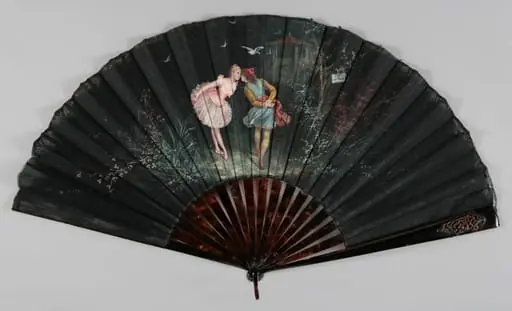
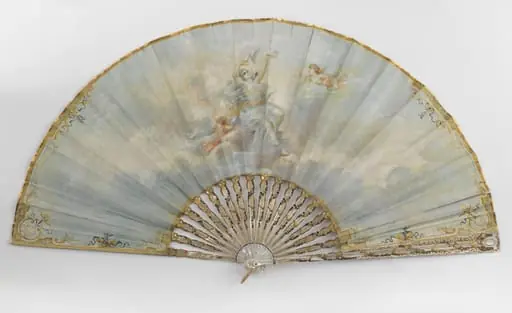
Created around 1850 by Gabrielle Zaborowska-Eylé, this folded fan is part of the Museum of Ethnography’s collection. Made with watercolor on paper, it features two distinct scenes painted on a black ground. The fan’s handle shows signs of age, and its edges are worn from use, suggesting it was handled regularly. Its delicate pigments have faded over time, yet the composition retains a quiet intimacy.
Subject & Meaning
The left panel depicts a woman in a light dress standing beneath a tree, a star glowing above her, evoking a contemplative or poetic mood. The right panel shows a seated woman veiled, her expression obscured, introducing an air of secrecy. The contrast between openness and concealment may reflect themes of inner life and social restraint, common in mid-19th-century feminine iconography. Tiny beads in the first woman’s hair suggest attention to personal adornment as a form of quiet expression.
Technique & Style
The scenes are rendered in thin, translucent watercolor washes, allowing subtle gradations of tone and light. Soft brushwork defines forms without sharp outlines, enhancing the dreamlike quality of the left image and the somber ambiguity of the right. The black background intensifies the luminosity of the figures, a technique common in decorative arts of the period. The precision of minute details—like the beads or the veil’s folds—reveals a hand skilled in intimate, detailed work.
History & Provenance
The fan entered the Museum of Ethnography’s holdings as part of a collection of personal and domestic objects from the 19th century. Its maker, Gabrielle Zaborowska-Eylé, was active in artistic circles in France during the mid-1800s, though little is documented about her life. The fan’s condition suggests it was owned and used by someone of modest means, not merely displayed as a luxury item.
Context
In mid-19th-century Europe, painted fans were both practical objects and vehicles for personal expression, often made by women for private or social use. This fan aligns with a tradition of domestic artistry, where watercolor was favored for its portability and subtlety. The dual imagery may reflect contemporary literary or romantic ideals, where femininity was associated with mystery and introspection, often conveyed through symbolic settings like trees and stars.
Legacy
Though not widely known today, the fan exemplifies the quiet artistry of amateur women artists in the 19th century. Its survival offers insight into how personal narratives were encoded in everyday objects. The work contributes to broader scholarship on gender, material culture, and the boundaries between fine and decorative art during a period when such distinctions were increasingly contested.
Artist & collection
Artist
Gabrielle Zaborowska-Eylé kept a studio full of half-folded fans—some real, some painted.

Museum
Palais Galliera - Musée de la Mode de la Ville de Paris
Continue through works from the same source collection.