Artwork
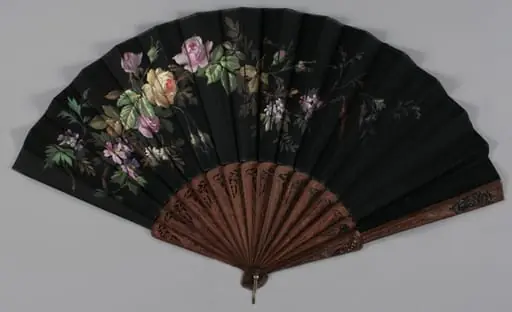
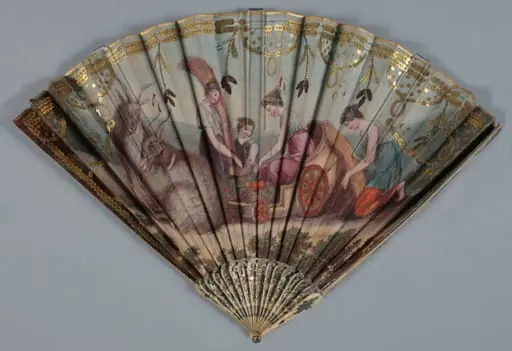
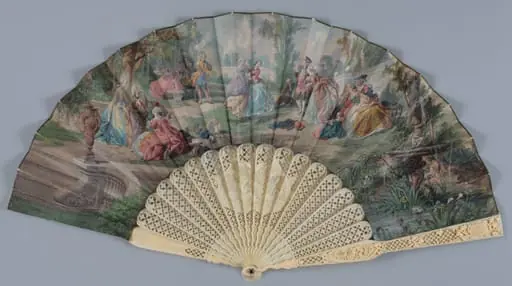
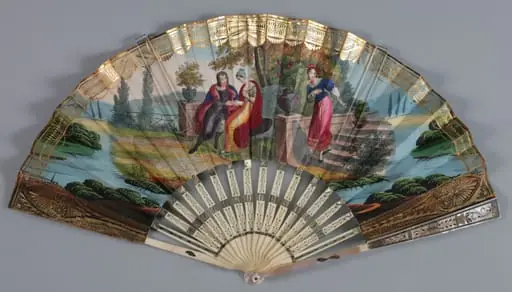
Eventail plié
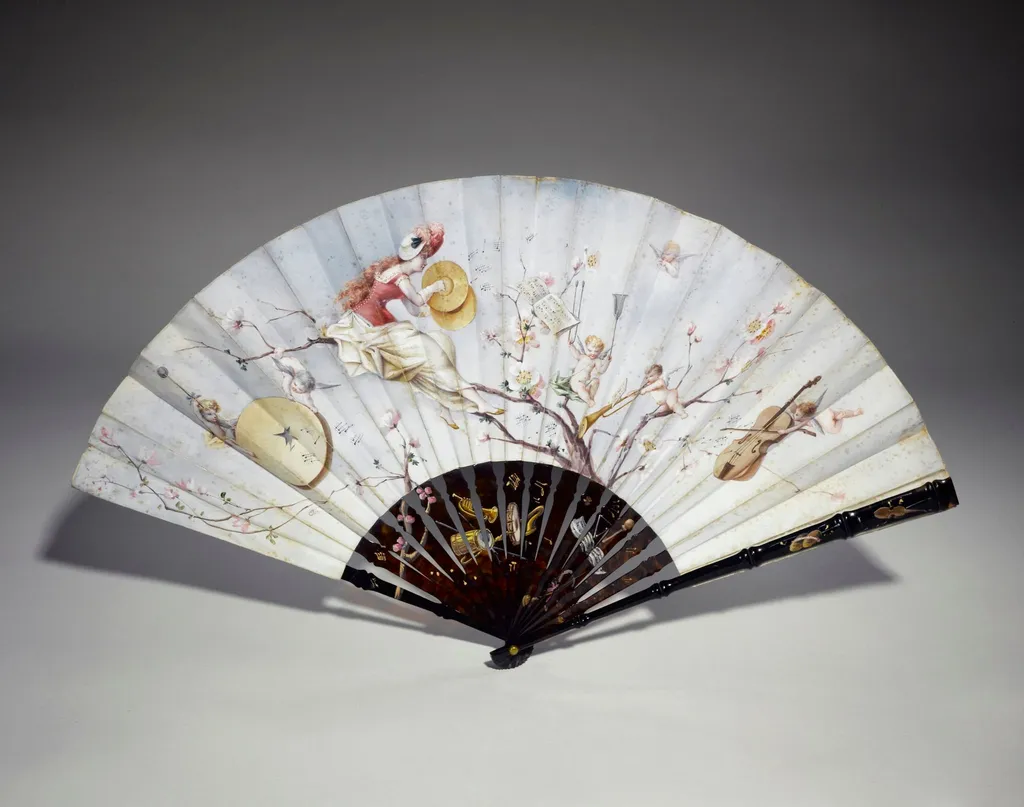
Eventail plié is an unspecified work on paper by Jumon. It dates from 1850 and is held in the collection of the Palais Galliera - Musée de la Mode de la Ville de Paris.
About this work
Overview
The piece combines delicate imagery with refined craftsmanship, reflecting the aesthetic sensibilities of mid-19th-century Japanese decorative arts.
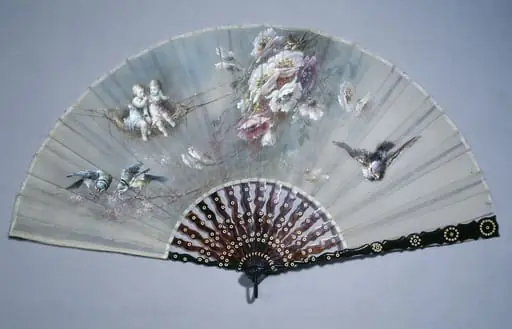
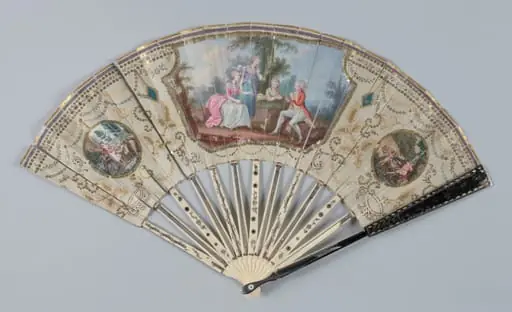
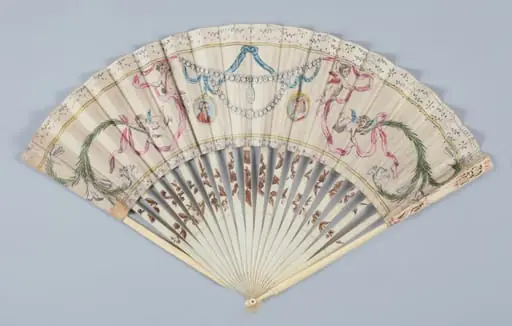
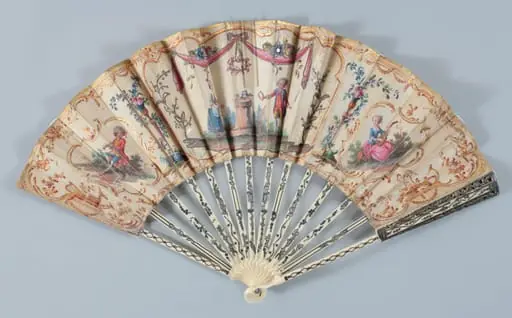
Created around 1850 by the artist Jumon, Eventail plié is a folding fan crafted in watercolor on paper. It is part of the collection at the Museum of Ethnography. The piece combines delicate imagery with refined craftsmanship, reflecting the aesthetic sensibilities of mid-19th-century Japanese decorative arts. Its portable form suggests use in daily life, blending utility with artistic expression.
Subject & Meaning
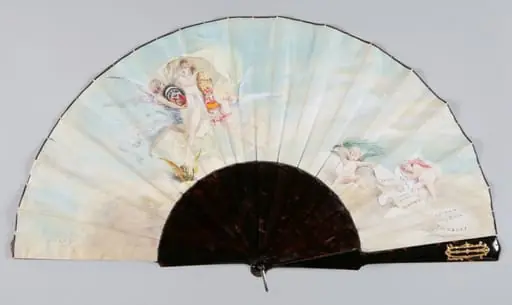
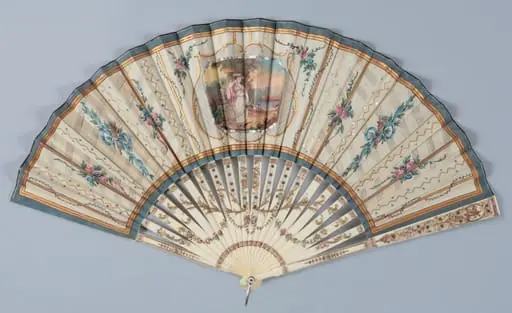
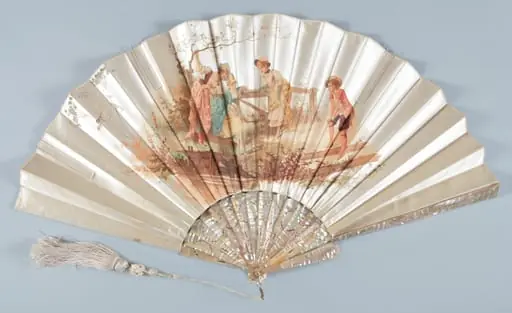
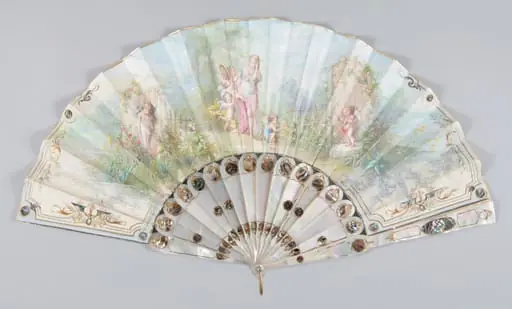
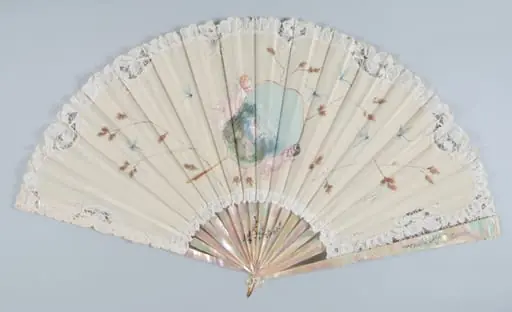
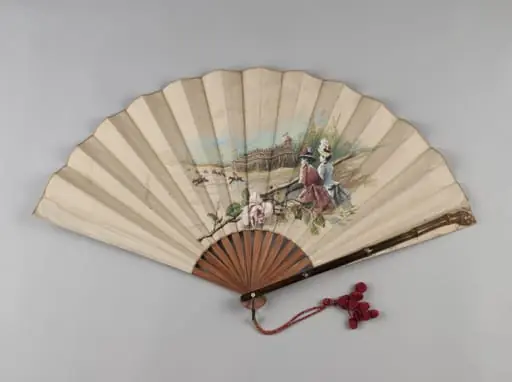
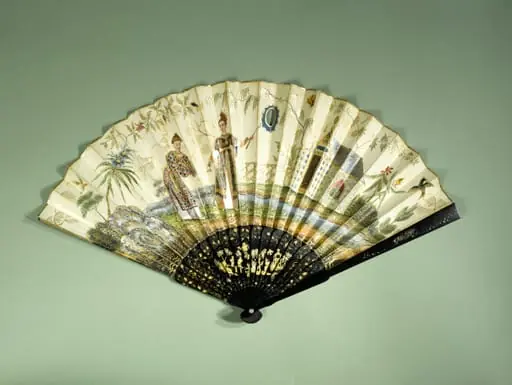
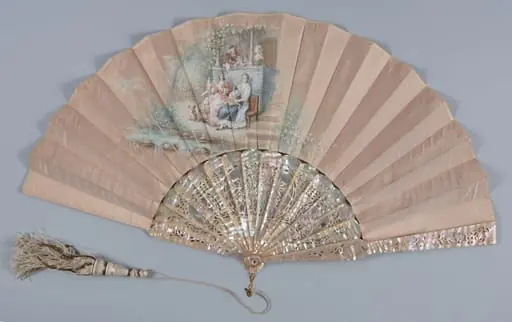
The central figure is a woman dressed in a pale pink garment and straw hat, holding a fan as if in quiet repose. Surrounding her are vignettes: cherubs at play, a blossoming tree, and a violin resting nearby. These elements evoke themes of leisure, nature, and music, common in domestic scenes of the period. The imagery suggests an idealized moment of refinement, not narrative but atmospheric.
Technique & Style
Jumon employed transparent watercolor washes to achieve a light, airy quality, allowing the paper’s surface to contribute to the overall luminosity. Soft, minimal outlines define forms without heavy detail, creating a sketch-like immediacy. The handle, dark and adorned with gold accents, contrasts subtly with the pale imagery, enhancing the fan’s elegance without overpowering its delicacy.
History & Provenance
The fan entered the Museum of Ethnography’s collection through documented acquisition, though its earlier ownership remains unrecorded. Its preservation suggests it was valued as an object of artistic merit rather than mere utilitarian item. No evidence indicates it was mass-produced; its hand-painted nature points to a commission or personal creation within a refined cultural context.
Context
In mid-19th century Japan, folding fans were more than accessories—they carried social and aesthetic significance. Women of the urban elite often carried elaborately decorated fans as symbols of taste and refinement. This piece aligns with the ukiyo-e tradition’s interest in everyday beauty, yet its intimate scale and soft palette distinguish it from more dramatic prints of the era.
Legacy
Eventail plié endures as an example of how fine art and daily objects intersected in Japanese material culture. It reflects a period when artistic skill was applied to personal items, elevating the mundane through careful design. Today, it contributes to scholarly understanding of gender, aesthetics, and the role of portable art in 19th-century Japan.
Artist & collection
Artist
Japanese artist Jumon made delicate fan-shaped watercolors, folding the page like a handheld screen.

Museum
Palais Galliera - Musée de la Mode de la Ville de Paris
Continue through works from the same source collection.