Artwork
Maica Domnului îndurerată
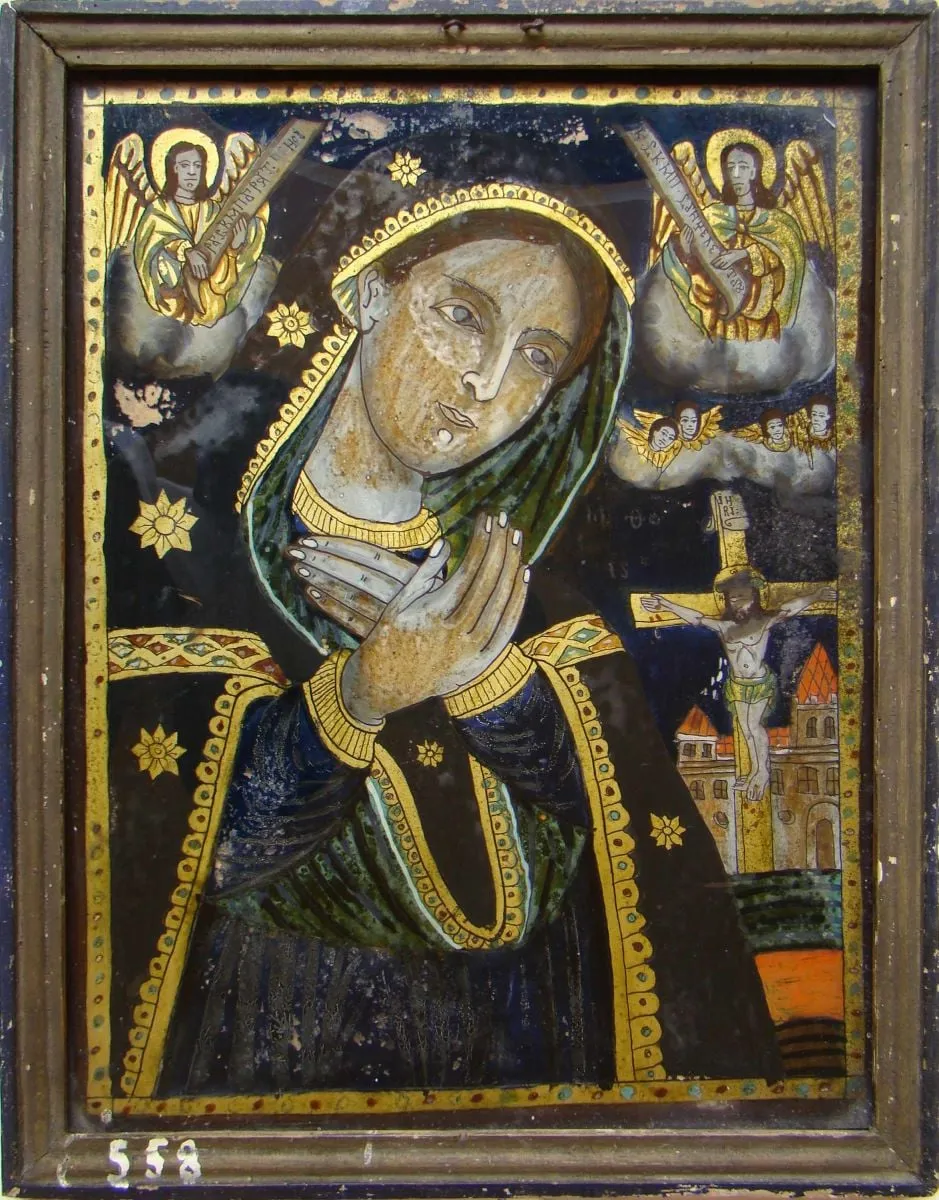
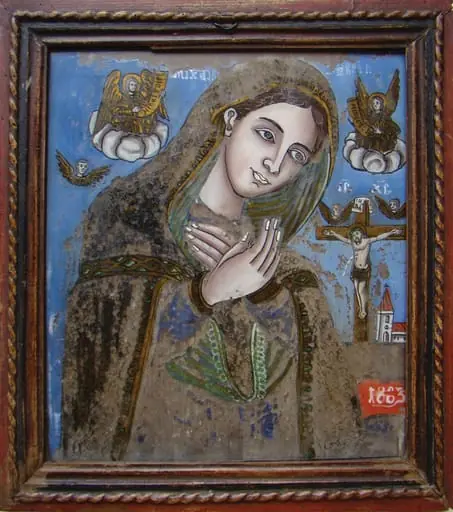
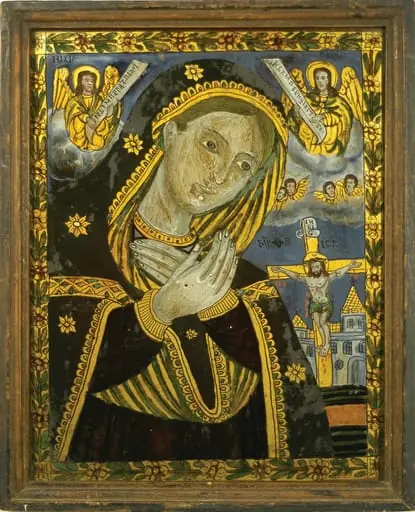
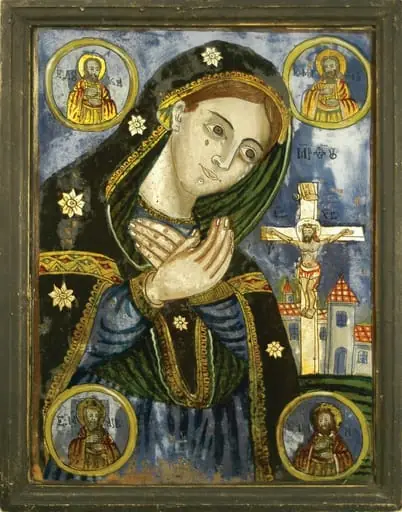
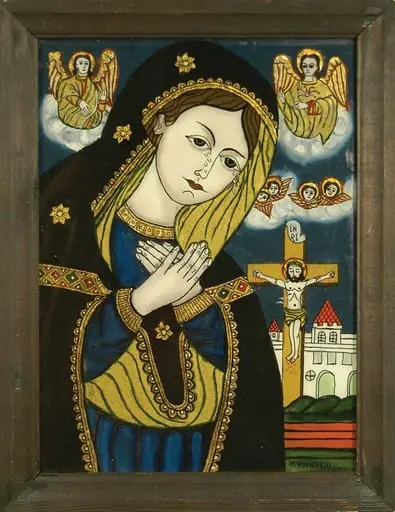
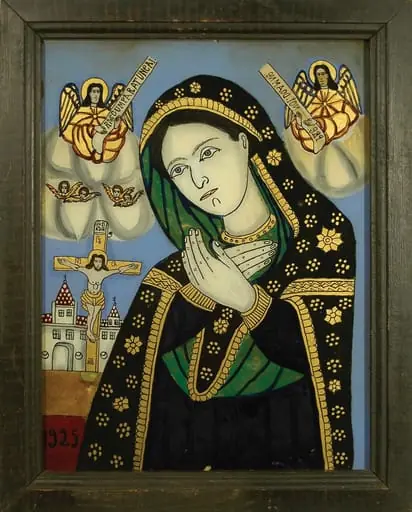
Maica Domnului îndurerată is an unspecified painting by the Byzantine icon painting artist Pavel Zamfir. It is held in the collection of the Alba Iulia Orthodox Archdiocese. This devotional painting portrays the Virgin Mary in mourning, her hands folded in quiet prayer.
About this work
Overview
A dark background frames her figure, with faint outlines of angels and a crucifix suggesting divine presence without distraction.
This devotional painting portrays the Virgin Mary in mourning, her hands folded in quiet prayer. Rendered in deep tones with selective gold detailing, the composition emphasizes solemnity and introspection. A dark background frames her figure, with faint outlines of angels and a crucifix suggesting divine presence without distraction. The work reflects a tradition of Orthodox iconography adapted into a painted panel format.
Subject & Meaning
The Virgin Mary is depicted not as a queen of heaven but as a grieving mother, embodying compassion and sorrow. Her clasped hands signify supplication, while the crucifix in the background ties her grief to Christ’s sacrifice. Angels, barely visible, serve as witnesses rather than active participants, reinforcing the intimate, personal nature of her lament.
Technique & Style
The artist employs fine brushwork to render the intricate gold embroidery on Mary’s robe, contrasting with the flat, shadowed background. The green headscarf and dark robe create a muted palette, heightened by metallic accents that catch light subtly. The style blends Byzantine icon conventions with regional Romanian painting techniques, favoring symbolic clarity over naturalism.
History & Provenance
Attributed to Pavel Zamfir, the work likely originated in late 19th or early 20th century Romania, where religious icon painting remained a living tradition. It may have been commissioned for a private chapel or parish church, common in rural communities maintaining Orthodox devotional practices. No documented provenance exists beyond the artist’s known regional activity.
Context
During this period, Romanian religious art preserved medieval iconographic forms while incorporating modest decorative elements from Western European styles. Zamfir’s work reflects this synthesis—rooted in Orthodox theology but shaped by local craftsmanship and the tastes of a devout, non-urban clientele seeking spiritual solace through imagery.
Legacy
Pavel Zamfir’s oeuvre, though not widely documented, contributes to the understudied corpus of Romanian religious painting from the transition era between tradition and modernity. This piece remains a quiet example of how devotional imagery sustained communal faith in regions where large-scale ecclesiastical art was scarce.
Artist & collection
Artist
This artist made religious drawings and paintings in the late 1800s. Look at the soft pencil lines in *Maica Domnului cu Pruncul, împărăteasă tronând* (1897) or the solemn colors in *Adormirea Maicii Domnului* (1898).…