Artwork
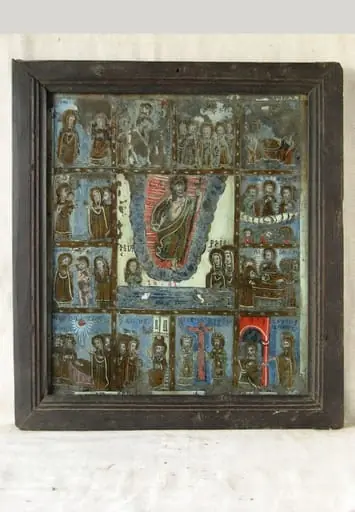
Învierea lui Iisus, cu 12 scene de praznic
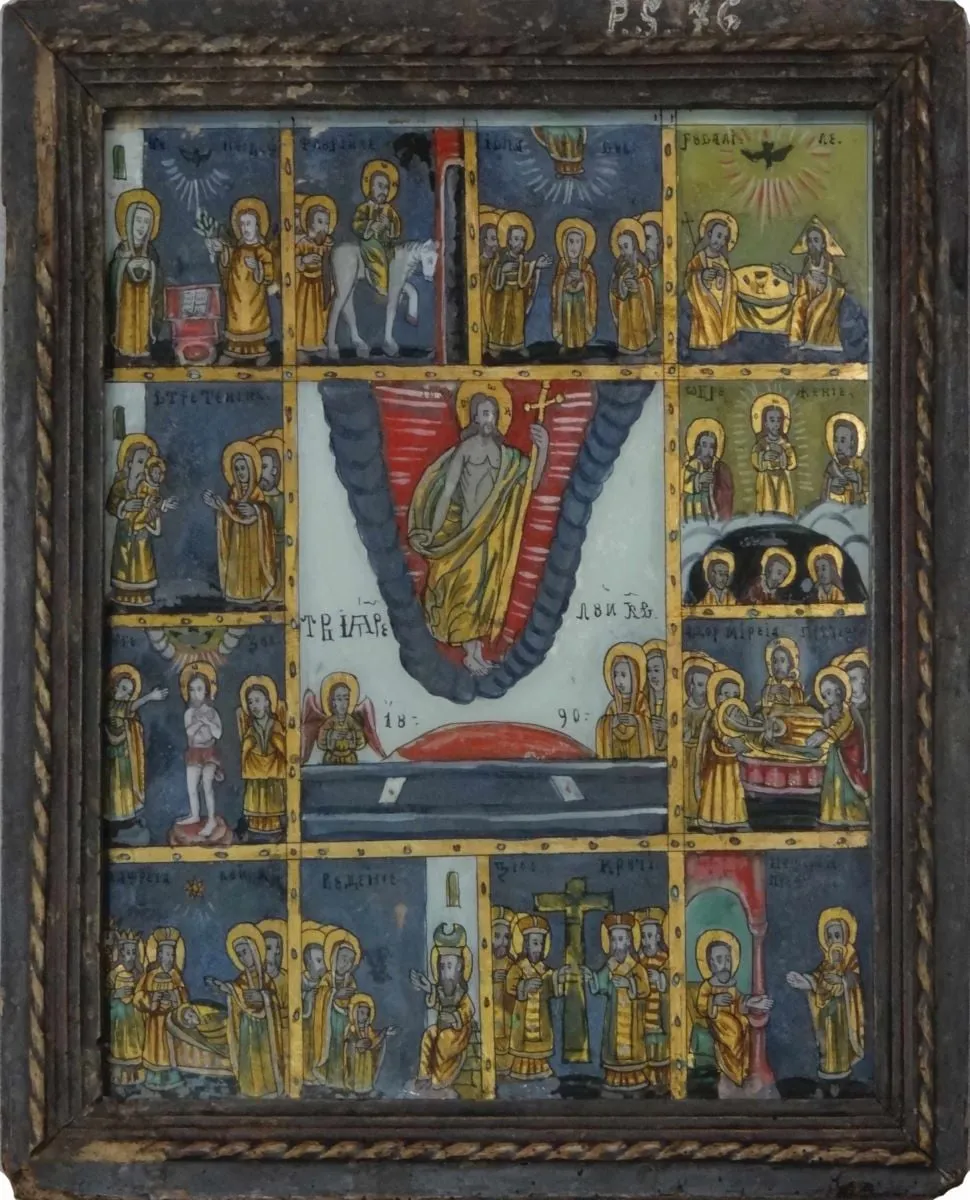
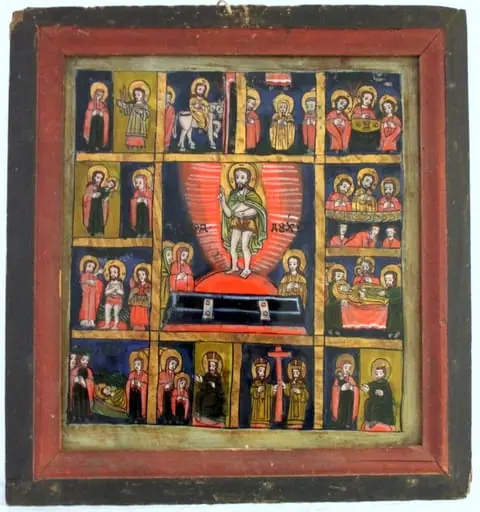
Învierea lui Iisus, cu 12 scene de praznic is a drawing by the Impressionist artist Pavel Zamfir. It dates from 1890 and is held in the collection of the Alba Iulia Orthodox Archdiocese.
About this work
If you like this style, check out composition next to see how artists organize stories in small panels.
This painting is packed with small, bright scenes in a grid. Each box shows people in gold robes and blue backgrounds, often with halos. Some scenes have animals or buildings, while others show groups gathered around a central figure. The colors are flat—no shading—with bold reds, blues, and golds.
The center panel stands out: a figure rises from a tomb, surrounded by a red cloth. The word "TRIAPE" is written below, and numbers "1890" appear in two spots. The rest of the boxes seem to tell a story, with labels like "FEDRARI" and "PASCA" at the top.
If you like this style, check out composition next to see how artists organize stories in small panels.
Overview
Pavel Zamfir’s 1890 work titled Învierea lui Iisus, cu 12 scene de praznic is a composite image comprising twelve small panels arranged in a grid. The piece is part of the collection of the Museum of Ethnography and depicts a series of festive episodes linked to the resurrection narrative.
Subject & Meaning
Each panel presents a vignette of the Easter celebration, with figures clothed in gold‑trimmed garments and surrounded by blue fields. Halos identify sacred participants, while occasional animals and architectural elements suggest a communal setting. The central panel focuses on the risen Christ emerging from a tomb, underscored by a red cloth and the inscription “TRIAPE.”
Technique & Style
The composition relies on flat, unmodulated colour fields—bright reds, blues, and golds dominate without chiaroscuro. The repetitive use of gold robes and halo motifs creates visual continuity across the panels, while the grid format emphasizes the narrative sequence rather than a single, unified scene.
History & Provenance
Created in 1890, the work entered the Museum of Ethnography’s holdings at an unspecified date. The presence of the date “1890” in two locations on the image confirms its year of execution, and the labels “FEDRARI” and “PASCA” at the top of the grid indicate its association with local Easter festivities.
Context
The piece reflects a folk‑art tradition of illustrating religious stories in a series of small, decorative scenes. Such multi‑panel formats were common in Romanian popular visual culture, where communal celebrations were recorded in vivid, accessible imagery.
Artist & collection
Artist
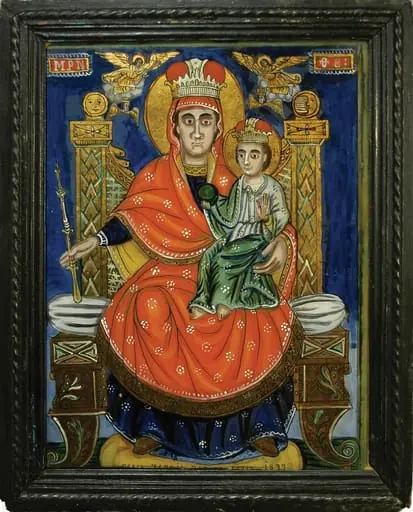
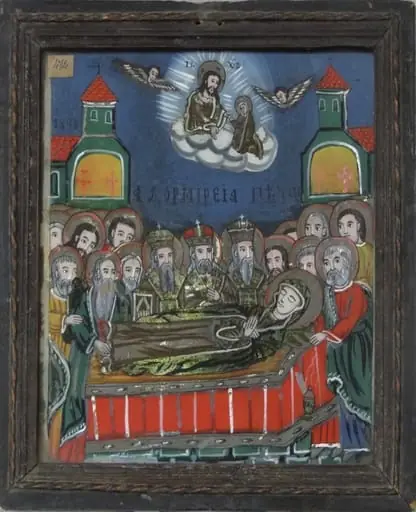
This artist made religious drawings and paintings in the late 1800s. Look at the soft pencil lines in *Maica Domnului cu Pruncul, împărăteasă tronând* (1897) or the solemn colors in *Adormirea Maicii Domnului* (1898).…