Artwork
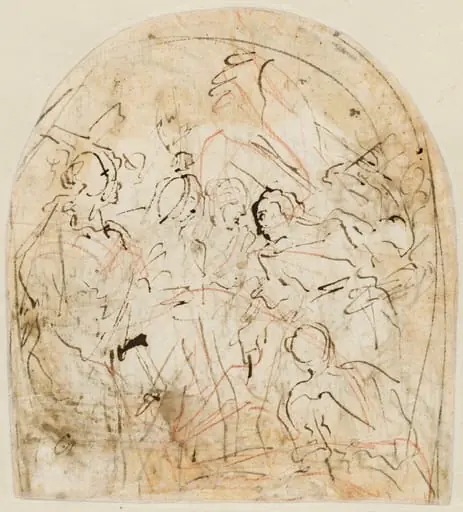
Christ Carrying the Cross
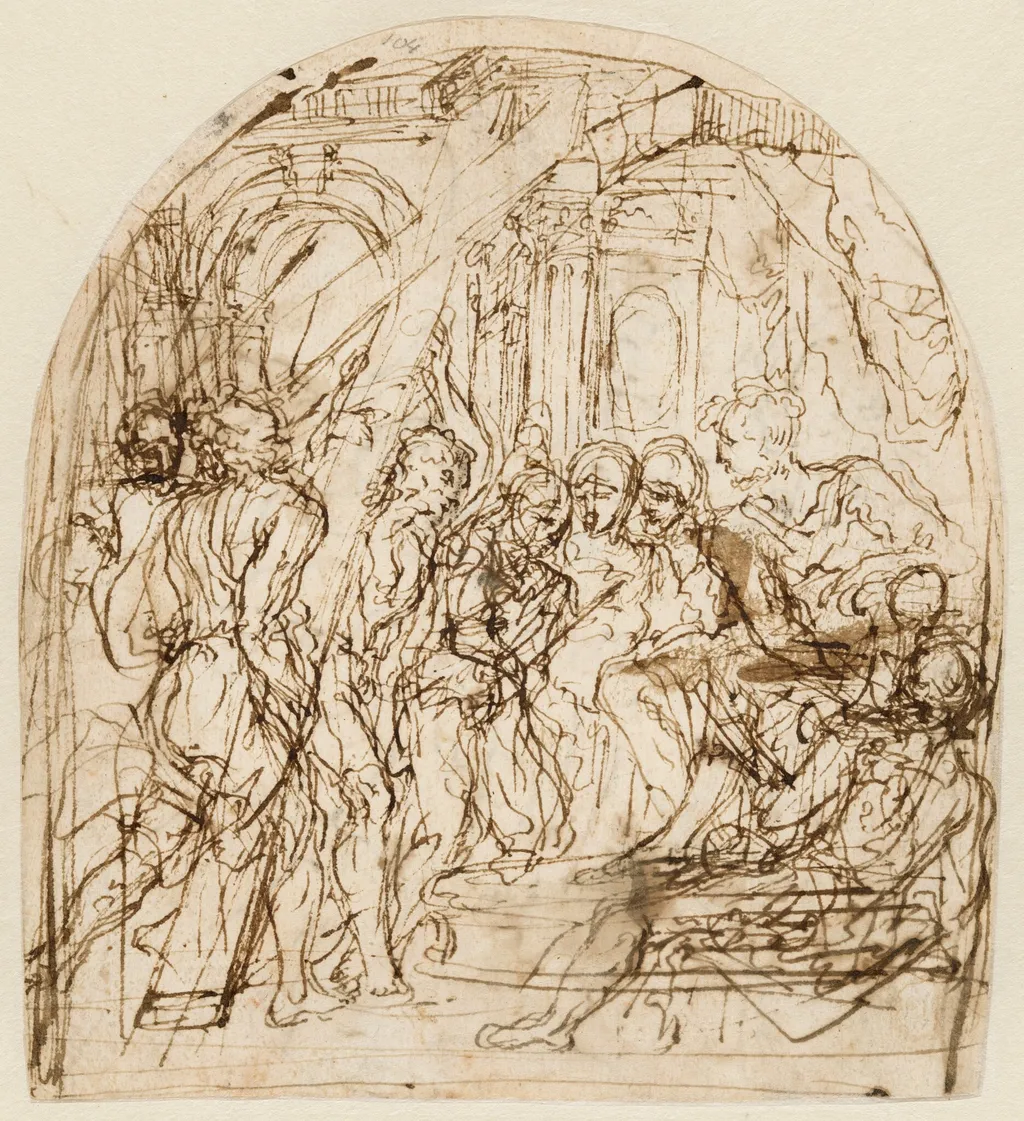
Christ Carrying the Cross is an ink drawing by the Baroque artist Italian 17th Century. It dates from 1601 and is held in the collection of the National Gallery of Art.
About this work
You can learn more about this style by looking into the movement: Baroque.
The painting is called Christ Carrying the Cross.
It was made with pen and brown ink on laid paper.
The artist was part of the Baroque movement, which was popular in the 17th century, and this piece is a good example of the kind of art being made during that time, with artists often depicting dramatic scenes from the Bible.
You can learn more about this style by looking into the movement: Baroque.
Overview
Christ Carrying the Cross is a drawing executed in pen and brown ink on laid paper. The work presents the biblical episode of Jesus bearing the instrument of his crucifixion, rendered in a compact, linear format typical of preparatory studies. Its dimensions and material place it among the portable, quickly produced works that artists used to explore composition before committing to larger paintings.
Technique & Style
The artist employed fine pen lines combined with washes of brown ink, exploiting the texture of laid paper to create tonal variation. Cross‑hatching and stippling generate depth and volume, while the restrained palette emphasizes the solemn mood. The handling reflects Baroque sensibilities—dramatic chiaroscuro and dynamic movement—yet the medium confines the effect to a more intimate, study‑like quality.
Subject & Meaning
The composition depicts the moment of Christ shouldering the cross, a pivotal scene in the Passion narrative. By focusing on the physical strain and the figure’s determined posture, the drawing underscores themes of sacrifice and endurance. The absence of elaborate background directs attention to the emotional weight of the act, inviting contemplation of the theological significance of the crucifixion.
Context
Created in the 17th century, the work belongs to the Baroque period, when artists frequently turned to dramatic biblical subjects to engage viewers emotionally. Such drawings often served as preparatory sketches for larger altarpieces or as devotional images for private contemplation. The use of ink on paper aligns with the era’s practice of producing multiple studies to refine composition and narrative impact.
Artist & collection

Artist
This Italian artist worked in the 17th century, making engravings, ink drawings, and oil paintings.

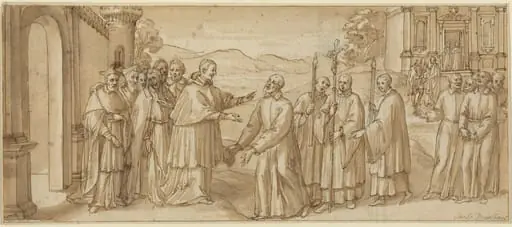
![Presentation of the Virgin in the Temple [verso], by Antonio Zanchi](https://artifactworldgallery.com/img/antonio-zanchi--presentation-of-the-virgin-in-the-temple-verso--450080eaf8685583-w320.webp) Presentation of the Virgin in the Temple [verso]
Presentation of the Virgin in the Temple [verso]![Presentation of the Virgin in the Temple [recto], by Antonio Zanchi](https://artifactworldgallery.com/img/antonio-zanchi--presentation-of-the-virgin-in-the-temple-recto--b60030c863fe5e3b-w320.webp) Presentation of the Virgin in the Temple [recto]
Presentation of the Virgin in the Temple [recto]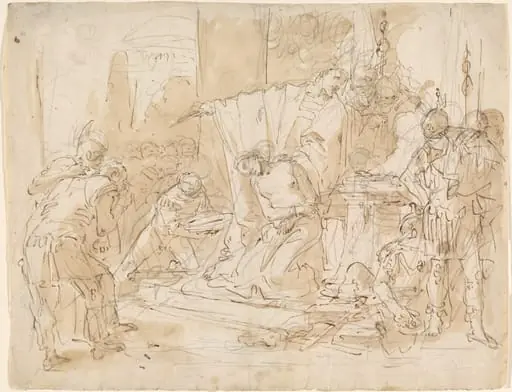 The Sacrifice of Iphigenia (recto) / Study of a Male Nude (verso)
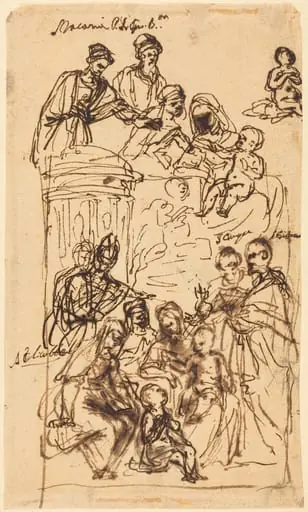 The Madonna and Child with Saints
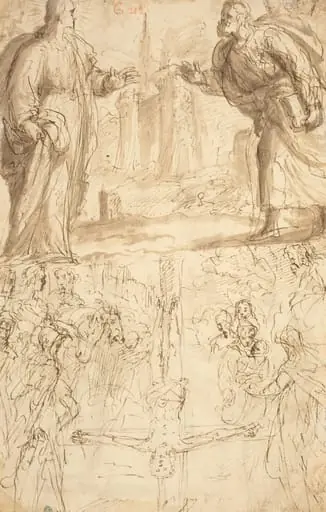 Crucifixion of Saint Peter
![The Adoration of the Magi [recto], by Donato Creti](https://artifactworldgallery.com/img/donato-creti--the-adoration-of-the-magi-recto--2cfd5d76b55e821e-w320.webp) The Adoration of the Magi [recto]
The Adoration of the Magi [recto]![The Apotheosis of Saint Mark [recto and verso], by Pietro Roselli](https://artifactworldgallery.com/img/pietro-roselli--the-apotheosis-of-saint-mark-recto-and-verso--cd3a4ec627f729de-w320.webp) The Apotheosis of Saint Mark [recto and verso]
The Apotheosis of Saint Mark [recto and verso]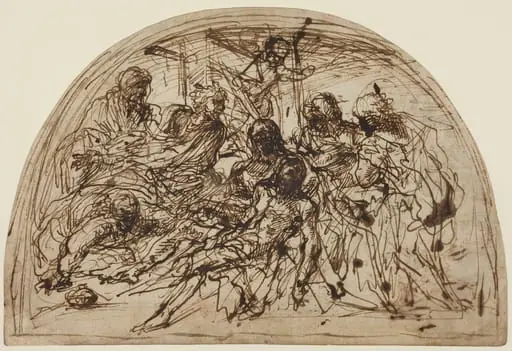 The Lamentation with Saints
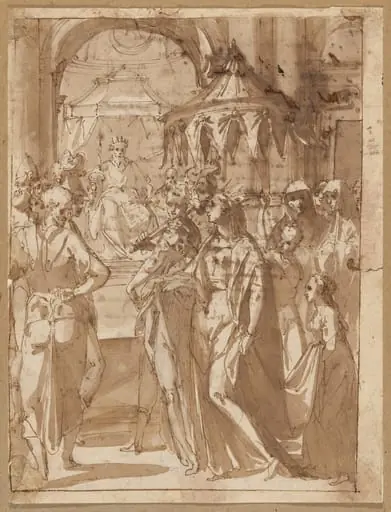 Esther before Ahasuerus
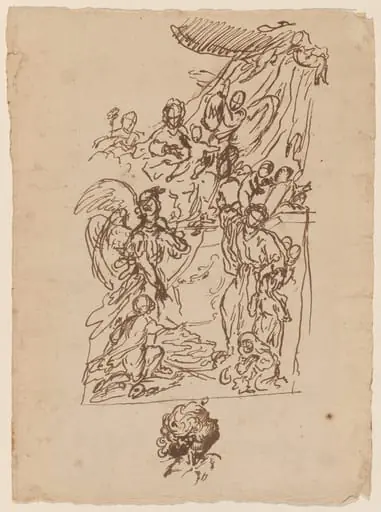 The Madonna and Child Seated on a Dais with Tobias and the Angel and a Saint Presenting Two Children
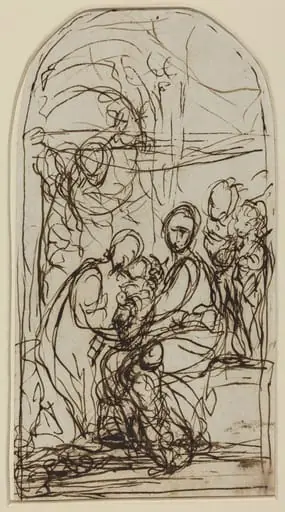 The Mystic Marriage of Saint Catherine?
 Christ Carrying the Cross