Artwork
Virgin and Child Enthroned with Saints
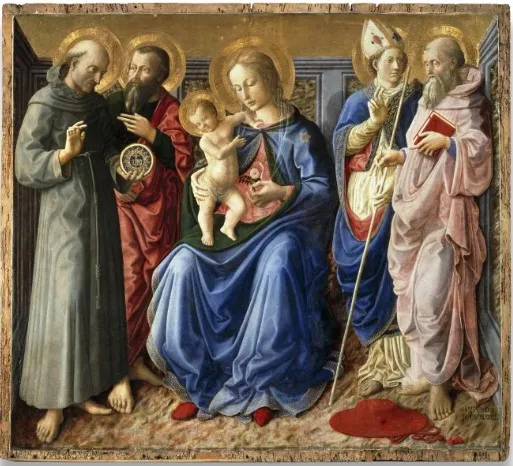
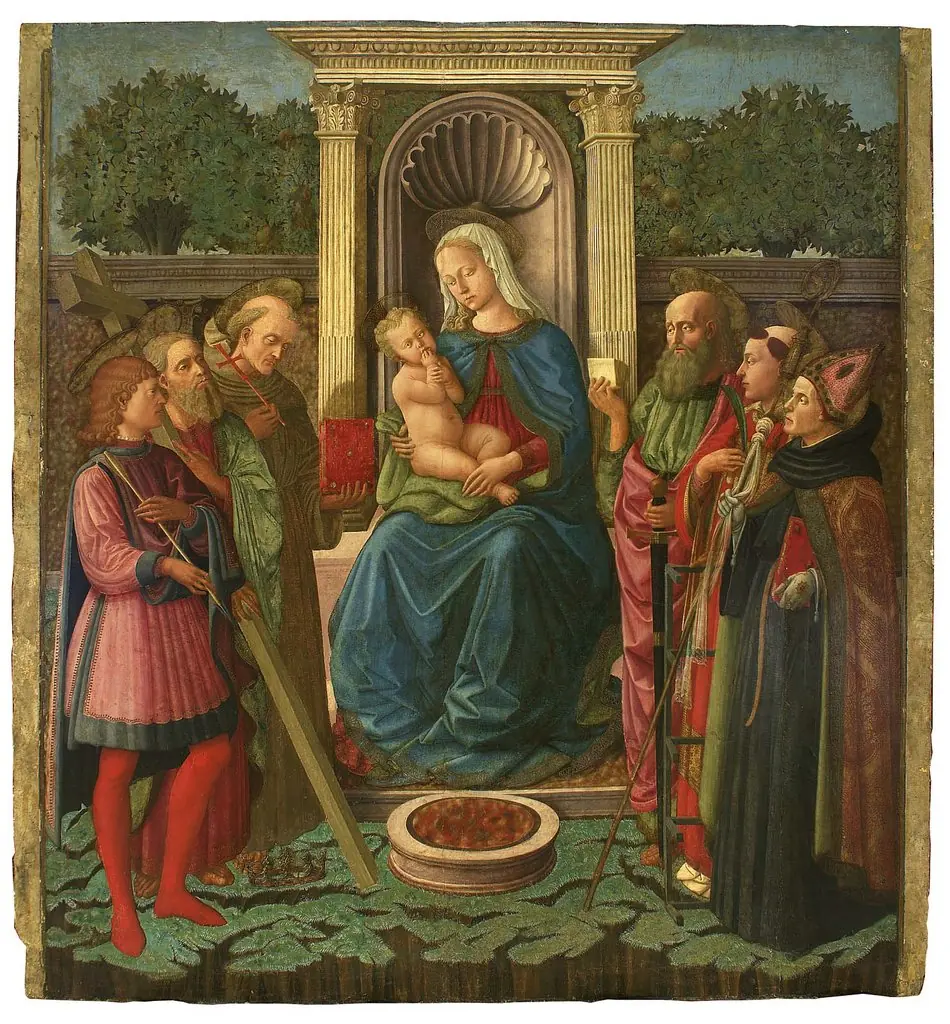
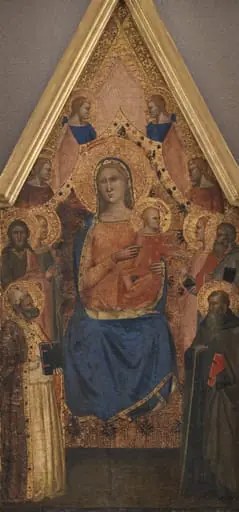
Virgin and Child Enthroned with Saints is an unspecified painting by Zanobi Machiavelli. It dates from 1470 and is held in the collection of the National Gallery of Ireland.
About this work
Overview
Virgin and Child Enthroned with Saints is a 1470 painting by Zanobi Machiavelli, a Florentine Quattrocento artist known for religious themes in both panel painting and manuscript illumination. The work is now part of the National Gallery of Ireland's collection.
Subject & Meaning
The painting centrally depicts the Virgin Mary in blue robes holding the Christ Child, flanked by three saints: one in a brown robe to her left and two haloed figures in ornate robes to her right. The composition emphasizes Mary through her prominent placement and contrasting attire against a gold background.
Technique & Style
Characterized by a formal and serious tone, the painting features a linear arrangement of figures against a solid gold backdrop, typical of the Quattrocento's early Renaissance stylistic elements. The contrast between the Virgin's blue robe and the gold background highlights the central subject.
History & Provenance
Created in 1470, the painting's early history is not detailed here, but it is known to have become part of the National Gallery of Ireland's collection. Zanobi Machiavelli passed away in Pisa in 1479, nine years after completing this work.
Context
As part of the Florentine Quattrocento, this painting reflects the artistic trends of 15th-century Florence, blending traditional religious themes with emerging Renaissance styles. Machiavelli's dual expertise in panel painting and manuscript illumination may have influenced the work's detailed, illuminated quality.
Artist & collection
Artist
Zanobi Machiavelli (1418–1479) was an Italian painter and illuminator. Machiavelli specialized in religious themed pieces. Some of his works reside at the National Gallery, London, and the Dunedin Public Art Gallery. He…