Artwork
The Virgin with Blessing Child Enthroned and Saints
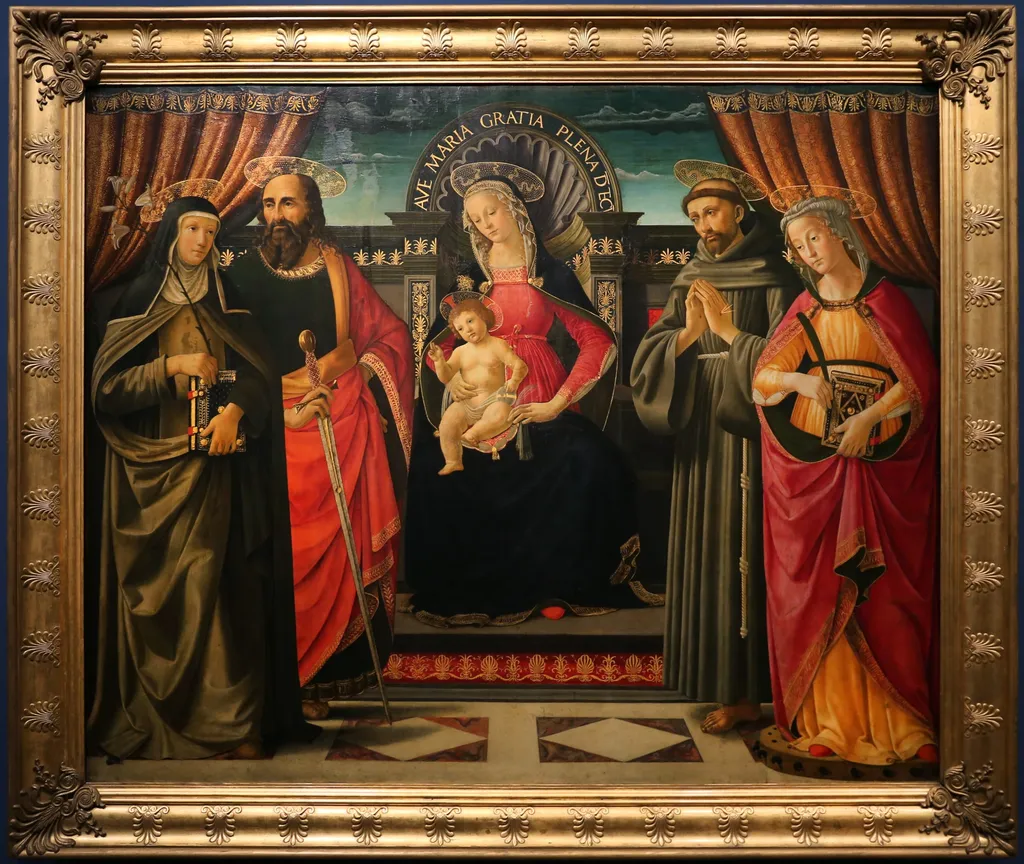
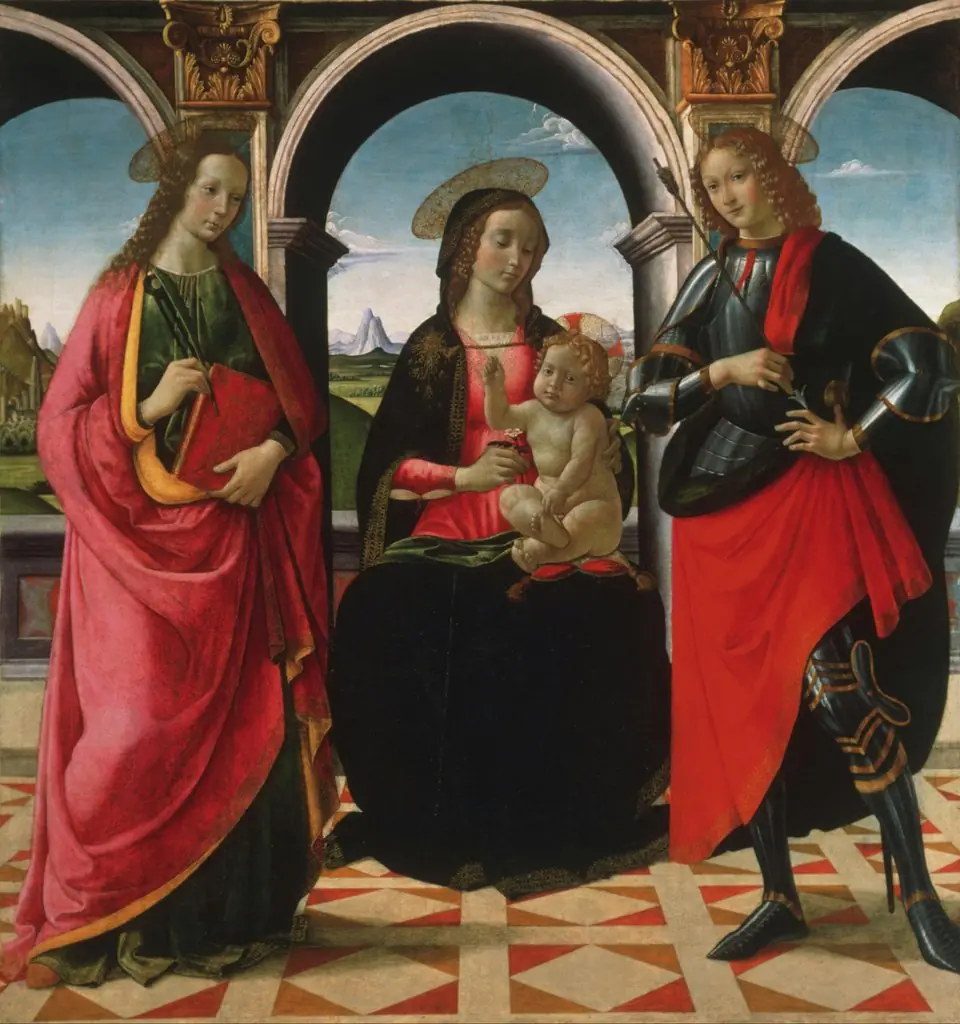
The Virgin with Blessing Child Enthroned and Saints is a paint painting by the Early Renaissance artist Davide Ghirlandaio. It dates from 1490 and is held in the collection of the Gemäldegalerie Berlin.
About this work
Overview
Painted in 1490, this tempera on panel work by Davide Ghirlandaio presents a traditional Marian enthronement with accompanying saints.
Painted in 1490, this tempera on panel work by Davide Ghirlandaio presents a traditional Marian enthronement with accompanying saints. Executed in the Florentine manner of the late 15th century, it reflects the devotional priorities of its time. The painting resides in the Gemäldegalerie, Berlin, and exemplifies the workshop practices of Renaissance Florence, where artistic production was often collaborative and rooted in established iconography.
Subject & Meaning
The Virgin Mary is depicted seated on a grand throne, holding the Christ Child, who raises his hand in blessing. Flanking them are four saints, arranged symmetrically to emphasize hierarchy and spiritual order. The composition serves a liturgical function, inviting contemplation and prayer. The choice of saints, though unnamed, likely reflects the patron’s devotional interests or local religious affiliations common in Florentine civic piety.
Technique & Style
Ghirlandaio employed tempera on panel, a medium favored in early Renaissance Florence for its precision and luminous finish. Gold leaf accents highlight halos and textile details, enhancing sacredness without overt opulence. The figures are rendered with restrained modeling, and the background’s soft blue sky with cloud forms creates a serene, otherworldly space. Drapery folds are carefully defined, reflecting the influence of his brother Domenico’s naturalism.
History & Provenance
The painting entered the Gemäldegalerie Berlin’s collection in the 19th century, though its earlier ownership remains undocumented. It was likely created for a private chapel or religious confraternity in Florence, given its scale and devotional focus. Davide Ghirlandaio, though less renowned than his brother, managed the family workshop after Domenico’s death, and this work may represent his independent output during that transition.
Context
In late 15th-century Florence, religious imagery dominated public and private devotion. Altarpieces like this one were commissioned by wealthy families or guilds to affirm piety and social standing. The balanced composition, use of gold, and frontal presentation align with traditions established by Giotto and Masaccio, while the restrained color palette and orderly arrangement reflect the city’s evolving taste for clarity and dignity in sacred art.
Legacy
Though Davide Ghirlandaio’s name is often overshadowed by his brother’s, this painting illustrates his competence within the Florentine workshop system. It preserves the visual language of devotional painting before the full emergence of High Renaissance ideals. As a surviving example of mid-to-late Quattrocento religious art, it contributes to understanding how artistic production functioned in familial and commercial contexts beyond the most celebrated names.
Artist & collection
Artist
Davide Ghirlandaio (1452–1525), also known as David Ghirlandaio and as Davide Bigordi, was an Italian painter and mosaicist, active in his native Florence.

 Sant'Ambrogio Altarpiece
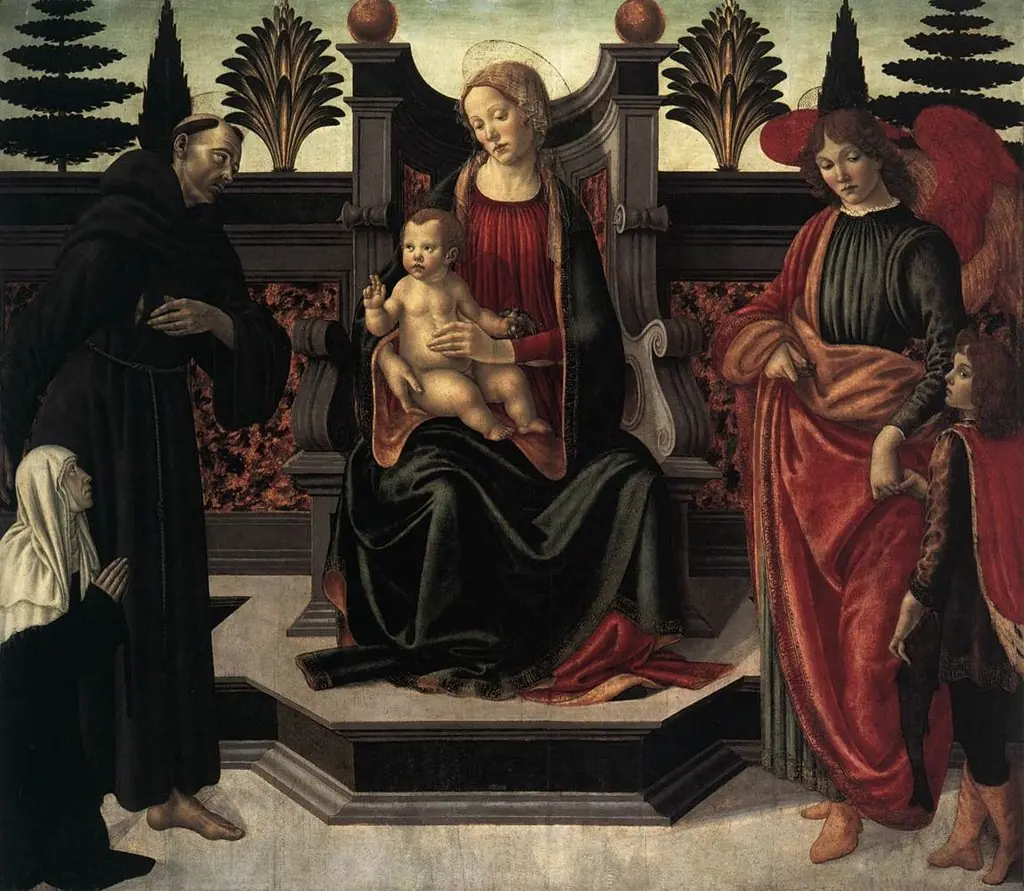 Madonna and Child Enthroned
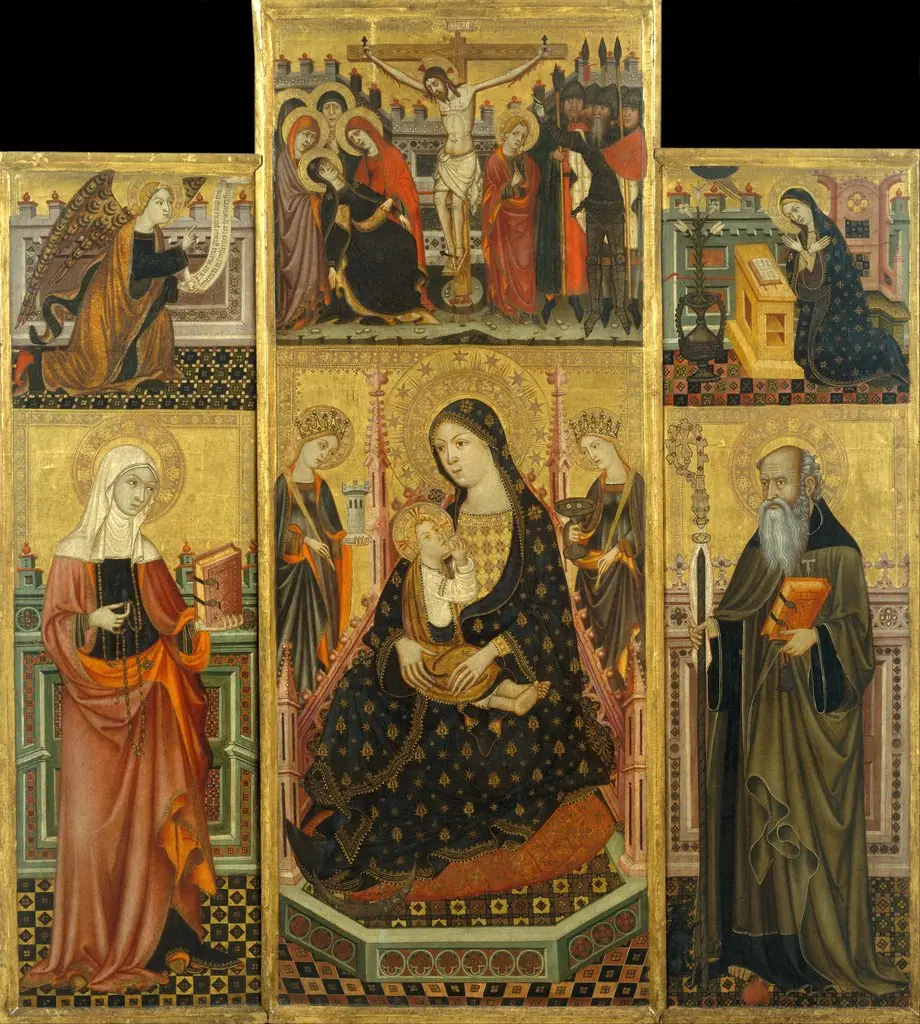 Altarpiece of the Virgin Suckling the Child, Saint Clare and Saint Anthony the Abbott
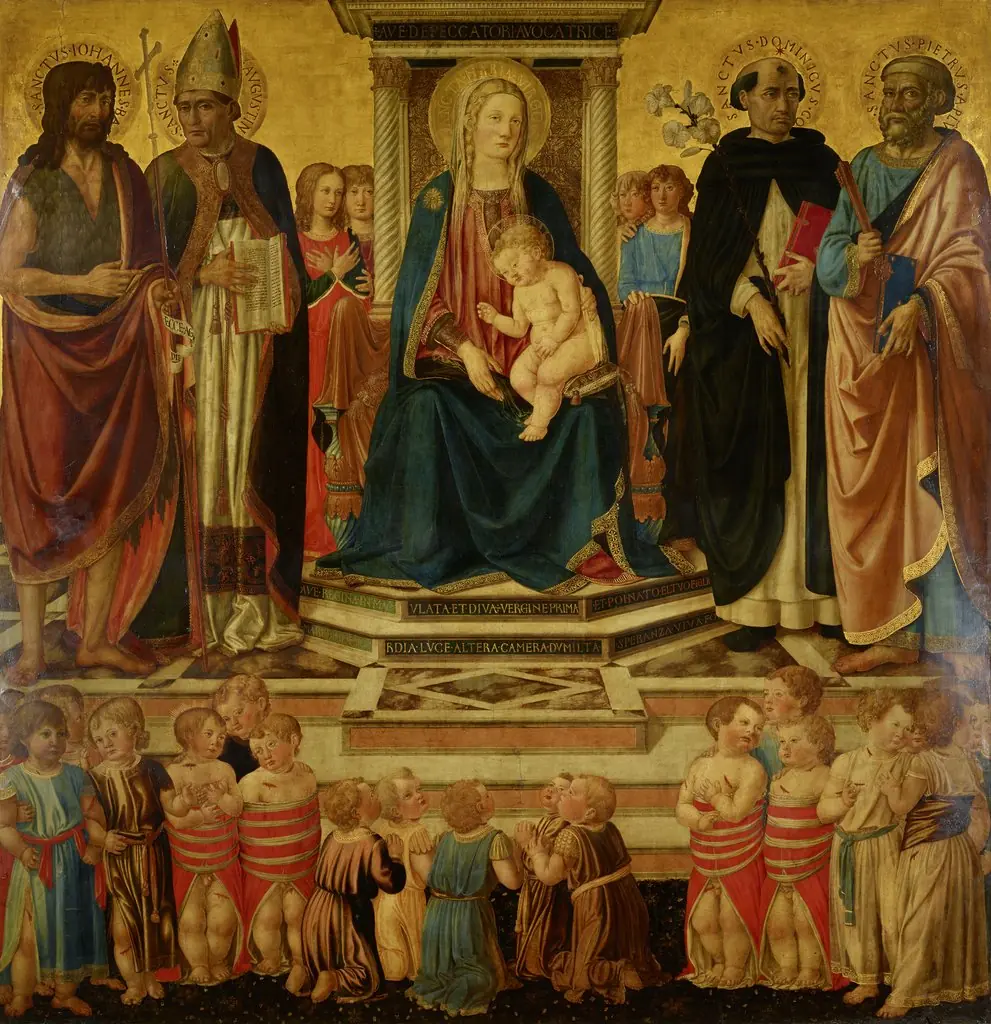 The Virgin and Blessing Child Enthroned with Sts. John, Augustine, Dominic, Peter and Victims of the bethemitic Child Murder
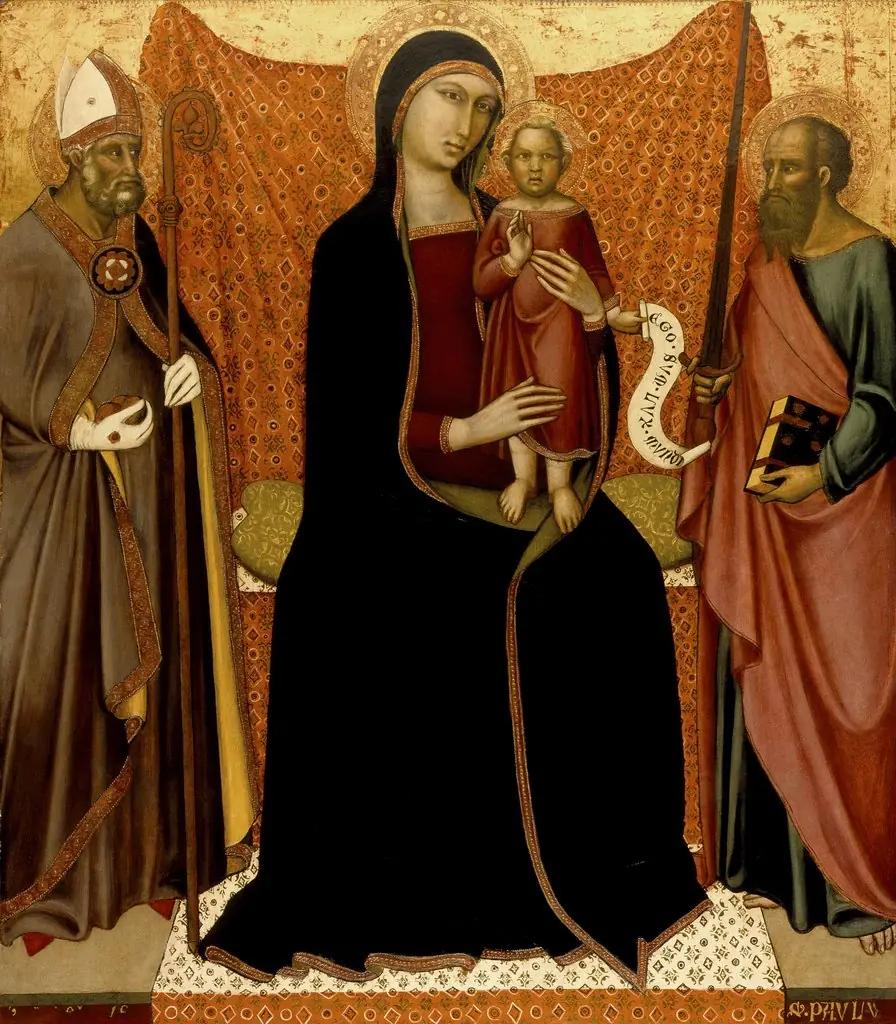 Madonna and Child with Sts. Nicholas and Paul
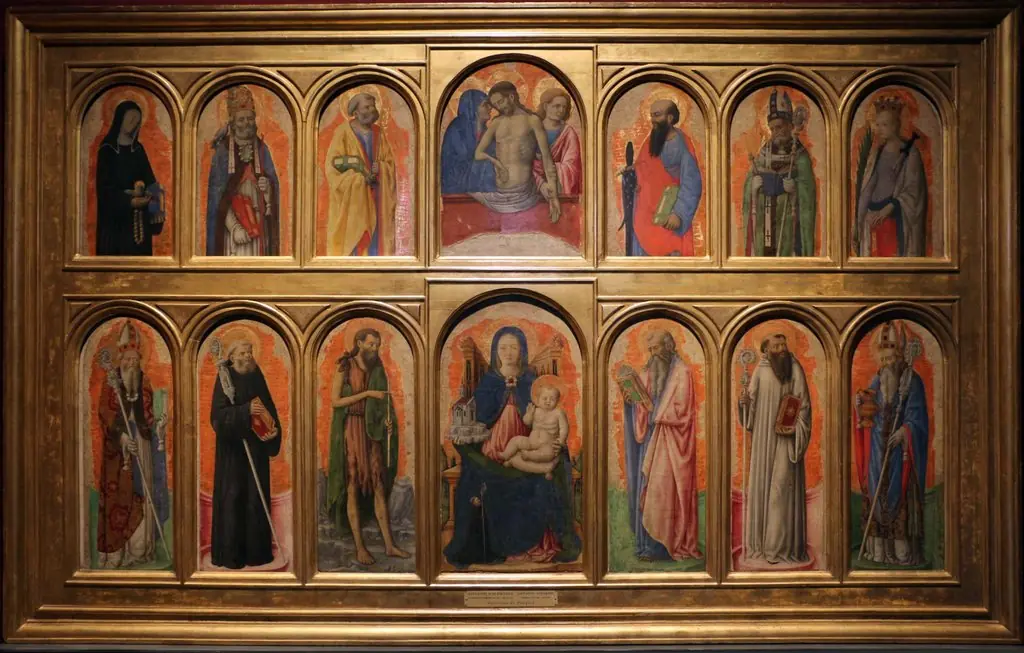 Polyptych of Praglia
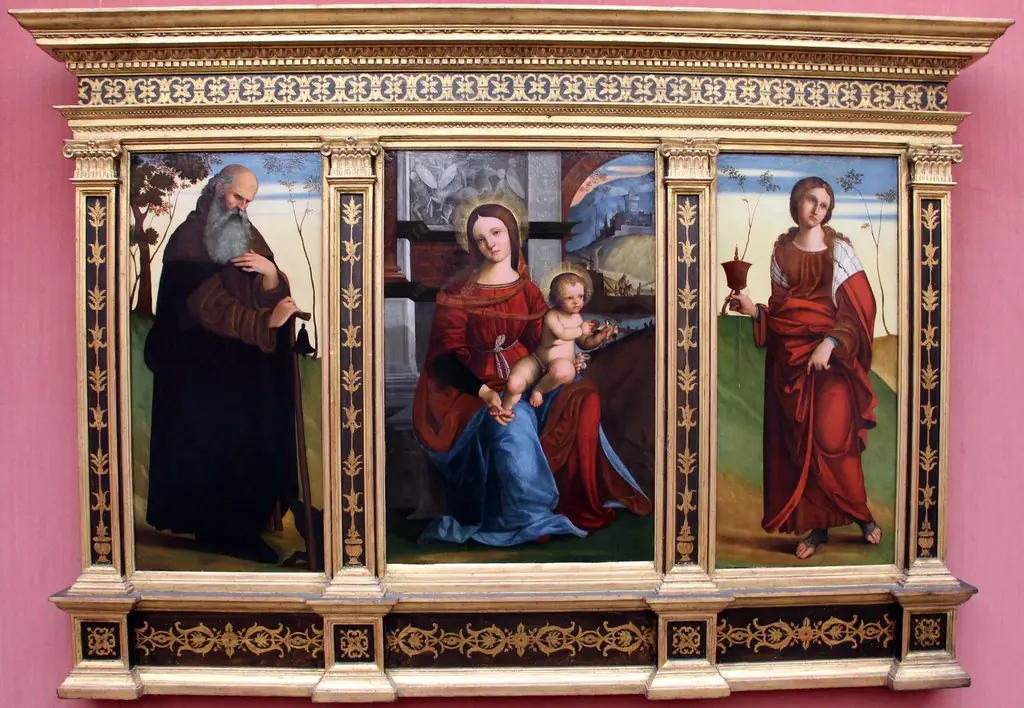 Triptychon, Maria mit Kind, Antonius Eremita, Maria Magdalena
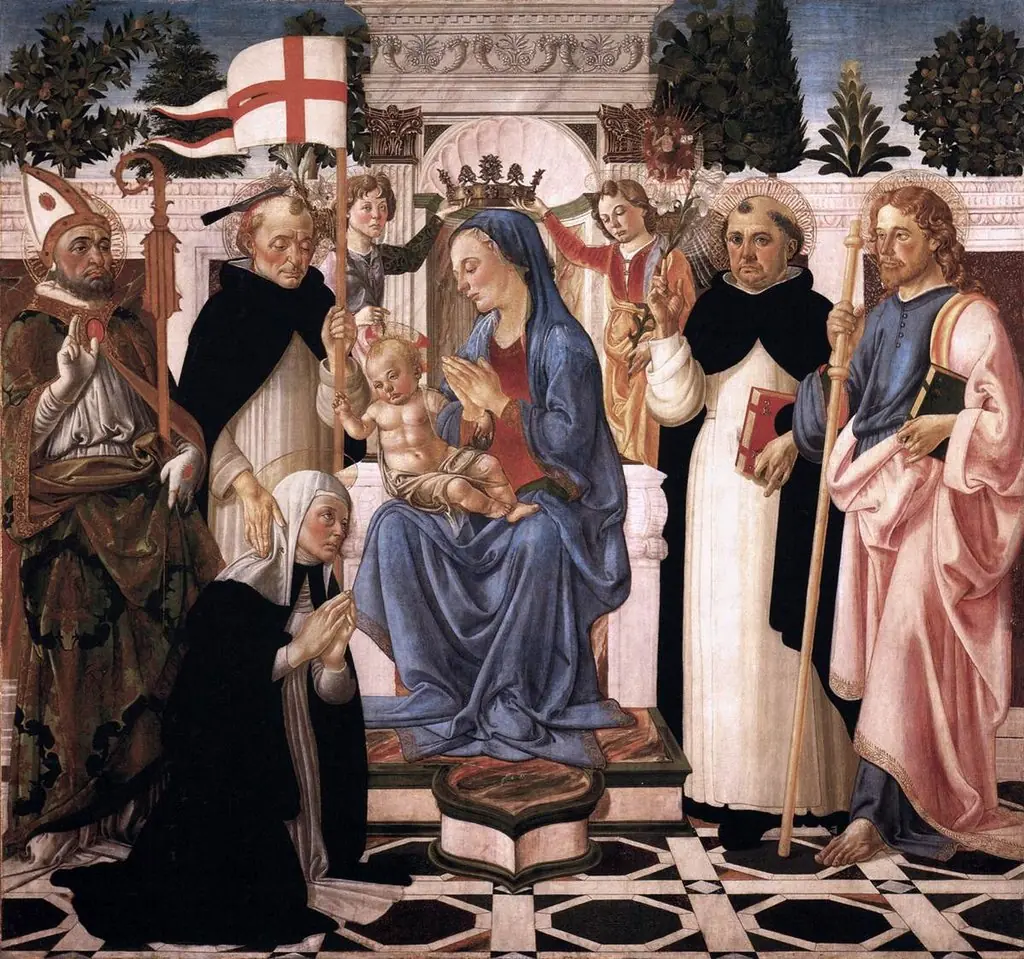 Madonna and Child with Five Saints and Two Angels
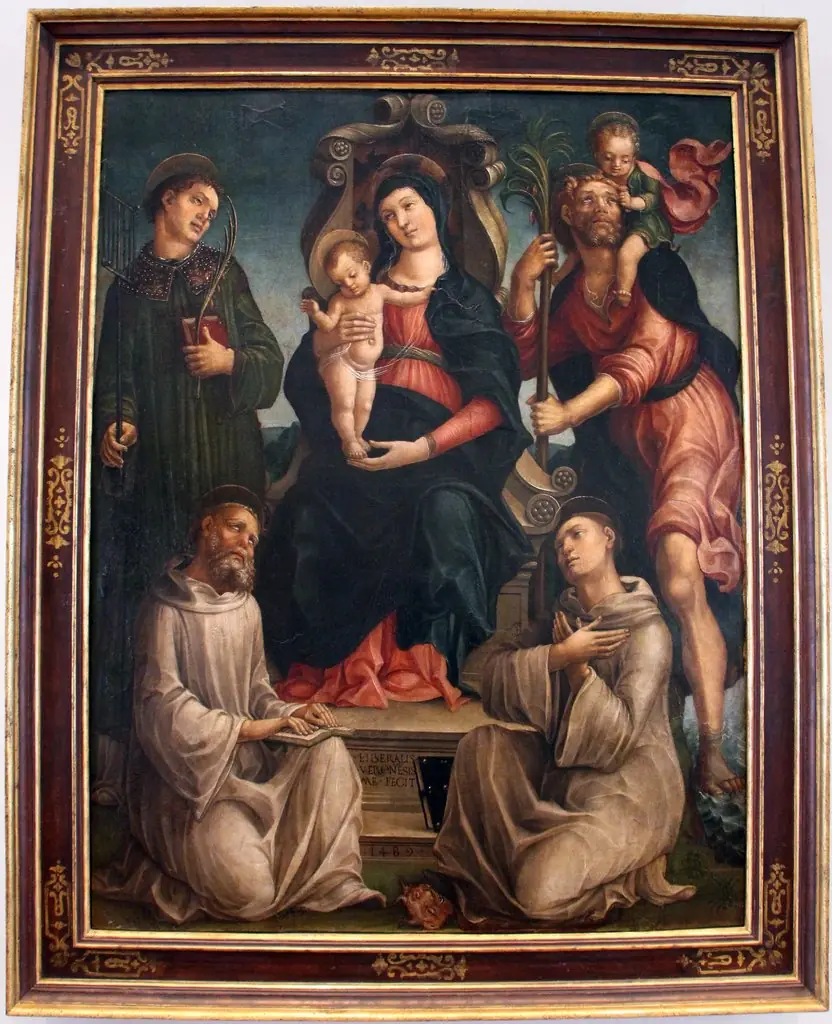 Thronende Maria mit dem segnenden Kind und den Heiligen Benedikt von Nursia, Laurentius und Bernhard von Clairvaux
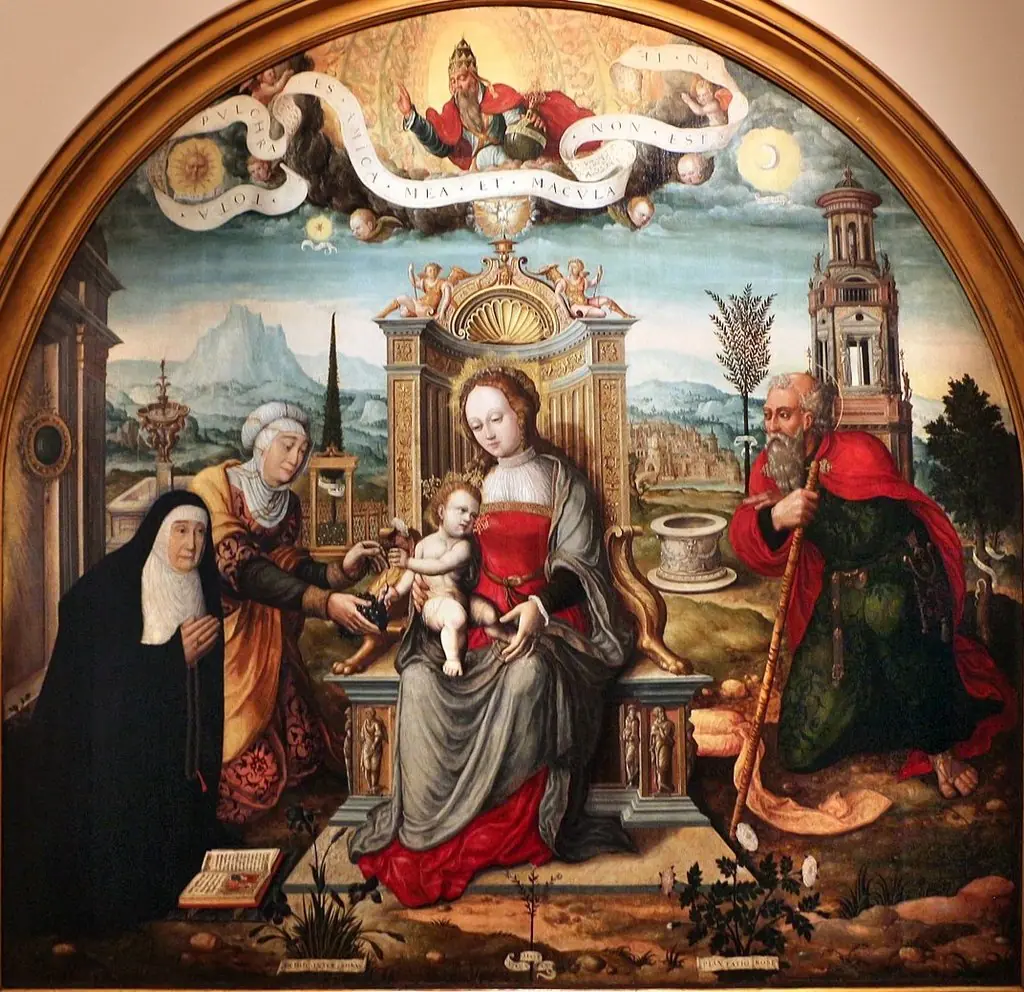 A Virgem Maria e o Menino Jesus com Santa Ana, São Joaquim e Doadora
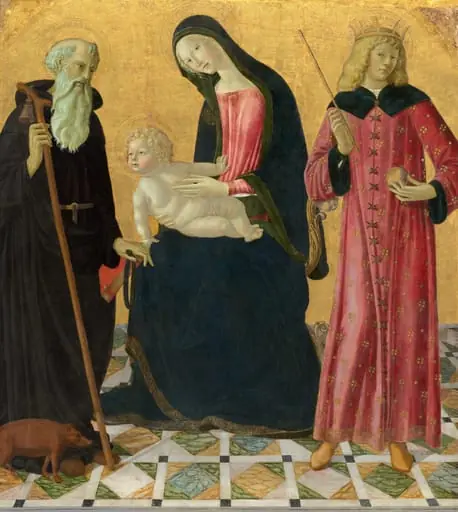 Madonna and Child with Saint Anthony Abbot and Saint Sigismund
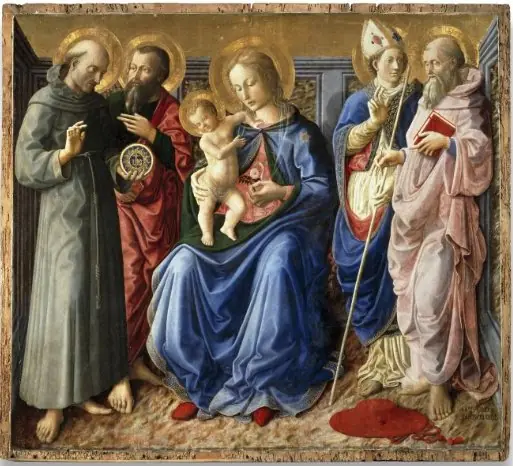 Virgin and Child Enthroned with Saints