Artwork
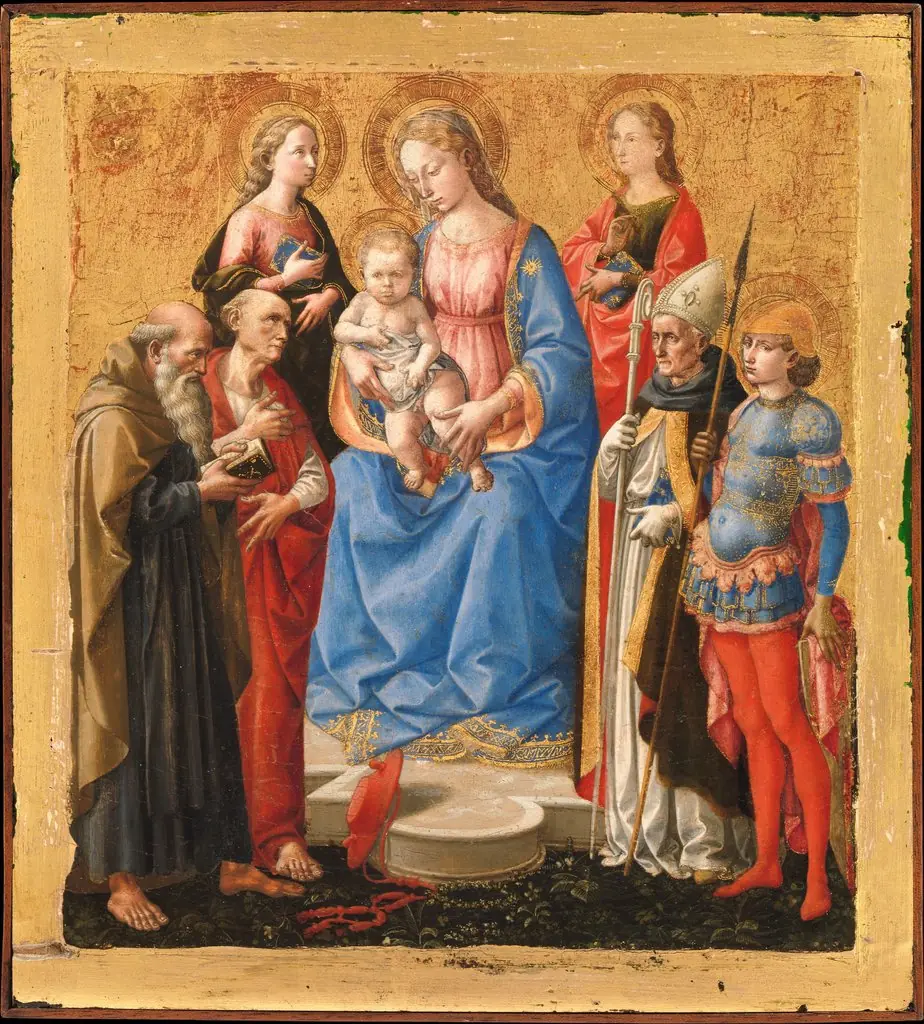
Virgin and Child Enthroned with Saints Sebastian, Andrew, Bernardino (?), Paul, Lawrence, and Augustine
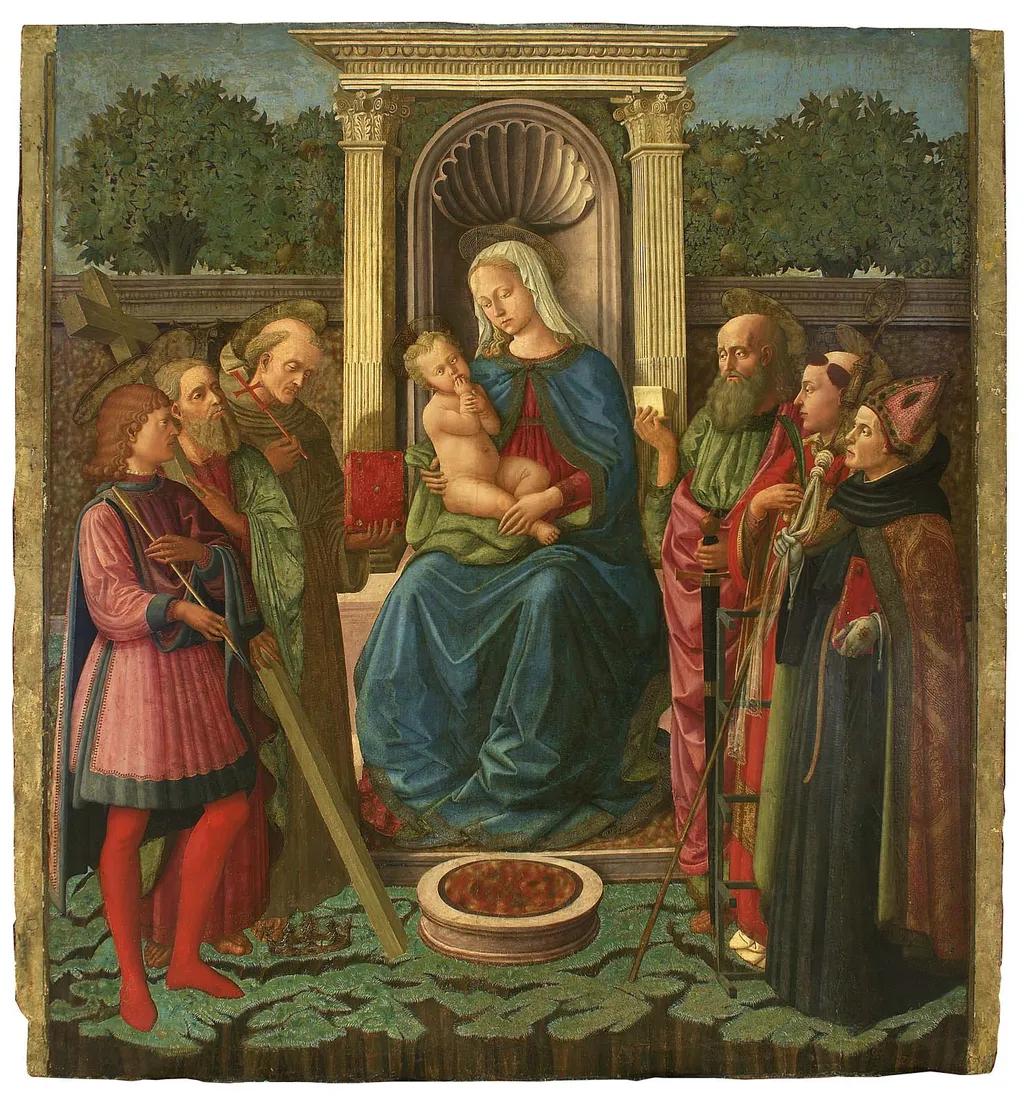
Virgin and Child Enthroned with Saints Sebastian, Andrew, Bernardino (?), Paul, Lawrence, and Augustine is an unspecified painting by Zanobi Machiavelli. It dates from 1458 and is held in the collection of the Museum of Fine Arts Boston.
About this work
Overview
This mid-15th-century panel painting, created by Italian artist Zanobi Machiavelli around 1458, depicts a devotional scene in an altarpiece format. It features the Virgin Mary and the Christ Child surrounded by six saints, set against a stylized architectural background.
Subject & Meaning
The painting represents a sacred gathering with the Virgin and Child at its center, accompanied by identifiable saints, including Sebastian, Andrew, Paul, Lawrence, Augustine, and possibly Bernardino. The composition conveys a sense of reverence and harmony among the figures.
Technique & Style
Architectural elements, such as the archway and columned backdrop, add depth.
Characterized by simple, solid-colored robes on the saints and a predominantly blue and red palette for the Virgin, the work showcases Machiavelli's restrained yet expressive style. Architectural elements, such as the archway and columned backdrop, add depth. Notable details include a bowl at the base of the Virgin's throne, suggestive of a fountain, and the varied expressions and actions of the saints, including one playing a flute and another holding a book.
History & Provenance
Created circa 1458 by Zanobi Machiavelli, the painting is now part of the collection at the Museum of Fine Arts, Boston. Machiavelli's works are also found in other prominent collections, such as the National Gallery, London, and the Dunedin Public Art Gallery.
Context
As a religious-themed work by an artist known for similar subjects, this panel reflects the devotional art common in 15th-century Italy, tailored for worship or veneration, likely in a religious setting.
Legacy
While specific impact on art history is not detailed, the painting represents Machiavelli's contribution to the tradition of Italian Renaissance devotional art, with its style and composition influencing or reflecting contemporary religious painting practices.
Own this work as a print
Artist & collection
Artist
Zanobi Machiavelli (1418–1479) was an Italian painter and illuminator. Machiavelli specialized in religious themed pieces. Some of his works reside at the National Gallery, London, and the Dunedin Public Art Gallery. He…

 Madonna and Child Enthroned with Four Saints
 Madonna and Child with Six Saints
 The Adoration of the Christ Child
 Madonna and Child
 Madonna with two Angels Adoring the Christ Child in a landscape
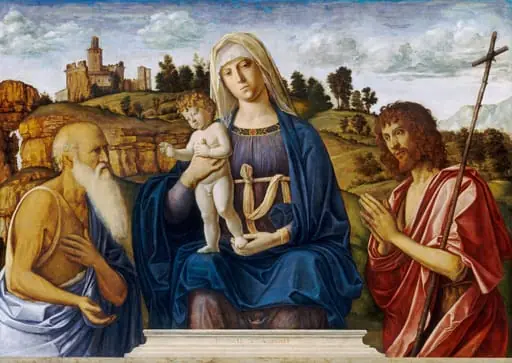 Madonna and Child with Saint Jerome and Saint John the Baptist
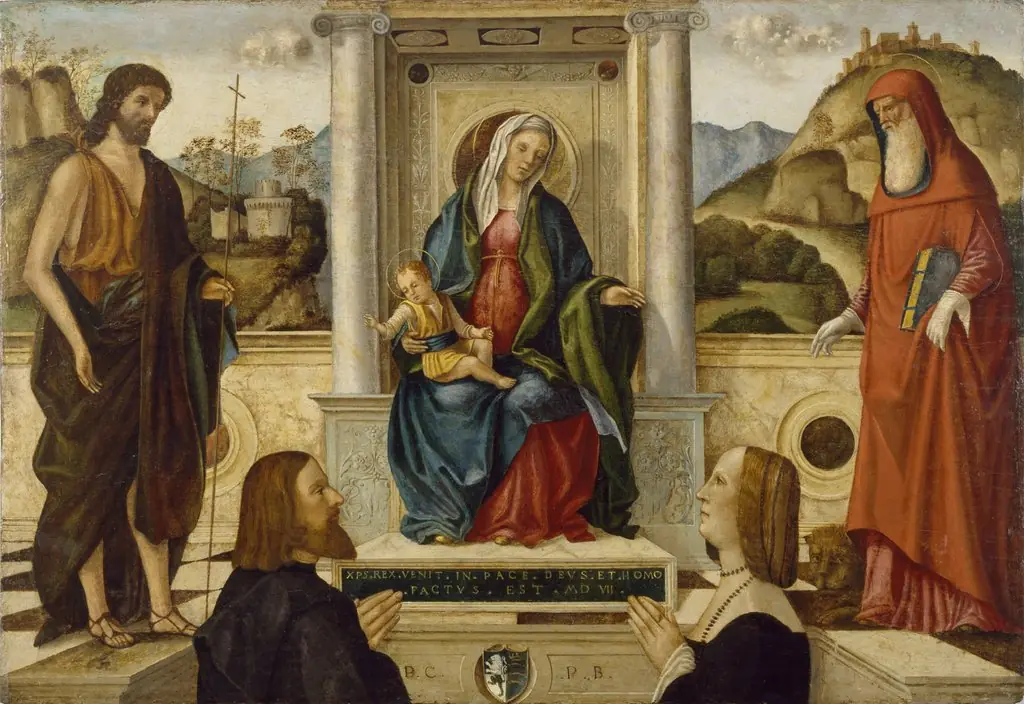 Madonna and Child Enthroned with Saints and Donor