Artwork
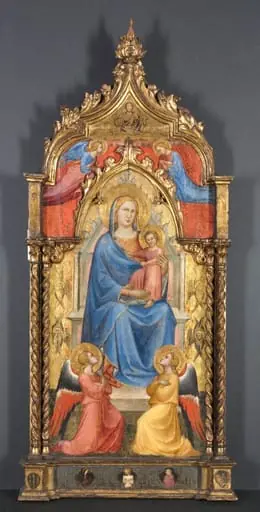
Virgin and Child with Four Angels and the Redeemer
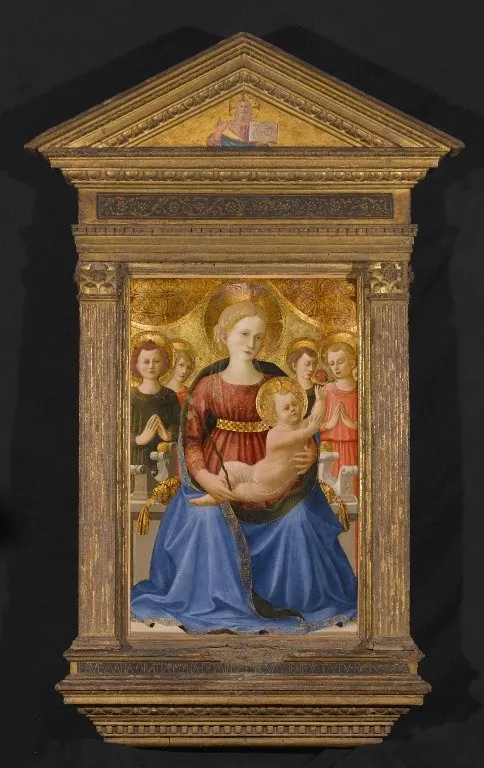
Virgin and Child with Four Angels and the Redeemer is an unspecified painting by the Early Renaissance artist Zanobi Strozzi. It dates from 1450 and is held in the collection of the Brooklyn Museum.
About this work
Overview
Strozzi, active in Florence and Fiesole, was trained in the tradition of Fra Angelico and worked across both panel painting and manuscript illumination.
Painted around 1450 by Zanobi Strozzi, this devotional panel features the Virgin Mary and Christ Child accompanied by four angels and a depiction of the Redeemer. Strozzi, active in Florence and Fiesole, was trained in the tradition of Fra Angelico and worked across both panel painting and manuscript illumination. The work exemplifies early Renaissance religious art, combining spiritual symbolism with refined decorative detail. It is now part of the Brooklyn Museum’s collection.
Subject & Meaning
The composition centers on the Virgin Mary holding the Christ Child, flanked by four angels who serve as celestial attendants. Above them, the Redeemer—often interpreted as Christ in glory—hovers in a symbolic realm, reinforcing the theological link between Incarnation and Salvation. The arrangement reflects a devotional hierarchy, inviting contemplation of divine grace. The inclusion of the Redeemer elevates the scene beyond a simple maternal portrait to a statement of Christian redemption.
Technique & Style
Strozzi employed tempera and gold leaf on wood, typical of early Renaissance panel painting. The figures are rendered with delicate modeling and soft contours, echoing the lyrical style of Fra Angelico. The background is a richly tooled gold field, patterned with intricate tooling that suggests heavenly radiance. The angels’ robes vary in hue, adding visual rhythm without disrupting the sacred stillness. The overall aesthetic balances naturalism with spiritual idealization.
History & Provenance
The painting’s early history is undocumented, but its style and technique align with Florentine workshop practices of the mid-15th century. It entered the Brooklyn Museum’s collection in the 20th century, likely through a private acquisition or donation. Its survival as a relatively intact panel, with its original gilded frame, is uncommon. The frame, with its triangular top and miniature figure holding a book, may have been added later but complements the devotional intent.
Context
Created during the height of Florentine humanism, the painting reflects the era’s fusion of religious devotion and artistic refinement. While secular interests grew, devotional imagery remained central in private and ecclesiastical settings. Strozzi’s dual practice as a panel painter and illuminator illustrates how techniques from manuscript art—fine detail, luminous color—infused larger works. This piece belongs to a broader tradition of intimate, contemplative altarpieces for domestic or monastic use.
Legacy
Though Zanobi Strozzi is less known than his contemporaries, this work preserves the quiet elegance of a Florentine workshop tradition that prioritized spiritual clarity over dramatic spectacle. Its survival offers insight into the production of devotional art outside major commissions. The painting contributes to understanding how artists like Strozzi sustained religious iconography through meticulous craftsmanship, bridging the gap between manuscript illumination and panel painting in Renaissance Italy.
Artist & collection
Artist
Zanobi di Benedetto di Caroccio degli Strozzi (17 November 1412 – 6 December 1468) was an Italian Renaissance painter and manuscript illuminator active in Florence and nearby Fiesole.

 Virgin and Child with Angels
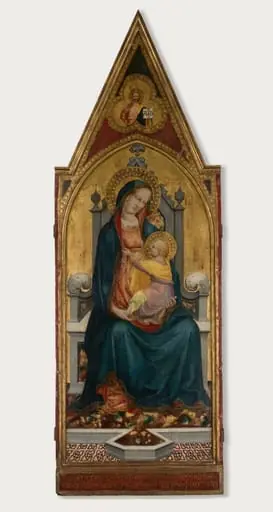 Virgin and Child Enthroned
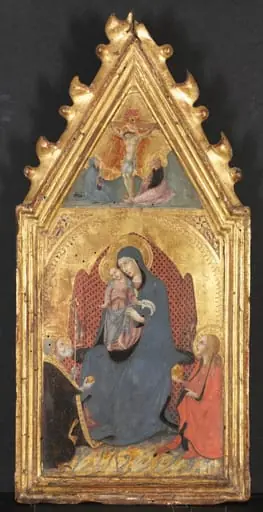 Virgin and Child Adored by Saints Mary Magdalene and Nicolas of Bari; Christ Crucified with the Virgin and Saint John the Evangelist
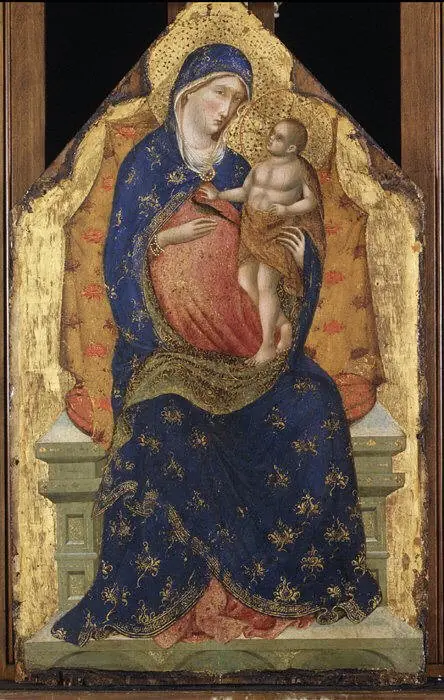 Madonna and Child Enthroned
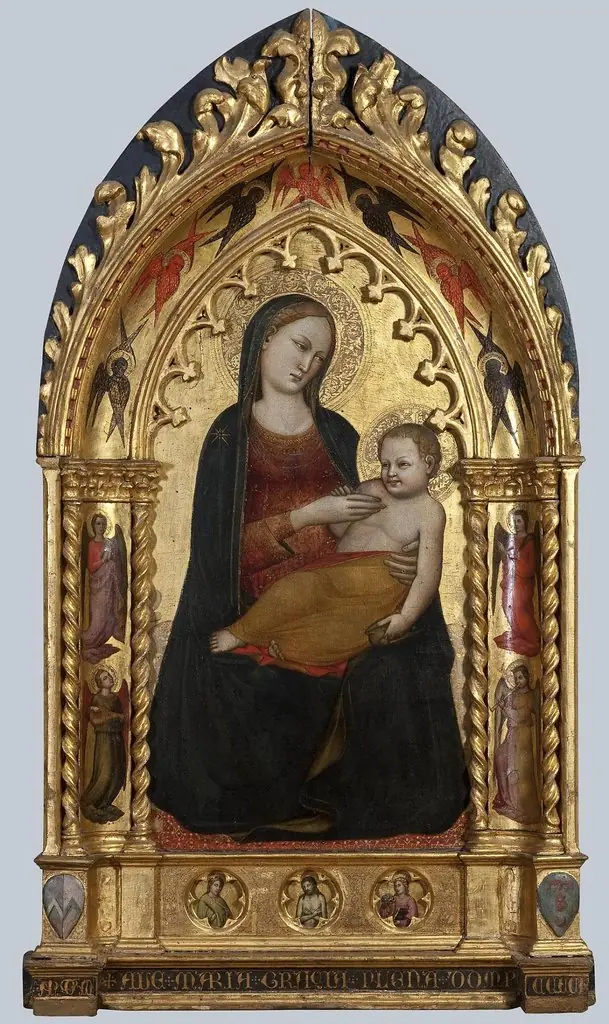 Madonna and Child
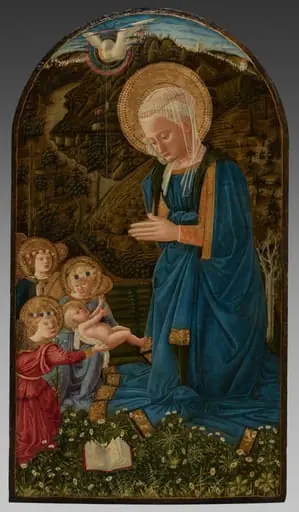 Virgin and Child with Angels
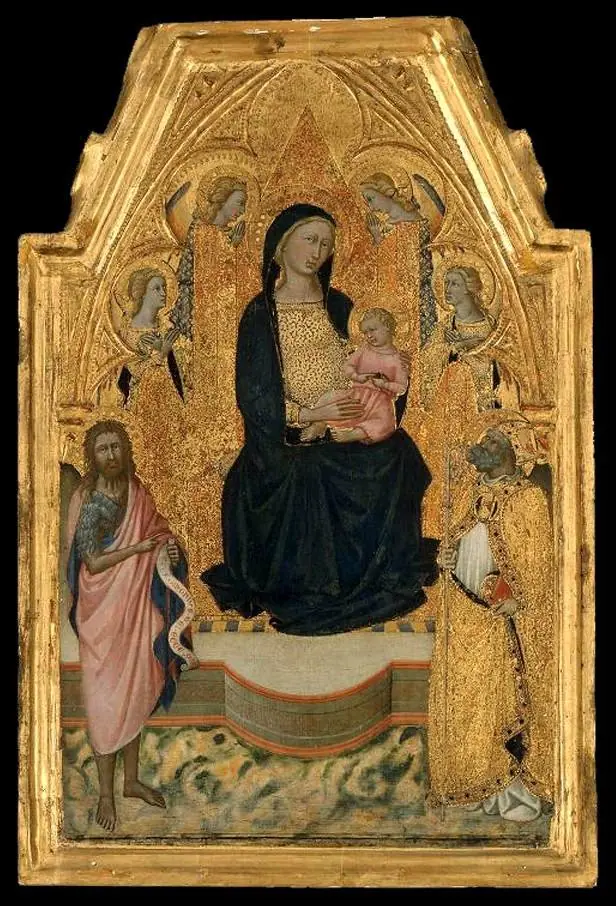 Virgin and Child Enthroned with a Bishop Saint, Saint John the Baptist, and Four Angels
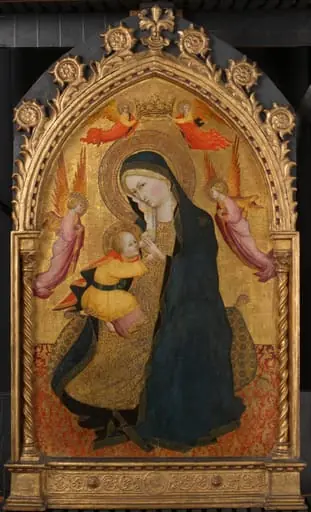 Madonna of Humility
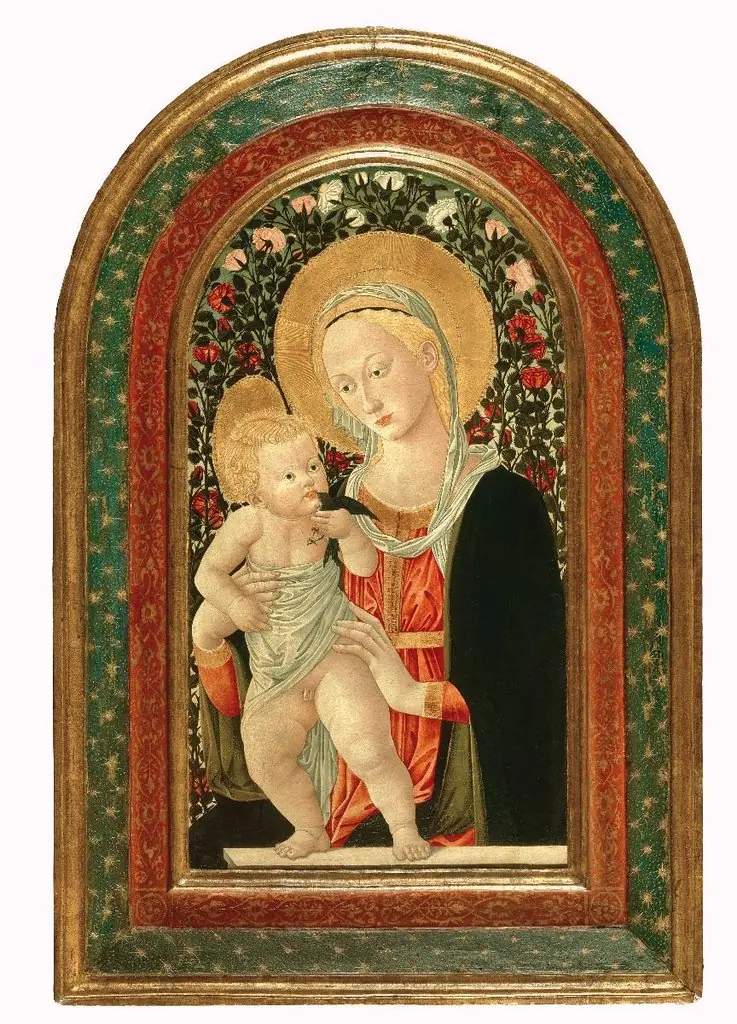 Maria col bambino