Artwork
Palaces of Han
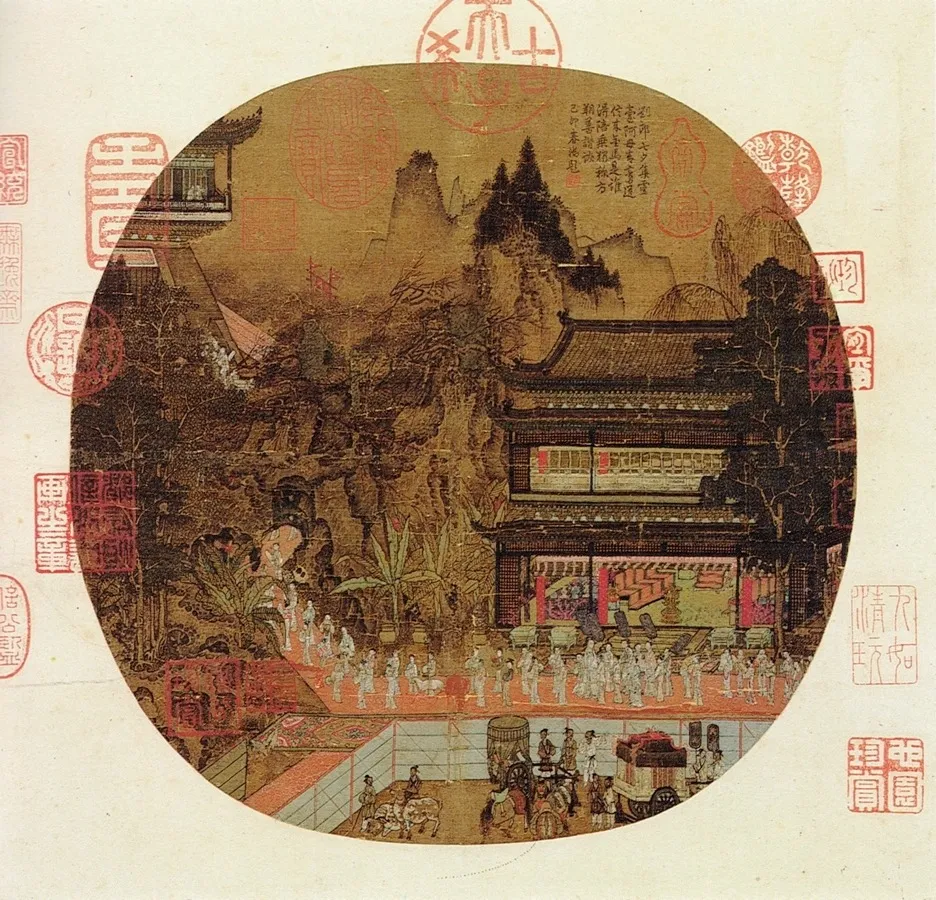
Palaces of Han is an unspecified painting by the Song dynasty landscape artist Zhao Boju. It dates from 1161 and is held in the collection of the National Palace Museum.
About this work
Overview
Palaces of Han is a landscape painting created by Chinese artist Zhao Boju around 1161, during the early Southern Song Dynasty. Characterized by a detailed, circular composition, the work embodies the traditional Song landscape style.
Subject & Meaning
The painting depicts a serene scene with a distant mountain backdrop and a foreground building surrounded by a courtyard, where figures gather amidst lush, verdant surroundings. The subject is interpreted as an idyllic representation of imperial or aristocratic residences, reflecting the era's cultural ideals.
Technique & Style
Executed with meticulous attention to detail, the painting features numerous small figures and objects. The palette is subdued, predominantly consisting of earthy tones such as browns and greens, consistent with the restrained aesthetic of Southern Song landscape painting.
History & Provenance
Despite Zhao Boju's documented reputation by critic Zhao Xigu, no original works by the artist are known to survive to the present day. The existence and attributes of *Palaces of Han* are inferred from historical descriptions.
Context
*Palaces of Han* aligns with the Song dynasty's landscape painting traditions, which often emphasized harmony between natural and built environments. The work would have been created for an elite audience, given the subject matter and artistic craftsmanship.
Artist & collection
Artist
Zhao Boju (Chinese: 赵伯驹; pinyin: Zhào Bójū; 1120–1182), was a Chinese painter during the early Southern Song Dynasty (1127–1279).

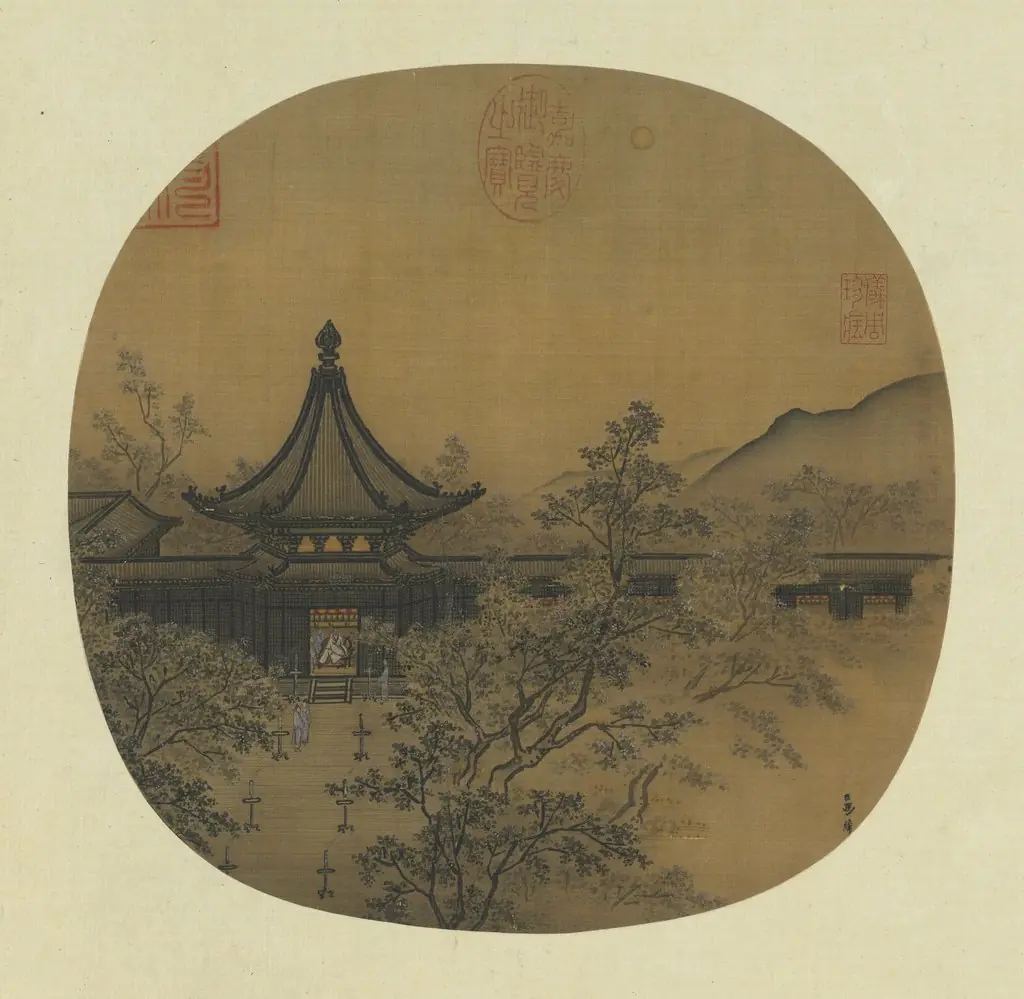 Waiting for Guests by Lamplight
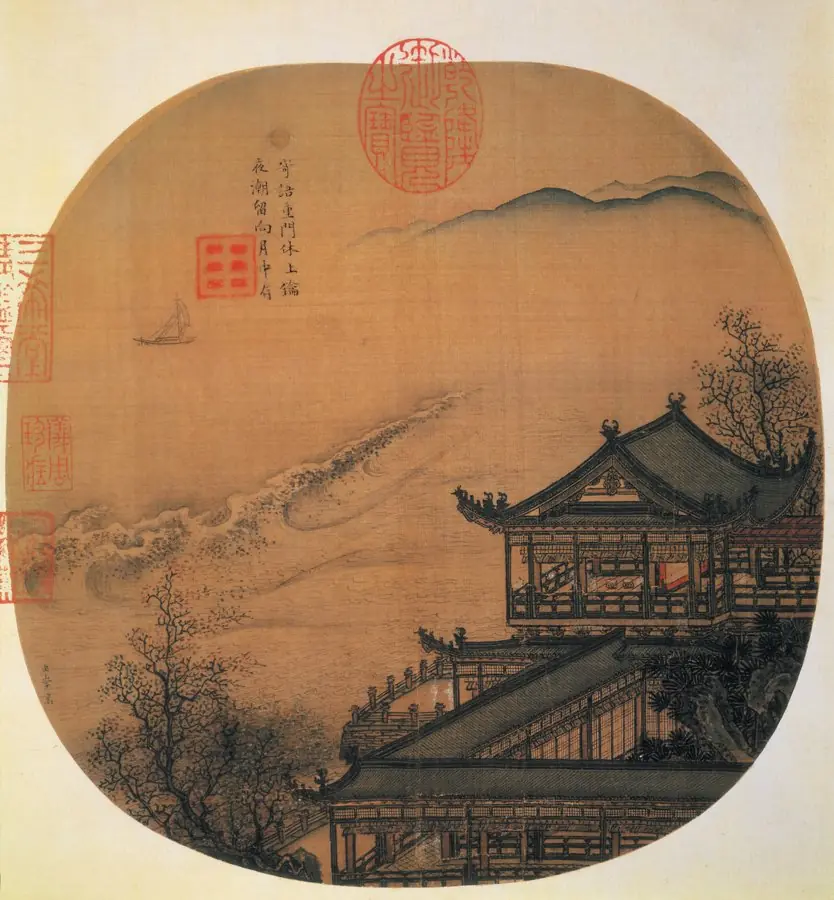 The Hangchow Tidal Bore by Moonlight
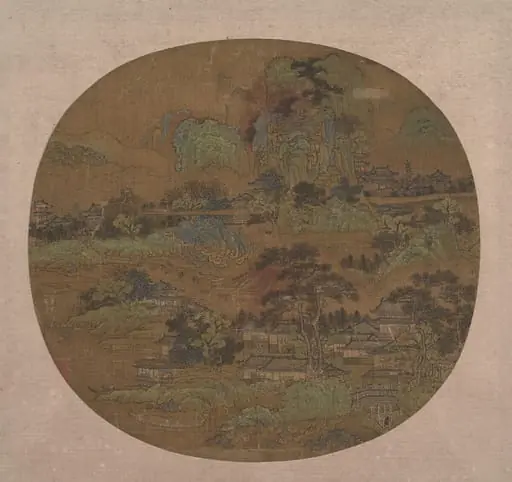 明 佚名 樓閣江帆圖 團扇|Village and Temples in Jiangnan
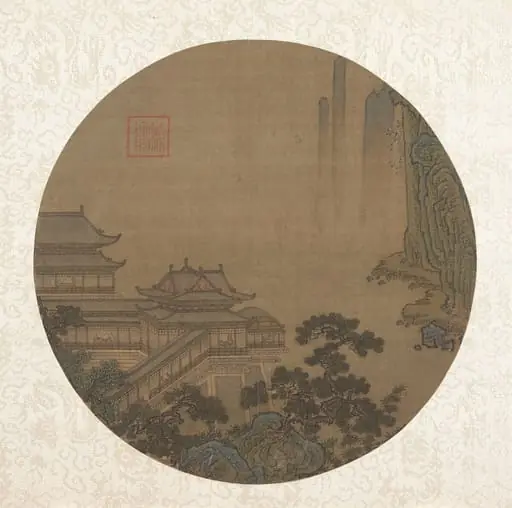 明/清 佚名 仙山樓閣圖 團扇頁|Palace
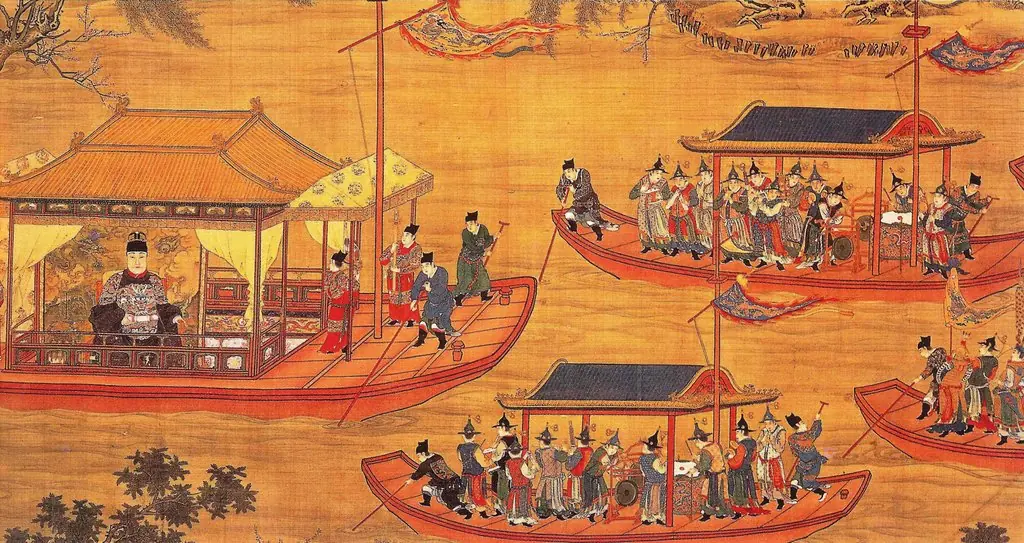 Imperial Procession Returning to the Palace
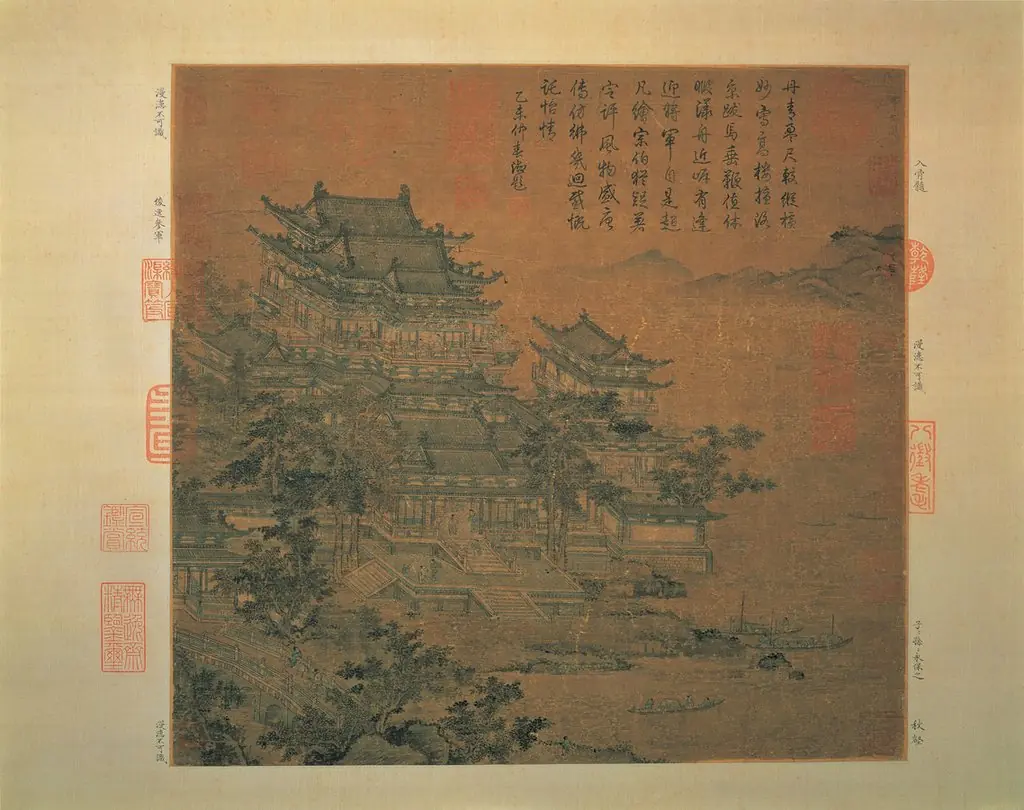 The Lo-yang Pavilion
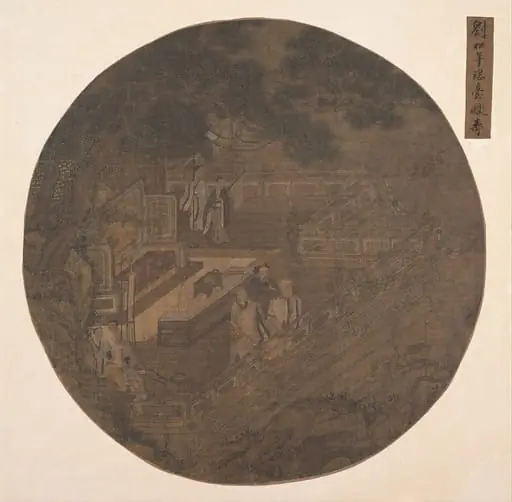 明 佚名 瑤臺獻壽圖 扇|Paying homage to Xiwangmu, the Queen Mother of the West
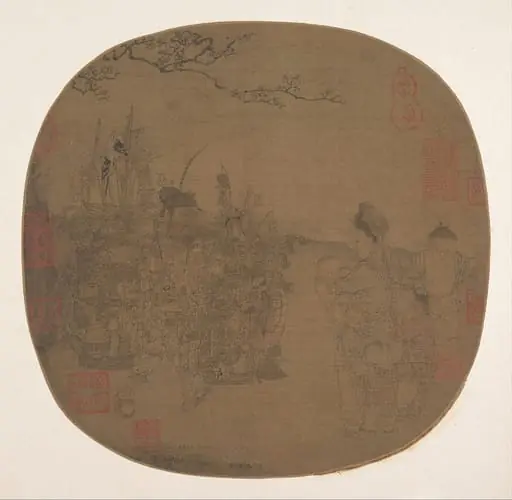 元/明 佚名 絹本設色 貨郎嬰戲圖 扇頁|Knickknack Peddler