Artwork
Towers and Pavilions in Mountains of the Immortals
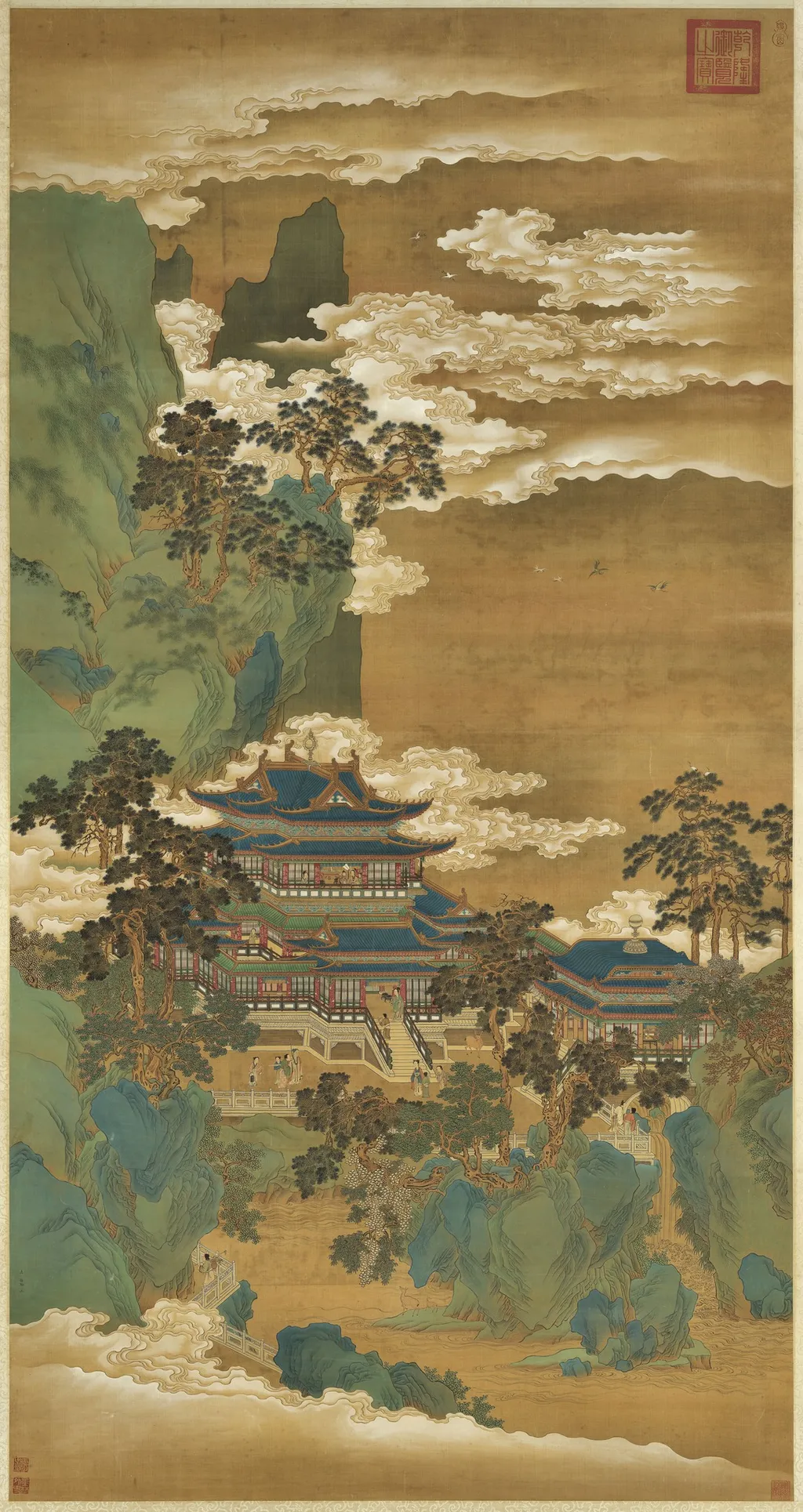
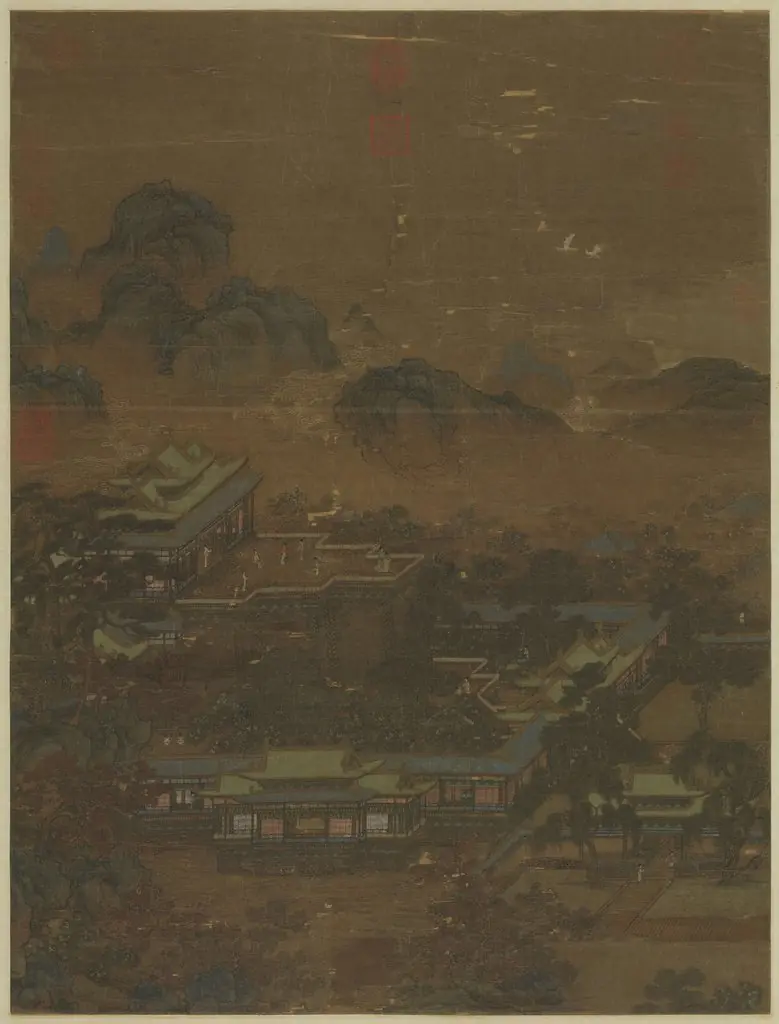
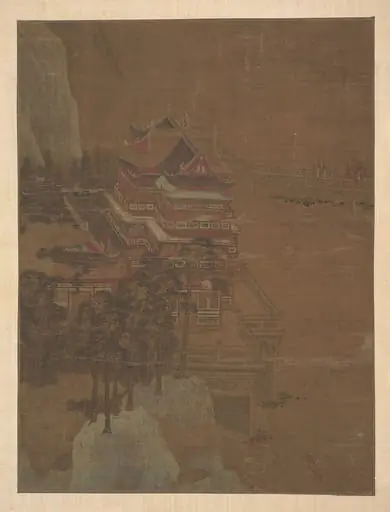
Towers and Pavilions in Mountains of the Immortals is an unspecified painting by the Song dynasty landscape artist Zhao Boju. It dates from 1161 and is held in the collection of the National Palace Museum.
About this work
Overview
Though no signed or verified works by him remain, historical records affirm his role in shaping the period’s aesthetic.
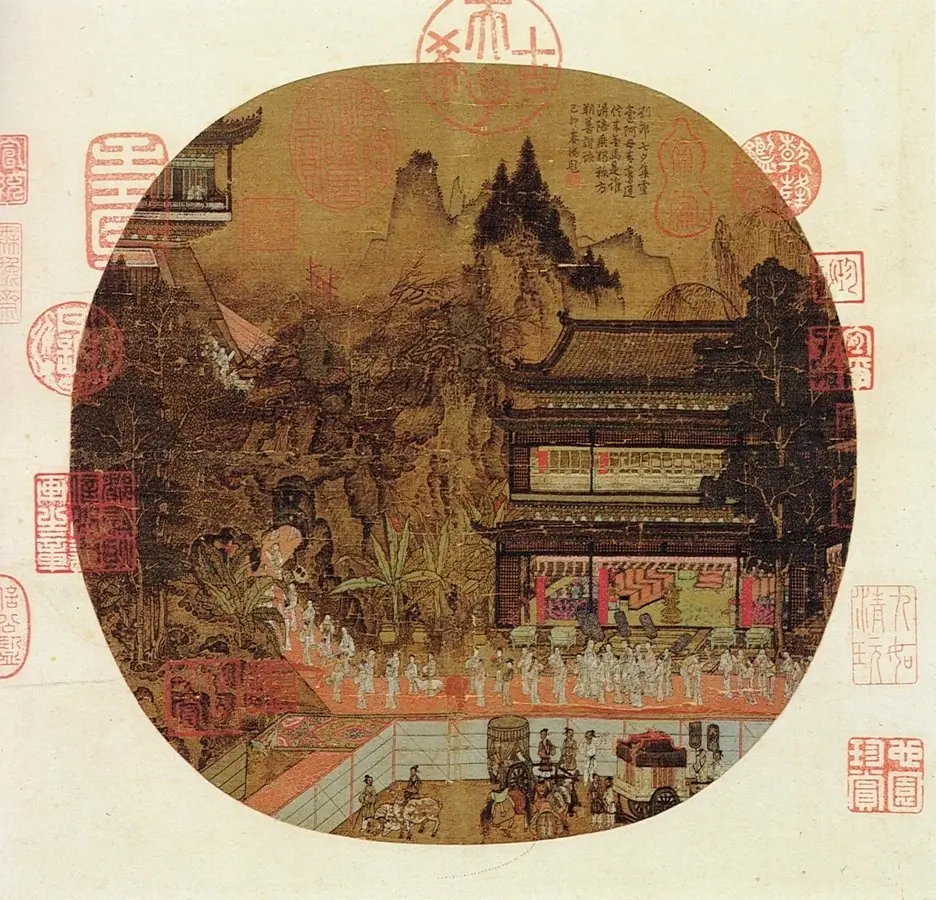
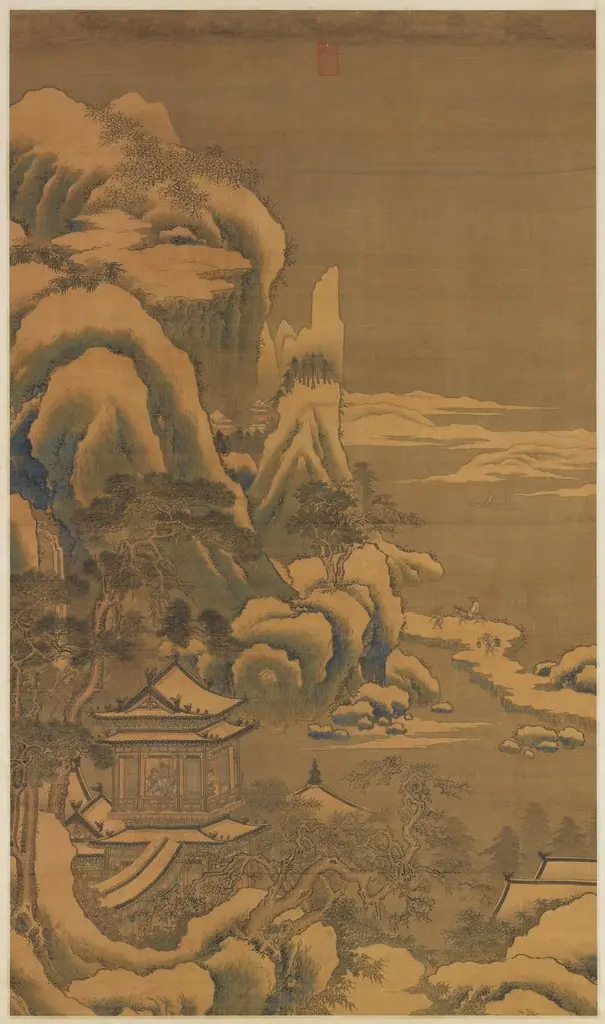
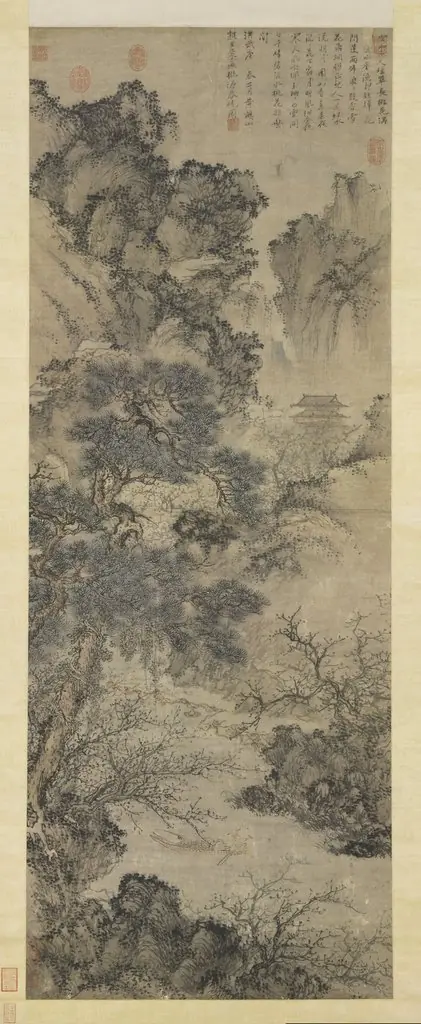
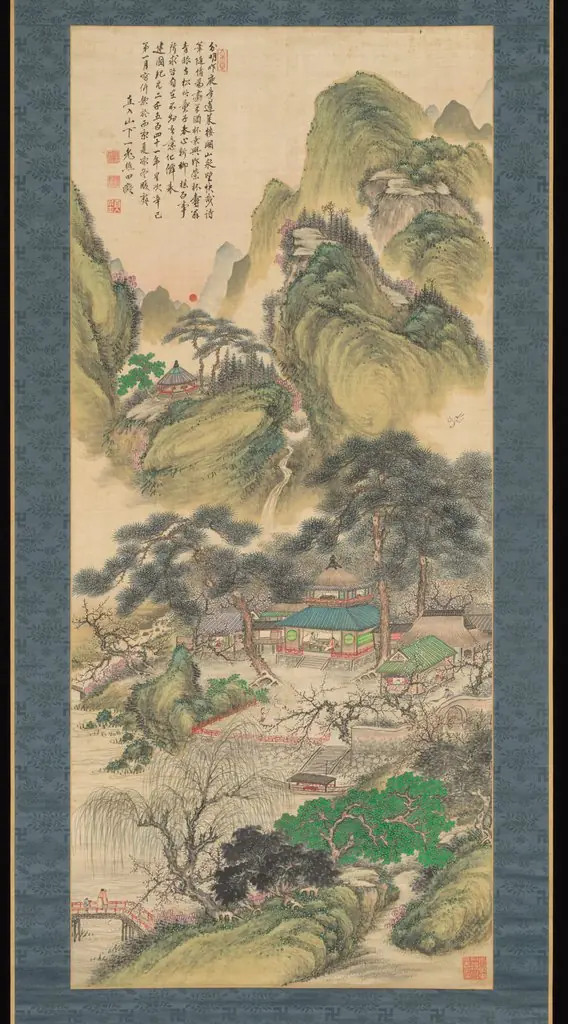
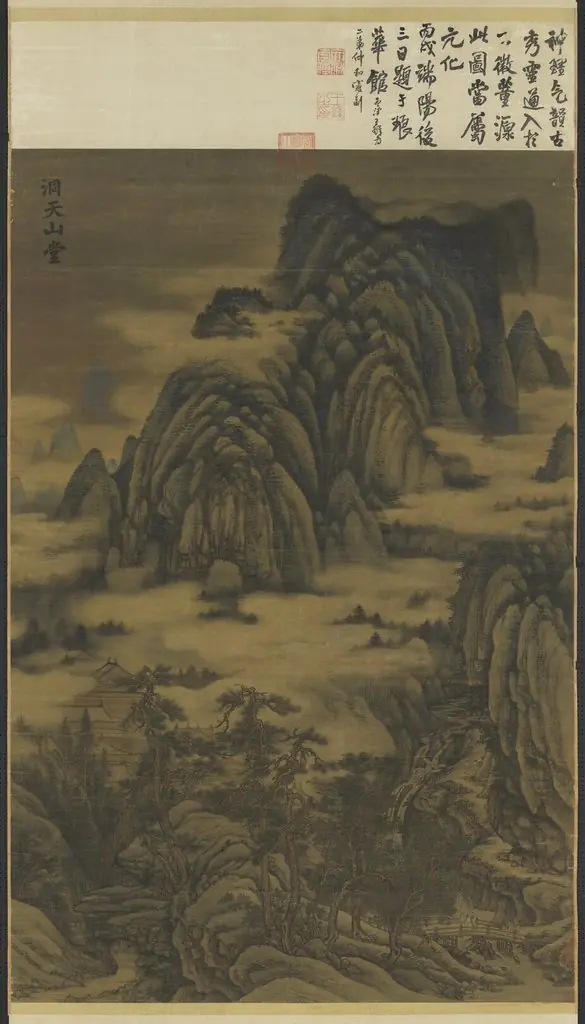
Created circa 1161 during the early Southern Song period, this landscape painting is attributed to Zhao Boju, a court artist known for his refined compositional sense. Though no signed or verified works by him remain, historical records affirm his role in shaping the period’s aesthetic. The painting exemplifies the idealized mountain scenery favored by Southern Song painters, blending architectural elements with natural forms to evoke a transcendent realm.
Subject & Meaning
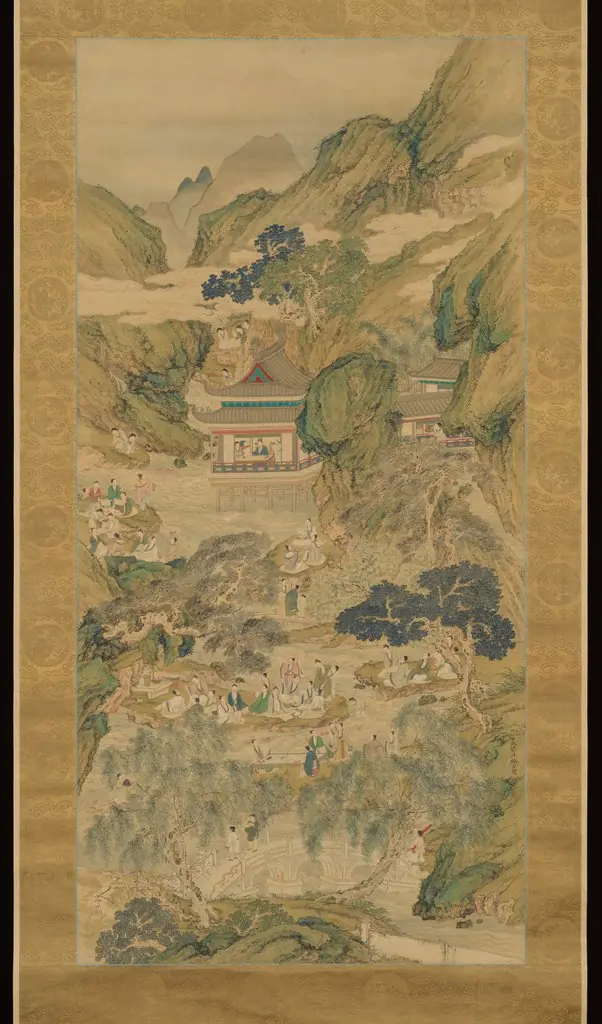
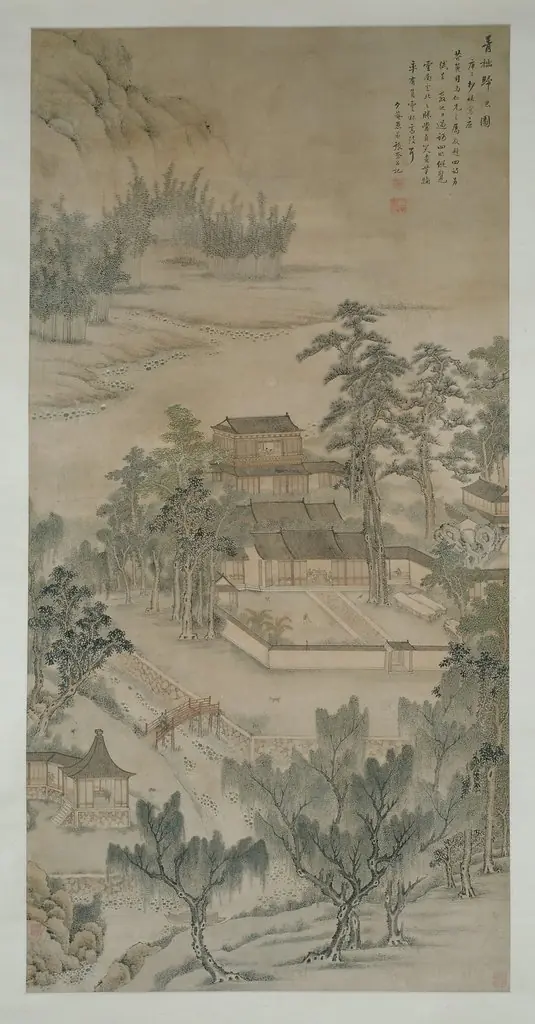
The scene depicts a cluster of pavilions nestled among mist-shrouded peaks, suggesting the mythical abode of immortals. Figures on the balconies imply quiet contemplation, reinforcing the theme of spiritual retreat. The composition avoids narrative action, instead cultivating stillness and distance, aligning with Daoist ideals of harmony between humanity and the eternal landscape.
Technique & Style
The painting employs delicate ink washes and restrained color, with a pale brown background and subtle blue accents on the roof. Trees and rocks are rendered with precise, fine brushwork, while distant mountains fade into atmospheric haze. The spatial depth is achieved through layered planes and minimal perspective, characteristic of Southern Song court painting’s emphasis on lyrical suggestion over realism.
History & Provenance
Zhao Boju’s oeuvre survives only through textual references, notably those by the critic Zhao Xigu, who praised his mastery of landscape and figure painting. The work’s survival likely stems from its inclusion in imperial collections, though its exact provenance after the Southern Song remains undocumented. Its attribution rests on stylistic parallels and historical accounts rather than physical signatures.
Context
Produced during a time when the Southern Song court had retreated southward, the painting reflects a cultural turn toward introspection and idealized nature. Mountain imagery became a metaphor for political and spiritual refuge. Artists like Zhao Boju responded to this mood by crafting serene, otherworldly landscapes that distanced viewers from contemporary turmoil.
Legacy
Though Zhao Boju’s hand cannot be confirmed in any extant work, his influence is discernible in the stylistic conventions of Southern Song court painting. Later artists adopted his compositional balance and atmospheric subtlety, embedding his approach into the broader tradition of literati landscape. His name endures as a symbol of refined, courtly aesthetics rather than as a maker of surviving objects.
Artist & collection
Artist
Zhao Boju (Chinese: 赵伯驹; pinyin: Zhào Bójū; 1120–1182), was a Chinese painter during the early Southern Song Dynasty (1127–1279).