Artwork
Untitled
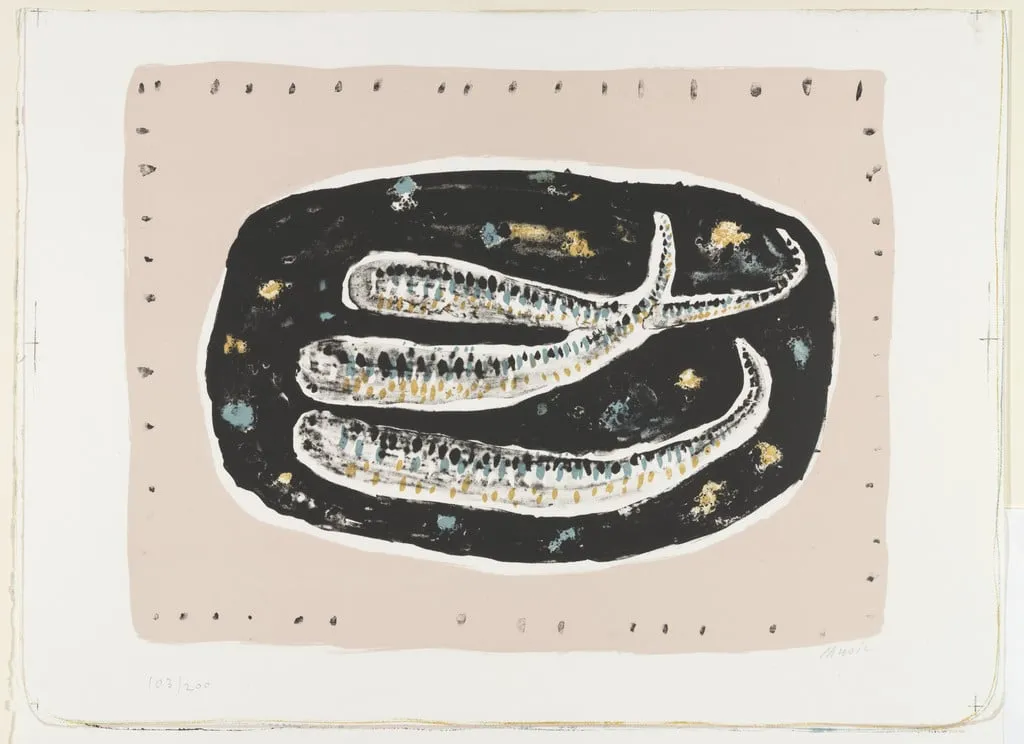
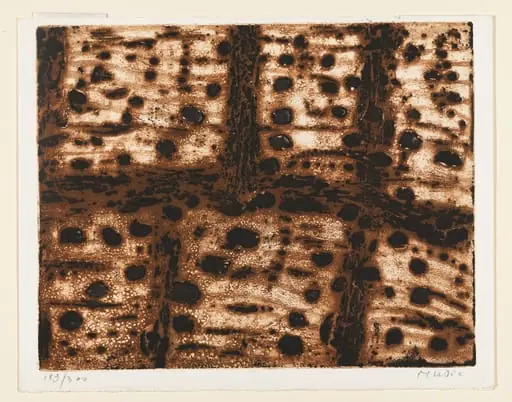
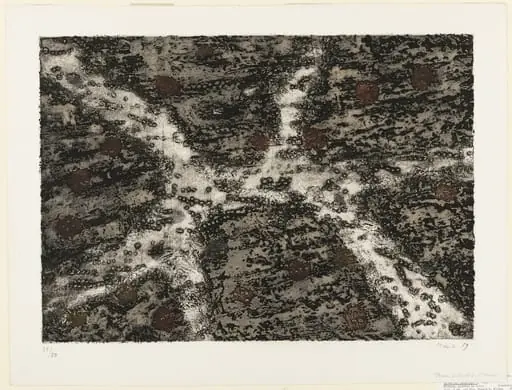
Untitled is an ink print by Zoran Mušič. It dates from 1951 and is held in the collection of the Museum of Modern Art.
About this work
The lines aren’t a pretty school of fish; they feel like something glimpsed in a half-empty bowl or on a prison bunk.
You see a jumble of thin black lines on white paper—some look like fish, others like bones or scraps of cloth.
Mušič made this in 1951, just six years after he survived Dachau. The lines aren’t a pretty school of fish; they feel like something glimpsed in a half-empty bowl or on a prison bunk. The lithograph stone let him press the same plate over and over, so the marks stack up like memories that won’t fade.
If you want to see how ink on paper can hold quiet weight, look up lithography.
Overview
Created in 1951, this lithograph by Slovene artist Zoran Mušič is part of The Museum of Modern Art’s print collection. Produced during his years in Paris, the work reflects his engagement with memory and material restraint. Though unsigned and untitled, its formal simplicity belies a deep emotional resonance tied to his experiences during and after World War II.
Subject & Meaning
The composition consists of overlapping, fragmented black lines that suggest ambiguous forms—possibly bones, fish, or torn fabric. These elements do not cohere into a clear narrative but instead evoke the persistence of trauma. Made just six years after his release from Dachau, the image conveys the weight of unspoken recollection, where memory lingers as fragmented, recurring traces rather than resolved imagery.
Technique & Style
Mušič employed lithography to build layered, delicate lines through repeated impressions on stone. The medium allowed subtle tonal variations and a sense of accumulation, mirroring the way memories resurface unpredictably. The thin, incised marks are neither bold nor decorative; their quiet density creates a tactile stillness, emphasizing restraint over expression.
History & Provenance
The work entered The Museum of Modern Art’s collection as part of its broader effort to document postwar European printmaking. Mušič, who lived and worked primarily in Paris from the 1940s onward, produced this piece during a period of intense personal reflection. Its presence in a major American institution reflects growing recognition of his role in postwar art beyond national boundaries.
Context
In the early 1950s, many European artists turned to abstraction or minimalism as a means of processing wartime trauma. Mušič’s approach avoided overt symbolism, instead using the physicality of printmaking to convey psychological residue. His focus on Venice and domestic scenes coexisted with these darker, more elusive works, revealing a duality in his artistic vision.
Legacy
This lithograph exemplifies Mušič’s contribution to mid-century printmaking through its quiet intensity and technical discipline. It stands as a testament to how non-representational marks can carry historical weight. His work, though less widely known than some contemporaries, continues to inform discussions on art and memory in the aftermath of violence.
Artist & collection
Artist
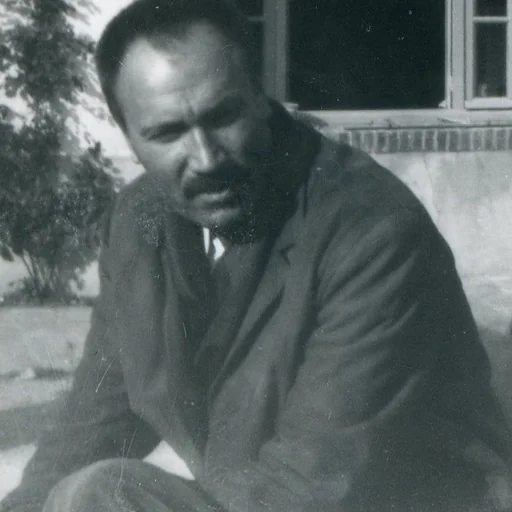
Zoran Mušič (12 February 1909 – 25 May 2005), baptised as Anton Zoran Musič, was a Slovene painter, printmaker, and draughtsman.