Artwork
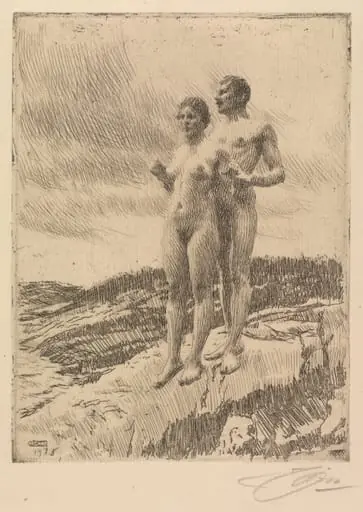
The Two
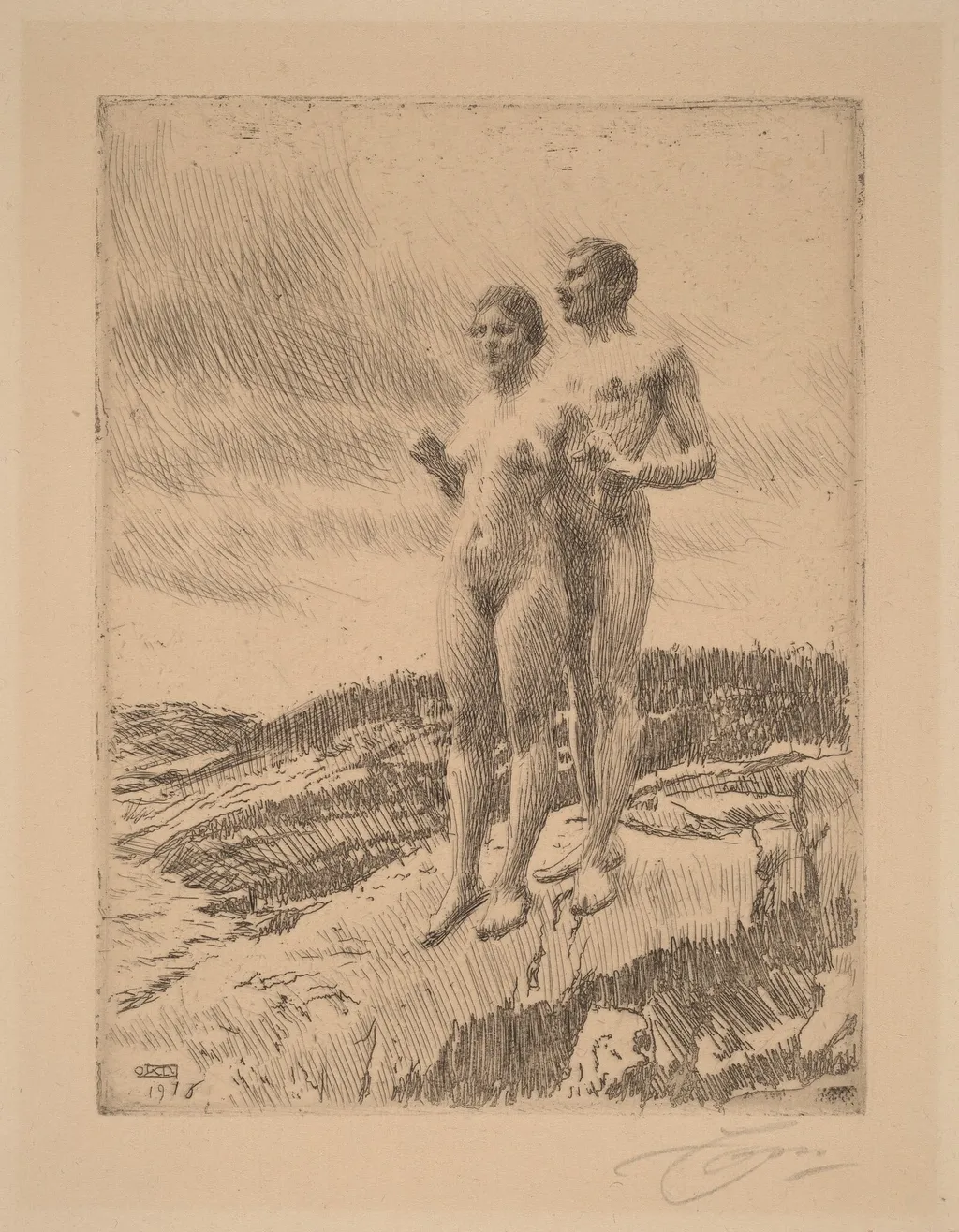
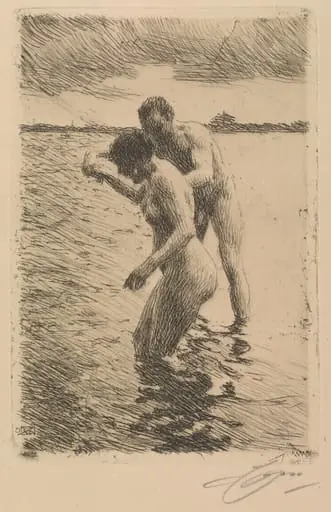
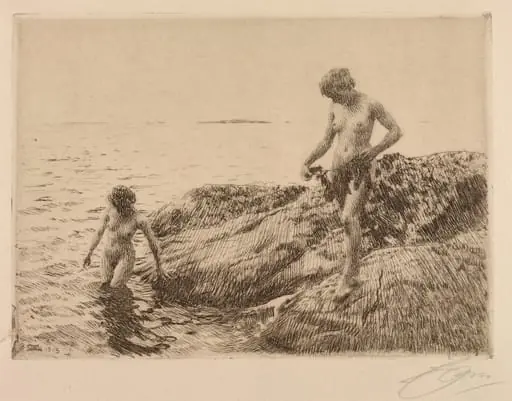
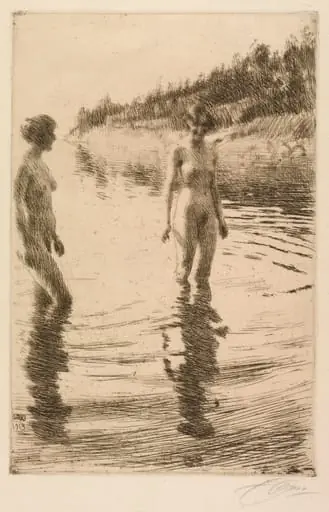
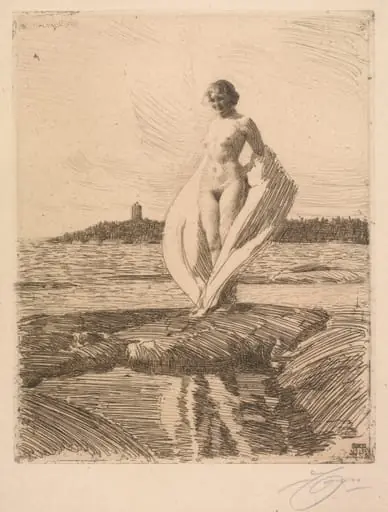
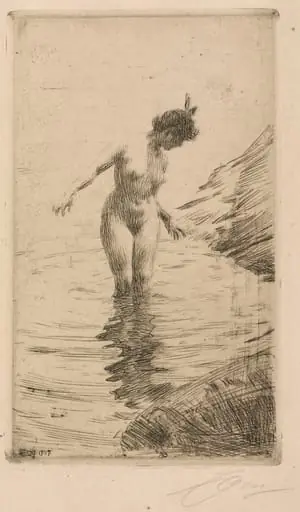
The Two is an ink print by the Impressionist artist Anders Zorn. It dates from 1916 and is held in the collection of the National Gallery of Art.
About this work
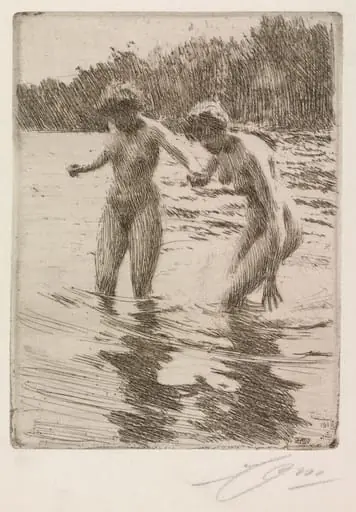
You see two people in this etching.
They are standing close together.
The artist made this in 1916, which is interesting because it was during a time of war in Europe, and this quiet scene is a contrast to that.
The way the artist used lines to create texture is notable.
It adds depth to the simple scene.
Check out the technique: etching.
Overview
Anders Zorn’s print *The Two* is an etching on laid paper dated 1916. The work presents a compact composition of two figures standing in close proximity, rendered in a restrained monochrome palette. Though modest in scale, the image captures a moment of quiet intimacy that contrasts sharply with the broader turmoil of its era.
Subject & Meaning
The scene depicts a pair of individuals positioned side by side, their bodies subtly angled toward one another, suggesting a personal connection or shared contemplation. The lack of elaborate background focuses attention on the relational dynamics, inviting viewers to consider themes of companionship, support, or quiet solidarity amid external unrest.
Technique & Style
Zorn employed traditional intaglio etching, incising fine lines into a metal plate before transferring the image onto laid paper. The artist’s handling of line creates nuanced textures, from the soft shading of clothing to the delicate rendering of facial features, imparting depth and volume within the limited tonal range of the medium.
Context
Created in 1916, the work emerged during the height of World War I, a period marked by widespread conflict across Europe. The serene, intimate portrayal of two figures stands in stark contrast to the prevailing atmosphere of war, reflecting perhaps an intentional refuge in personal human connection amid collective upheaval.
Own this work as a print
Artist & collection

Artist
Anders Leonard Zorn was born in February 1860 in Mora, Dalarna, the illegitimate son of a Bavarian brewer and a Swedish farmer's daughter; his mother died shortly after his birth, and his grandparents raised him.