Artwork
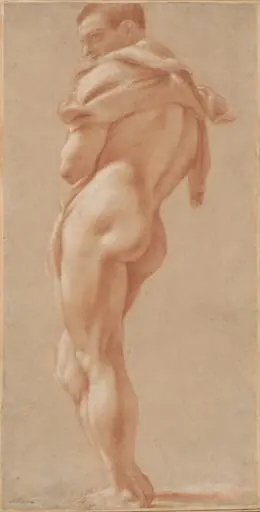
A Man Seen from Behind [recto]
![A Man Seen from Behind [recto], by Taddeo Zuccaro, chalk, 1555](https://artifactworldgallery.com/img/taddeo-zuccaro--a-man-seen-from-behind-recto--aa5baa2752dbdfca-w1024.webp)
A Man Seen from Behind [recto] is a chalk drawing by the Renaissance artist Taddeo Zuccaro. It dates from 1555 and is held in the collection of the National Gallery of Art.
About this work
Overview
Created around 1555, this drawing by the Italian painter Taddeo Zuccaro presents a solitary figure seen from the back. Executed on laid paper, the work measures a modest size and exemplifies the artist’s interest in studying the human form in a contemplative pose.
Subject & Meaning
The composition features a man turned away from the viewer, clothed in unadorned, everyday garments that suggest anonymity rather than narrative. By omitting facial features, Zuccaro invites contemplation of the figure’s interior life, emphasizing presence through posture and the quiet dignity of ordinary attire.
Technique & Style
Rendered primarily with red chalk, the drawing gains dimensionality through delicate white highlights that model the torso and limbs. The subtle gradations of tone produce a soft, atmospheric quality reminiscent of sfumato, allowing edges to melt into one another and lending the figure a gentle, almost ethereal volume.
History & Provenance
Attributed to Zuccaro’s mid‑sixteenth‑century output, the piece reflects the period’s preference for preparatory studies in chalk. While its early ownership remains undocumented, the work has been catalogued among the artist’s surviving drawings and is held in a European collection that specializes in Renaissance drawings.
Artist & collection


![A Man Seen from Behind [verso], by Taddeo Zuccaro](https://artifactworldgallery.com/img/taddeo-zuccaro--a-man-seen-from-behind-verso--697ddd0c2446f11c-w320.webp)
 Standing Male Nude Seen from Behind
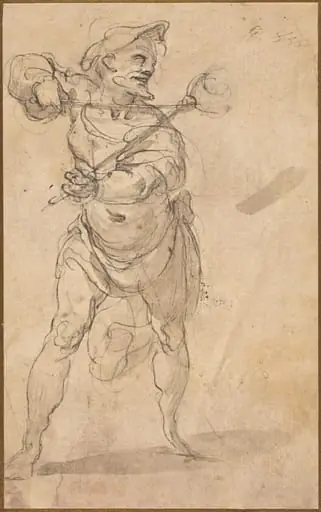
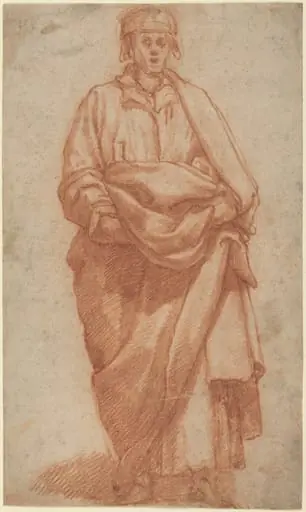 Standing Man
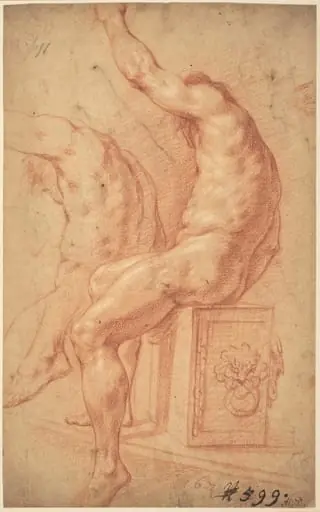 A Seated Nude
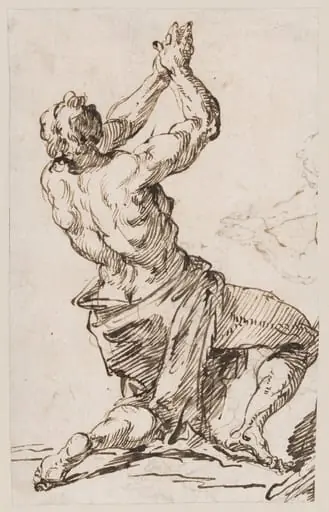 a) Study of a Man Kneeling, Looking Upward (recto); b) Studies of the Same Figure (verso)
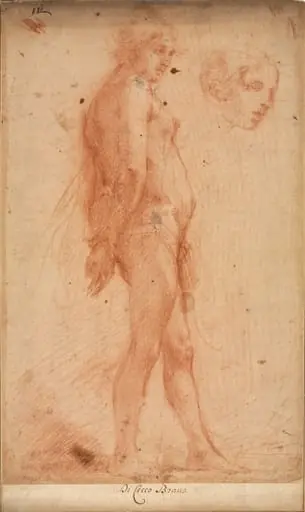 Study of a Standing Male Nude, with a Study of Head in Three-Quarter Profile
![Studies of Legs and Drapery [recto], by Abraham Bloemaert](https://artifactworldgallery.com/img/abraham-bloemaert--studies-of-legs-and-drapery-recto--93eb35075fbdb28d-w320.webp) Studies of Legs and Drapery [recto]
Studies of Legs and Drapery [recto]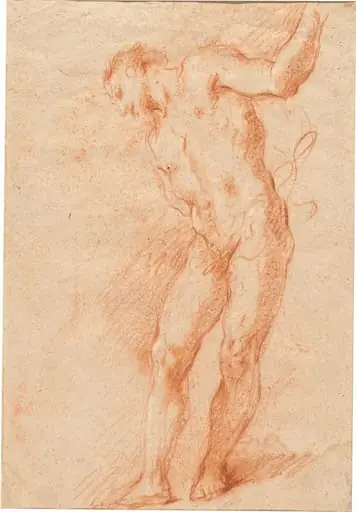 Male Nude
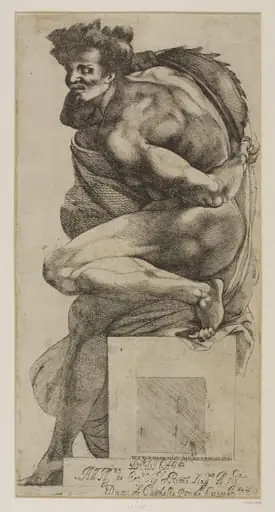 Untitled
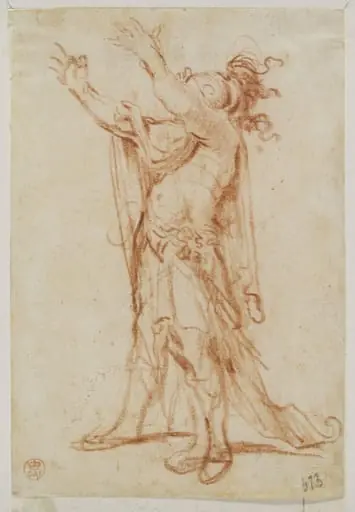 Study of a soldier in Roman dress with uplifted arms