Artwork
Reproducere după un desen cu titlul „Cămașa însângerată” realizată de Wang Che-kouo și datată în 1959. Exemplarul a fost oferit lui Nicolae Ceaușescu, secretar general al Partidului Comunist Român; șeful de stat al Republicii Socialiste România, ca parte a unui album ce conține un catalog quatrolingv (franceză, spaniolă, engleză, chineză) și alte 9 reproduceri după picturi cu semnificație istorică pentru mișcarea comunistă în RP China.
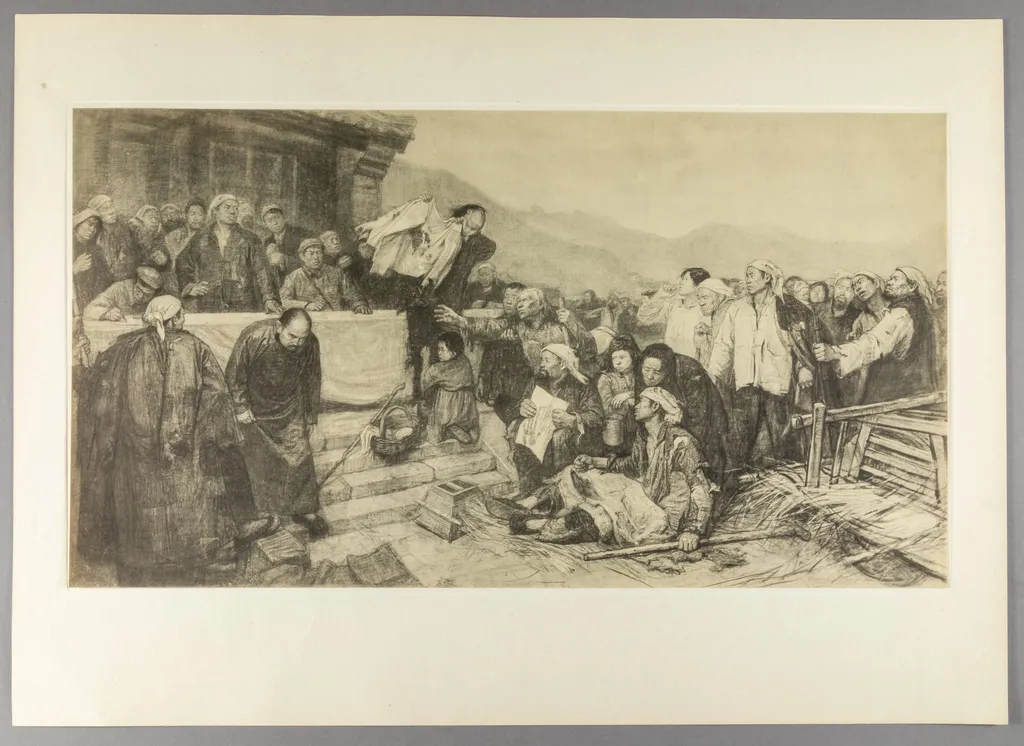
Reproducere după un desen cu titlul „Cămașa însângerată” realizată de Wang Che-kouo și datată în 1959. Exemplarul a fost oferit lui Nicolae Ceaușescu, secretar general al Partidului Comunist Român; șeful de stat al Republicii Socialiste România, ca parte a unui album ce conține un catalog quatrolingv (franceză, spaniolă, engleză, chineză) și alte 9 reproduceri după picturi cu semnificație istorică pentru mișcarea comunistă în RP China. is an unspecified painting by Wang Che-kouo. It is held in the collection of the National Museum of Romanian History. The work is a reproduction of a 1959 painting titled “The Blood‑Stained Shirt,” originally created by Wang Che‑kouo.
About this work
Overview
The album contains nine other reproductions of artworks deemed historically significant to the Chinese communist movement.
The work is a reproduction of a 1959 painting titled “The Blood‑Stained Shirt,” originally created by Wang Che‑kouo. It appears in a multilingual album—French, Spanish, English and Chinese—assembled for Nicolae Ceaușescu, then General Secretary of the Romanian Communist Party and head of state. The album contains nine other reproductions of artworks deemed historically significant to the Chinese communist movement.
Subject & Meaning
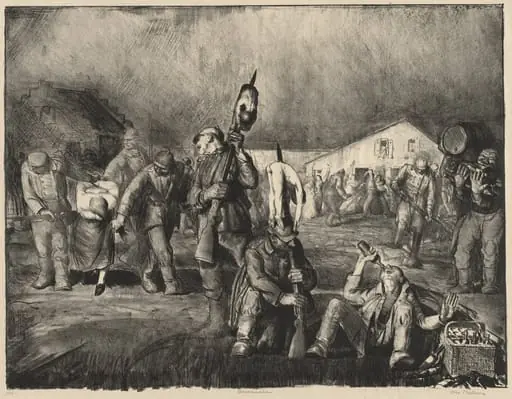
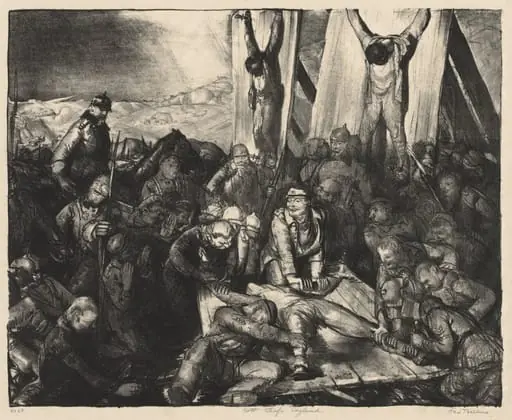
The scene depicts a sizable assembly of figures gathered around a central individual, some positioned on an elevated platform. Traditional attire, including headscarves and hats, situates the group within a cultural context. In the foreground a fallen figure lies amid scattered objects, suggesting injury or sacrifice, while surrounding onlookers display alarm or concern, evoking themes of struggle and collective solidarity.
Technique & Style
The composition employs strong chiaroscuro, contrasting illuminated areas with deep shadows to generate a dramatic sense of depth. This lighting scheme draws attention to the central figure and heightens the tension of the tableau. The background of mountains and a cloudy sky provides a broad, atmospheric setting that frames the human drama.
History & Provenance
The reproduction was presented to Ceaușescu as part of a diplomatic cultural exchange, reflecting the political ties between Romania and the People’s Republic of China during the Cold War. The original painting, created in 1959, aligns with the period’s emphasis on revolutionary iconography supporting the Chinese Communist Party.
Context
Produced at a time when socialist realism dominated official art in both China and its allied states, the image reinforces narratives of collective struggle and martyrdom. Its inclusion alongside other historically charged works underscores the shared ideological messaging promoted by communist regimes in the mid‑20th century.
Artist & collection
Artist
Wang Che-kouo kept a studio so tidy you could find a pencil by sound—he’d hum while he drew.

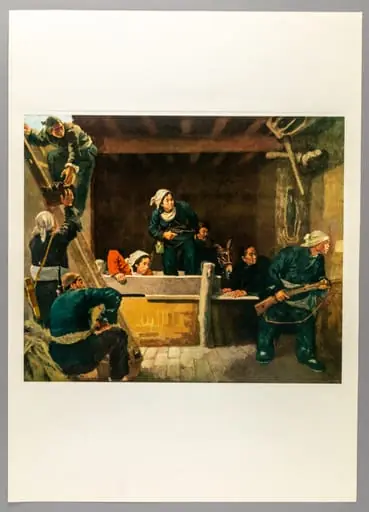 Reproducere după o pictură în ulei cu titlul „Lupta subterană” realizată de Lo Kong-lieu și datată în 1951. Exemplarul a fost oferit lui Nicolae Ceaușescu, secretar general al Partidului Comunist Român; șeful de stat al Republicii Socialiste România, ca parte a unui album ce conține un catalog quatrolingv (franceză, spaniolă, engleză, chineză) și alte 9 reproduceri după picturi cu semnificație istorică pentru mișcarea comunistă în RP China.
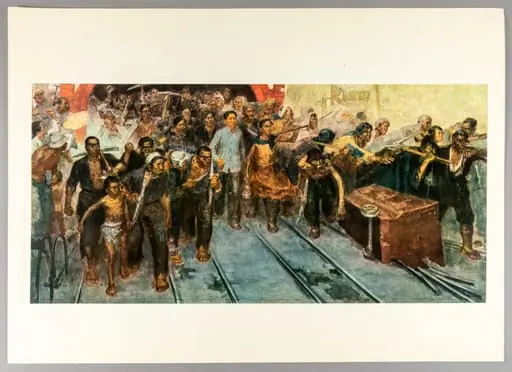 Reproducere după o pictură în ulei cu titlul „Camaradul Liou Chao-chi și minerii din Anyuan” realizată de Heou Yi-min și datată în 1961. În 1922 a avut loc Greva minerilor Anyuan, eveniment care a marcat un moment decisiv pentru Partidul Comunist Chinez, deoarece lideri comuniști, printre care și Mao Zedong, au venit în ajutorul minerilor care reprezentau masele suferinde în interesul cărora trebuia să aibă loc revoluția. După greva nonviolentă a treisprezece mii de muncitori, majoritatea acestora s-a înrolat ca soldați în Armata Roșie pentru a-l sprijini pe Mao și Revoluția. Exemplarul a fost oferit lui Nicolae Ceaușescu, secretar general al Partidului Comunist Român; șeful de stat al Republicii Socialiste România, ca parte a unui album ce conține un catalog quatrolingv (franceză, spaniolă, engleză, chineză) și alte 9 reproduceri după picturi cu semnificație istorică pentru mișcarea comunistă în RP China.
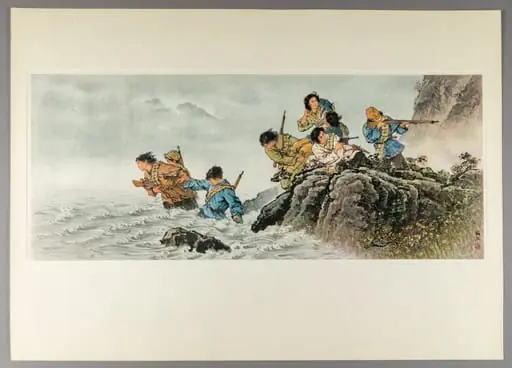 Reproducere după o pictură în ulei cu titlul „8 revoluționari trecând fluviul” realizată de Wang Cheng-lie și datată în 1957. Exemplarul a fost oferit lui Nicolae Ceaușescu, secretar general al Partidului Comunist Român; șeful de stat al Republicii Socialiste România, ca parte a unui album ce conține un catalog quatrolingv (franceză, spaniolă, engleză, chineză) și alte 9 reproduceri după picturi cu semnificație istorică pentru mișcarea comunistă în RP China.