Artist
Yves Tanguy
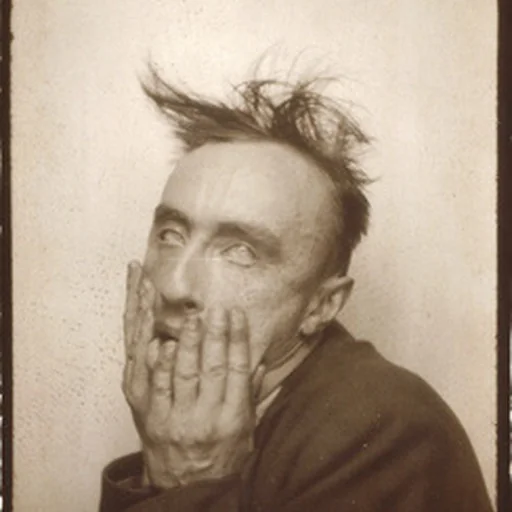
American, 1900–1955
Yves Tanguy was an American Surrealism artist. 26 works are cataloged here, principally at Museum of Modern Art. Yves Tanguy was born in 8th arrondissement of Paris.
Raymond Georges Yves Tanguy (5 January 1900 – 15 January 1955), known as just Yves Tanguy (; French: ), was a French Surrealist painter, known for his abstract landscapes.
Overview
Raymond Georges Yves Tanguy (5 January 1900 – 15 January 1955), known as just Yves Tanguy (; French: [iv tɑ̃ɡi]), was a French Surrealist painter, known for his abstract landscapes.
Biography
Tanguy was the son of Félix Tanguy, a retired navy captain, and Anne-Marie Tanguy, and was born 5 January 1900, at the Ministry of Naval Affairs on Place de la Concorde in Paris, France. His parents were both of Breton origin. After his father's death in 1908, his mother moved back to her native Locronan, Finistère, and he ended up spending much of his youth living with various relatives.
In 1918, Tanguy briefly joined the merchant navy before being drafted into the Army, where he befriended Jacques Prévert. At the end of his military service in 1922, he returned to Paris, where he worked various odd jobs. He stumbled upon Giorgio de Chirico's painting The Child's Brain (1914) and was so deeply impressed he resolved to become a painter himself in spite of his complete lack of formal training. Tanguy had a habit of being completely absorbed by the current painting he was working on. This way of creating artwork may have been due to his very small studio which only had enough room for one wet piece. Through his friend Prévert, in around 1924 Tanguy was introduced into the circle of Surrealist artists around André Breton. Tanguy quickly began to develop his own unique painting style, giving his first solo exhibition in Paris in 1927, and marrying his first wife Jeannette Ducrocq (b. 1896, d. 1977) later that same year. During this busy time of his life, Breton gave Tanguy a contract to paint 12 pieces a year. With his fixed income, he painted less and ended up creating only eight works of art for Breton.
On 3 December 1930, at an early screening of Luis Buñuel and Salvador Dalí's film L'Age d'Or, activists from the right-wing Ligue des patriotes stormed the lobby of the cinema where the film was being screened and destroyed artworks by Dalí, Joan Miró, Man Ray and other Surrealist artists – Tanguy's painting Fraud in the Garden (1930) was among those slashed. The piece has since been restored. Throughout the 1930s, Tanguy adopted the bohemian lifestyle of the struggling artist with gusto, leading eventually to the failure of his first marriage. He had an intense affair with Peggy Guggenheim in 1938 when he went to London with his wife Jeannette Ducrocq to hang his first retrospective exhibition in Britain at her gallery Guggenheim Jeune. The exhibition was a great success and Guggenheim wrote in her autobiography that "Tanguy found himself rich for the first time in his life". She purchased his pictures Toilette de L'Air and The Sun in Its Jewel Case (Le Soleil dans son écrin) for her collection. Tanguy also painted Peggy two earrings. The affair continued in both London and Paris and only finished when Tanguy met a fellow Surrealist artist who would become his second wife.
In 1938, after seeing the work of fellow artist Kay Sage, Tanguy began a relationship which led to his second marriage. With the outbreak of World War II, Sage moved back to her native New York, and Tanguy, judged unfit for military service, followed her. He would spend the rest of his life in the United States. Sage and Tanguy were married in Reno, Nevada, on August 17, 1940. Their marriage proved durable but tense. Both drank heavily, and Tanguy assaulted Sage verbally and sometimes physically, pushing her and sometimes even threatening her with a knife privately and at social gatherings. Sage, according to friends' accounts, made no response to her husband's aggression. Toward the end of the war, the couple moved to Woodbury, Connecticut, converting an old farmhou
Style and legacy
But with Tanguy, it will be a new horizon, one in front of which the no longer physical landscape will spread out. Tanguy's paintings have a recognizable style of nonrepresentational Surrealism. They show vast, abstract landscapes, mostly in a tightly limited palette of colors, occasionally showing flashes of contrasting color accents. Typically, these landscapes are populated with various abstract shapes, sometimes angular and sharp, sometimes with an organic look to them.
According to Nathalia Brodskaïa, Mama, Papa is Wounded! (1927) is one of Tanguy's most impressive paintings. Brodskaïa writes that the painting reflects his debt to Giorgio de Chirico – falling shadows and a classical torso – and conjures up a sense of doom: the horizon, the emptiness of the plain, the solitary plant, the smoke, the helplessness of the small figures. Tanguy said that it was an image he saw entirely in his imagination before starting to paint it. He also claimed he took the title of this and other works from psychiatric textbooks: "I remember spending a whole afternoon with ... André Breton," he said, "leafing through books on psychiatry in the search for statements of patients which could be used as titles for paintings." Jennifer Mundy, however, discovered that the title of this painting and several others were taken from a book about paranormal phenomena, Traité de metaphysique (1922) by Dr Charles Richet. Tanguy's style was an important influence on several younger painters, such as Roberto Matta, Wolfgang Paalen, Toyen, and Esteban Francés, who adopted a Surrealist style in the 1930s. Later, Tanguy's paintings (and, less directly, those of de Chirico) influenced the style of the 1980 French animated movie Le Roi et l'oiseau, by Paul Grimault and Prévert. Tanguy's works also influenced the science fiction cover art of illustrator Richard Powers.
In popular culture
Tanguy's The Invisibles was a key plot point in the third episode of the second series of BBC Two comedy-drama There She Goes.
1920s
Vite! Vite! (1924) Rue de la Santé (1925) The Museum of Modern Art, New York Self Portrait (1925) Private Collection Dancing (1925) Private Collection The Testament of Jacques Prévert (1925) Private Collection Fantômas (1925–1926) Private Collection The Storm (1926) The Lighthouse (1926) Private Collection, France The Girl with Red Hair (1926) Private Collection Title Unknown (The Giantess, The Ladder) (1926) Private Collection I Came As I Had Promised. Adieu (1926) Dieter Scharf Collection Foundation The Storm (Black Landscape) (1926) Philadelphia Museum of Art Woman Dreaming (Sleeping) (1926) Private Collection Composition (1927) Private Collection Large Painting Representing a Landscape (1927) Private Collection Death Watching His Family (1927) Thyssen-Bornemisza Museum, Madrid Second Message II (Third Message) (1927) Private Collection Someone Is Ringing (1927) Private Collection, Switzerland There! (The Evening Before) (1927) Menil Collection, Houston He Did What He Wanted (1927) Richard S Zisler Collection, New York Shadow Country (1927) The Detroit Institute of Arts Mama, Papa is Wounded! (1927) The Museum of Modern Art, New York Extinction of Useless Lights (1927) The Museum of Modern Art, New York The Hand in the Clouds (1927) Staatsgalerie Stuttgart Finish What I Have Begun (1927) Private Collection Belomancy I (1927) Museo Nacional Centro de Arte Reina Sofia, Madrid Surrealist Landscape (1927) Staatliche Kunsthalle Karlsruhe Title Unknown (Surrealist Composition) (1927) Ulla and Heiner Pietzsch Collection, Berlin Title Unknown (He Comes) (1928) Private Collection Old Horizon (1928) National Gallery of Australia, Canberra Unspoken Depths (1928) Private Collection The Dark Garden (1928) Kunstsammlung Nordrhein-Westfalen, Düsseldorf Tomorrow They Shoot Me (1928) Sara Hildén Art Museum, Tampere, Finland Tabernacle (1928) Landscape with Red Cloud (1928) Private Collection Title Unknown (1928) Cleveland Museum of Art Indifferent Drouning/Indifferent Walnut Tree (1929) Private Collection Perfect Balance (1929) Gunter Sachs Collection Outside (1929) Scottish National Gallery of Modern Art, Edinburgh Lit Bleu (1929) Private Collection Inspiration (1929) Museum of Fine Arts of Rennes, France L'Avion (1929) The Look of Amber (1929) The National Gallery of Art, Washington DC The Lovers (1929) Museum Folkwang, Essen Derive d'Azur (1929) Museum Ludwig, Köln Out of the Blue (1929) Private Collection The Lurid Sky (1929) Mount Holyoke College Museum Views (1929) Private Collection Satin Pillow (1929) Art Gallery of Ontario, Toronto At 4 O'Clock in the Summer, Hope (1929) Musée National d'Art Moderne, Paris
1930s
Cloud (1930) Private Collection La Splendeur Semblable (1930) Neither Legends Nor Figures (1930) Menil Collection, Houston Clouds of Earth (The Man) (1930) Private Collection Similar Resplendence (1930) Kunstmuseum, Basel Tower of the West (1931) Kunstmuseum Winterthur Promontory Palace (1931) Peggy Guggenheim Collection, Venice The Armoire of Proteus (1931) Private Collection Four-Part Screen (The Firmament) (1932) Berardo Collection, Lisbon The Heart of the Tower (1933) Private Collection The Certitude of the Never-Seen (1933) The Art Institute of Chicago Between the Grass and the Wind (1934) Private Collection The End of the Rope (1934) Private Collection I Am Waiting for You (1934) Los Angeles County Museum of Art The Passage of a Smile (1935) The Toledo Museum of Art Échelles (1935) Manchester Art Gallery The Meeting-Place of Parallels (1935) Kunstmuseum, Basel Title Unknown (Metaphysical Landscape) (1935) Staatsgalerie Stuttgart Palming (1935) Private Collection, Hamburg The New Nomads (1935) John and Mable Ringling Museum of Art, Sarasota The Geometer of Dreams (1935) Private Collection Untitled (1935) Collection of Carlo F. Bilotti Heredity of Acquired Characteristics (1936) Menil Collection, Houston L'Extinction des Especes (1936) From the Other Side of the Bridge (1936) Private Collection, New York The Nest of the Amphioxus (1936) Museum of Grenoble Treasures of the Sea (1936) Private Collection Fragile (1936) Way of Heredity (1936) Private Collection The Air in Her Mirror (1937) Sprengel Museum, Hanover Les Filles des Conséquences (1937) The Doubter (The Interrogation) (1937) Hirshhorn Museum and Sculpture Garden, Washington DC The Sun in its Jewel Case (1937) Peggy Guggenheim Collection, Venice Lingering Day (1937) Musée National d'Art Moderne, Centre Pompidou, Paris Movements and Acts (1937) Smith College Museum of Art Title Unknown (Landscape) (1938) Private Collection Familiar Little Person (1938) Musée National d'Art Moderne, Centre Pompidou, Paris Ennui and Tranquility (1938) Private Collection Boredom and tranquillity (1938) The Jeffrey H. Loria Collection Hidden Thoughts (My Hidden Thoughts) (1939) San Francisco Museum of Modern Art If it Were (1939) Private Collection La Rue aux Levres (1939) The Furniture of Time (1939) The Museum of Modern Art, New York The Great Nacre Butterfly (1939) Private Collection Second Thoughts (1939) San Francisco Museum of Modern Art Satin Tuning-Fork (1939) Collection of Mr and Mrs Jacques Gelman
1940s
The Satin Tuning Fork (1940) Belomancy II (1940) Private Collection The Witness (1940) Collection of Mr and Mrs Frederick R. Weisman A Little Later (1940) Private Collection The Earth and the Air (1941) Baltimore Museum of Art On Slanting Ground (1941) Peggy Guggenheim Collection, Venice The Five Strangers (1941) Wadsworth Atheneum, Hartford Twice The Black (1941) Private Collection The Palace of the Windowed Rocks (1942) Musée National d'Art Moderne, Centre Pompidou, Paris Naked Water (1942) Hirshhorn Museum and Sculpture Garden, Washington DC The Long Rain (1942) Honolulu Museum of Art Indefinite Divisibility (1942) Albright-Knox Art Gallery, Buffalo The Absent Lady (1942) Kunstsammlung Nordrhein-Westfalen, Düsseldorf The Great Mutation (1942) The Museum of Modern Art, New York Slowly Toward the North (1942) The Museum of Modern Art, New York The Stone in the Tree (1942) The Arizona State University Art Museum, Tempe Minotaur (1943) Fundació Joan Miró, Barcelona Through Birds, Through Fire and Not Through Glass (1943) The Minneapolis Institute of Arts Reply to Red (1943) The Minneapolis Institute of Arts Zones D'Instabilite (1943) Equicocal Colors (1943) Private Collection The Prodigal Never Returns I (1943) Collection of Mr and Mrs Leonard Yaseen The Prodigal Never Returns II (1943) Collection of Mr and Mrs Leonard Yaseen The Prodigal Never Returns III (1943) Collection of Mr and Mrs Leonard Yaseen The Prodigal Never Returns IV (1943) Collection of Mr and Mrs Leonard Yaseen Distances (1944) Private Collection Twice (1944) Private Collection The Tower of the Sea (1944) Washington University Gallery of Art, St Louis My Life, White and Black (1944) Collection of Mr and Mrs Jacques Gelman The Rapidity of Sleep (1945) The Art Institute of Chicago, Chicago There, Motion Has Not Yet Ceased (1945) Richard S Zeisler Collection, Guggenheim, New York There the Mouth has not Ceased Yet (1945) Collection of Richard S. Zeisler The Provider (1945) Private Collectio Hands and Gloves (1946) Musée d'Art Moderne de Saint-Etienne Clothed in Wakefulness (1947) Collection of Mr and Mrs Isidore M. Cohen There Is (1947) Private Collection At the Risk of the Sun (1947) Nelson Gallery - Atkins Museum, Kansas City From One Night to Another (1947) de Young Museum, San Francisco First Stone (1947) Private Collection Who Will Answer (1948) Collection of Mr and Mrs Herbert Lust Fear (1949) Whitney Museum of American Art, New York
1950s
Rose of the Four Winds (1950) Wadsworth Atheneum, Hartford The Immense Window (1950) Private Collection From Pale Hands to Weary Skies (1950) Yale University Art Gallery To look at in Winter (1950) Smith College Museum of Art Unlimited Sequences (1951) Pennsylvania Academy of Fine Arts, Philadelphia The Invisibles / The Transparent Ones (1951) Tate Modern, London The Hunted Sky (1951) Menil Collection, Houston Time Without Change (1951) University of Arizona Museum of Art, Tucson The Stars in Open-Work (1951) The Art Institute of Chicago Because (1951) Williams College Museum of Art This Morning (1951) Collection of Nesuhi Ertegun Through the Forest (1952) The Mirage of Time (1954) The Metropolitan Museum of Art, New York The Saltimbanques (1954) Richard L Feigen, New York Imaginary Numbers (1954) Thyssen-Bornemisza Museum, Madrid From Green to White (1954) Collection of Mr and Mrs Jacques Gelman Multiplication of the Arcs (1954) The Museum of Modern Art, New York
Collections represented

Museum

Museum
Artists in a similar vein