Artwork
To vaskekoner
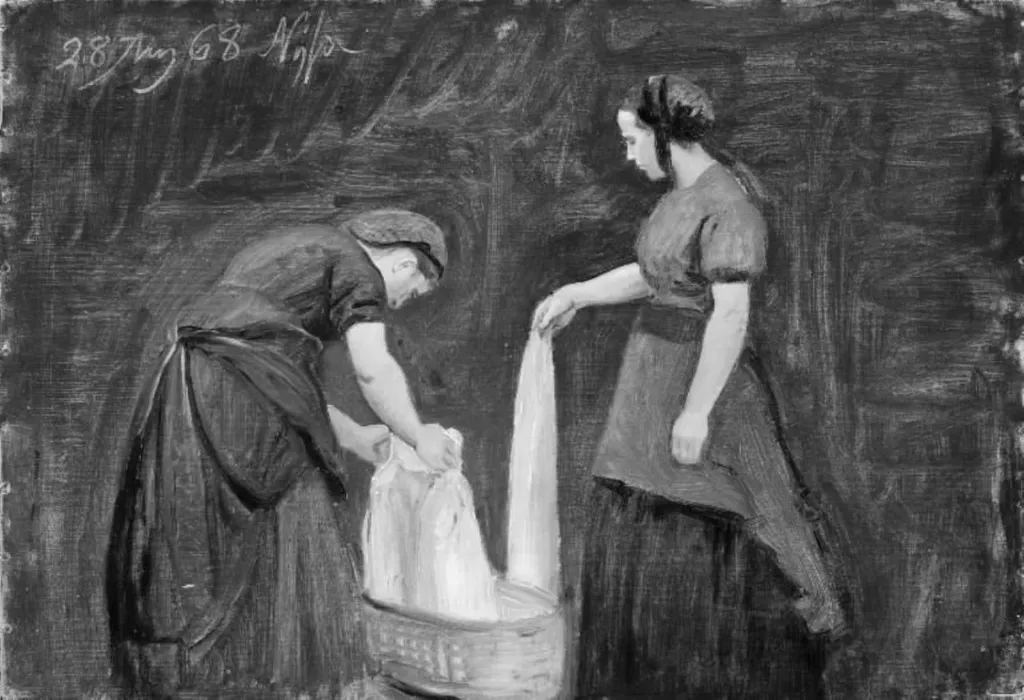
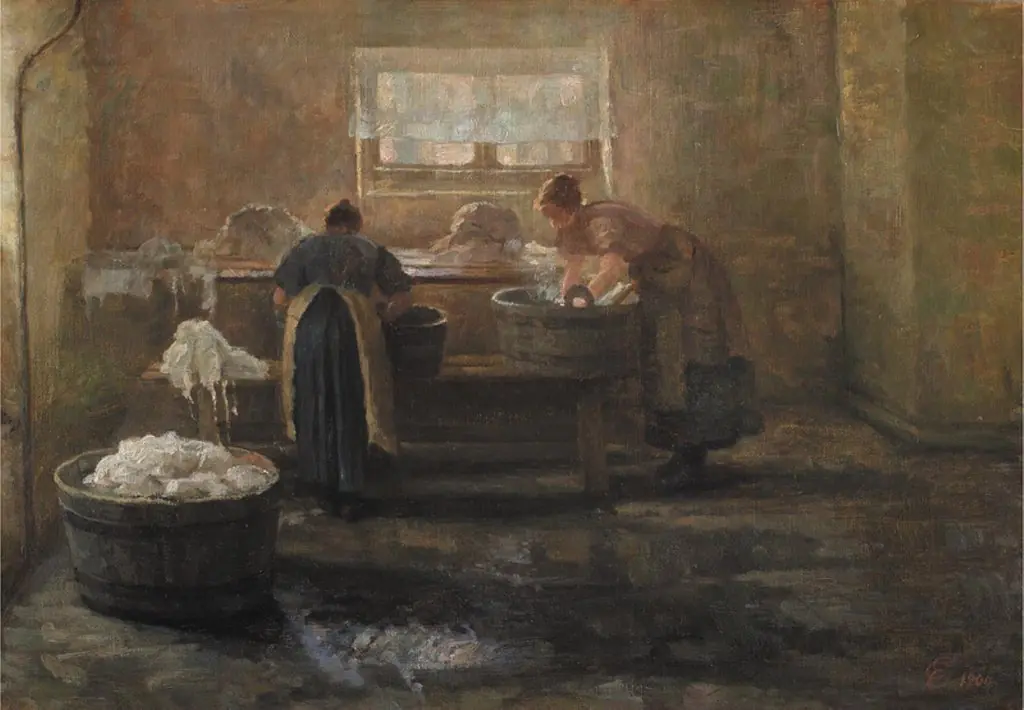
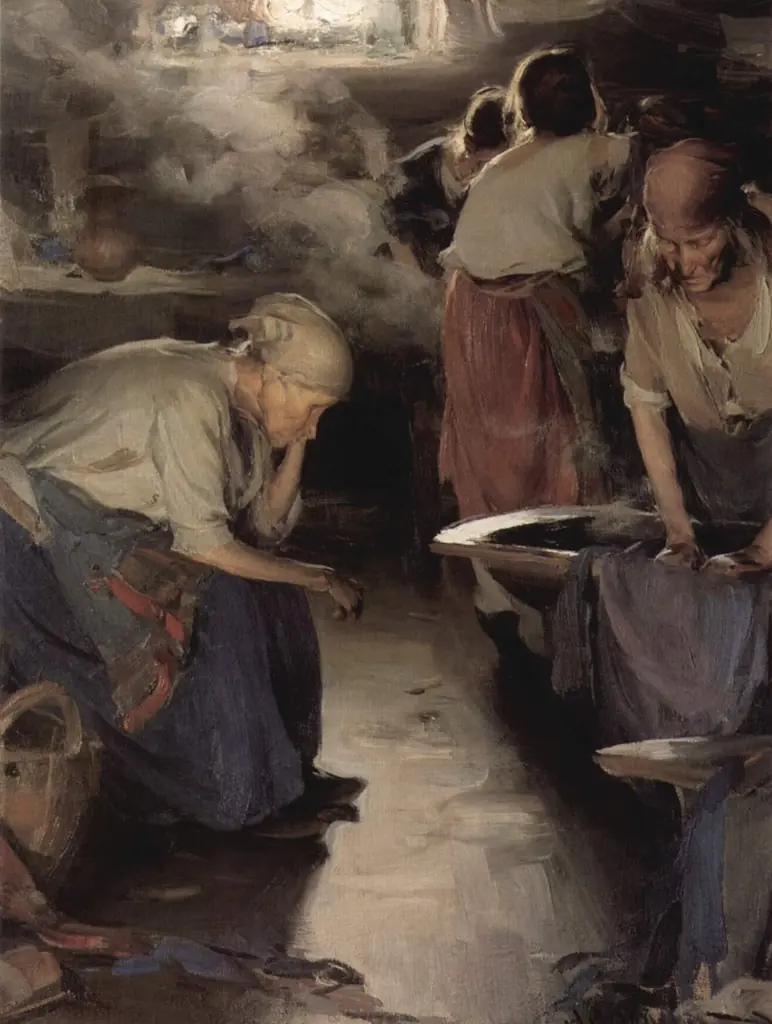
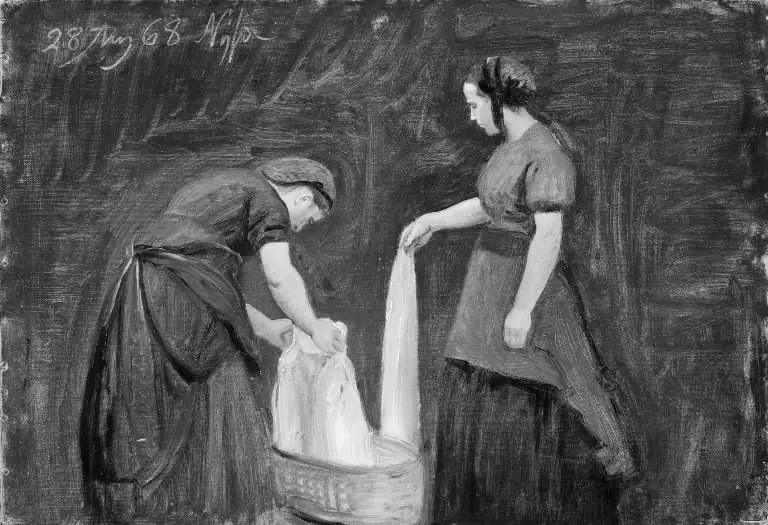
To vaskekoner is a photography by the Impressionist artist Unknown. It dates from 1868 and is held in the collection of the Statens Museum for Kunst. Created in 1868 by 1008_person, this black-and-white image portrays two women engaged in laundry work.
About this work
Overview
Created in 1868 by 1008_person, this black-and-white image portrays two women engaged in laundry work. It is part of the collection at the Museum of Ethnography. The composition centers on their physical labor, rendered with restrained tones and minimal background detail, emphasizing the quiet rhythm of domestic routine rather than dramatic narrative.
Subject & Meaning
The painting captures a moment of everyday labor: one woman leans over a tub, the other stands with a length of fabric, both absorbed in their tasks. Their dark attire and headscarf suggest working-class status. The absence of ornament or setting directs focus to the physicality of their work, reflecting an interest in the dignity of ordinary life rather than idealized scenes.
Technique & Style
Rendered in monochrome, the work relies on tonal contrast and careful shading to define form and movement. Brushwork is precise but not overly detailed, allowing the figures’ postures to convey motion and effort. The muted background isolates the subjects, enhancing the sense of focused labor, though the approach diverges from typical Impressionist color and light studies.
History & Provenance
The piece has been held since its creation by the Museum of Ethnography, suggesting its initial reception as a document of social life rather than fine art. Its preservation in this context indicates an early recognition of its value in representing domestic labor, though little is documented about its exhibition history prior to institutional acquisition.
Context
In the late 19th century, depictions of laborers gained traction among artists seeking to portray real life beyond aristocratic or mythological subjects. While this work shares thematic concerns with Realism and early Social Observation movements, its stylistic restraint and lack of overt commentary distinguish it from more politically charged contemporaries.
Legacy
The painting remains a quiet testament to the visibility of women’s labor in 19th-century domestic spheres. Though not widely exhibited outside ethnographic circles, it contributes to broader scholarly interest in how everyday tasks were recorded visually during a period of rapid social change, offering insight into uncelebrated routines of the time.
Artist & collection

 Domestic Scene
 Giacomo and Cardinal Marco, investing Andrea, Abbot of San Zeno, with his Benefice
 The Nymph of Fontainebleau
 Portrait of a Woman
 Madonna and Child with Saints in the Enclosed Garden
 Venus and Minerva
 Family Group of Four on Sofa
 Wall painting from Room H of the Villa of P. Fannius Synistor at Boscoreale