Artwork
A Wash House
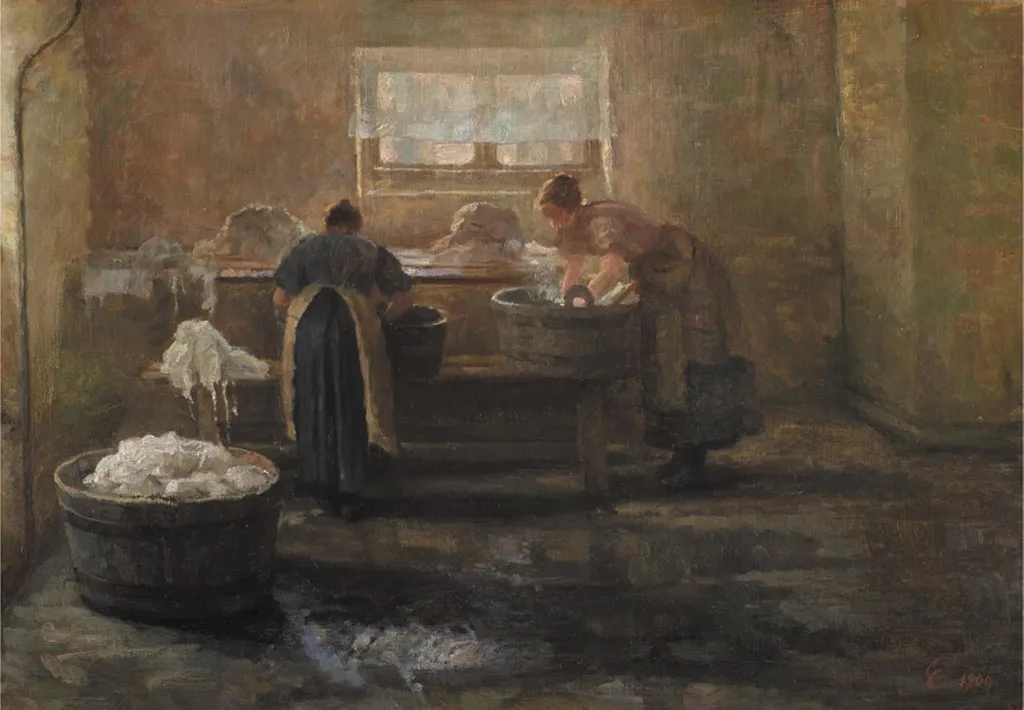
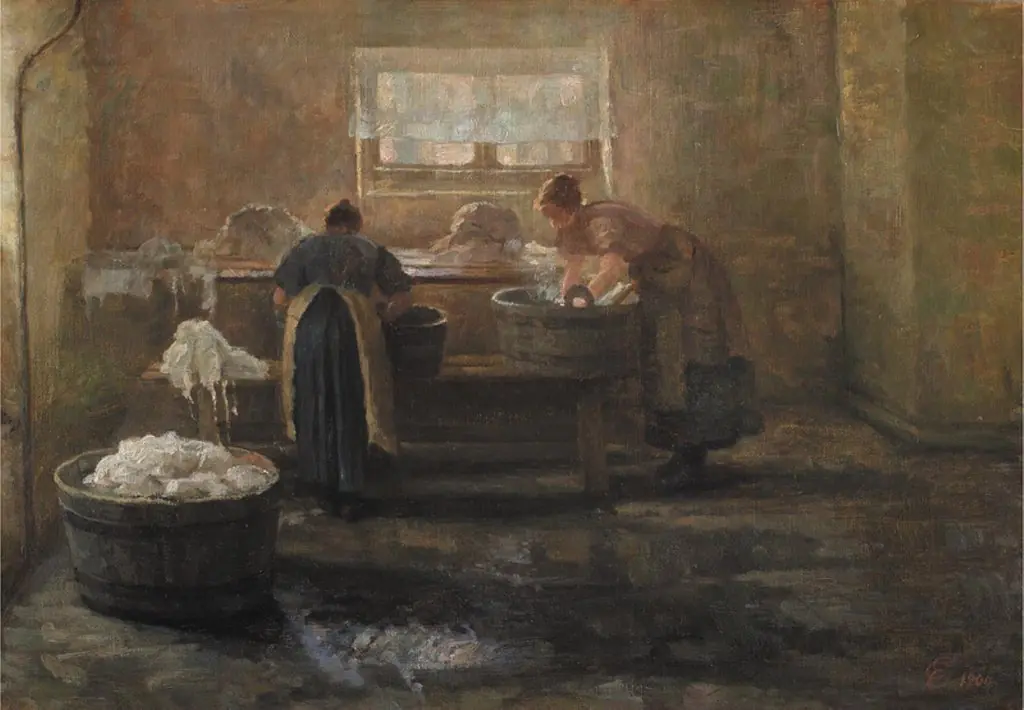
A Wash House is a photography by Unknown. It dates from 1900 and is held in the collection of the Statens Museum for Kunst.
About this work
Overview
A Wash House is a photographic work from 1900, attributed to 599_person, and currently held in the collection of the Museum of Ethnography.
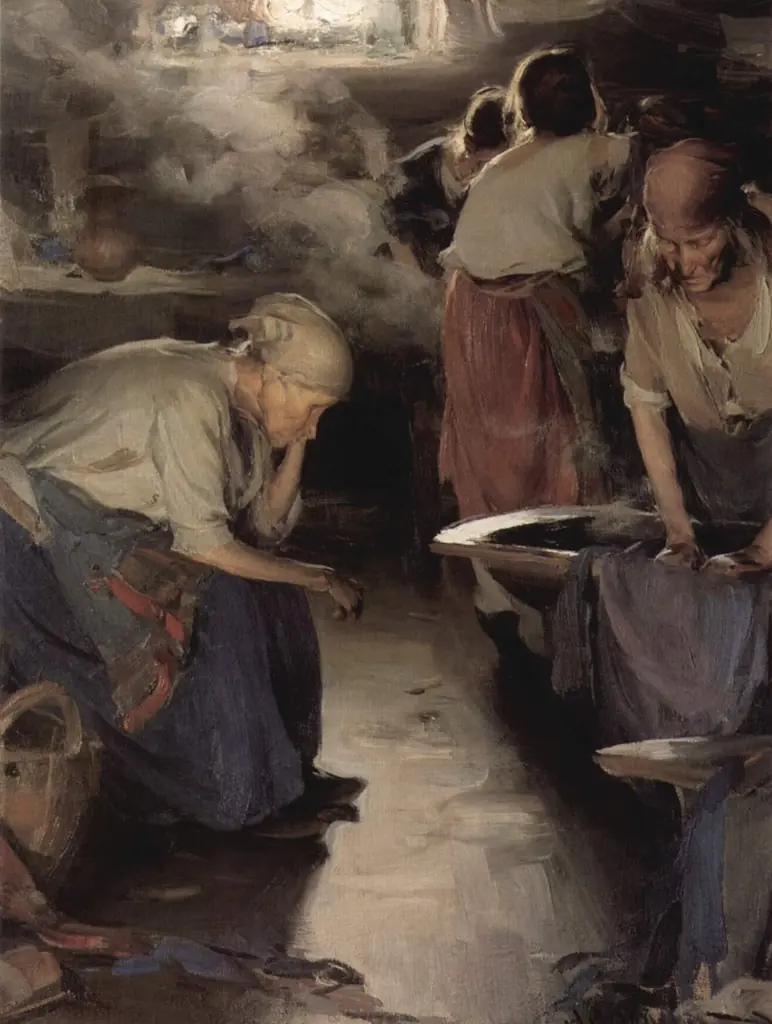
A Wash House is a photographic work from 1900, attributed to 599_person, and currently held in the collection of the Museum of Ethnography. Though captured on film, its visual qualities evoke the tactile brushwork of painted scenes, with dense shadows and high-contrast illumination lending it a painterly intensity. The image documents labor in a modest interior, rendered with a focus on texture and atmosphere rather than documentary clarity.
Subject & Meaning
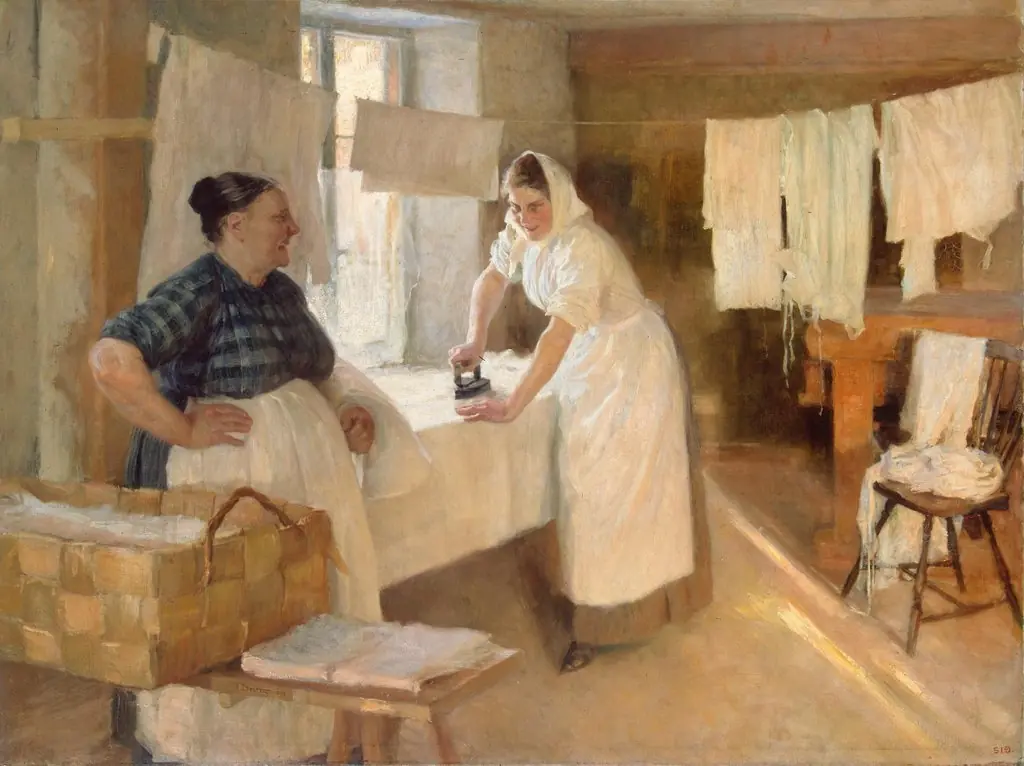
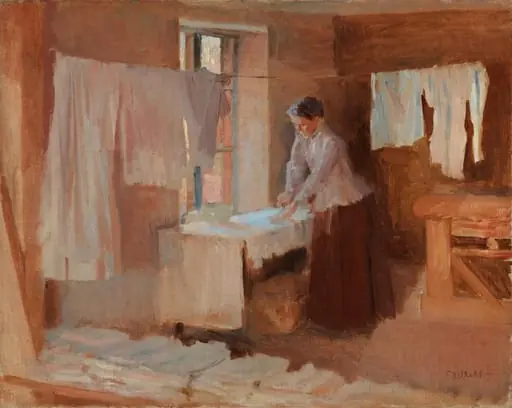
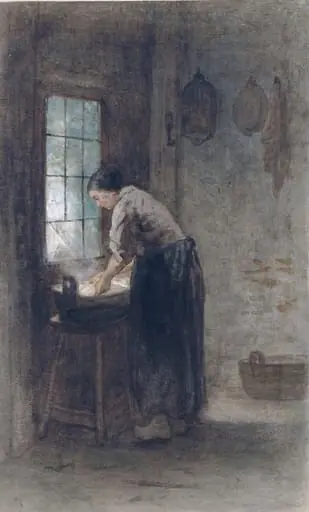
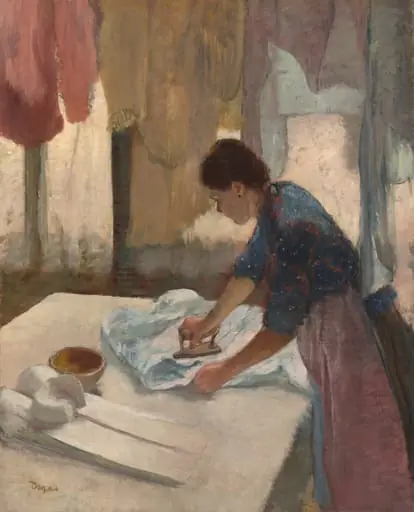
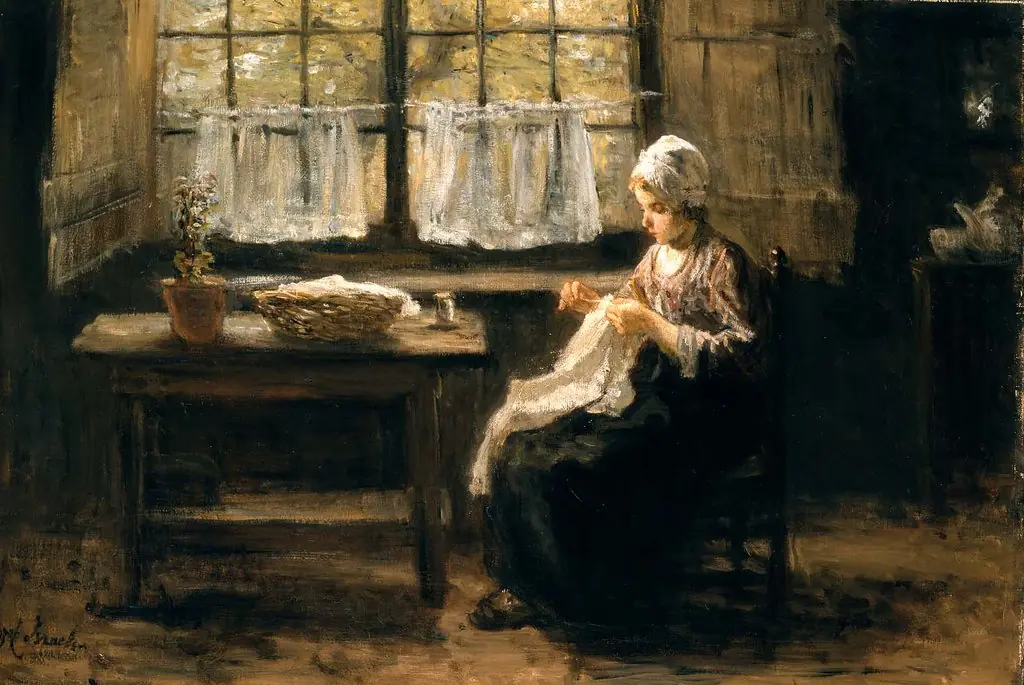
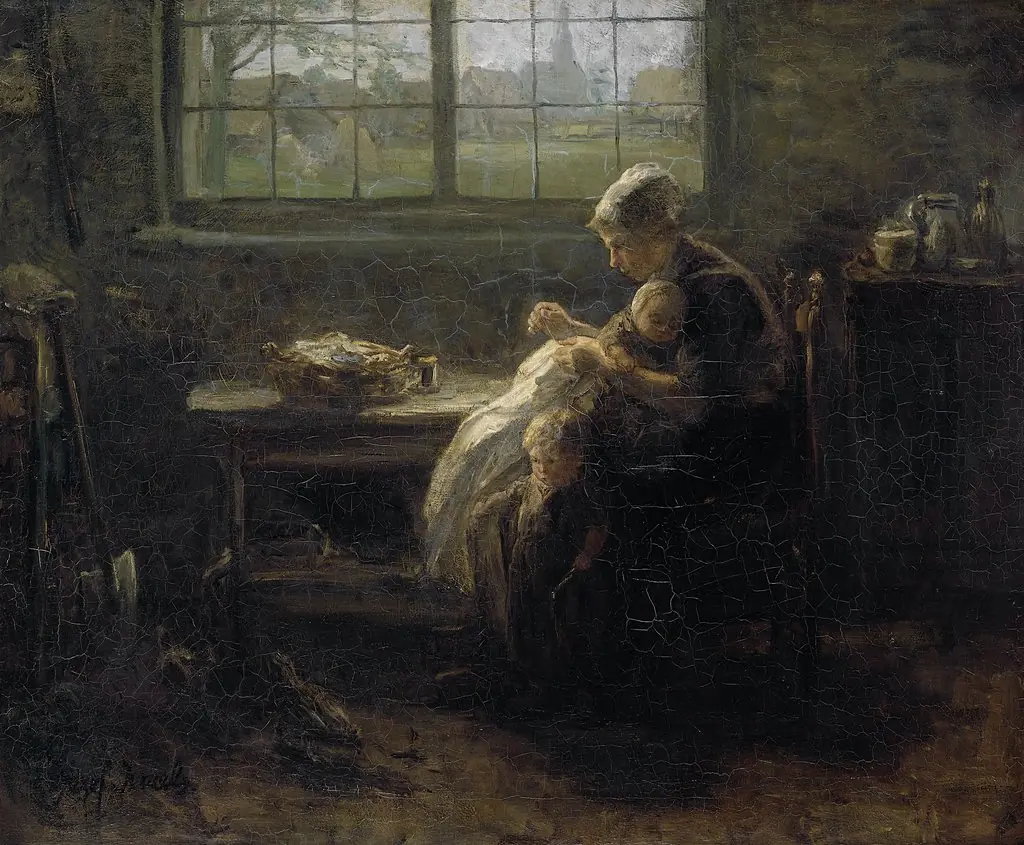
The scene depicts two individuals engaged in the physical labor of laundering clothes. One person scrubs fabric at a wooden table, while another tends to a basin nearby. Piles of damp linens and buckets of soapy water clutter the floor, emphasizing the repetitive, unrelenting nature of domestic work. The dim, confined space and focused gestures suggest a quiet dignity in routine labor, without overt sentiment or idealization.
Technique & Style
The photograph employs dramatic chiaroscuro, with sharp contrasts between light and shadow that model the figures and surfaces with sculptural weight. Textures of wet cloth, rough walls, and wooden surfaces are heightened by the play of light, creating an effect reminiscent of impasto painting. The grain and tonal range of the photographic medium are used to mimic the physicality of brushstrokes, blurring the boundary between photography and painted realism.
History & Provenance
Created in 1900, the photograph entered the collection of the Museum of Ethnography early in its history, likely as part of a broader effort to document everyday life across social classes. Its attribution to 599_person remains tied to archival records from the period, though little is known about the photographer’s broader practice. The image has been preserved in its original form, with no known alterations.
Context
At the turn of the 20th century, photographic documentation of domestic labor was increasingly used by social reformers and ethnographers to record conditions of working-class life. This image aligns with that trend, capturing a moment of routine labor in a setting stripped of ornament or luxury. It reflects a growing interest in the material realities of household work, particularly in urban or modest rural environments.
Legacy
The photograph endures as a quiet testament to the physical demands of pre-industrial domestic labor. Its stylistic choices—emphasizing texture, shadow, and gesture—have influenced later documentary photography that seeks emotional resonance through formal rigor. It remains a reference point in studies of visual representation and labor history, valued for its unembellished observation.
Artist & collection

 Domestic Scene
 Giacomo and Cardinal Marco, investing Andrea, Abbot of San Zeno, with his Benefice
 The Nymph of Fontainebleau
 Portrait of a Woman
 Madonna and Child with Saints in the Enclosed Garden
 Venus and Minerva
 Family Group of Four on Sofa
 Wall painting from Room H of the Villa of P. Fannius Synistor at Boscoreale