Artwork
A Clog Maker's Workshop
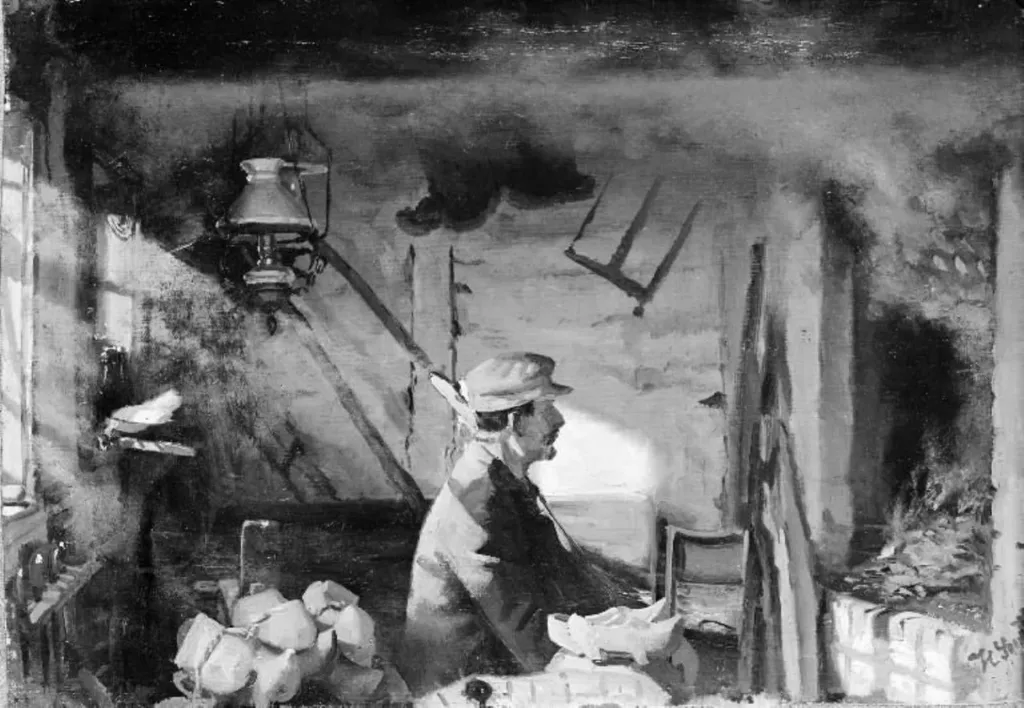
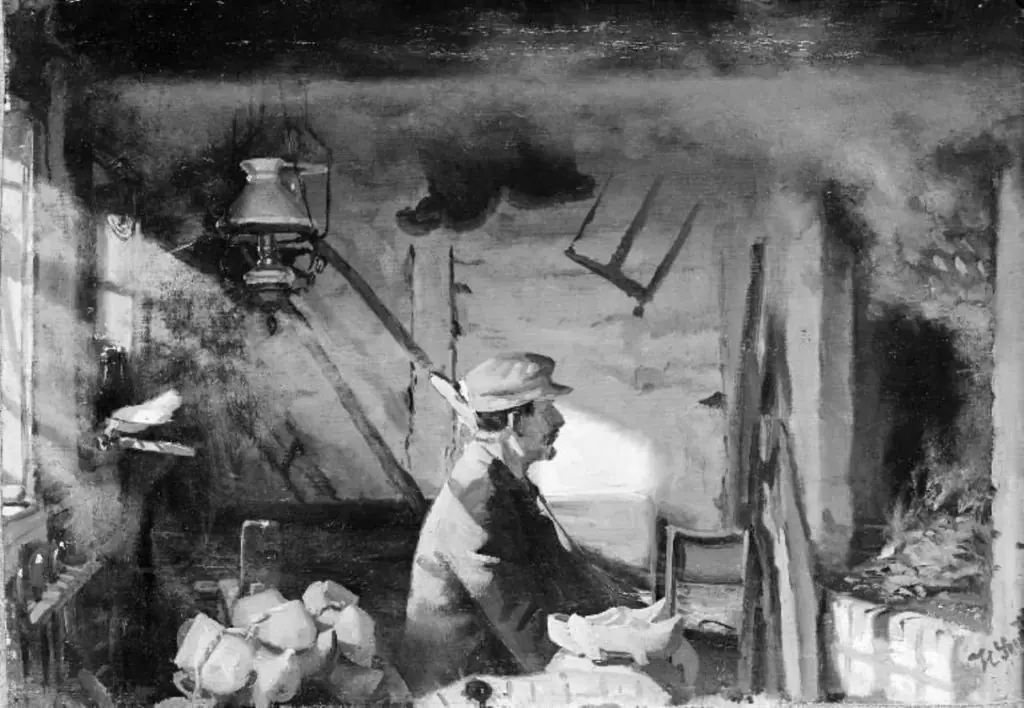
A Clog Maker's Workshop is a photography by Unknown. It dates from 1850 and is held in the collection of the Statens Museum for Kunst. This black-and-white photograph, dated around 1850, captures a clog maker at work in a modest interior.
About this work
Overview
The composition emphasizes the worker’s focused activity through deliberate lighting, isolating the figure against a shadowed environment.
This black-and-white photograph, dated around 1850, captures a clog maker at work in a modest interior. The image is held by the Museum of Ethnography and presents a quiet, unembellished moment of artisan labor. The composition emphasizes the worker’s focused activity through deliberate lighting, isolating the figure against a shadowed environment. No decorative elements distract from the immediacy of the scene.
Subject & Meaning
The subject is a craftsman engaged in the manual process of clog production, a common trade in 19th-century rural and working-class communities. His posture and tools suggest sustained concentration, highlighting the physicality of skilled labor. The image does not idealize the worker but instead records the quiet dignity of everyday craftsmanship, offering a glimpse into pre-industrial modes of production.
Technique & Style
The photographer employed chiaroscuro to direct attention toward the worker’s hands and face, using a single hanging lamp to create a sharp contrast between illuminated surfaces and deep shadows. The rough walls and scattered tools recede into darkness, reinforcing the intimacy of the moment. This controlled use of light and tone enhances the tactile realism of the scene without theatrical embellishment.
History & Provenance
The photograph was likely made in the mid-19th century as part of a documentary effort to record traditional trades. It entered the collection of the Museum of Ethnography, where it remains as a record of material culture and labor practices. Its origins as a private or institutional study are not fully documented, but its preservation suggests early recognition of its ethnographic value.
Context
In the 1850s, clog-making was a widespread craft in Europe, particularly in regions with limited access to factory-made footwear. Artisans like the one depicted worked in small, self-contained workshops, often within their homes. This image reflects a world before industrialization transformed such trades, preserving a visual record of skills soon to be displaced by mechanization.
Legacy
The photograph endures as a quiet testament to pre-industrial labor, valued for its unvarnished realism. It contributes to broader historical studies of craft, class, and domestic workspaces. While not widely exhibited, its inclusion in an ethnographic collection ensures its role as a primary source for understanding the material conditions of 19th-century artisans.
Artist & collection

 Domestic Scene
 Giacomo and Cardinal Marco, investing Andrea, Abbot of San Zeno, with his Benefice
 The Nymph of Fontainebleau
 Portrait of a Woman
 Madonna and Child with Saints in the Enclosed Garden
 Venus and Minerva
 Family Group of Four on Sofa
 Wall painting from Room H of the Villa of P. Fannius Synistor at Boscoreale
 Ivan Rodin
 The Tyresmith
 A Blind Man Outside his House
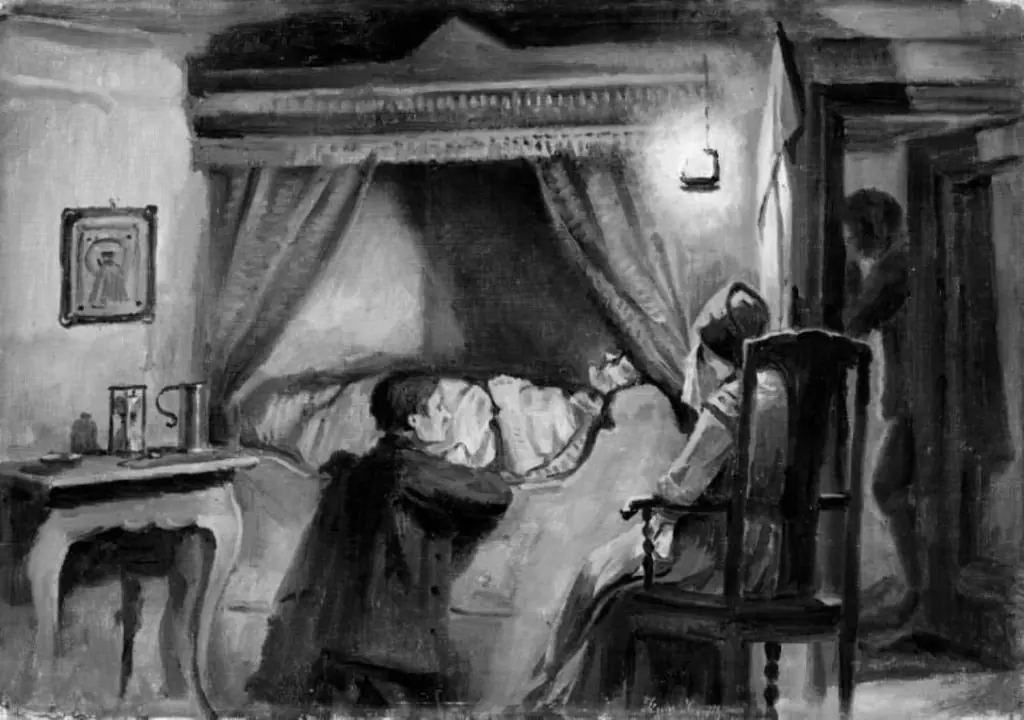 Hr. Sørens død
 Hr. Sørens død
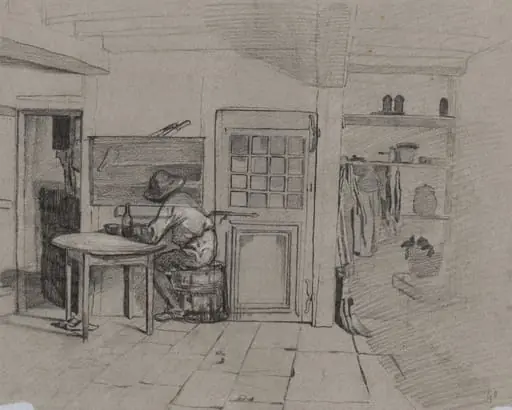 A Farmhouse Interior with a Boy at a Table
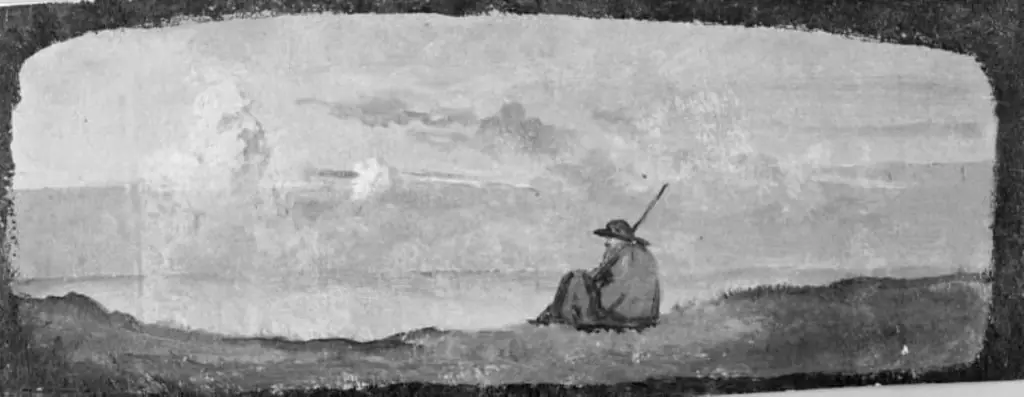 A Herdsman Sitting in a Landscape with Evening Clouds
 Portrait of Professor Carl Lorentzen (1860-1932)
 Interior of a Barn
 Still Life with Green Cloth
 Cloud Formations
 A Clog Maker's Workshop