Artwork
A Blind Man Outside his House
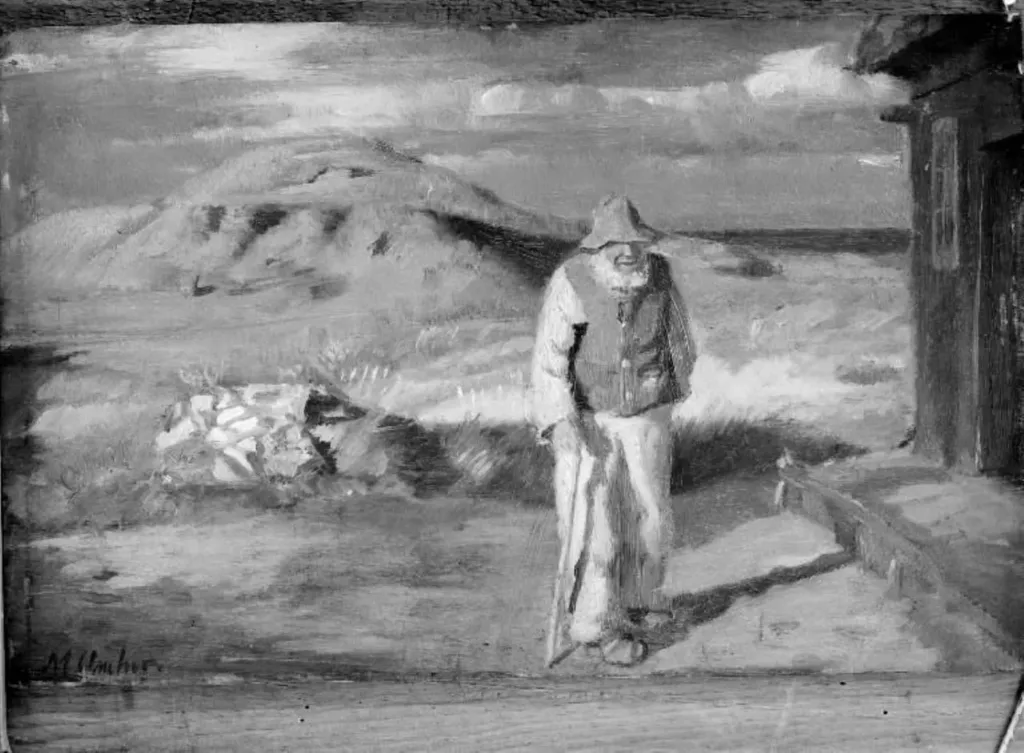
A Blind Man Outside his House is a photography by Unknown. It dates from 1850 and is held in the collection of the Statens Museum for Kunst. This black-and-white photograph, dated around 1850, depicts a man standing outside a modest dwelling.
About this work
Overview
Its faded tonal quality and simple composition reflect early photographic limitations and the ordinary circumstances of its subject.
This black-and-white photograph, dated around 1850, depicts a man standing outside a modest dwelling. The image, preserved at the Museum of Ethnography, captures a quiet moment of daily life in a rural setting. Its faded tonal quality and simple composition reflect early photographic limitations and the ordinary circumstances of its subject. The man’s posture and cane suggest he is blind, yet composed and self-reliant.
Subject & Meaning
The figure, a man with visual impairment, stands calmly before his home, suggesting autonomy despite his condition. His wide-brimmed hat and long coat imply modest means and adaptation to the environment. The absence of overt distress or assistance points to a life lived with quiet dignity. The scene resists romanticization, presenting an unembellished view of disability in a pre-industrial context.
Technique & Style
Rendered in early photographic process, the image exhibits soft contrasts and grainy texture typical of mid-19th-century emulsions. The composition is straightforward: the figure is centered, framed by the house and sparse landscape. No retouching or staging is evident. The slight fading indicates age and exposure, reinforcing the photograph’s documentary character over artistic intent.
History & Provenance
The photograph entered the collection of the Museum of Ethnography in the late 19th or early 20th century, likely as part of a broader ethnographic survey. Its origin remains undocumented, with no record of the photographer or sitter. Its preservation suggests it was valued for its anthropological insight rather than aesthetic qualities at the time of acquisition.
Context
Created during a period when photography began documenting marginalized communities, this image aligns with emerging ethnographic practices in Europe. Rural life, disability, and self-sufficiency were rarely recorded with such neutrality. The setting—rocky terrain, simple architecture—hints at a region with limited resources, possibly in southern Europe or the Balkans.
Legacy
The photograph endures as a quiet testament to everyday resilience. It contributes to historical records of disability and rural existence before modern social systems. Its lack of commentary or sentimentality allows contemporary viewers to engage with the subject without imposed narrative, preserving the dignity of its subject through restraint.
Artist & collection

 Domestic Scene
 Giacomo and Cardinal Marco, investing Andrea, Abbot of San Zeno, with his Benefice
 The Nymph of Fontainebleau
 Portrait of a Woman
 Madonna and Child with Saints in the Enclosed Garden
 Venus and Minerva
 Family Group of Four on Sofa
 Wall painting from Room H of the Villa of P. Fannius Synistor at Boscoreale
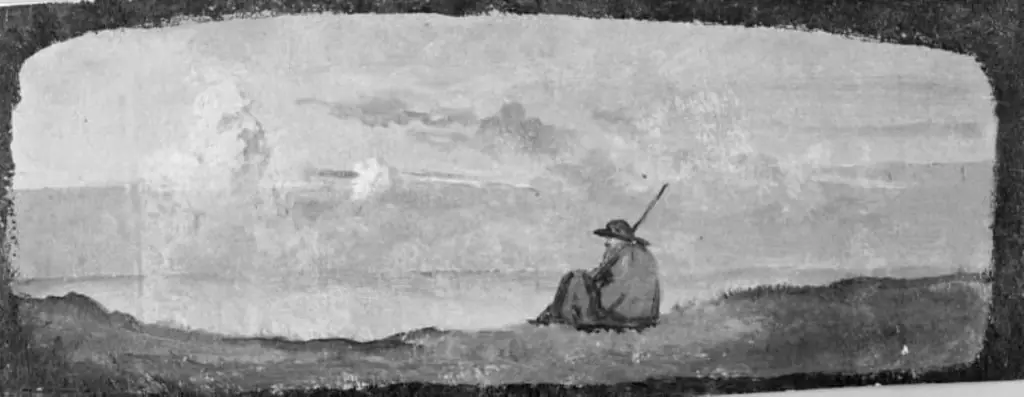 A Herdsman Sitting in a Landscape with Evening Clouds
 A Herdsman Sitting in a Landscape with Evening Clouds
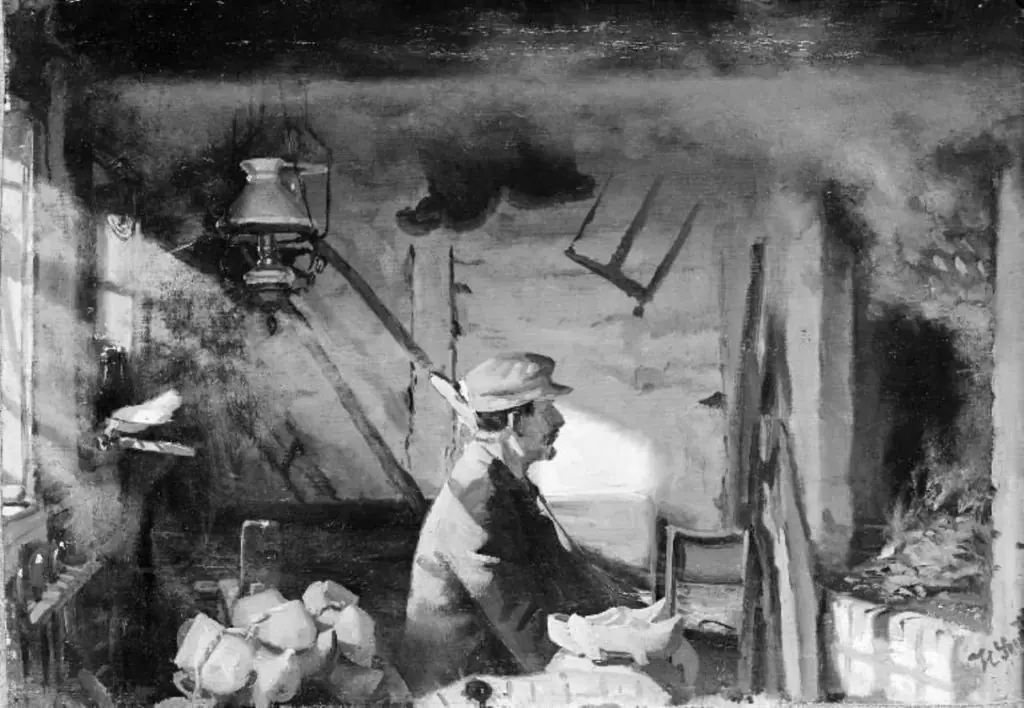 A Clog Maker's Workshop
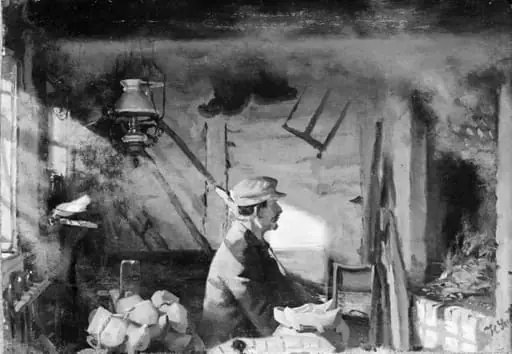 A Clog Maker's Workshop
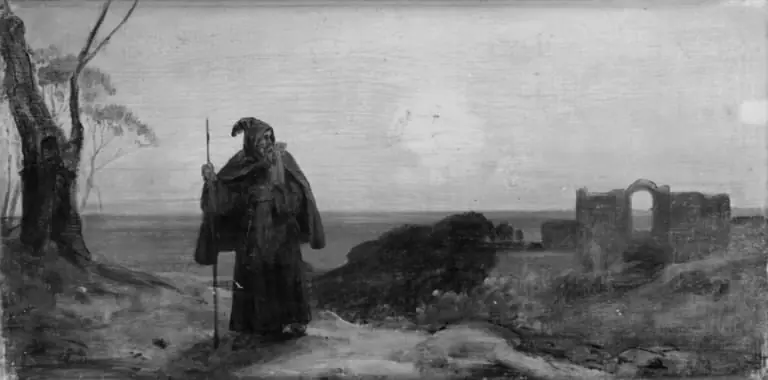 Evening Landscape with an Old Monk
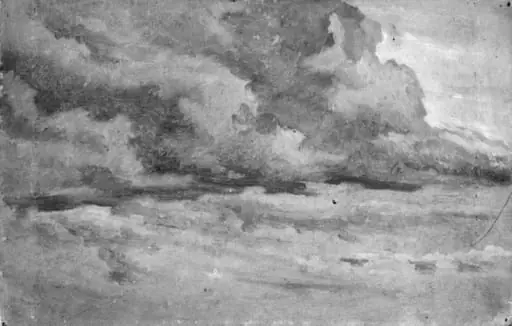 Study of Clouds
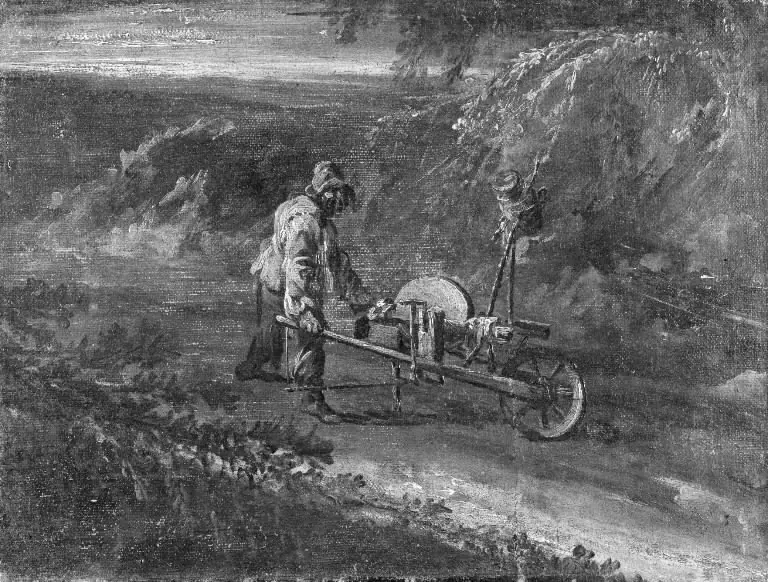 A Knife Grinder
 Studie af skyer
 Philosophe
 Bucht bei ruhiger See
 A Knife Grinder
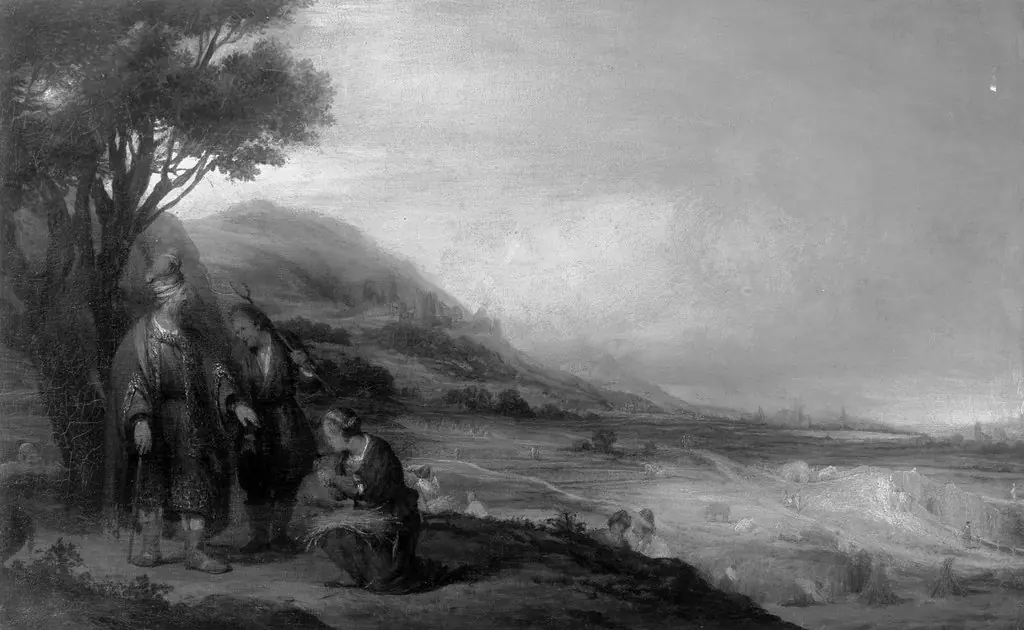 Landscape with Ruth and Boaz