Artwork
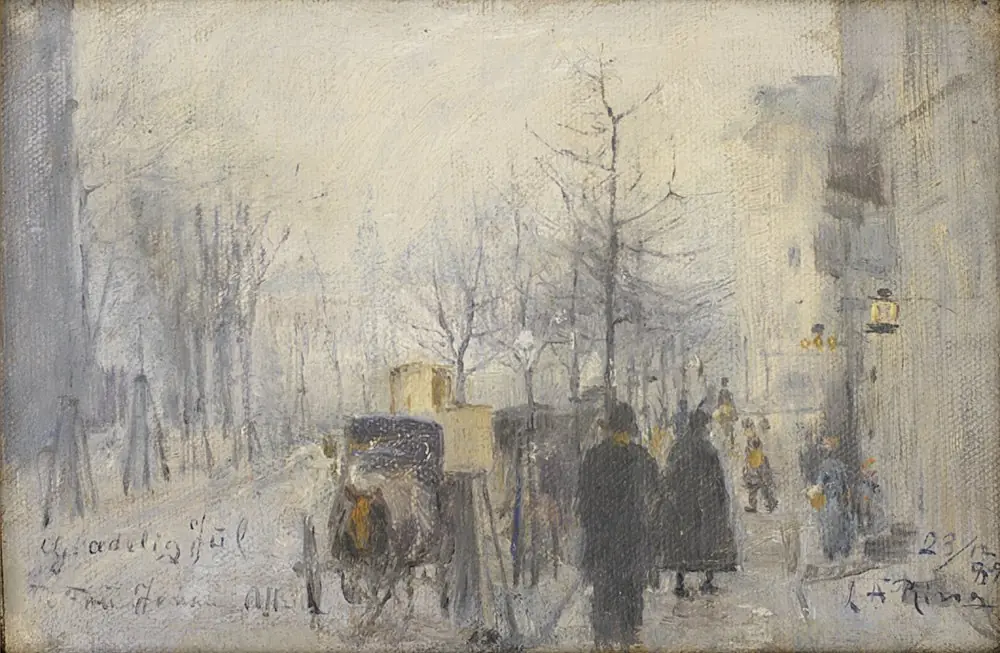
Udsigt fra vinduet i Café Osborne op ad Frederiksberg Allé
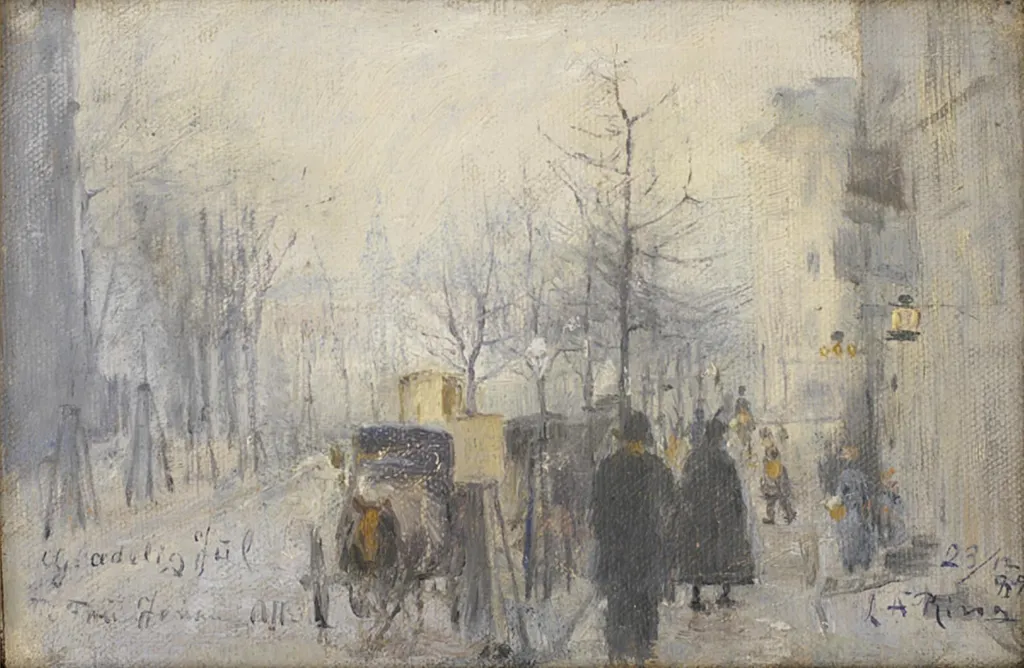
Udsigt fra vinduet i Café Osborne op ad Frederiksberg Allé is a photography by the Impressionist artist Unknown. It dates from 1889 and is held in the collection of the Statens Museum for Kunst. Painted in 1889, this work captures a winter view from the window of Café Osborne along Frederiksberg Allé in Copenhagen.
About this work
Overview
It is part of the collection at the Museum of Ethnography, though its subject is a secular urban landscape rather than an ethnographic artifact.
Painted in 1889, this work captures a winter view from the window of Café Osborne along Frederiksberg Allé in Copenhagen. The artist rendered the scene with loose, energetic brushwork that conveys a sense of immediacy. It is part of the collection at the Museum of Ethnography, though its subject is a secular urban landscape rather than an ethnographic artifact. The painting reflects a momentary observation of everyday life in late 19th-century Denmark.
Subject & Meaning
The scene depicts a quiet, snow-covered street with sparse pedestrian traffic and a single horse-drawn carriage passing a building with a pale wall. Figures are minimally defined, bundled against the cold, suggesting anonymity and routine. The absence of grandeur or narrative focus emphasizes the ordinary rhythm of urban winter life. The painting invites contemplation of transient moments rather than telling a specific story.
Technique & Style
Thick, visible brushstrokes and a restrained palette of whites, grays, and muted blues dominate the composition. Highlights from the carriage’s lantern and faint touches of color break the monotony without disrupting the somber tone. The technique prioritizes atmosphere over detail, with forms suggested rather than rendered precisely. This approach aligns with the observational methods of Impressionist practice, though executed with a distinctly Nordic restraint.
History & Provenance
The painting was completed in 1889 and entered the collection of the Museum of Ethnography, where it remains today. Its presence in an institution typically focused on non-European cultures raises questions about its acquisition context. No detailed record of its early ownership or exhibition history is widely documented, suggesting it may have been acquired as part of a broader interest in Danish urban life during the late 19th century.
Context
In the late 1880s, Copenhagen was undergoing subtle modernization, yet its streets retained a quiet, pre-industrial character. Artists increasingly turned to everyday scenes as subjects, moving away from historical or mythological themes. This work reflects that shift, capturing a moment of stillness amid urban change. The cold, muted tones mirror the seasonal reality of Danish winters and the cultural preference for understated realism.
Legacy
Though not widely exhibited outside Denmark, the painting contributes to a body of work that documents the quietude of Nordic urban life at the turn of the century. Its emphasis on transient light and ordinary activity aligns it with broader European trends in plein air painting. It stands as a modest but persistent record of how artists observed and recorded the rhythms of daily existence without embellishment.
Artist & collection

 Domestic Scene
 Giacomo and Cardinal Marco, investing Andrea, Abbot of San Zeno, with his Benefice
 The Nymph of Fontainebleau
 Portrait of a Woman
 Madonna and Child with Saints in the Enclosed Garden
 Venus and Minerva
 Family Group of Four on Sofa
 Wall painting from Room H of the Villa of P. Fannius Synistor at Boscoreale
 The Boulevard Montmartre on a Winter Morning
 The Road to Saint Germain, near Marly
 Boulevard Montmartre, morning, cloudy weather
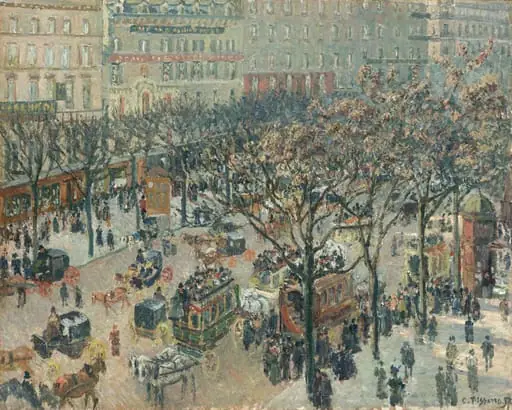 Boulevard des Italiens, Morning, Sunlight
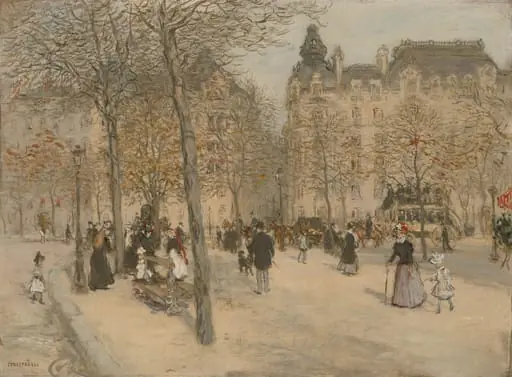 Square in Paris
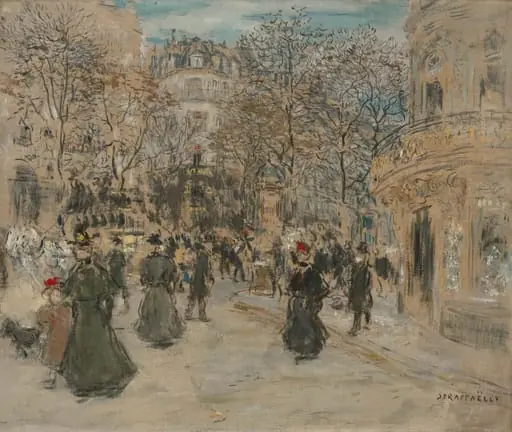 The Boulevard
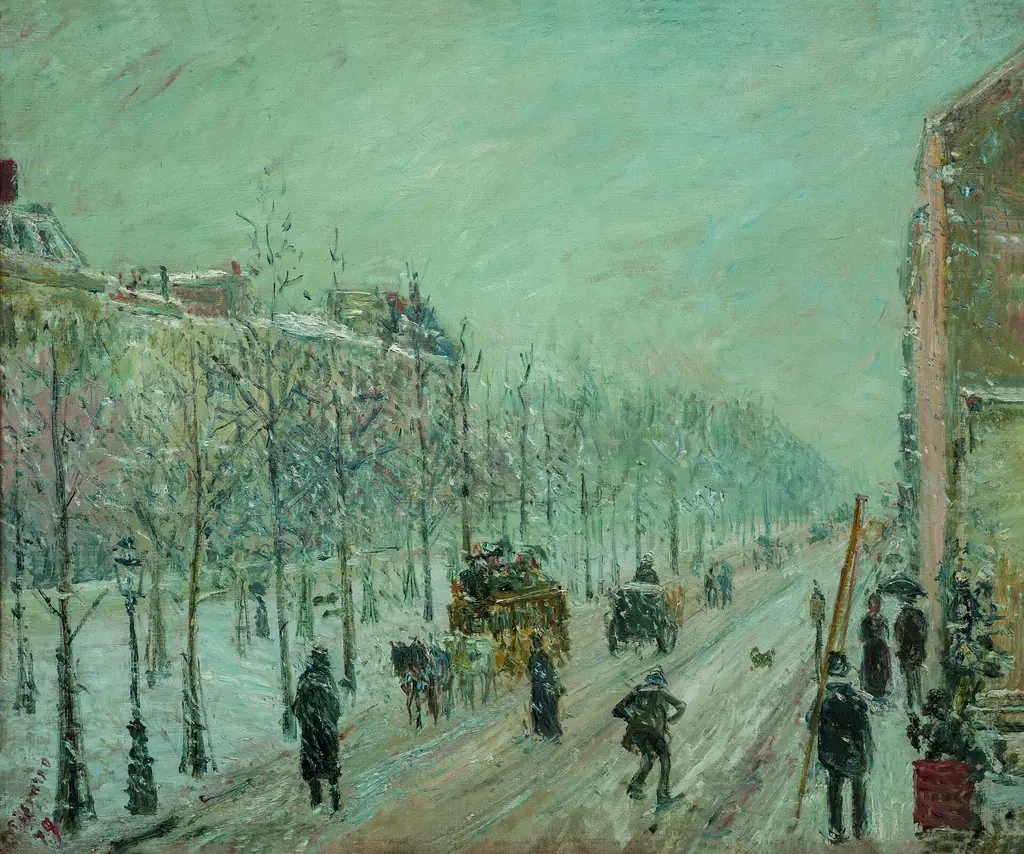 Les boulevards extérieurs. Effet de neige
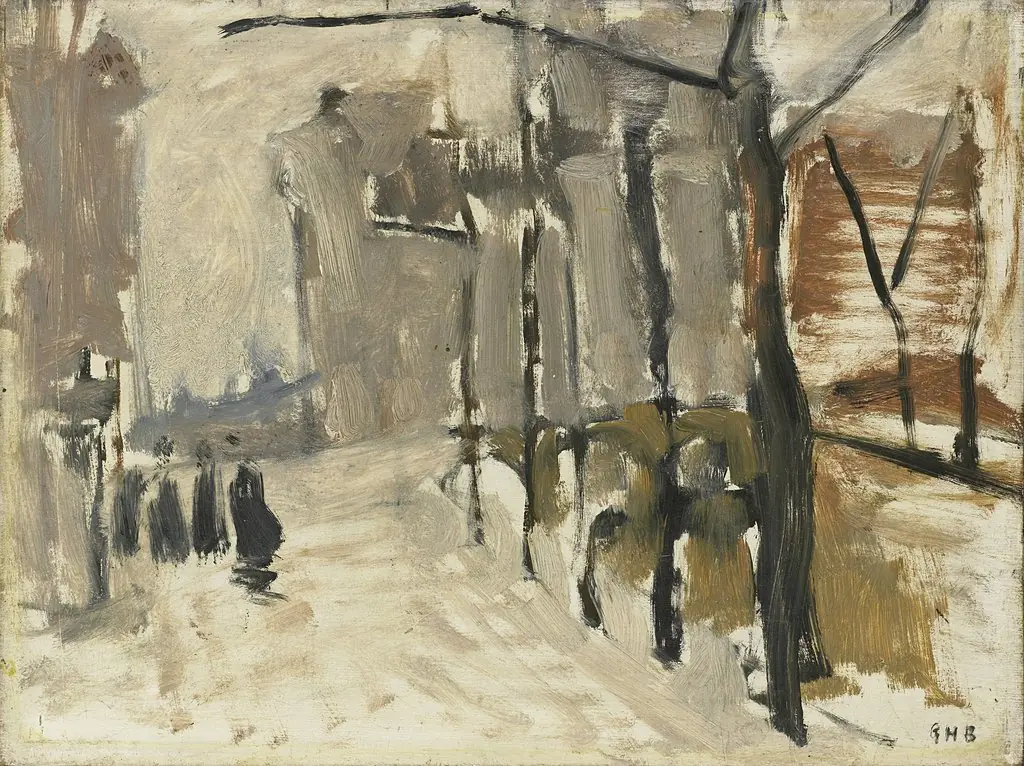 Cityscape in The Hague (?) (?)
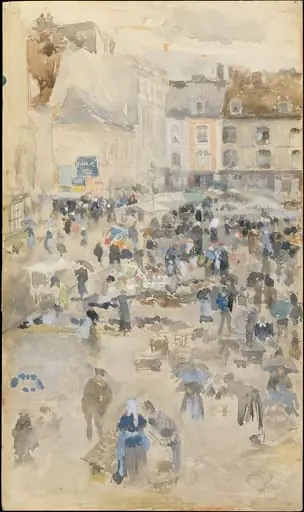 Variations in Violet and Grey—Market Place, Dieppe
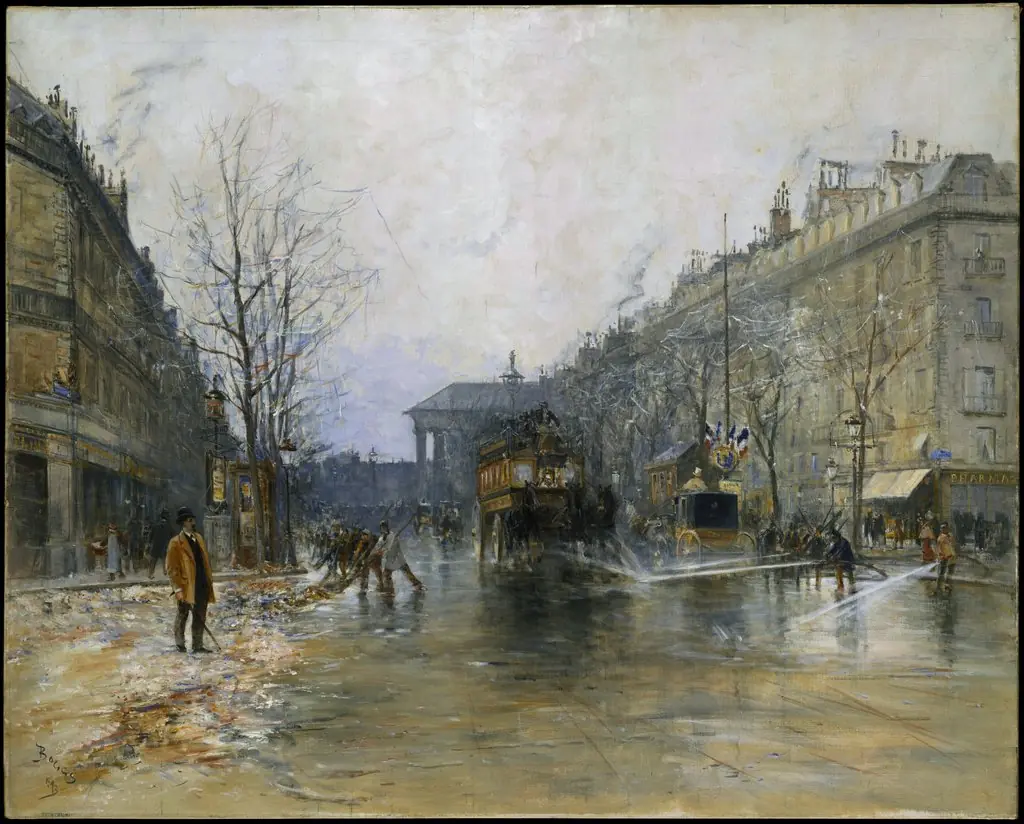 Paris Street Scene
 Pantheonul din Paris
 Udsigt fra vinduet i Café Osborne op ad Frederiksberg Allé