Artwork
Pantheonul din Paris
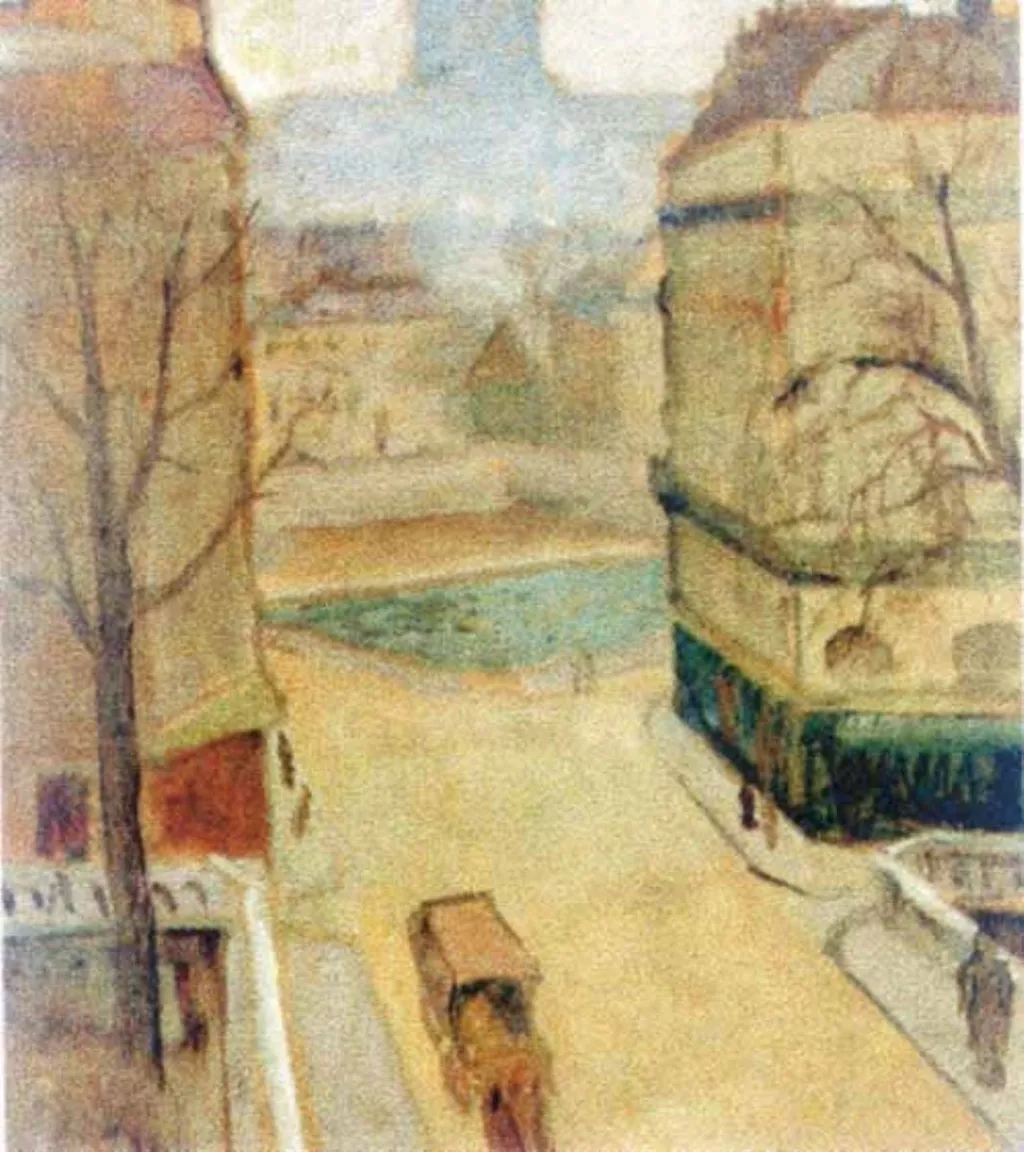
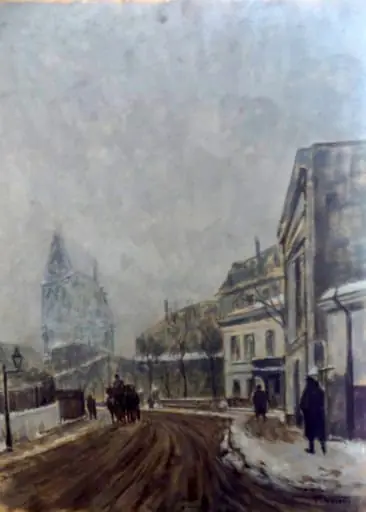
Pantheonul din Paris is an unspecified painting by the Romanesque artist Theodor Pallady. It dates from 1921 and is held in the collection of the Art Museum of Constanta.
About this work
Overview
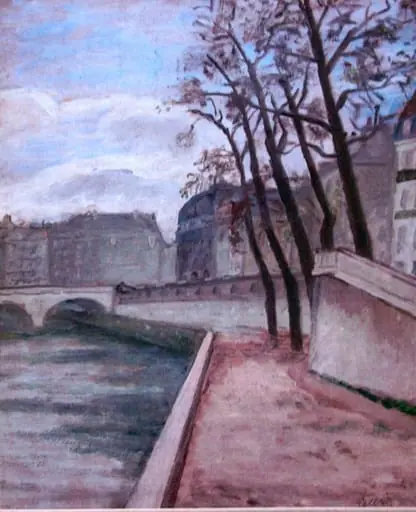
The work titled Pantheonul din Paris, executed around 1921 by Romanian painter Theodor Pallady, is part of the collection of the Museum of Ethnography. It presents a muted, atmospheric view of an urban street descending toward the horizon, with a solitary tree on the left and a faint sky overhead. The overall effect is one of gentle decay, as if the image has been softened by time.
Subject & Meaning
The subdued palette and hazy outlines suggest a moment of contemplation, inviting viewers to consider the transitory nature of city life.
The composition captures a quiet Parisian street scene, its buildings receding down a gentle slope. The subdued palette and hazy outlines suggest a moment of contemplation, inviting viewers to consider the transitory nature of city life. The lone tree, positioned at the edge of the frame, provides a natural counterpoint to the architectural forms, hinting at the coexistence of urban and organic elements.
Technique & Style
Pallady applied paint with a pronounced impasto technique, laying thick layers that remain visible as textured brushstrokes. This method gives the surface a tactile quality, emphasizing the materiality of the medium. The rough, almost sculptural handling of color contributes to the painting’s softened appearance, as the dense paint catches light and subtly blurs the details of the scene.
History & Provenance
Created in the early 1920s, the piece reflects Pallady’s later period, during which he explored atmospheric effects and expressive surface treatment. It entered the Museum of Ethnography’s holdings at an unspecified date, where it remains on display as part of the institution’s representation of early twentieth‑century European painting.
Artist & collection