Artwork
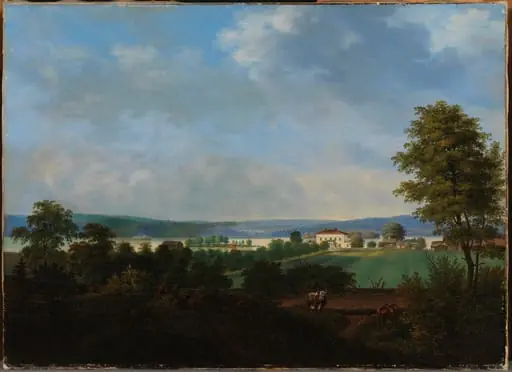
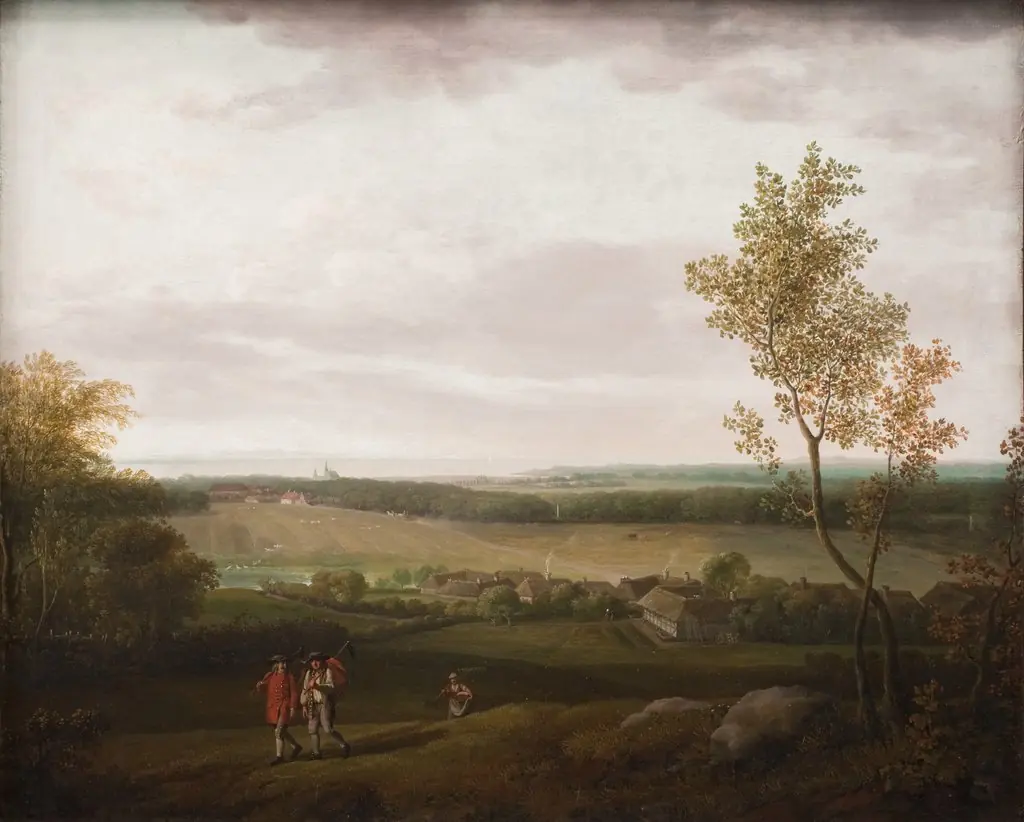
View of the Country near Jægerspris
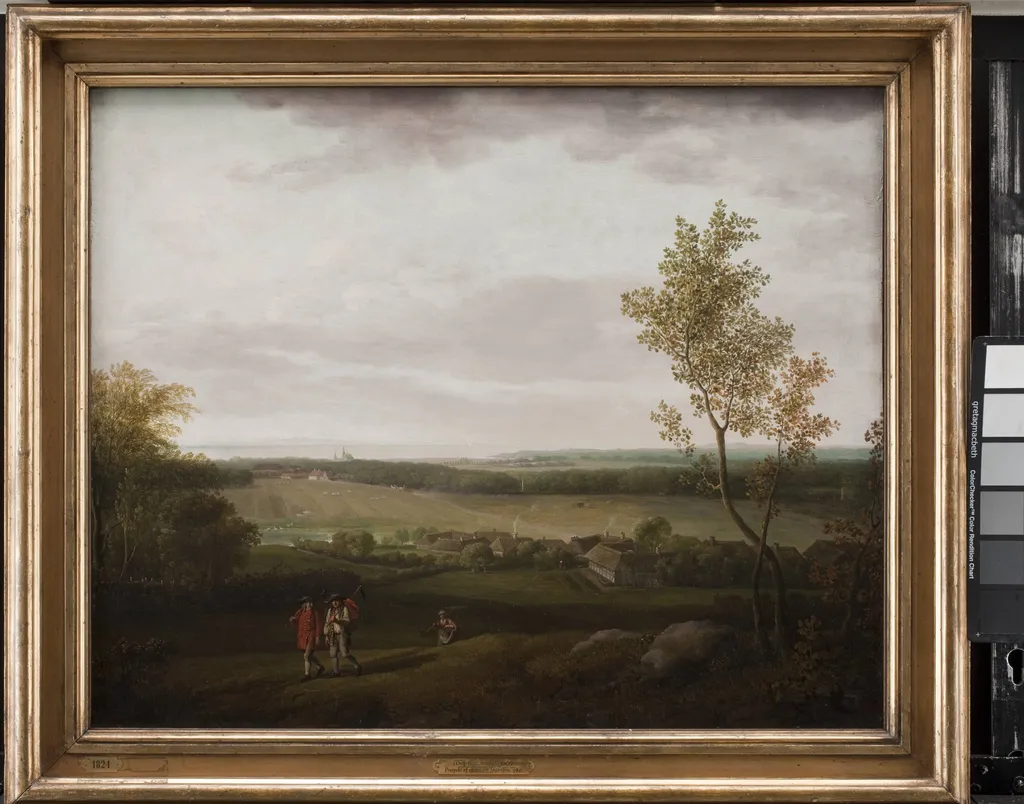
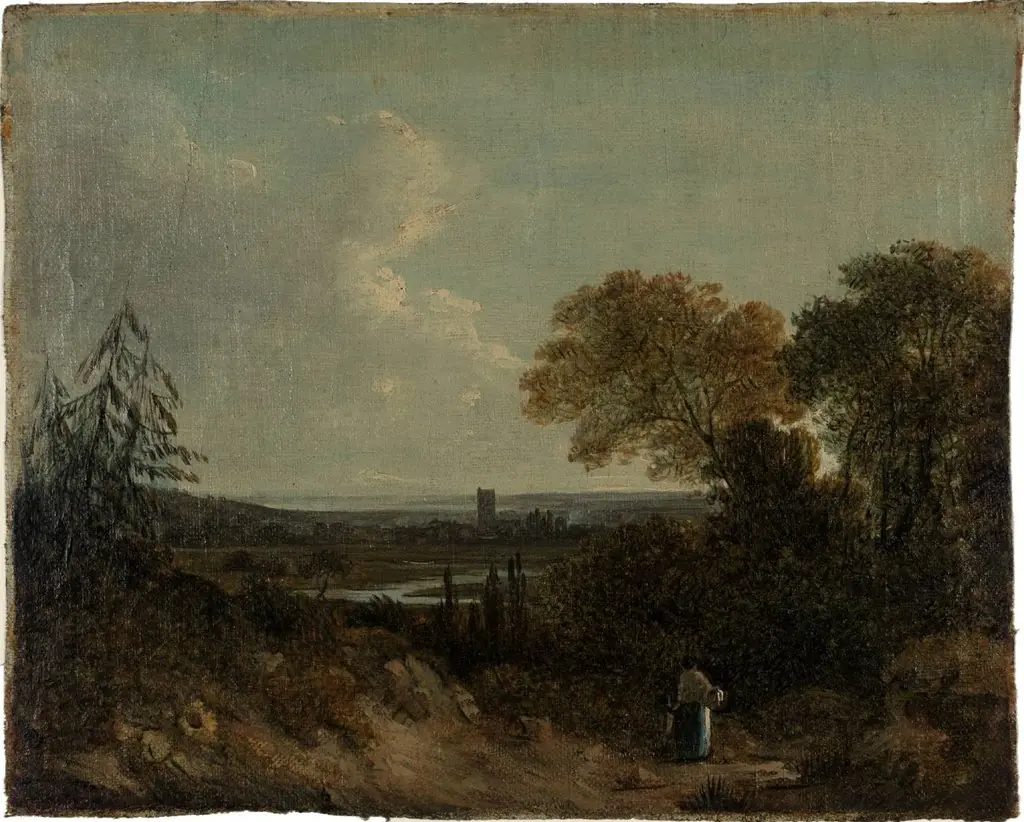
View of the Country near Jægerspris is a photography by the Romanticist artist Unknown. It dates from 1782 and is held in the collection of the Statens Museum for Kunst. Painted in 1782, this landscape depicts the rural surroundings of Jægerspris, a small settlement in Denmark.
About this work
Overview
Painted in 1782, this landscape depicts the rural surroundings of Jægerspris, a small settlement in Denmark. The work captures a tranquil moment in the countryside, with no dramatic events or human activity beyond three figures moving along a path. It is part of a modest body of Danish landscape studies from the late 18th century, now preserved in the Museum of Ethnography.
Subject & Meaning
The scene presents an unembellished view of rural life, emphasizing quietude over narrative. The three walkers, small in scale, suggest ordinary daily movement rather than symbolic action. The distant church spire and clustered dwellings imply community, while the autumnal trees and soft sky evoke seasonal stillness. The composition invites contemplation rather than storytelling.
Technique & Style
The artist employs a restrained palette of earthy browns and muted greens, harmonizing with the pale sky to create a sense of atmospheric unity. Light is diffused evenly, avoiding strong contrasts, which enhances the scene’s calm tone. Brushwork is subtle, with soft transitions between land, sky, and foliage, reinforcing the dreamlike stillness without relying on dramatic chiaroscuro.
History & Provenance
The painting was likely made during a period of growing interest in Danish rural life among local artists. It entered the collection of the Museum of Ethnography in the 19th century, possibly as part of a broader effort to document regional environments. Its attribution to the artist remains unverified in public records, and its early ownership is undocumented.
Context
Created during the Enlightenment, the work reflects a shift toward observing nature and everyday life with quiet precision. While European art often favored grand historical or mythological themes, this piece aligns with emerging Nordic traditions that valued modest, local subjects. It stands apart from urban or aristocratic landscapes common elsewhere in Europe at the time.
Legacy
Though not widely exhibited or reproduced, the painting contributes to an understudied strand of Danish landscape art from the late 1700s. It offers insight into how local artists engaged with their immediate surroundings, laying groundwork for later generations who would further develop national landscape traditions. Its preservation underscores the value placed on regional visual records.
Artist & collection

 Domestic Scene
 Giacomo and Cardinal Marco, investing Andrea, Abbot of San Zeno, with his Benefice
 The Nymph of Fontainebleau
 Portrait of a Woman
 Madonna and Child with Saints in the Enclosed Garden
 Venus and Minerva
 Family Group of Four on Sofa
 Wall painting from Room H of the Villa of P. Fannius Synistor at Boscoreale