Artwork
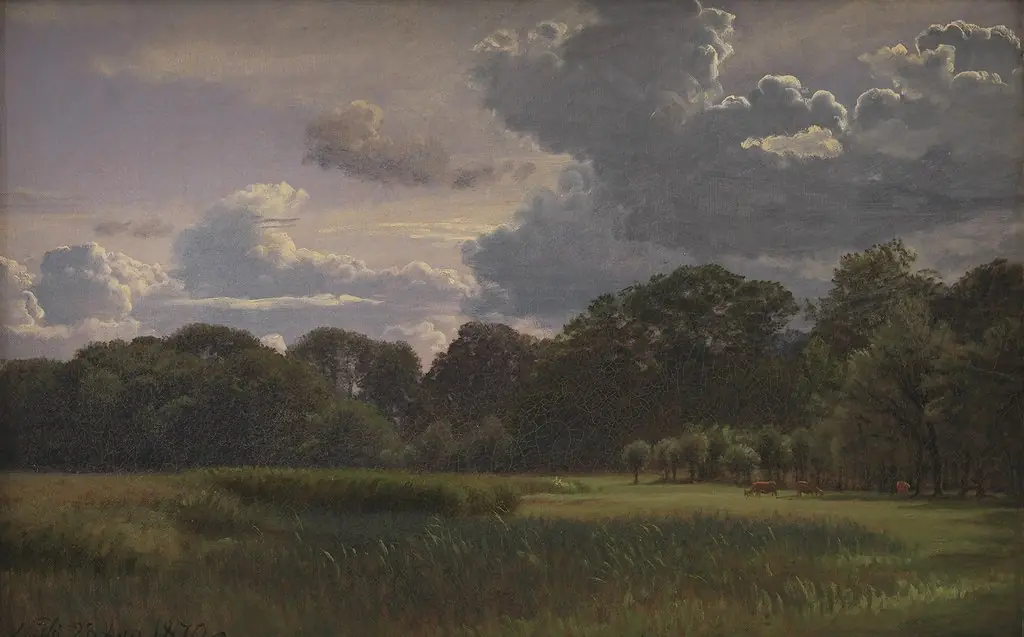
A Summer's Evening near Ry
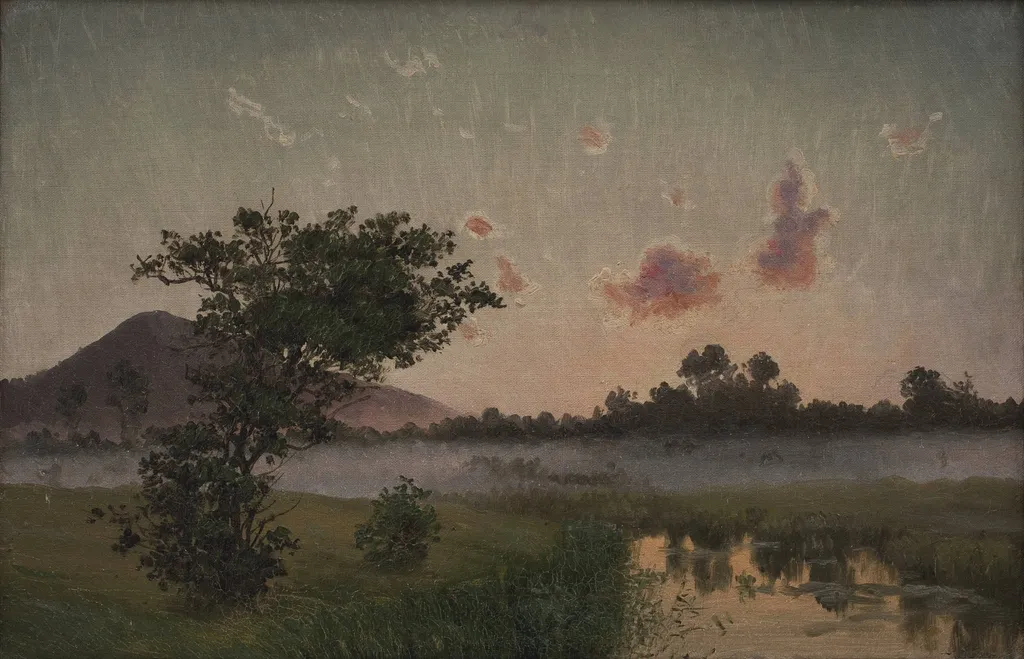
A Summer's Evening near Ry is a photography by the Impressionist artist Unknown artist. It dates from 1873 and is held in the collection of the Statens Museum for Kunst.
About this work
Overview
Painted in 1873, *A Summer's Evening near Ry* is a landscape by William Ronald Smith, an artist later known for his abstract work in the mid-20th century.
Painted in 1873, *A Summer's Evening near Ry* is a landscape by William Ronald Smith, an artist later known for his abstract work in the mid-20th century. This early piece predates his involvement with Painters Eleven by nearly eighty years. The work is held in the Museum of Ethnography’s collection, reflecting its historical significance as a rare surviving example of the artist’s pre-abstract phase.
Subject & Meaning
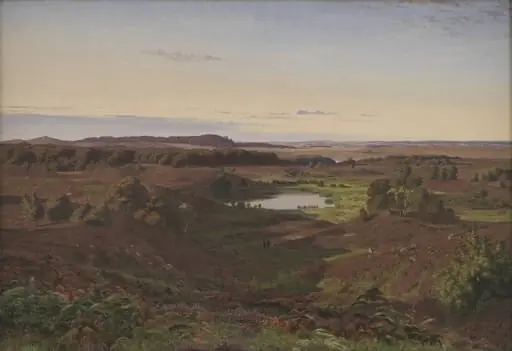
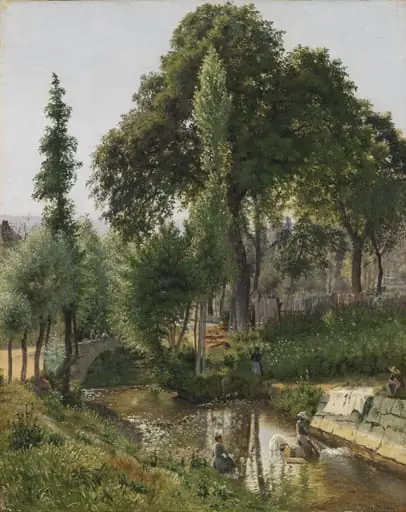
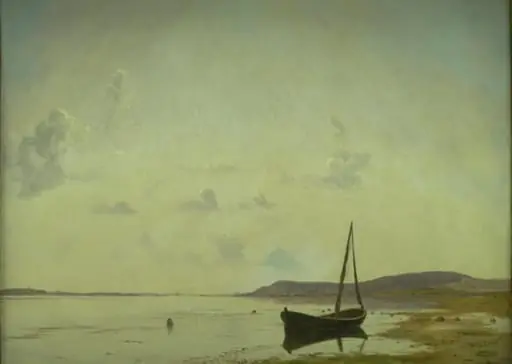
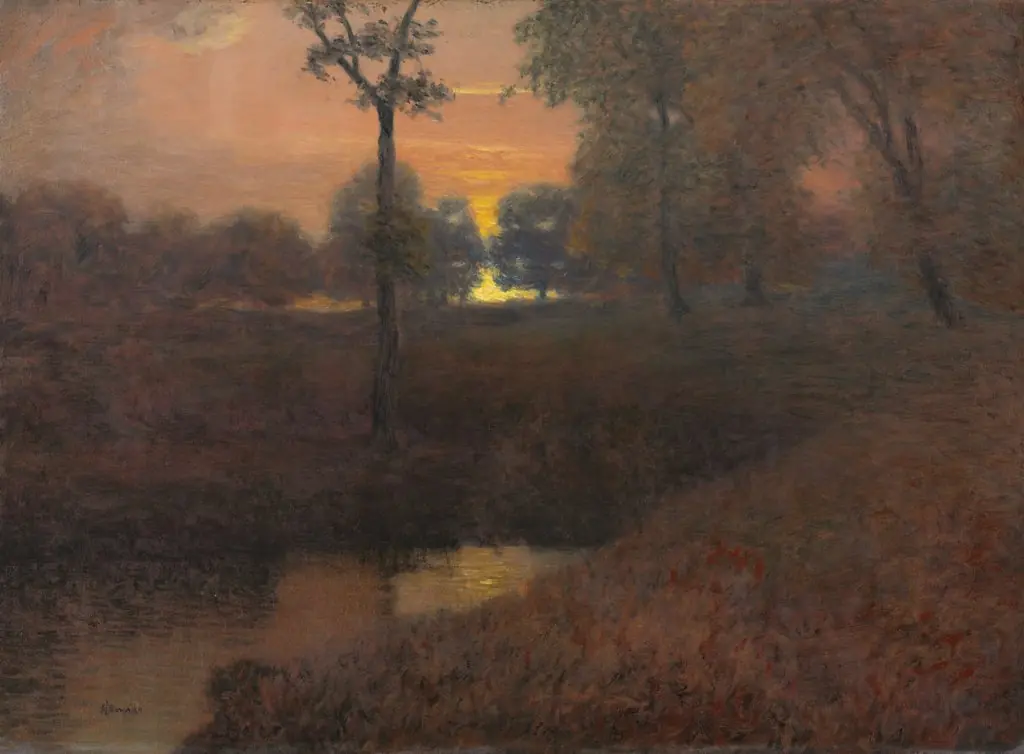
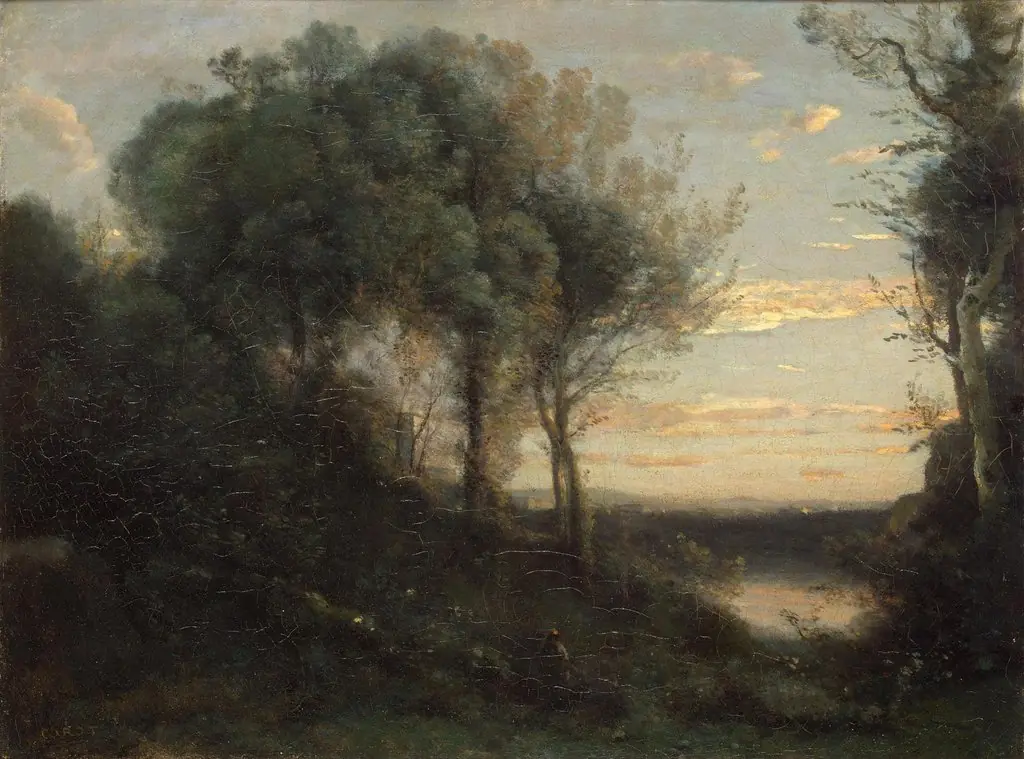
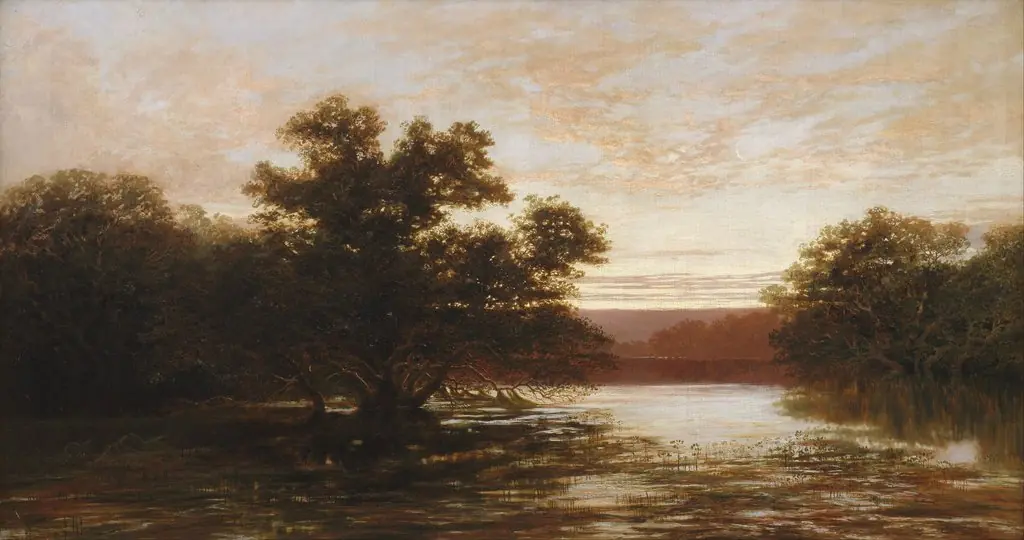
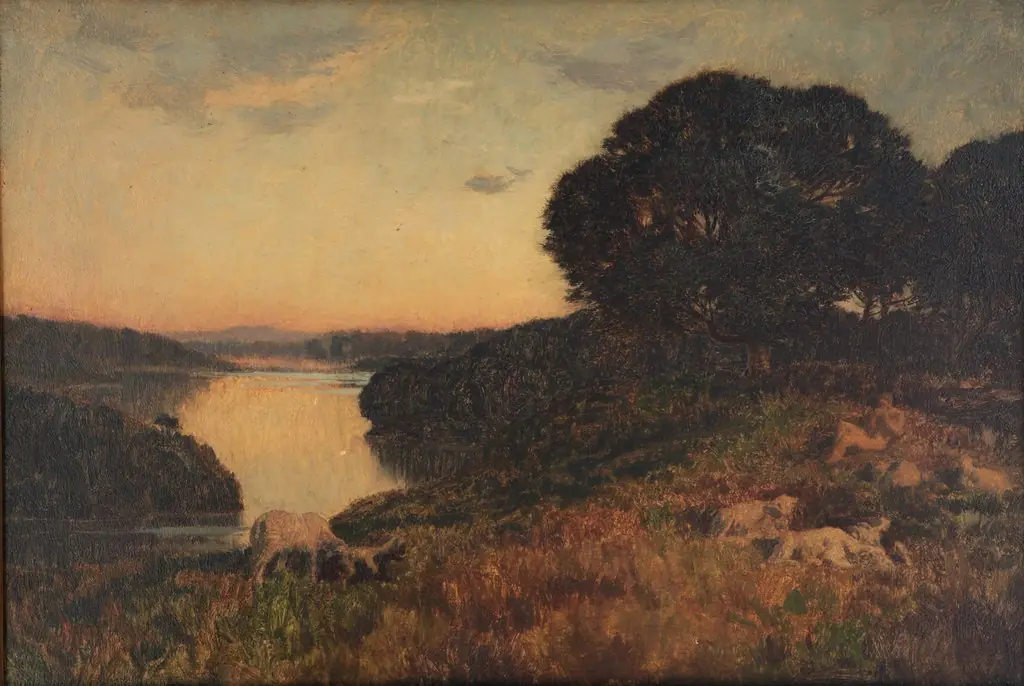
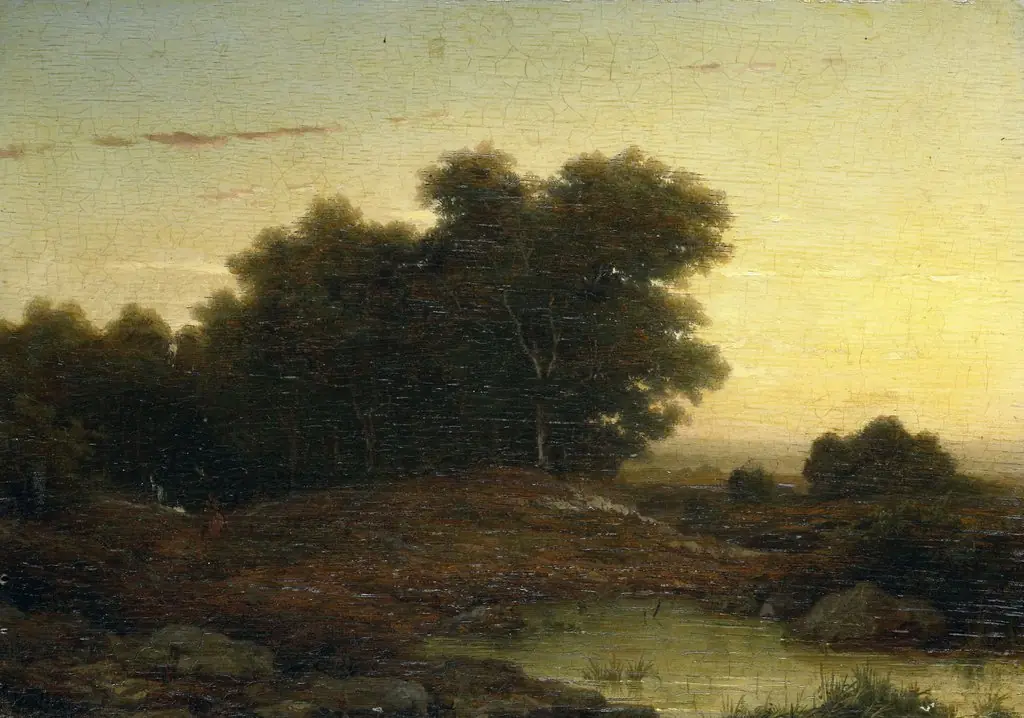
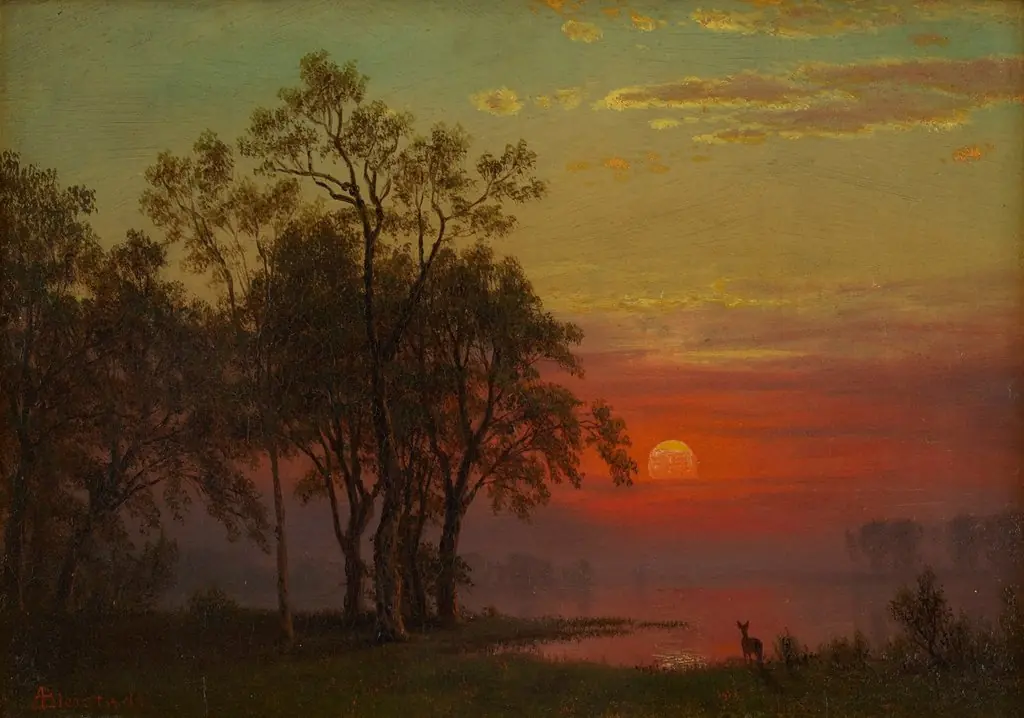
The scene captures a tranquil lakeside at twilight, with a solitary tree anchoring the foreground. Beyond it, rolling hills dissolve into atmospheric haze, and the water mirrors the sky’s subdued hues. The composition emphasizes stillness and the quiet transition from day to night, evoking a meditative mood rather than narrating a specific event or location.
Technique & Style
Ronald employed loose, fluid brushwork to render the sky’s fading light, blending soft pinks and whites in broad strokes. Details are minimized; forms are suggested rather than defined. The dark silhouette of the tree contrasts with the luminous horizon, creating depth through tone rather than line. This approach aligns with early impressionistic tendencies, prioritizing light and mood over precision.
History & Provenance
The painting remained in private hands until its acquisition by the Museum of Ethnography, where it is now preserved as part of a broader collection of Canadian visual culture. Its early date and stylistic departure from Ronald’s later abstract output make it a valuable artifact for understanding his artistic development and the broader landscape tradition in 19th-century Canada.
Context
Created during a period when Canadian artists were increasingly engaging with European landscape traditions, the work reflects the influence of plein air painting and the growing interest in capturing transient natural effects. Though not part of a formal movement, its emphasis on atmosphere aligns with broader 19th-century trends in North American and European art.
Legacy
While Ronald is primarily remembered for his abstract expressionist contributions, this early work reveals his foundational engagement with light and nature. It serves as a quiet counterpoint to his later, more radical compositions, offering insight into the evolution of his visual language and the enduring appeal of natural observation in Canadian art.
Artist & collection
Artist
William Ronald Smith (August 13, 1926 – February 9, 1998), known professionally as William Ronald, was a Canadian painter, best known as the founder of the influential Canadian abstract art group Painters Eleven in 1953…