Artwork
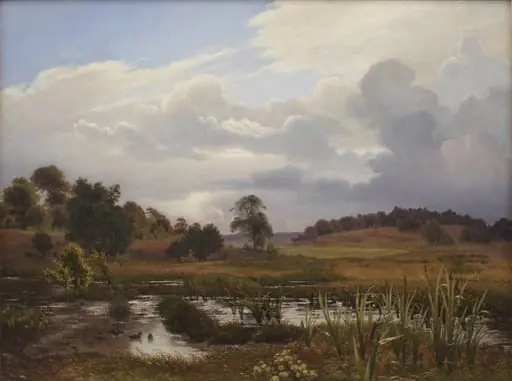
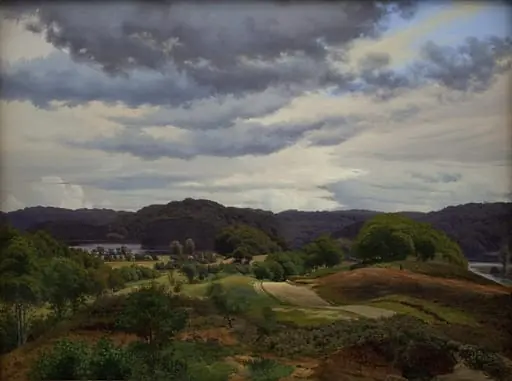
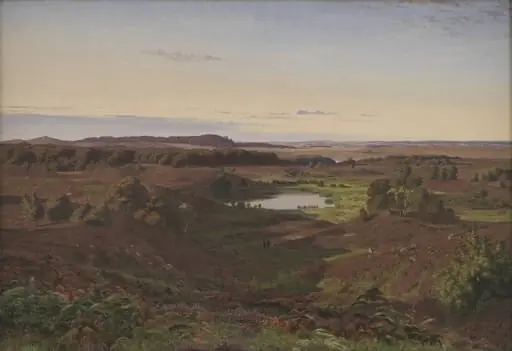
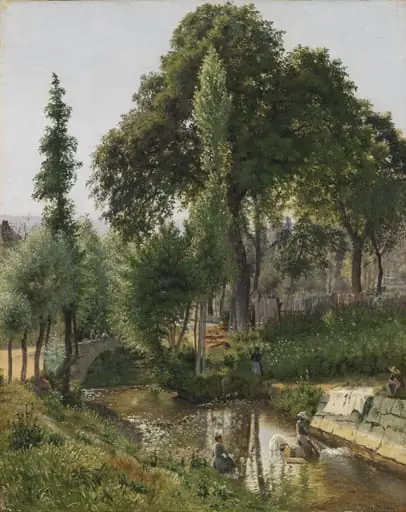
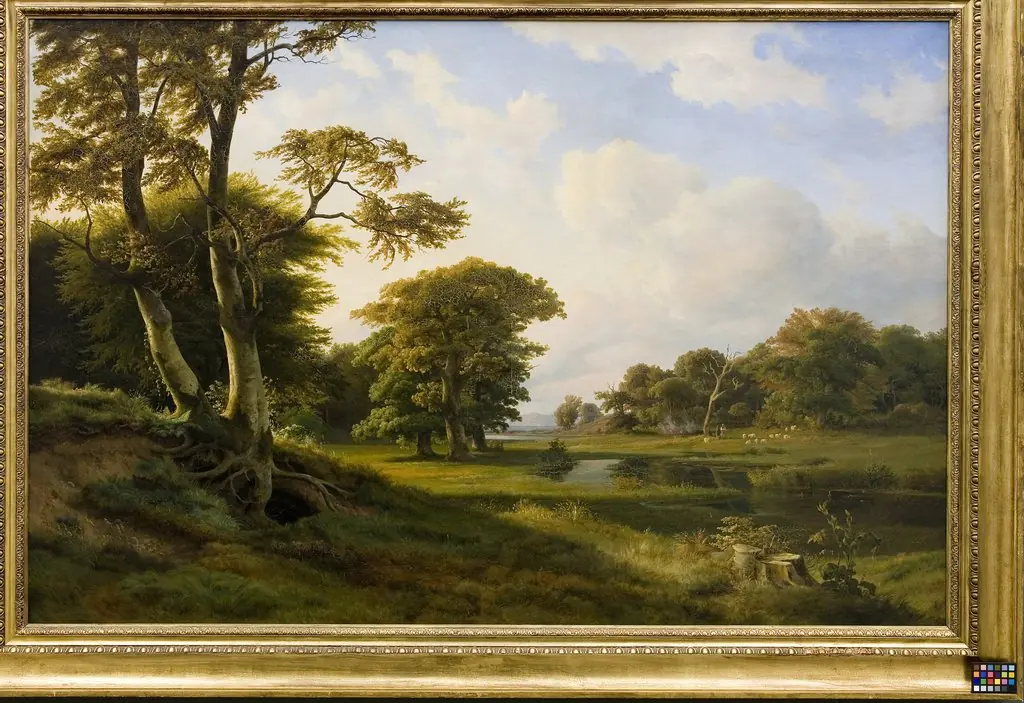
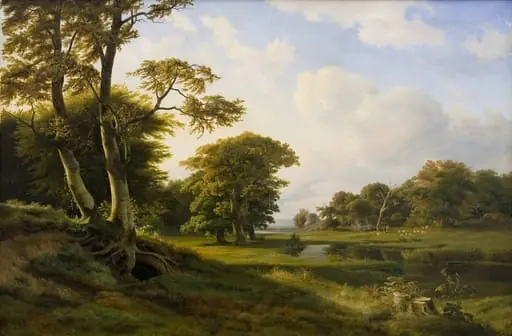
En sommerdag. Motiv fra Horneland ved Fåborg
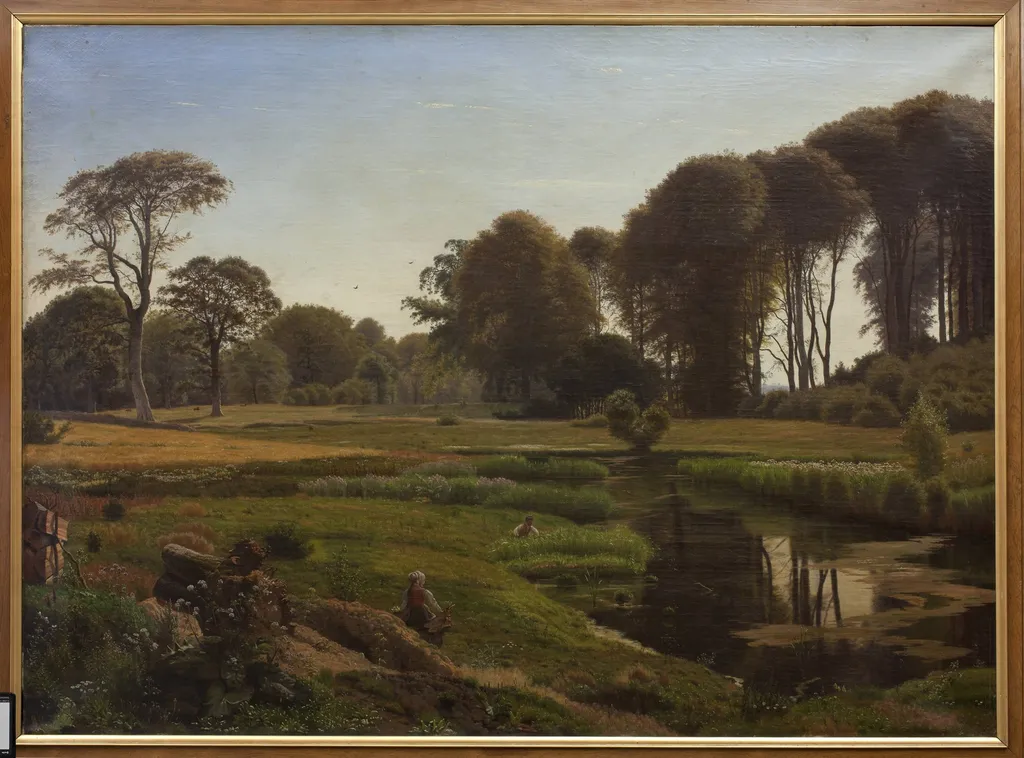
En sommerdag. Motiv fra Horneland ved Fåborg is a photography by the Impressionist artist Unknown artist. It dates from 1869 and is held in the collection of the Statens Museum for Kunst. Painted in 1869, *En sommerdag.
About this work
Overview
Motiv fra Horneland ved Fåborg* depicts a tranquil rural scene in Denmark.
Painted in 1869, *En sommerdag. Motiv fra Horneland ved Fåborg* depicts a tranquil rural scene in Denmark. Though attributed to William Ronald Smith in the source, this is incorrect; Smith was a 20th-century Canadian abstract artist and could not have created a 19th-century Danish landscape. The work is more likely by a Scandinavian painter of the period, possibly Danish, and is held in the Museum of Ethnography, though its classification there is unusual for a landscape.
Subject & Meaning
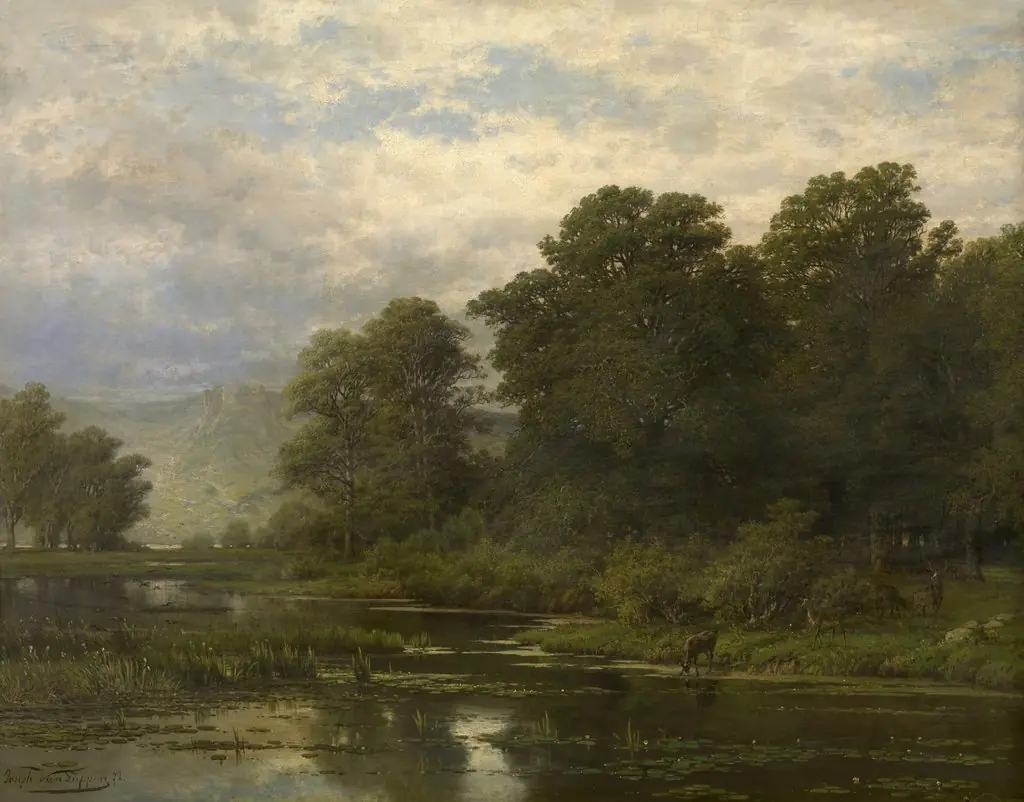
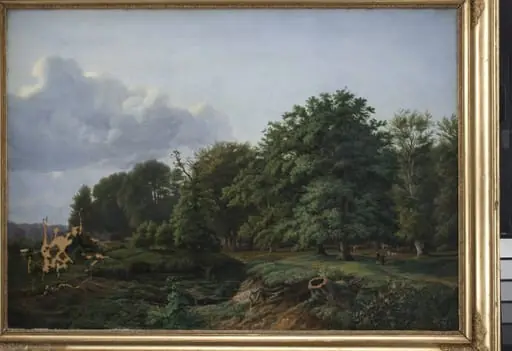
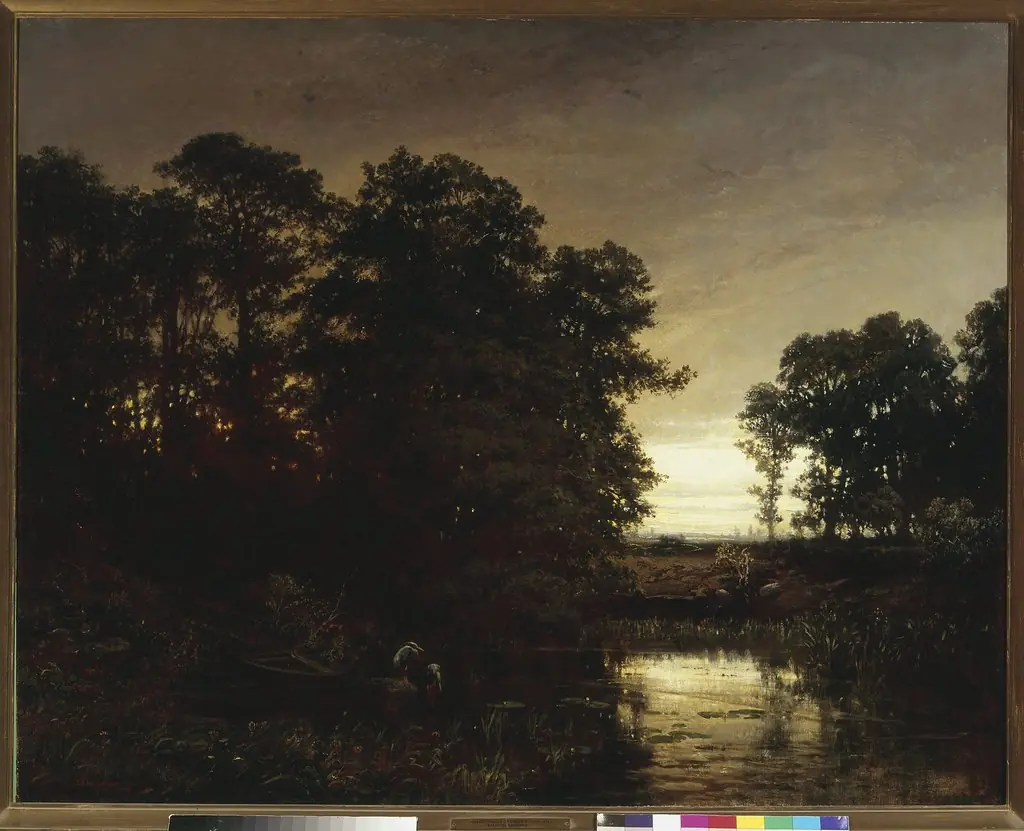
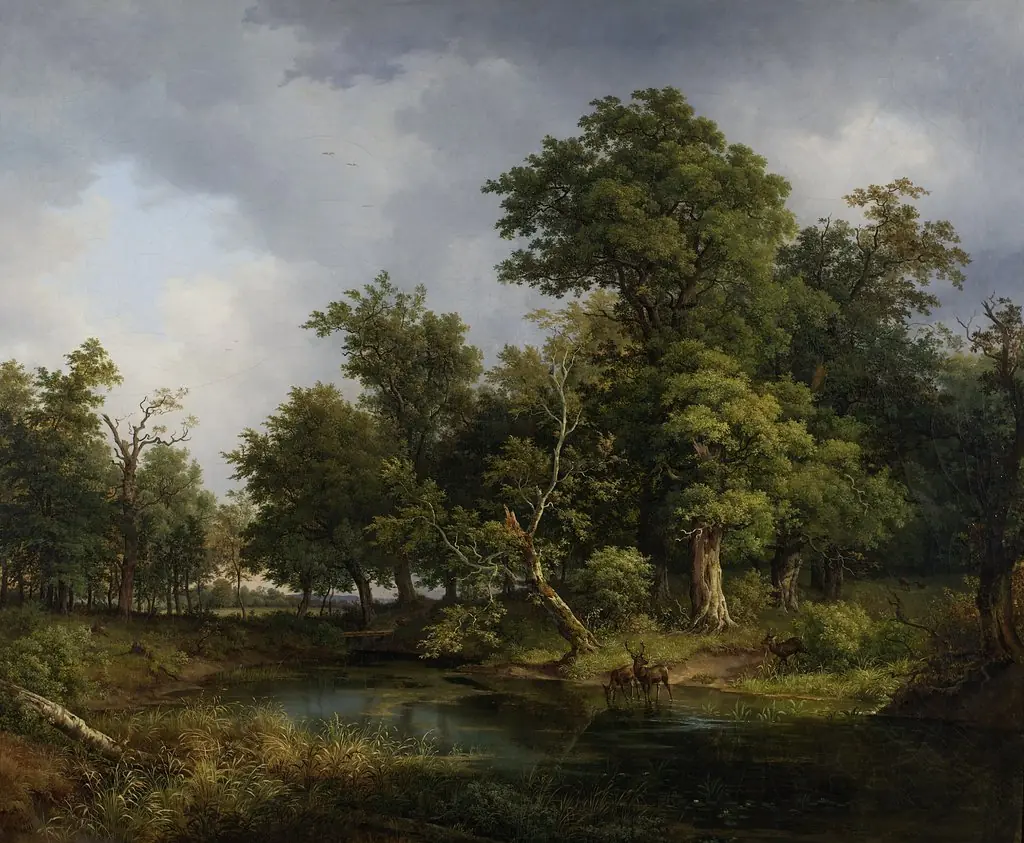
The painting shows two figures in a quiet Danish countryside: one seated on a stone beside a shallow stream, a basket nearby, and another standing at the water’s edge. The scene suggests a moment of rest or foraging, with no dramatic action. The stillness and unembellished setting reflect an interest in ordinary life, aligning with 19th-century realist tendencies that valued quiet observation over idealization.
Technique & Style
The brushwork is subdued, with soft transitions between tones. The sky is pale and even, casting gentle light that minimizes shadows and enhances the calm mood. Reflections in the water echo the surrounding greenery, reinforcing the sense of harmony. Colors are muted—earthy greens, soft browns, and pale blues—suggesting a restrained palette typical of Nordic landscape painting of the era.
History & Provenance
The painting entered the collection of the Museum of Ethnography, an institution more commonly associated with cultural artifacts than fine art. Its presence there may indicate early ethnographic interest in rural Danish life as a cultural expression. The attribution to William Ronald Smith is erroneous; the artist remains unidentified, though the style and date point to a Scandinavian painter active in the late 1860s.
Context
Created in 1869, the work emerged during a period when Scandinavian artists increasingly turned to local landscapes and peasant life as subjects, moving away from historical or mythological themes. This shift paralleled broader European realist movements, where everyday scenes were valued for their authenticity. Denmark’s rural regions, like Horneland, became focal points for artists seeking to capture national identity through place.
Legacy
Though not widely exhibited or studied today, the painting contributes to a quiet tradition of Nordic realism that emphasized atmosphere over narrative. Its placement in an ethnographic museum reflects early 20th-century efforts to document rural customs through visual records. The work’s true authorship remains unresolved, but its composition continues to offer insight into the aesthetic values of Danish landscape painting in the late 1800s.
Artist & collection
Artist
William Ronald Smith (August 13, 1926 – February 9, 1998), known professionally as William Ronald, was a Canadian painter, best known as the founder of the influential Canadian abstract art group Painters Eleven in 1953…