Artwork
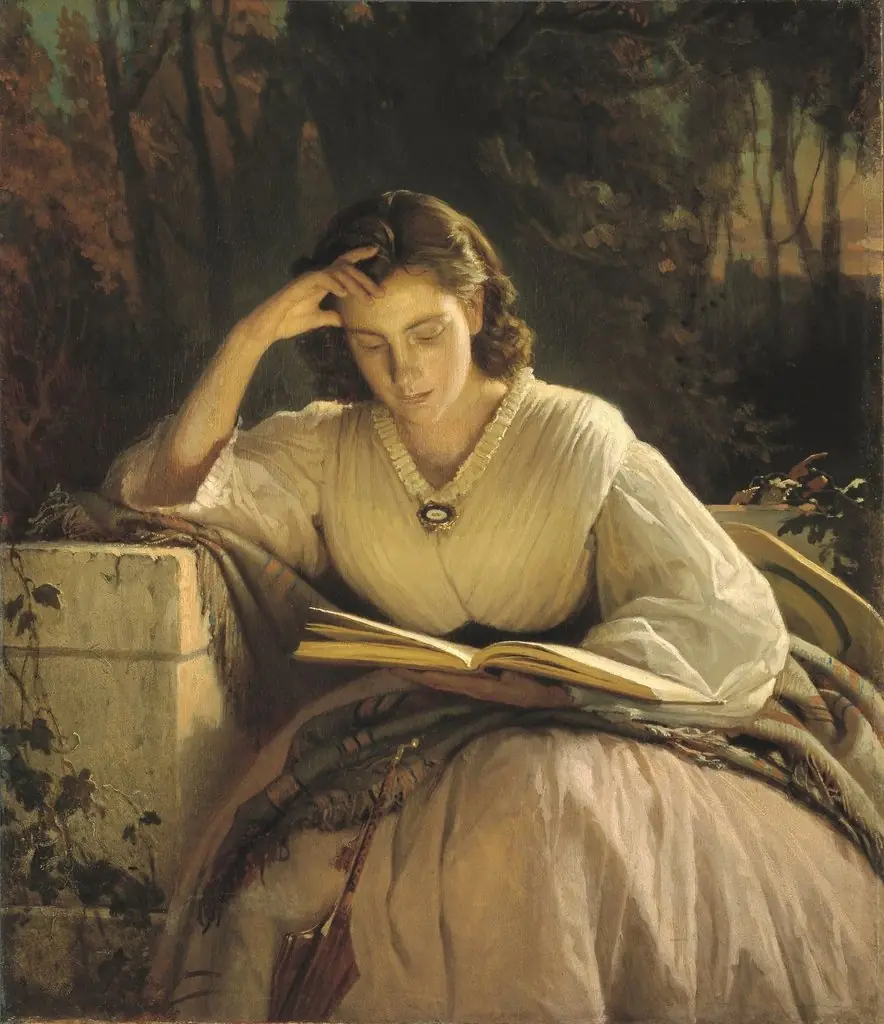
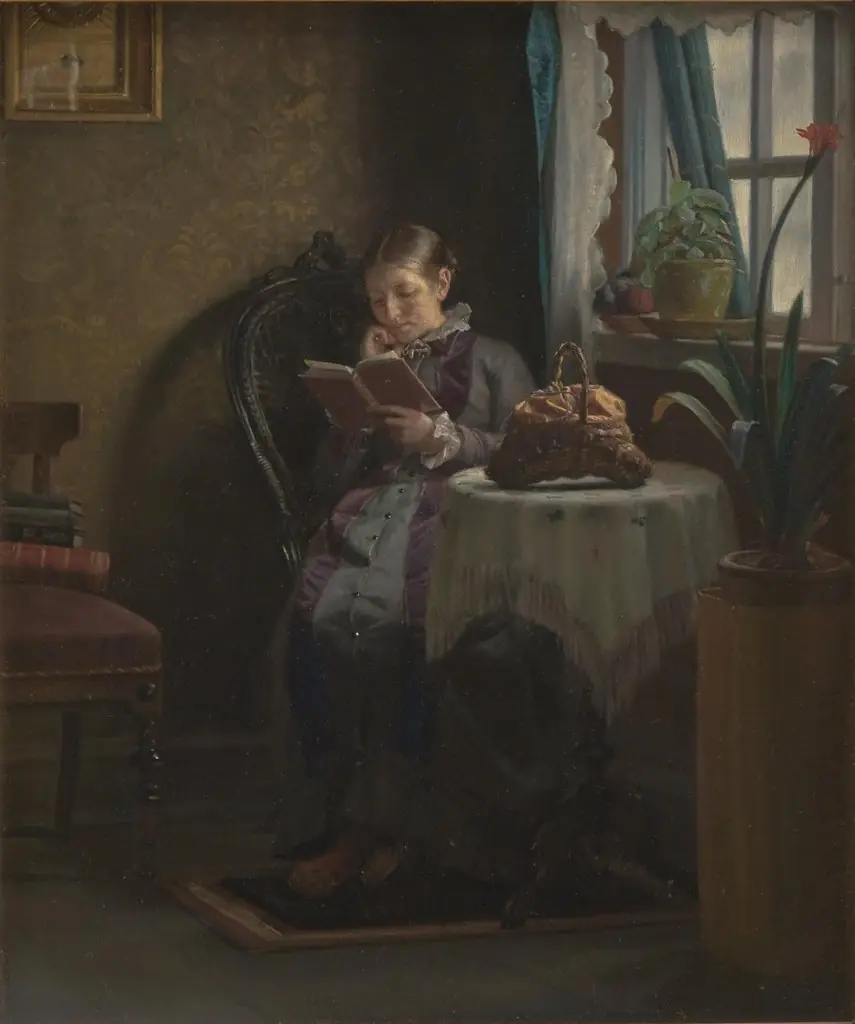
Læsende dame uden for en havedør
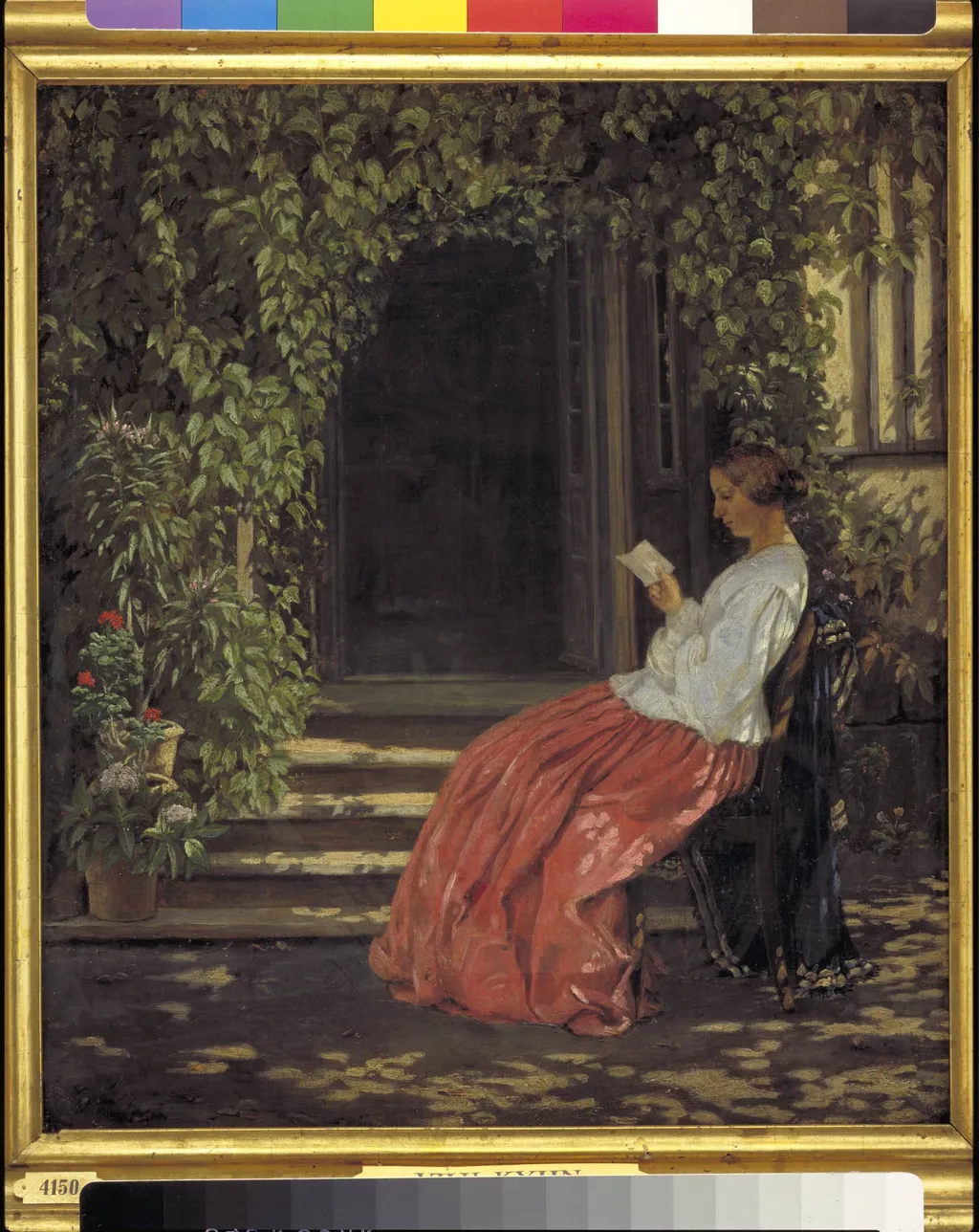
Læsende dame uden for en havedør is a photography by Unknown artist. It dates from 1868 and is held in the collection of the Statens Museum for Kunst.
About this work
Overview
It is held in the Museum of Ethnography’s collection, suggesting its cultural or ethnographic interest at the time of acquisition.
The painting *Læsende dame uden for en havedør* dates to approximately 1868 and is attributed to William Ronald Smith, a Canadian artist later associated with abstract expressionism. This work stands apart from his later abstract output, representing an early, figurative phase. It is held in the Museum of Ethnography’s collection, suggesting its cultural or ethnographic interest at the time of acquisition.
Subject & Meaning
The painting portrays a woman seated on stone steps outside a dwelling, deeply absorbed in reading. Her attire—a white shirt and deep red skirt—contrasts subtly with the surrounding greenery. Her stillness and focused gaze suggest an intimate moment of solitude. The scene evokes quiet contemplation, framing reading not as a social act but as a private, inward experience, enhanced by the natural setting.
Technique & Style
Smith employs soft modeling and careful attention to light to render the woman and her environment. Dappled sunlight filters through foliage, casting gentle shadows that define form without harsh contrast. The brushwork is restrained, favoring tonal harmony over detail. The composition directs attention to the figure through spatial framing and the directional flow of light, creating a sense of calm immediacy.
History & Provenance
The painting entered the Museum of Ethnography’s collection in the late 19th or early 20th century, though its exact acquisition path remains undocumented. Its presence in an ethnographic institution, rather than a fine arts collection, may reflect contemporary interest in depictions of everyday life across cultures. No records indicate it was exhibited publicly during Smith’s lifetime.
Context
Created in the late 1860s, the work aligns with European traditions of domestic interior and garden scenes, common in academic and realist painting. Smith, then in his early career, had not yet developed his abstract style. The painting reflects a broader 19th-century fascination with quiet, introspective female figures, often idealized as embodiments of moral or intellectual serenity.
Legacy
Though overshadowed by Smith’s later abstract works, this painting offers insight into his formative years and technical range. Its preservation in an ethnographic museum underscores shifting perceptions of art’s cultural value. It remains a rare example of his figurative output, contributing to scholarly understanding of his artistic evolution before his shift toward abstraction.
Artist & collection
Artist
William Ronald Smith (August 13, 1926 – February 9, 1998), known professionally as William Ronald, was a Canadian painter, best known as the founder of the influential Canadian abstract art group Painters Eleven in 1953…