Artwork
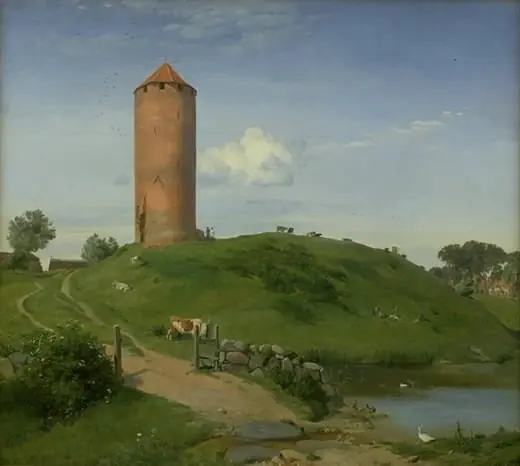
The Goose Tower in Vordingborg, Zealand
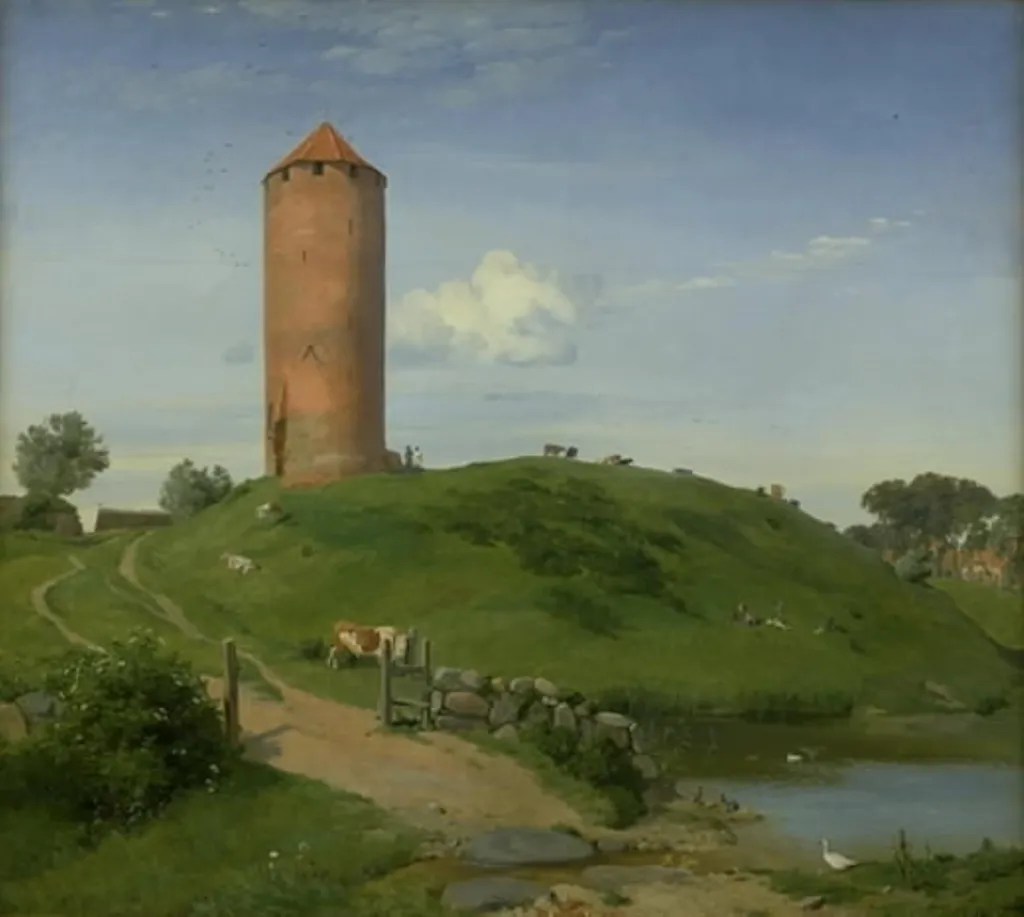
The Goose Tower in Vordingborg, Zealand is a photography by the Romanticist artist Unknown. It dates from 1842 and is held in the collection of the Statens Museum for Kunst.
About this work
In front of it, a winding dirt path leads down to a small stream, where a lone goose stands by the water.
This photo shows a tall, round brick tower on a grassy hill. The tower has a slanted roof and small windows near the top. In front of it, a winding dirt path leads down to a small stream, where a lone goose stands by the water. The hill is dotted with a few cows and trees, and the sky above is pale blue with soft clouds.
The tower’s name is the Goose Tower, and it’s located in Vordingborg, Denmark. The photo was taken in 1842, which makes it one of the earliest examples of landscape photography.
If you like this, check out Romanticism to see how nature and emotion shaped early photography.
Overview
This photograph, taken in 1842, captures the Goose Tower in Vordingborg, Denmark, one of the earliest known landscape images produced using photographic technology. The tower, a medieval stone structure, stands on a gentle hill overlooking a quiet stream. The composition includes surrounding pastureland, scattered cattle, and a single goose near the water, all rendered in the soft tonal range characteristic of early photographic processes.
Subject & Meaning
The image centers on a historic tower, its name derived from a local legend involving a goose and a royal hunt. The presence of the goose, the pastoral setting, and the solitary path suggest a quiet, contemplative mood. Rather than emphasizing grandeur, the photograph invites attention to the harmony between architecture and the natural landscape, reflecting a growing interest in everyday rural scenes during the early photographic era.
Technique & Style
Executed using the daguerreotype process, the image exhibits fine detail in the tower’s brickwork and subtle gradations in the sky and grass. The camera’s fixed perspective and long exposure time required stillness, resulting in a composed, almost painterly arrangement. The soft lighting and muted tones align with early photographic aesthetics, prioritizing clarity and atmospheric tone over dramatic contrast.
History & Provenance
The photograph was made in 1842 by an early practitioner of the medium, likely one of the first to document Danish architecture through photography. It entered the collection of the Museum of Ethnography in the late 19th century, where it was preserved as an example of early documentary practice. Its survival is rare, as many early photographic plates were lost or degraded over time.
Context
In the 1840s, photography emerged as a tool for recording architecture and landscape, often serving scientific or antiquarian interests. This image reflects a broader European trend of documenting historical sites as industrialization transformed the countryside. Unlike romanticized paintings, such photographs offered a new kind of visual evidence—unembellished, precise, and grounded in place.
Legacy
As one of the earliest photographic records of a Danish landmark, the image contributed to the development of architectural documentation through the lens. It helped establish photography’s role in preserving cultural heritage before widespread use of the medium. Today, it remains a reference point for understanding how early photographers engaged with history, nature, and the quiet rhythms of rural life.
Artist & collection

 Domestic Scene
 Giacomo and Cardinal Marco, investing Andrea, Abbot of San Zeno, with his Benefice
 The Nymph of Fontainebleau
 Portrait of a Woman
 Madonna and Child with Saints in the Enclosed Garden
 Venus and Minerva
 Family Group of Four on Sofa
 Wall painting from Room H of the Villa of P. Fannius Synistor at Boscoreale
 Landscape at Kolding, Jutland, at Sunset
 A Building near Tor di Quinto outside Rome
 A Building near Tor di Quinto outside Rome
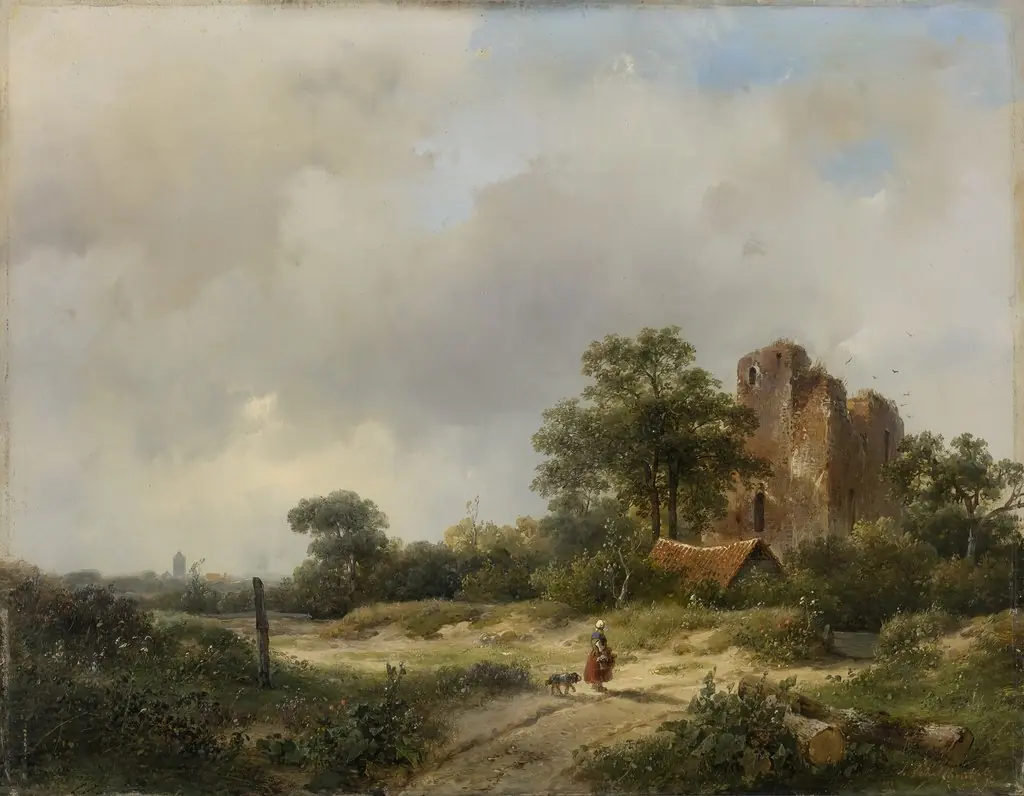 Landscape with the ruins of Castle Brederode in Santpoort
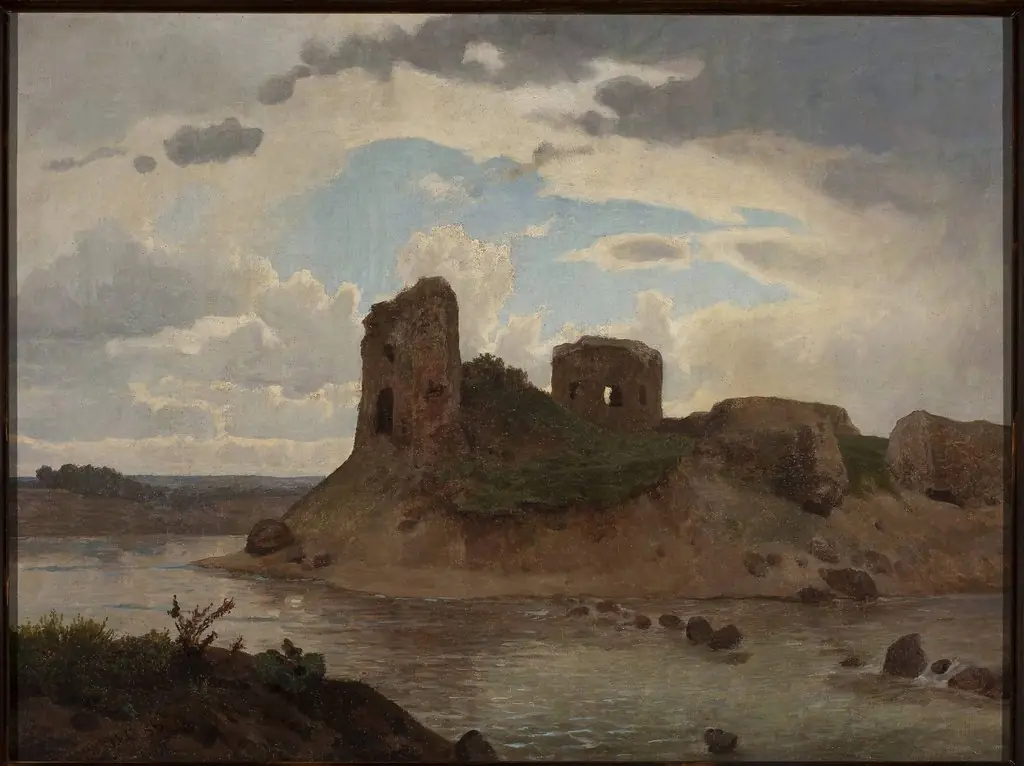 Ruins of the Bobrowniki castle by the Vistula River
 The Island of Brandsø with Wedellsborg Forest, Funen, in the Distance
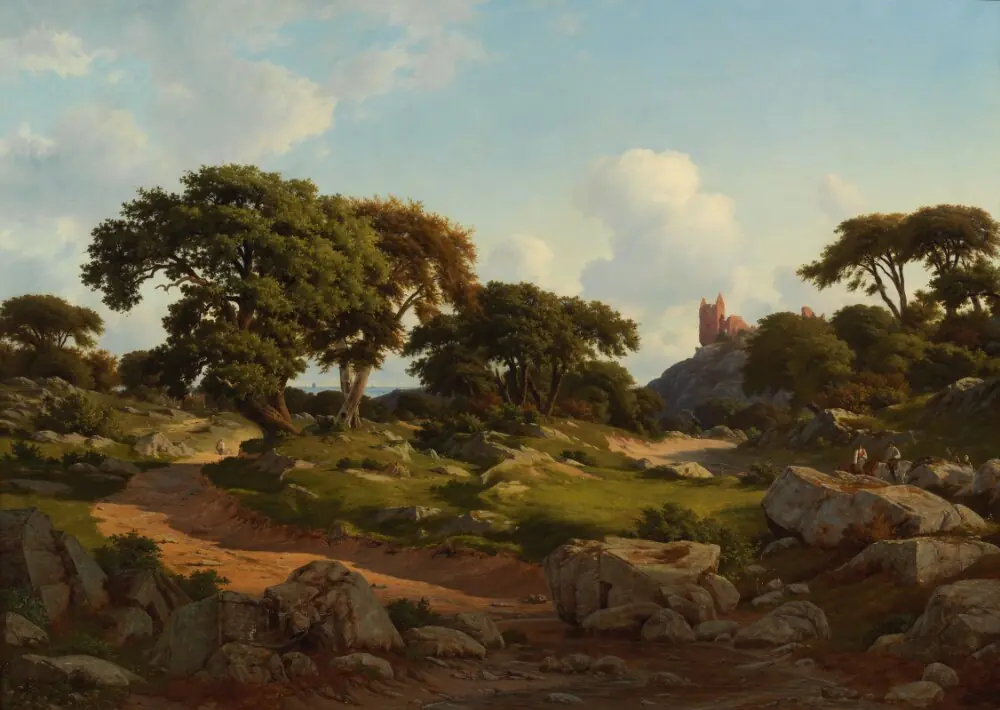 Landscape with a Ruined Castle, Hammershus on the Island Bornholm
 Landscape with Farmstead
 Italina landscape with round tower
 Udsigt mod Roskilde fra et husmandssted
 River Landscape with Ruin
 The Goose Tower in Vordingborg, Zealand