Artwork
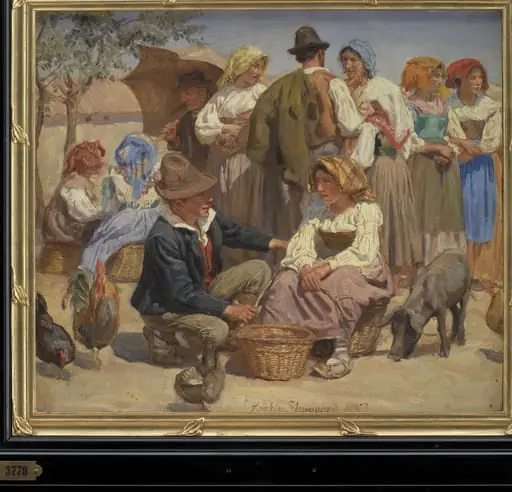
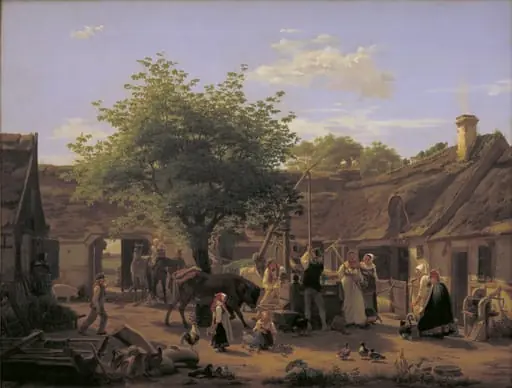
Sjællandske høstpiger ved en brønd
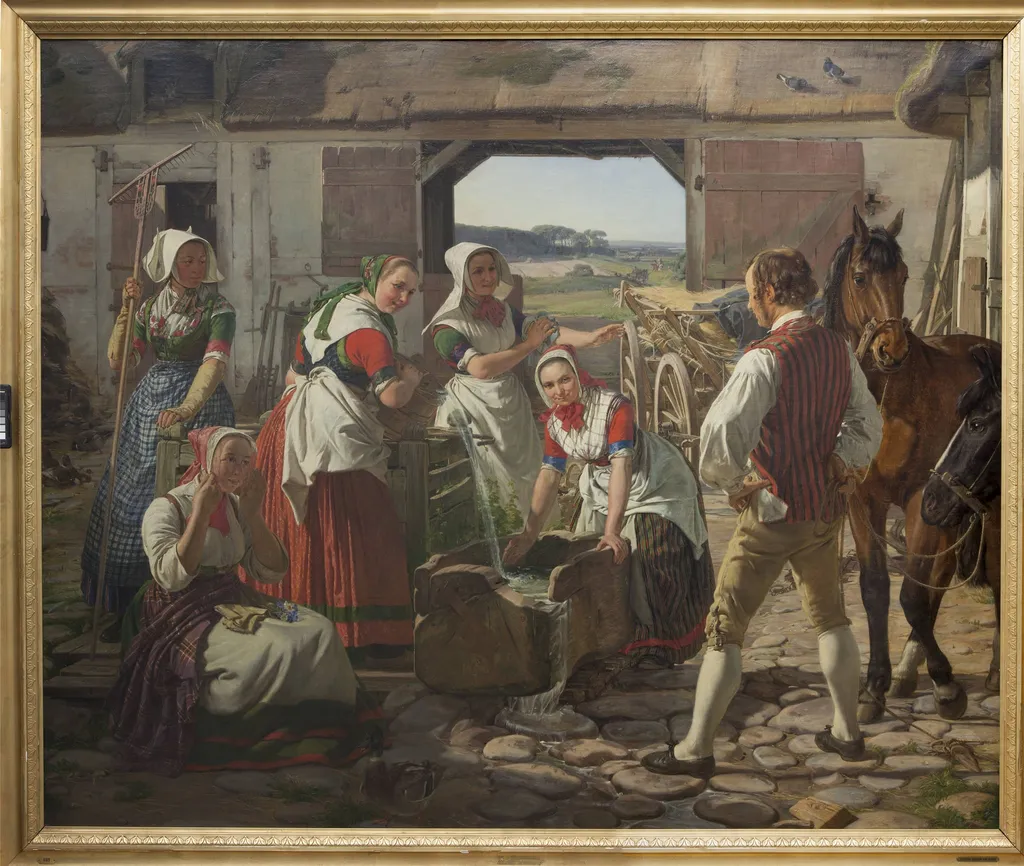
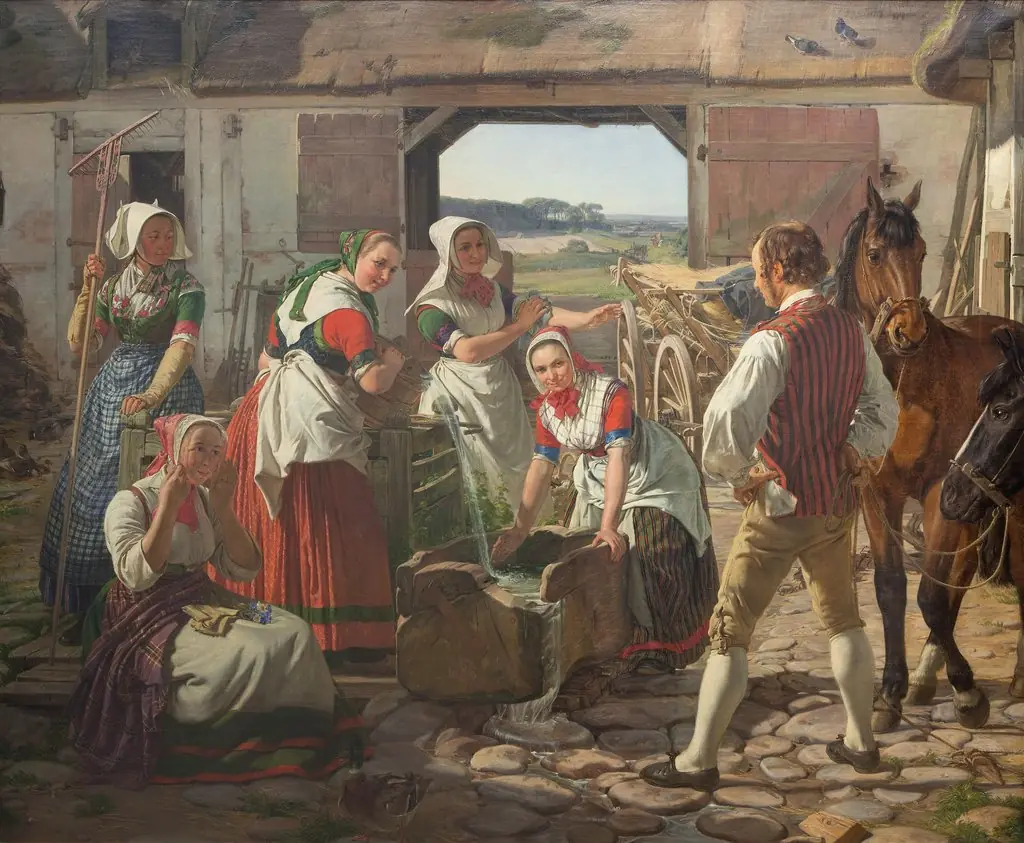
Sjællandske høstpiger ved en brønd is a photography by the Impressionist artist Unknown. It dates from 1850 and is held in the collection of the Statens Museum for Kunst. Created in 1850, this image depicts rural laborers on the Danish island of Zealand.
About this work
Four women in colorful aprons and headscarves stand or kneel around the well, while a man leads a horse outside a barn.
This photo shows a group of farmworkers near a stone well. Four women in colorful aprons and headscarves stand or kneel around the well, while a man leads a horse outside a barn. The women hold tools like buckets and sticks, and the scene looks like a busy day of work.
The photo was taken in 1850, capturing real farm life with clear details. The clothing and tools suggest hard, daily labor.
Next, look up Realism to see how artists showed everyday life like this.
Overview
Created in 1850, this image depicts rural laborers on the Danish island of Zealand. It captures a moment of daily work near a stone well, with four women and a man engaged in routine tasks. The photograph was made during a period when visual documentation of peasant life gained attention, offering a direct record of agricultural routines rather than idealized scenes.
Subject & Meaning
The image portrays farmwomen gathering water and preparing tools, while a man tends to a horse near a barn. Their clothing—colorful aprons and headscarves—reflects regional peasant dress of the time. The scene conveys the physical demands of rural existence, emphasizing collective labor and the centrality of water access in agricultural communities without romanticizing their conditions.
Technique & Style
Rendered as a photograph, the work uses natural light and sharp focus to record textures: the rough stone of the well, woven fabrics, and wooden tools. The composition is unposed, with figures arranged naturally around the well, suggesting candid observation. The clarity of detail aligns with early photographic practices that valued accuracy over artistic embellishment.
History & Provenance
The image was produced in 1850 and later acquired by the Museum of Ethnography, where it remains part of a collection documenting Nordic rural life. Its preservation reflects 19th-century interest in ethnographic records, particularly as industrialization prompted efforts to archive vanishing traditional ways of life in Denmark.
Context
In mid-19th-century Denmark, increasing attention was paid to the lives of peasants and laborers, influenced by emerging social sciences and nationalist sentiment. This photograph aligns with broader European trends toward documenting everyday work, contrasting with academic art’s preference for historical or mythological subjects.
Legacy
As one of the earliest photographic records of Danish rural labor, it contributes to the historical understanding of agrarian society before mechanization. Its value lies in its unembellished depiction of daily routines, offering scholars and the public a tangible link to the material conditions of 19th-century farm life.
Artist & collection

 Domestic Scene
 Giacomo and Cardinal Marco, investing Andrea, Abbot of San Zeno, with his Benefice
 The Nymph of Fontainebleau
 Portrait of a Woman
 Madonna and Child with Saints in the Enclosed Garden
 Venus and Minerva
 Family Group of Four on Sofa
 Wall painting from Room H of the Villa of P. Fannius Synistor at Boscoreale