Artwork
To mænd ved en brønd
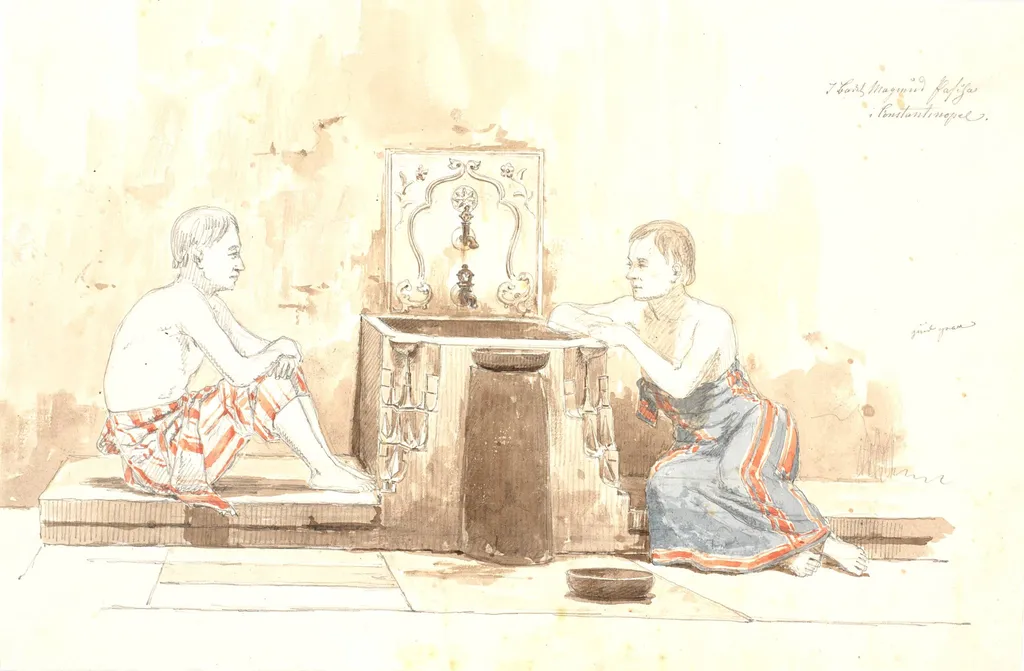
To mænd ved en brønd is an unspecified painting by the Romanticist artist Unknown. It dates from 1836 and is held in the collection of the Statens Museum for Kunst.
About this work
Overview
Painted in 1836, To mænd ved en brønd depicts two men beside a well, rendered in oil on canvas. The work is part of the collection at the Museum of Ethnography, where it is valued for its quiet observation of everyday rural life in 19th-century Denmark. Its modest scale and unadorned subject reflect a focus on ordinary individuals rather than grand historical or mythological themes.
Subject & Meaning
The two figures, dressed in simple, worn garments, suggest rural laborers engaged in a routine task—drawing water. Their postures and attire convey a sense of quiet dignity and practicality, hinting at the rhythms of peasant life. The well, a communal fixture, anchors the scene in a shared social reality, emphasizing endurance and necessity over drama or narrative.
Technique & Style
The artist employs chiaroscuro to model the figures with subtle gradations of light and shadow, lending volume and presence to their forms. Brushwork is restrained, avoiding flourish in favor of clarity. The palette is muted, dominated by earth tones, reinforcing the scene’s authenticity. Background elements are softened, directing attention to the men and their immediate surroundings.
History & Provenance
The painting entered the Museum of Ethnography’s collection in the late 19th century, likely acquired as part of a broader effort to document Danish folk life. Its attribution to the artist remains consistent in institutional records, though little is documented about its early ownership or exhibition history prior to museum acquisition.
Context
Created during a period of rising interest in national identity and rural traditions, the work aligns with a cultural shift toward valuing everyday peasant life. While not overtly political, its quiet realism resonated with contemporary movements that sought to preserve and portray the customs of Denmark’s non-urban populations.
Legacy
The painting endures as a quiet example of 19th-century Danish genre painting, valued for its unembellished portrayal of labor and dignity. It contributes to a broader visual archive of rural existence, influencing later artists interested in social realism and the aesthetic of the ordinary.
Artist & collection

 Domestic Scene
 Giacomo and Cardinal Marco, investing Andrea, Abbot of San Zeno, with his Benefice
 The Nymph of Fontainebleau
 Portrait of a Woman
 Madonna and Child with Saints in the Enclosed Garden
 Venus and Minerva
 Family Group of Four on Sofa
 Wall painting from Room H of the Villa of P. Fannius Synistor at Boscoreale
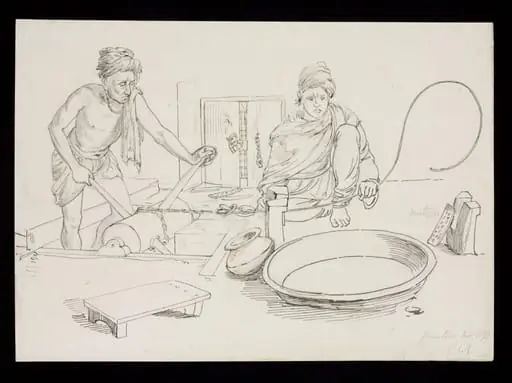 Two men working with machines to produce silver gilt wire
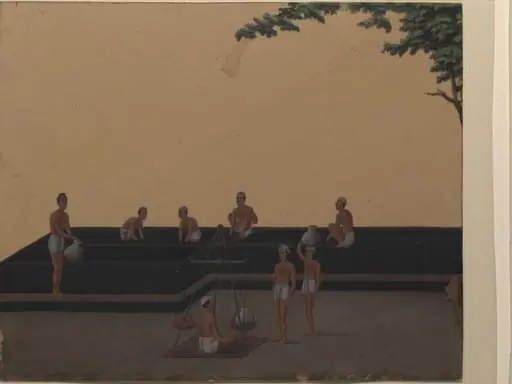 One of nineteen drawings illustrating processes in the manufacture of opium at the Opium Factory at Gulzarbagh, Patna, in Bihar.
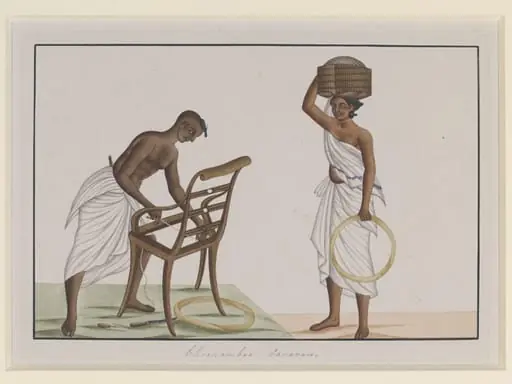 A chair-caner and his wife
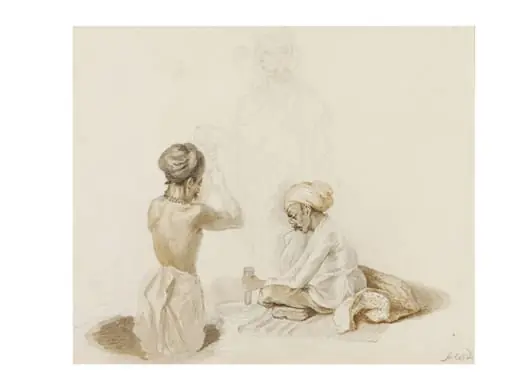 An Indian metal-worker seated cross-legged with his assistant, who raises and hammer, and another figure standing behind
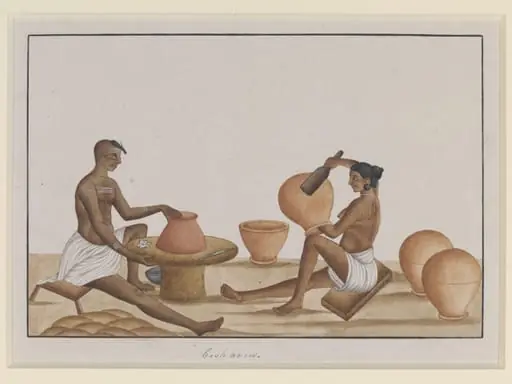 A potter and his wife
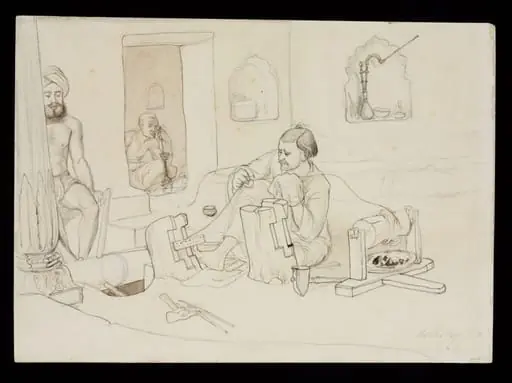 Three men in a workshop producing silver gilt wire
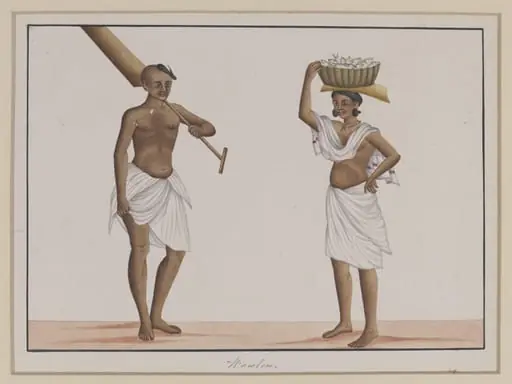 A fisherman and his wife
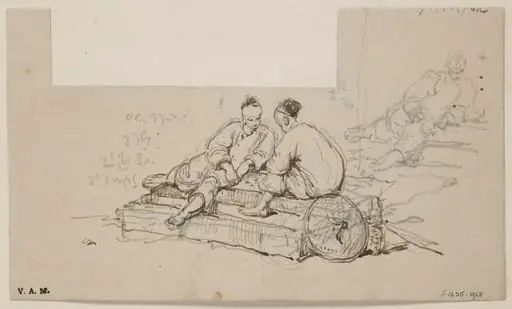 Two figures seated on a pair of steps
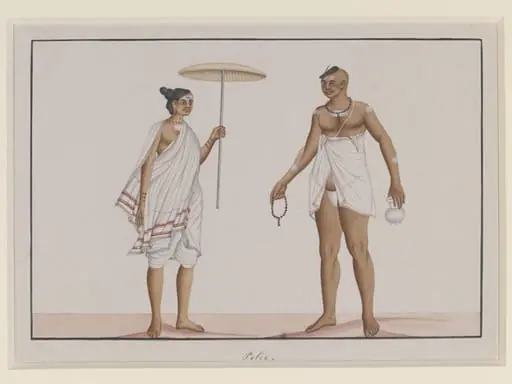 A Brahmin and his wife
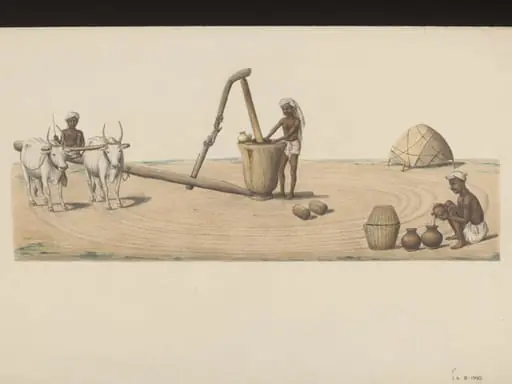 Oil monger pressing good oil
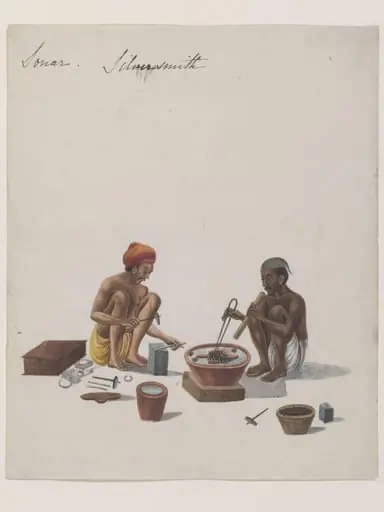 A silversmith with an assistant
 Untitled