Artwork
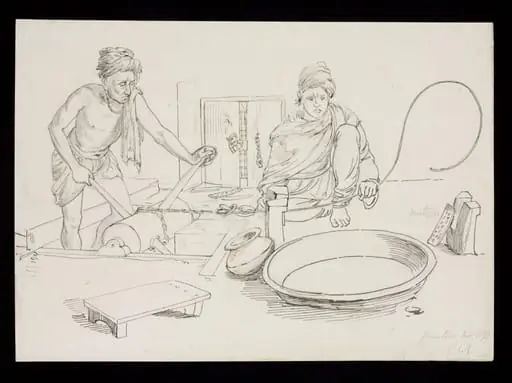
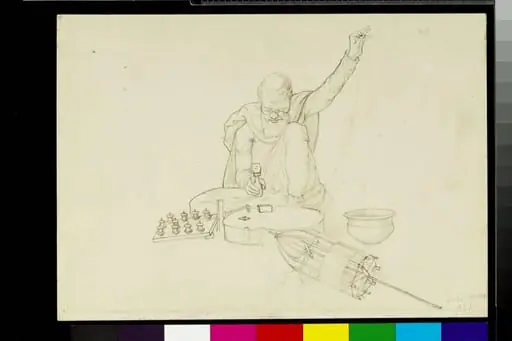
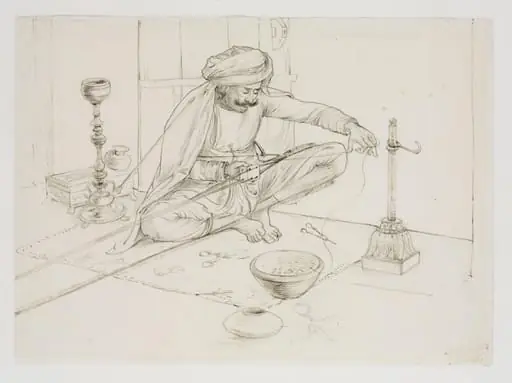
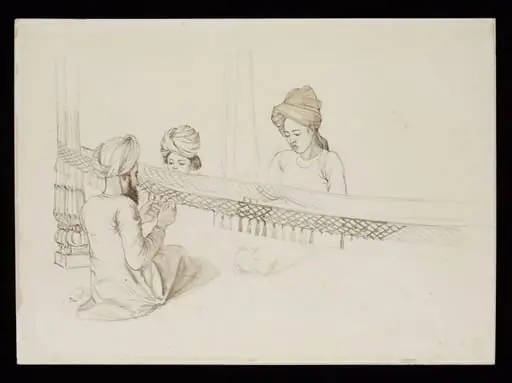
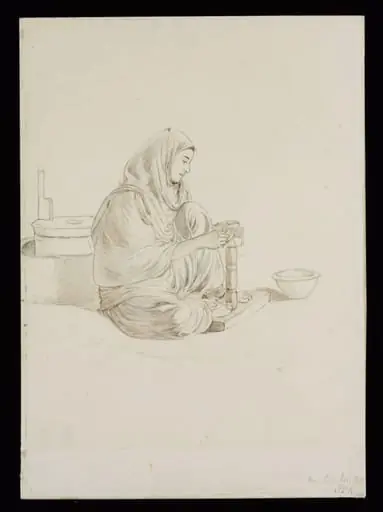
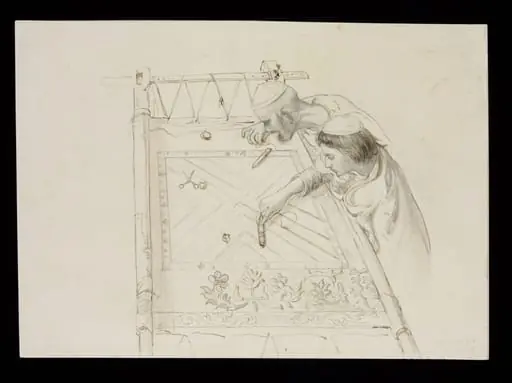
Three men in a workshop producing silver gilt wire
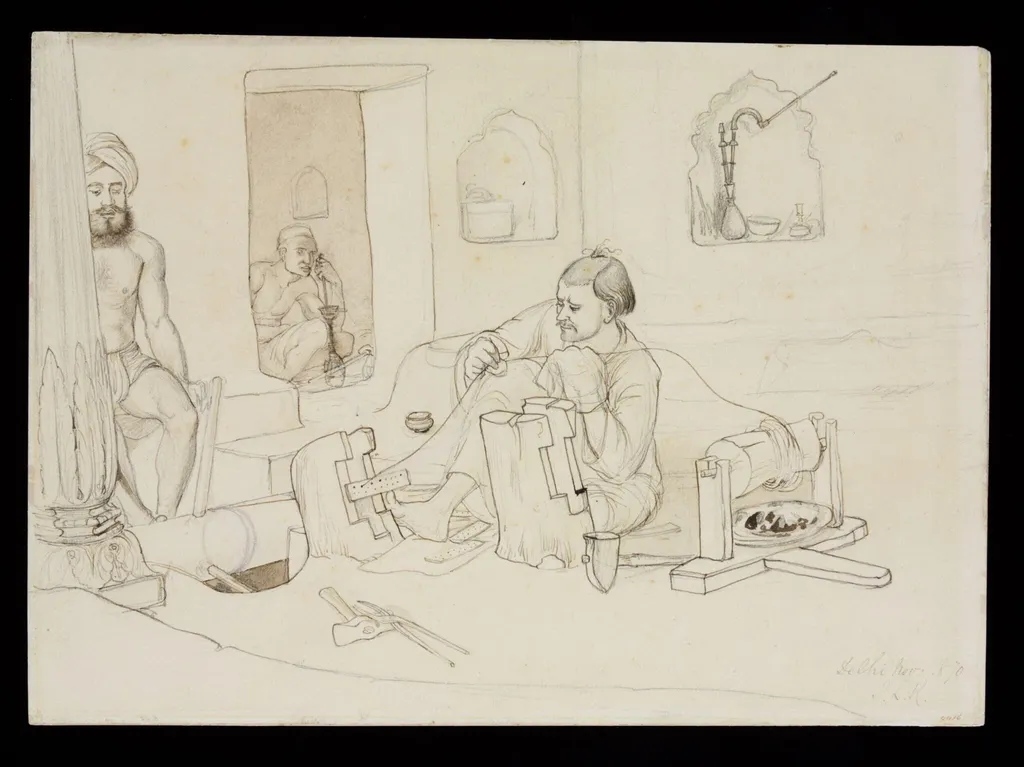
Three men in a workshop producing silver gilt wire is a drawing by the Impressionist artist John Lockwood Kipling. It dates from 1870 and is held in the collection of the Victoria and Albert Museum.
About this work
He had a interesting career, including teaching and decorative design work, and was even involved in the decoration of the Victoria and Albert Museum.
This drawing shows three men in a workshop producing silver gilt wire. It's a drawing from 1870.
John Lockwood Kipling was the artist who created this work. He had a interesting career, including teaching and decorative design work, and was even involved in the decoration of the Victoria and Albert Museum.
To learn more about the style and techniques used in this drawing, look up the movement: Realism.
Overview
John Lockwood Kipling’s 1870 drawing records a workshop in Delhi where three artisans are engaged in the production of silver‑gilt wire. Executed as a single‑sheet study, the work forms part of a series commissioned by the British administration to document Indian craft practices during the late nineteenth century.
Subject & Meaning
The composition centers on three male workers positioned around a workbench, each manipulating tools to twist and finish the metallic filament. By foregrounding the labor and materiality of the process, the image underscores the technical skill involved in traditional metalworking and offers a visual inventory of a craft that was then considered both economically and culturally significant.
Technique & Style
Rendered in fine pen and ink with delicate hatching, the drawing employs a realist approach that emphasizes accurate observation over decorative embellishment. Kipling’s linear precision captures the texture of the metal, the sheen of the gilt, and the subtle play of light across the workshop’s interior, reflecting the broader Victorian interest in empirical documentation.
History & Provenance
The study was produced during Kipling’s government‑appointed tour of the North‑West Provinces in 1870, a project aimed at recording indigenous artisanship. After its creation, the drawing entered the archives of the School of Art and Industry in Bombay, where Kipling served as architectural sculptor and later principal, before being transferred to the Victoria and Albert Museum’s collection of colonial-era works.
Context
Kipling’s career bridged teaching, architectural decoration, and the promotion of Indian crafts at institutions such as the Mayo College of Arts in Lahore. The drawing reflects his broader mission to preserve traditional manufacturing techniques at a time when European industrial goods were displacing local production, aligning with contemporary efforts to catalogue and sustain native arts.
Artist & collection
Artist
John Lockwood Kipling filled sketchbooks with the daily life he saw around him in British India, drawing craftsmen at work, farmers at market, and seed planters in fields.