Artwork
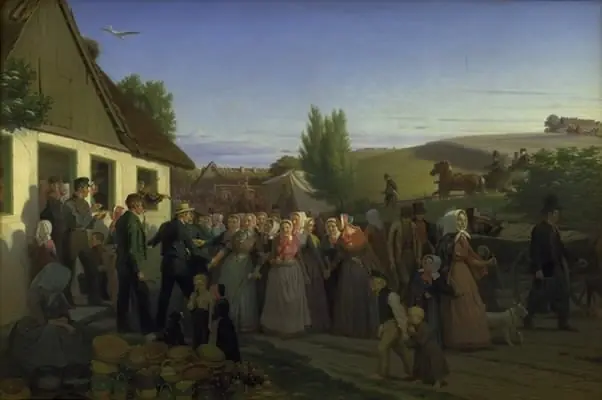
St. Hansfest i Tisvilde
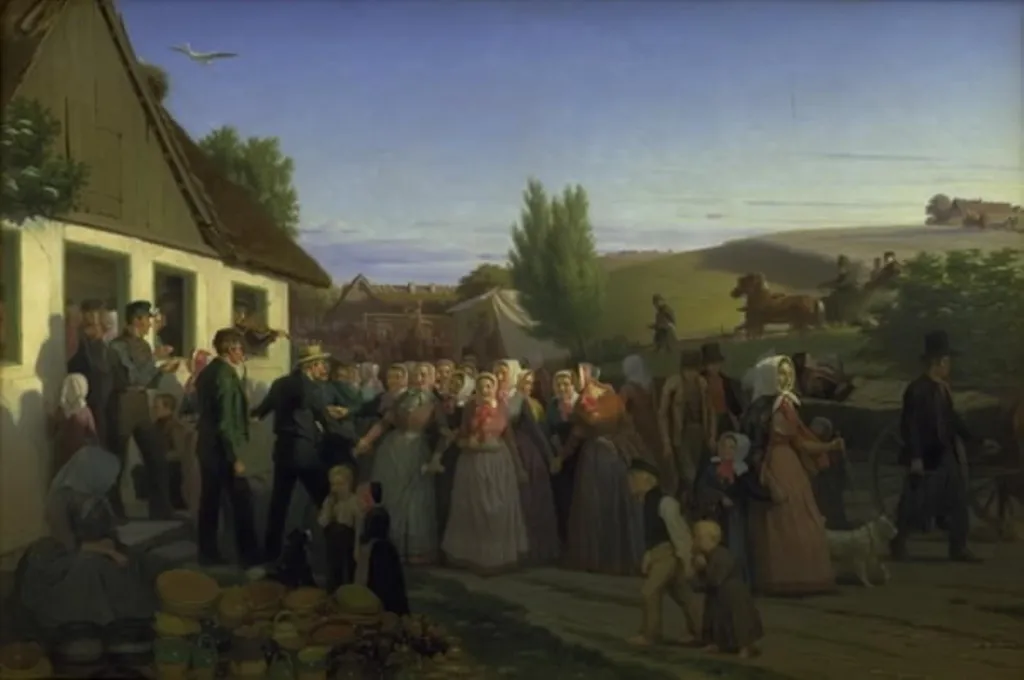
St. Hansfest i Tisvilde is a photography by the Impressionist artist Unknown. It dates from 1858 and is held in the collection of the Statens Museum for Kunst. St.
About this work
Overview
The work is held in the collection of the Museum of Ethnography, where it serves as a record of regional customs and social dynamics.
St. Hansfest i Tisvilde, painted in 1858, depicts a midsummer celebration in the Danish village of Tisvilde. The scene captures a moment of communal gathering, rendered with attention to ordinary details rather than idealized forms. It is part of a broader 19th-century movement that valued direct observation of daily life. The work is held in the collection of the Museum of Ethnography, where it serves as a record of regional customs and social dynamics.
Subject & Meaning
The painting portrays a local St. John’s Eve festival, a traditional Danish midsummer event marked by bonfires and socializing. Figures are arranged naturally: men near the doorway, women conversing in the foreground, children playing, and a horse tethered nearby. The attire—mixing practical and formal elements—suggests a blend of celebration and routine. The scene reflects community cohesion and seasonal ritual, not spectacle or hierarchy.
Technique & Style
The artist employed a loose, observational brushwork that prioritizes light and atmosphere over precise detail. Soft evening light bathes the scene, enhancing the sense of time and place. Colors are muted yet harmonious, with no dramatic contrasts. The composition avoids theatricality, favoring a candid, almost snapshot-like quality. This approach aligns with emerging realist tendencies in Scandinavian art of the period.
History & Provenance
Created in 1858, the work entered the Museum of Ethnography’s collection shortly after its completion. Its preservation there reflects early institutional interest in documenting folk life as cultural heritage. Unlike many contemporary works focused on myth or nobility, this painting was valued for its unembellished portrayal of rural Danish society. Its provenance remains largely unchanged since acquisition.
Context
In mid-19th-century Denmark, a growing interest in national identity spurred artists to depict everyday rural life. St. Hansfest i Tisvilde emerged amid this shift, alongside similar works that recorded local customs before industrialization altered them. The painting reflects broader European Realist currents but remains grounded in specific regional traditions, offering a quiet counterpoint to urban or academic subjects.
Legacy
The painting stands as a modest but significant document of Danish folk life in the mid-1800s. It influenced later artists seeking authenticity in genre scenes and contributed to the ethnographic record of rural customs. While not widely exhibited outside Denmark, it remains a touchstone for studies of 19th-century Scandinavian realism and the visual anthropology of everyday celebration.
Artist & collection

 Domestic Scene
 Giacomo and Cardinal Marco, investing Andrea, Abbot of San Zeno, with his Benefice
 The Nymph of Fontainebleau
 Portrait of a Woman
 Madonna and Child with Saints in the Enclosed Garden
 Venus and Minerva
 Family Group of Four on Sofa
 Wall painting from Room H of the Villa of P. Fannius Synistor at Boscoreale
 Bønder vender hjem fra marken med det sidste læs korn
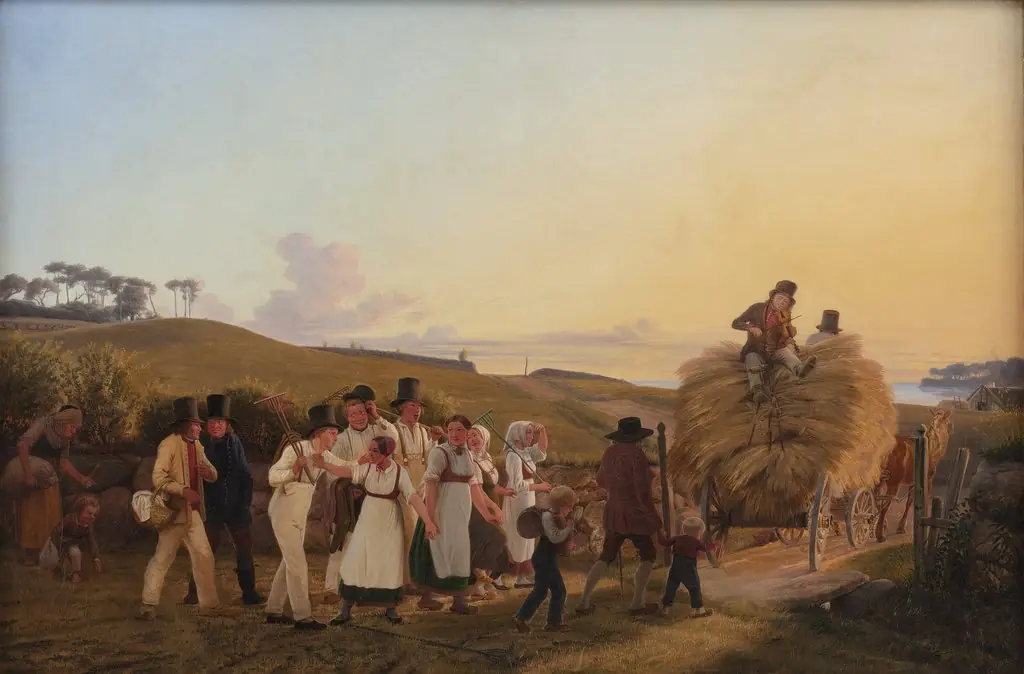 Farmers Returning Home from the Field with the Final Sheaves of Grain
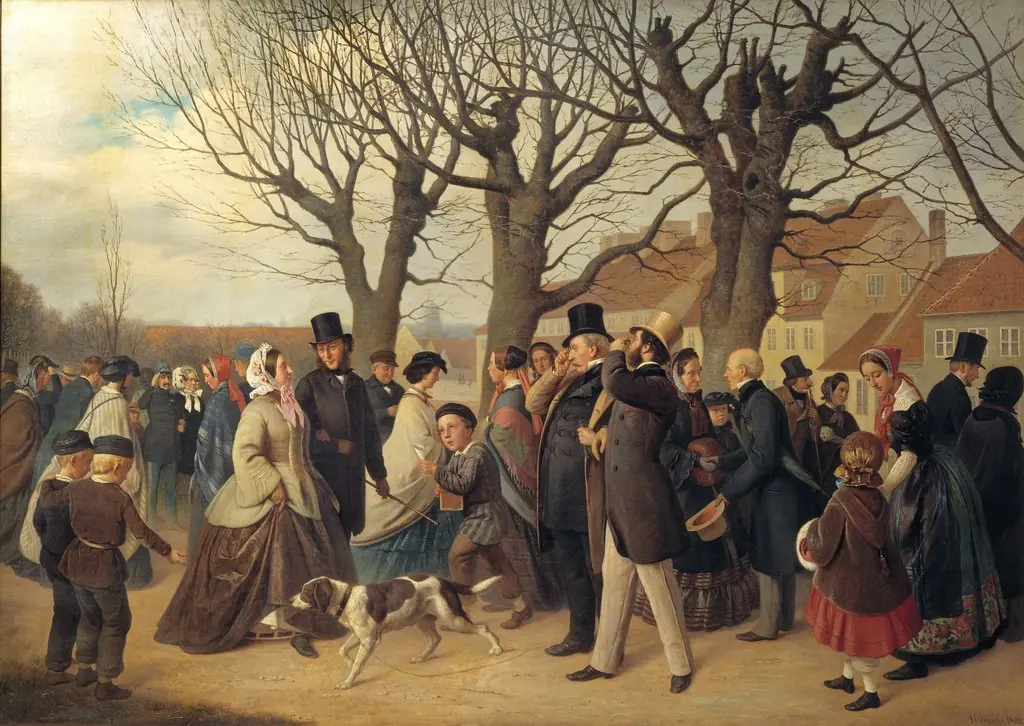 Promenading on the Ramparts of Copenhagen on the Evening of a Public Holiday in Spring
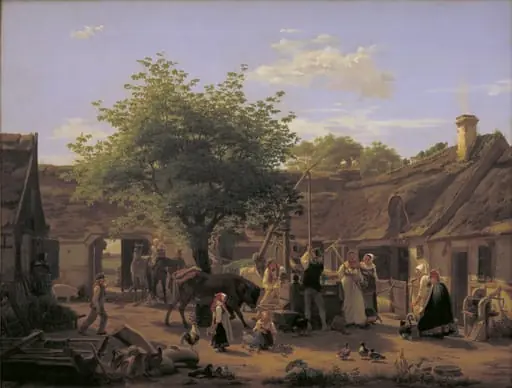 Billede af livet i en sjællandsk bondegård ved middagstid
 Billede af livet i en sjællandsk bondegård ved middagstid
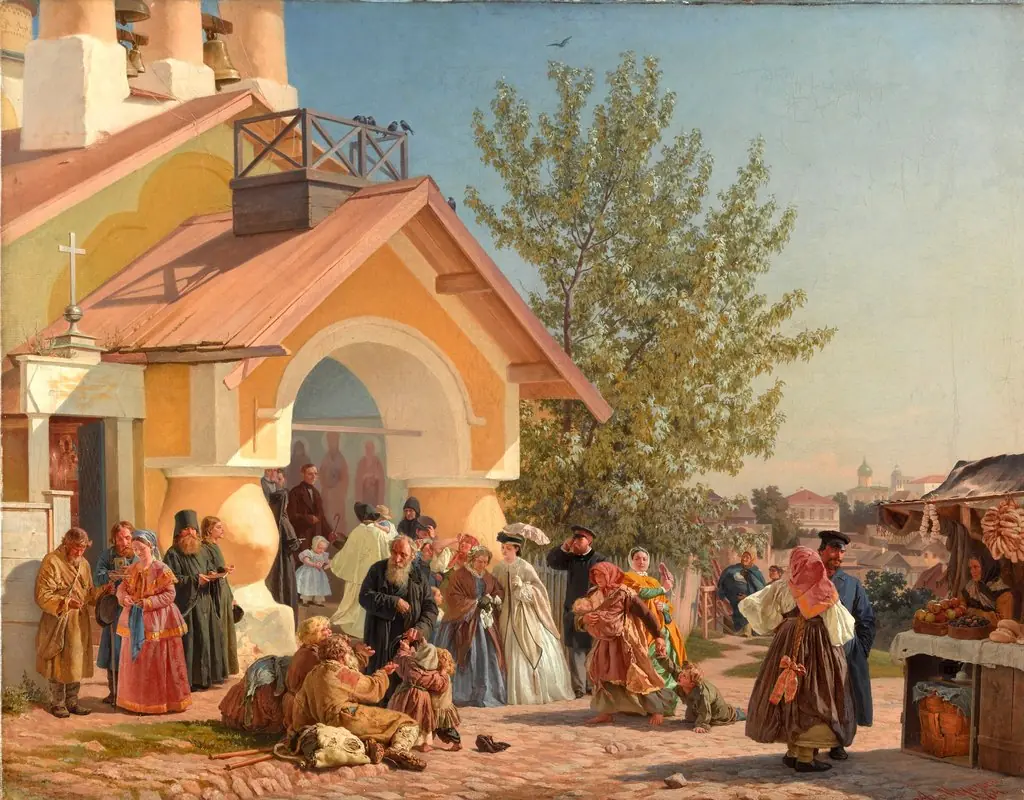 Kirchenausgang in Pskow
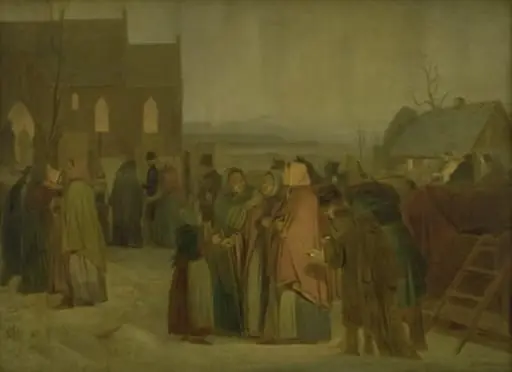 Peasants outside the Church on a Christmas Morning
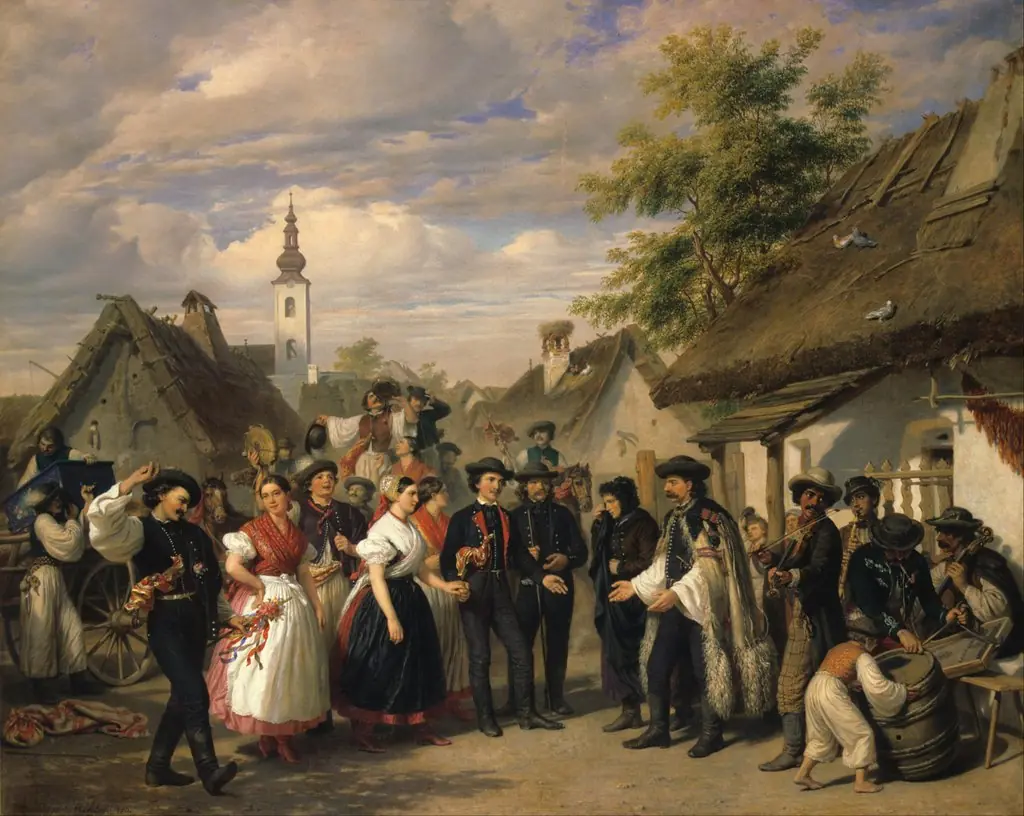 The Arrival of the Bride
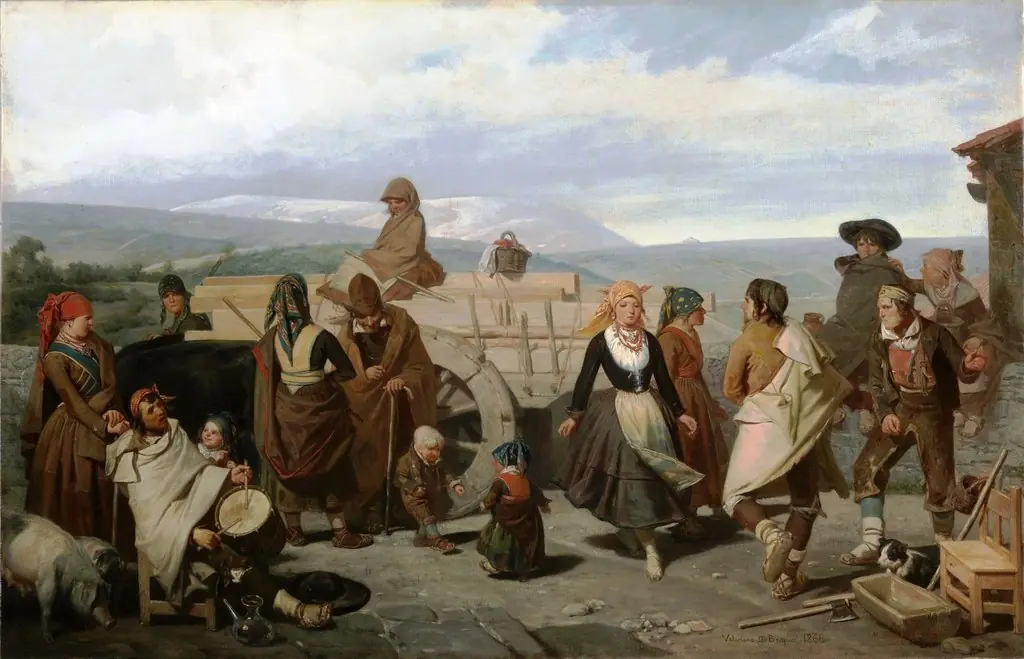 The Dance
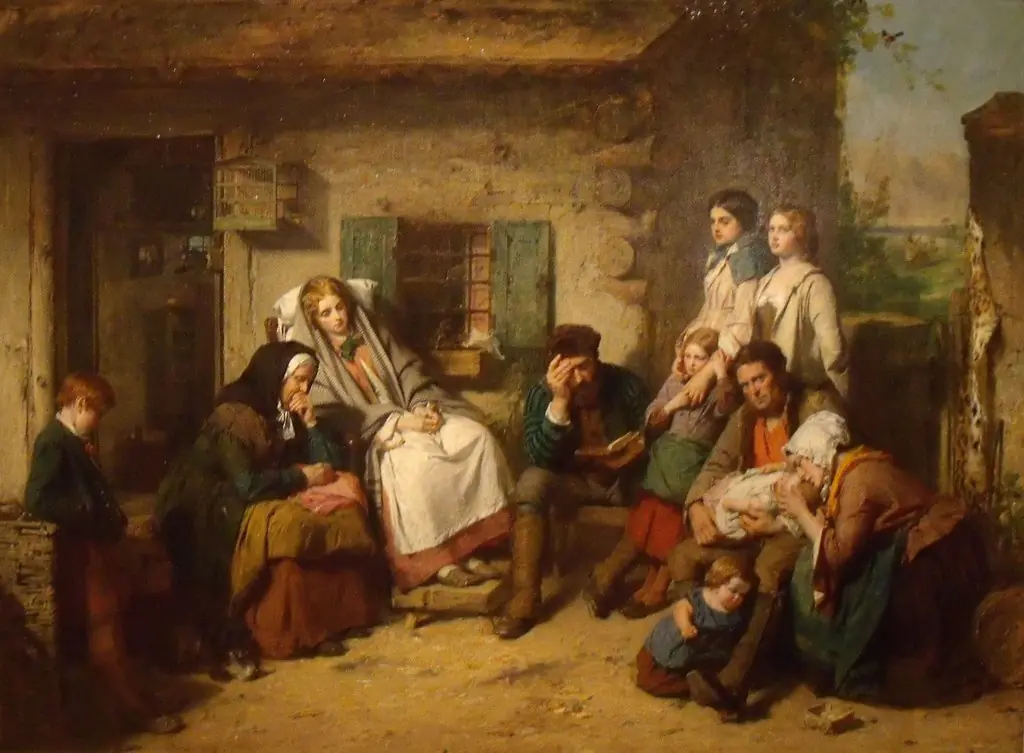 Sunday in the Backwoods of Canada
 The Bailiff Calls on a Poor Cooper in Salling
 St. Hansfest i Tisvilde