Artwork
Bønder vender hjem fra marken med det sidste læs korn
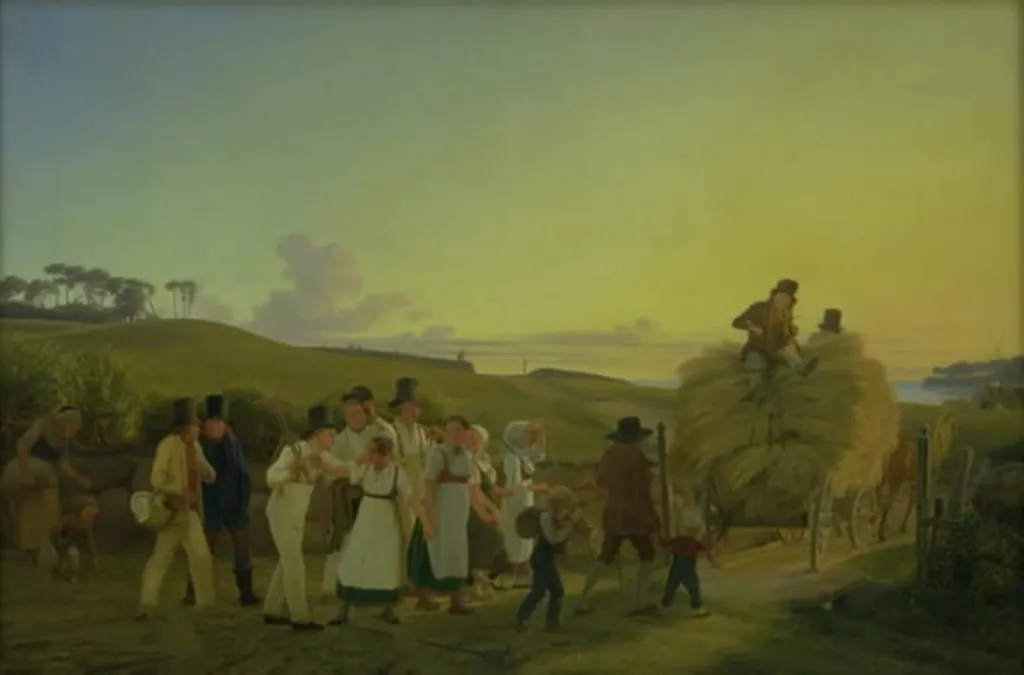
Bønder vender hjem fra marken med det sidste læs korn is a photography by Unknown. It dates from 1850 and is held in the collection of the Statens Museum for Kunst. Created around 1850, this painting portrays a group of rural laborers returning home after the final harvest of the season.
About this work
Overview
Created around 1850, this painting portrays a group of rural laborers returning home after the final harvest of the season. The scene captures a quiet moment of exhaustion and resolve, with figures burdened by a large stack of hay. The work is part of the collection at the Museum of Ethnography, where it serves as a record of 19th-century agricultural life in Scandinavia.
Subject & Meaning
The painting depicts peasants completing their seasonal labor, carrying the last load of hay from the fields. Their postures and focused expressions suggest endurance rather than celebration. The act of returning home with the final harvest carries symbolic weight, marking the end of a demanding cycle and the quiet dignity of subsistence farming.
Technique & Style
The composition uses a low horizon line to emphasize the figures and their burden, placing them against a broad, open sky. Brushwork is restrained, favoring clear forms over decorative detail. Clothing and tools are rendered with observational accuracy, reflecting a documentary impulse rather than romantic idealization.
History & Provenance
The painting entered the Museum of Ethnography’s collection in the late 19th century, likely acquired as part of a broader effort to document regional folk life. Its attribution to the artist identified as 538_person remains unverified in public records, and little is known about the creator’s biography or other works.
Context
In mid-19th century Scandinavia, rural communities were undergoing slow change as industrialization began to reshape labor patterns. This image reflects a vanishing way of life, where harvests dictated rhythm and attire remained tied to local tradition. Such scenes were increasingly valued as cultural artifacts amid rapid modernization.
Legacy
Though not widely exhibited beyond ethnographic circles, the painting contributes to a visual archive of pre-industrial labor. It offers no overt commentary but preserves the physicality and social structure of peasant life, serving as a quiet testament to the everyday rhythms of a disappearing world.
Artist & collection

 Domestic Scene
 Giacomo and Cardinal Marco, investing Andrea, Abbot of San Zeno, with his Benefice
 The Nymph of Fontainebleau
 Portrait of a Woman
 Madonna and Child with Saints in the Enclosed Garden
 Venus and Minerva
 Family Group of Four on Sofa
 Wall painting from Room H of the Villa of P. Fannius Synistor at Boscoreale
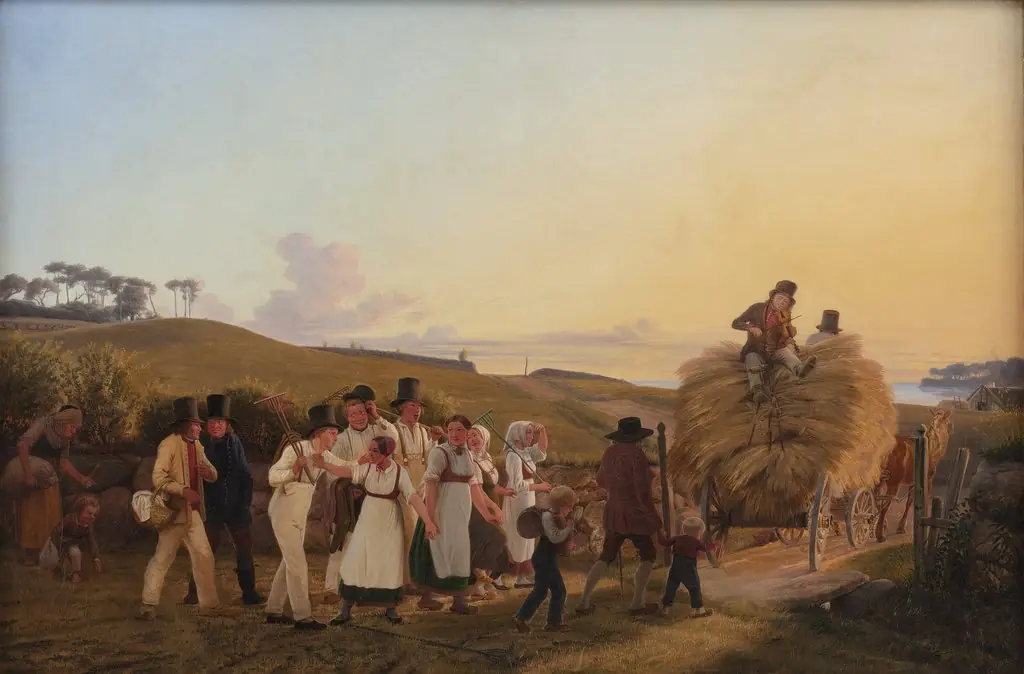 Farmers Returning Home from the Field with the Final Sheaves of Grain
 St. Hansfest i Tisvilde
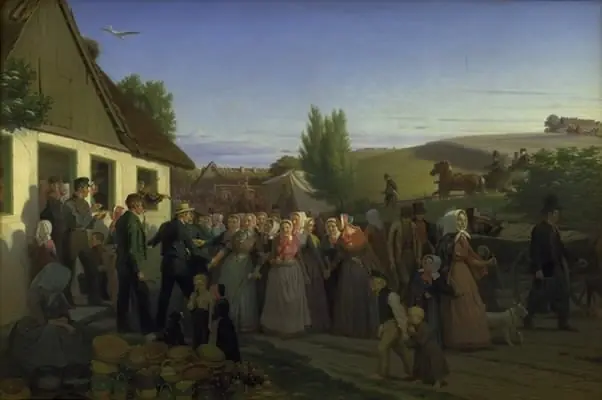 St. Hansfest i Tisvilde
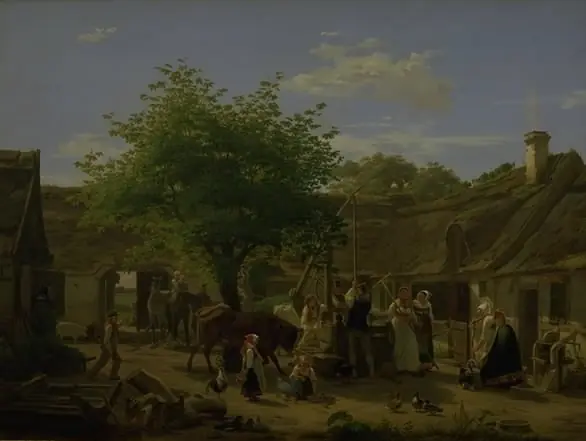 Billede af livet i en sjællandsk bondegård ved middagstid
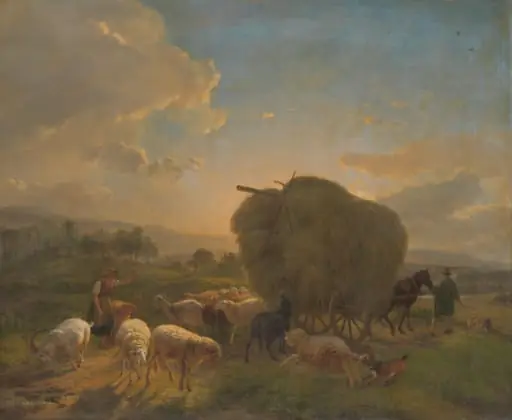 Landscape with Sheep and a Hay Wagon
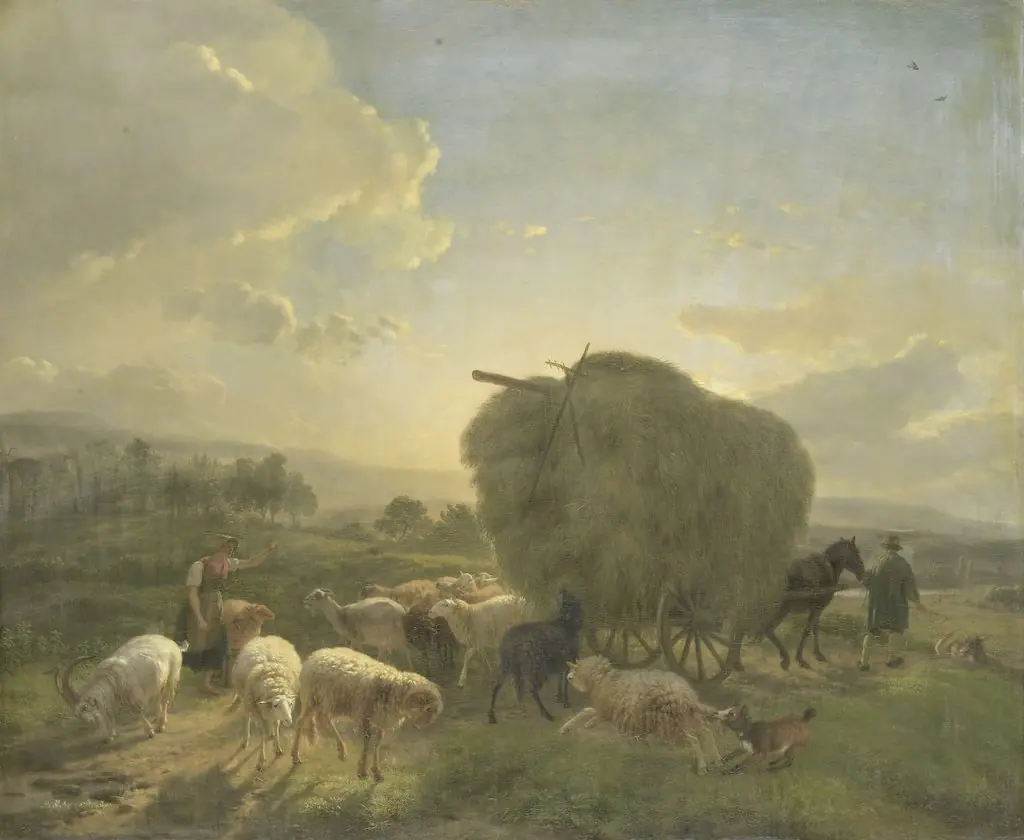 Landscape with Sheep and a Hay Wagon
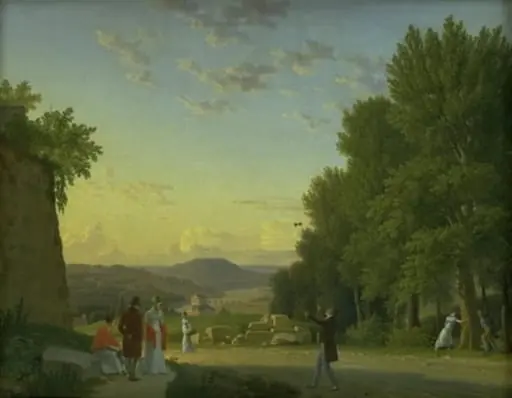 A View from the Château of Meudon
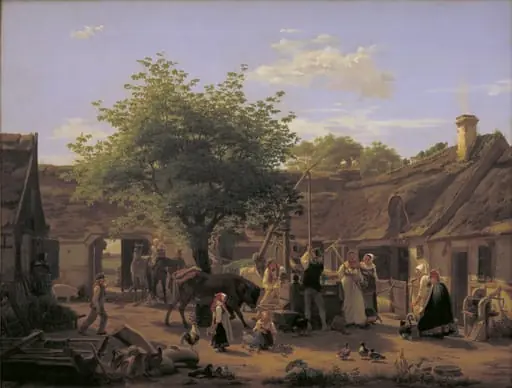 Billede af livet i en sjællandsk bondegård ved middagstid
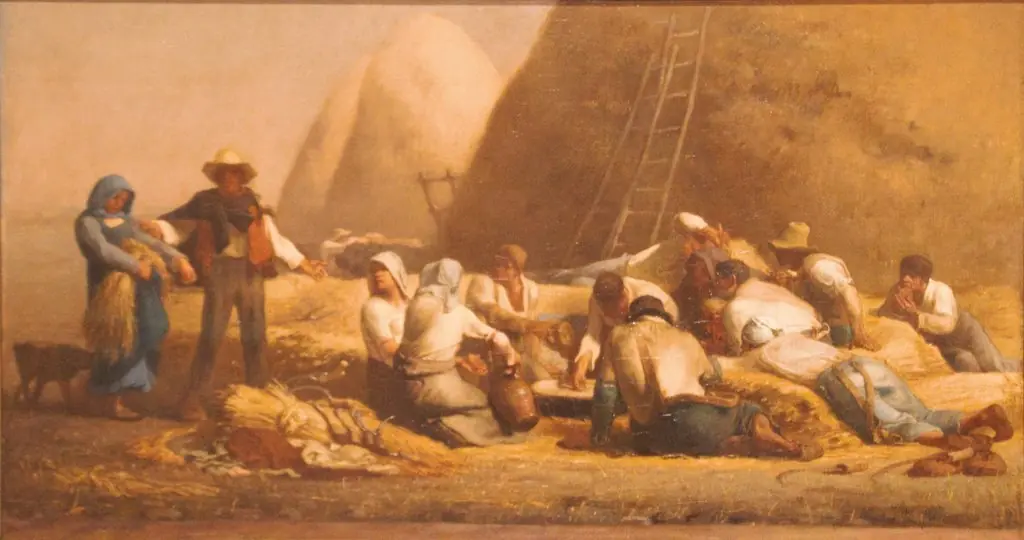 Harvesters Resting (Ruth and Boaz)
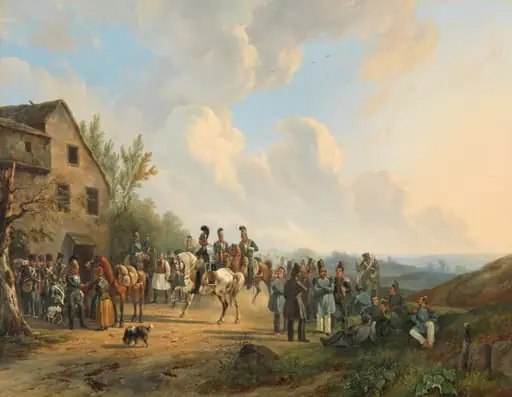 Scene from the Ten Days' Campaign against the Belgian Revolt, August 1831
 Market Gossip
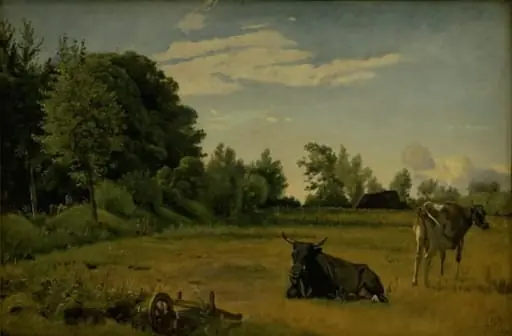 Two Cows in as Field near Vognserup Manor, Zealand