Artwork
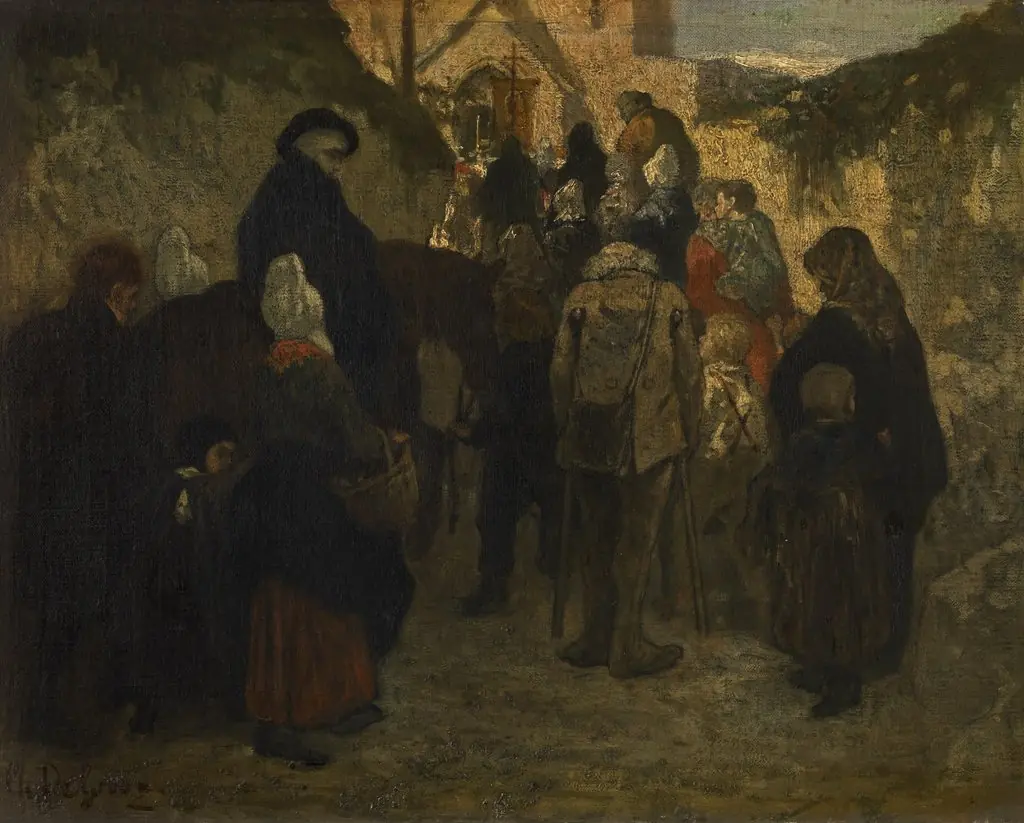
Peasants outside the Church on a Christmas Morning
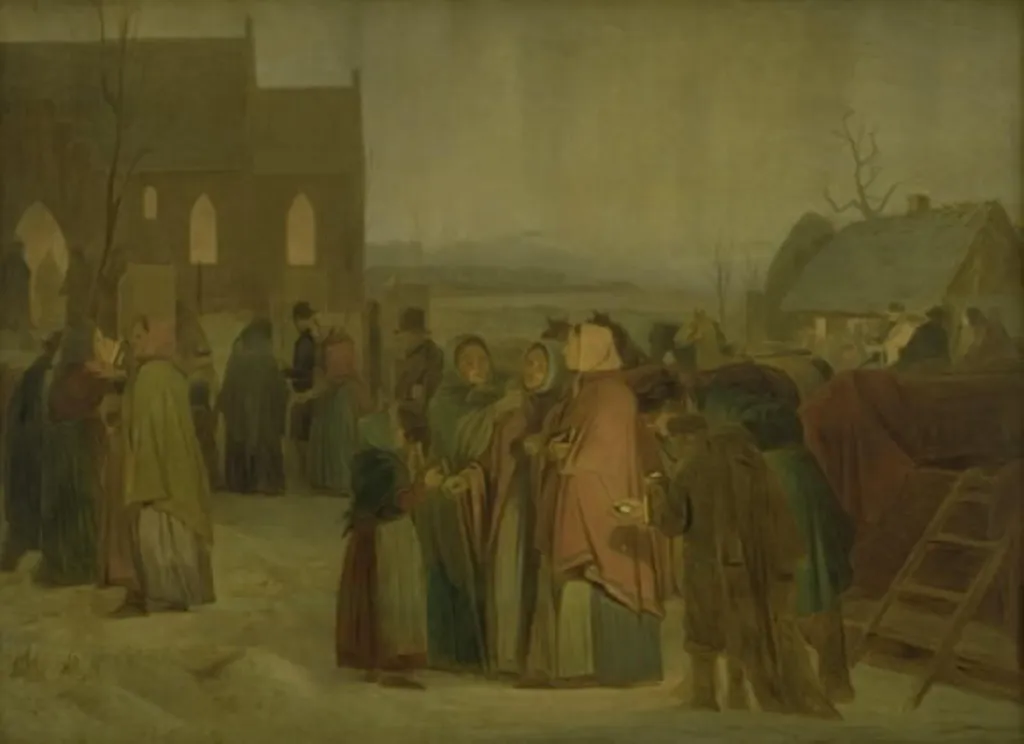
Peasants outside the Church on a Christmas Morning is a photography by Unknown. It dates from 1850 and is held in the collection of the Statens Museum for Kunst. Created around 1850, this image captures a quiet moment outside a rural church on Christmas morning.
About this work
Overview
The work is held by the Museum of Ethnography and reflects everyday life in a modest European village during the mid-nineteenth century.
Created around 1850, this image captures a quiet moment outside a rural church on Christmas morning. The scene depicts a group of villagers in winter attire, gathered in the dim light before services. The work is held by the Museum of Ethnography and reflects everyday life in a modest European village during the mid-nineteenth century. Its tone is subdued, emphasizing stillness and communal anticipation rather than festive spectacle.
Subject & Meaning
The figures, bundled against the cold, appear in quiet preparation for worship. Their stillness and grouped formation suggest shared ritual rather than individual expression. Lanterns and close proximity hint at both practical need for light and emotional solidarity. The scene conveys the quiet devotion of rural communities, where religious observance was woven into seasonal rhythms and collective endurance.
Technique & Style
The image employs strong contrasts between light and shadow, a method associated with chiaroscuro, to model forms and deepen spatial perception. The low, diffused light casts long shadows across snow-dusted ground and stone walls, enhancing the sense of chill and stillness. The composition avoids dramatic gestures, favoring naturalistic grouping and muted tones to reinforce the scene’s solemnity.
History & Provenance
The work entered the collection of the Museum of Ethnography in the late nineteenth or early twentieth century, likely acquired as part of a broader effort to document rural European life. Its origin as a photographic or painted record is not definitively documented, but its style aligns with ethnographic studies of the period that sought to preserve ordinary customs before industrialization transformed them.
Context
In mid-1800s rural Europe, Christmas was a time of both religious observance and seasonal hardship. Churches served as centers of community life, especially in winter. This scene reflects a reality where faith, weather, and economic constraint shaped daily rituals. The absence of clergy or interior views suggests the focus is on the people’s waiting—a moment of pause before the sacred.
Legacy
The image remains a quiet testament to the visual documentation of peasant life during a period of social change. It contributes to ethnographic records that valued authenticity over idealization. While not widely exhibited, it continues to inform studies of rural religiosity, material culture, and the use of light in early visual anthropology.
Artist & collection

 Domestic Scene
 Giacomo and Cardinal Marco, investing Andrea, Abbot of San Zeno, with his Benefice
 The Nymph of Fontainebleau
 Portrait of a Woman
 Madonna and Child with Saints in the Enclosed Garden
 Venus and Minerva
 Family Group of Four on Sofa
 Wall painting from Room H of the Villa of P. Fannius Synistor at Boscoreale
 St. Hansfest i Tisvilde
 Konfirmations-søndag. Dragør
 Konfirmations-søndag. Dragør
 Pilgrimage in Diegem
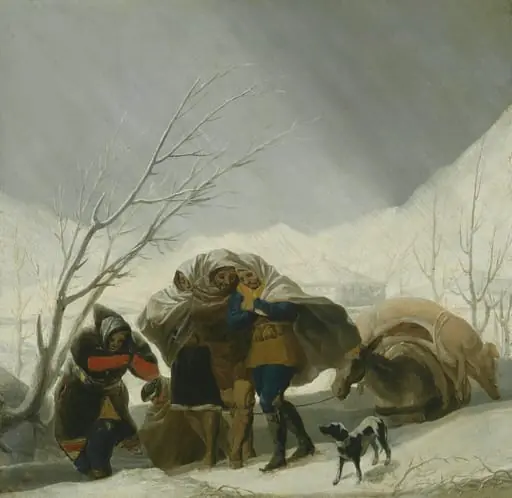 Winter Scene
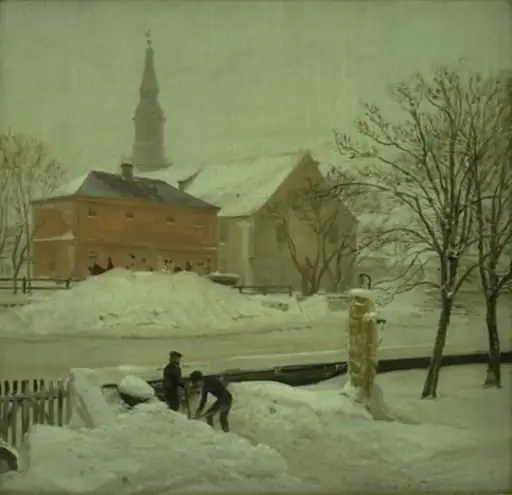 Udsigt fra kunstnerens bolig i Løweners ejendom på Christianshavn. Vinterdag med sne
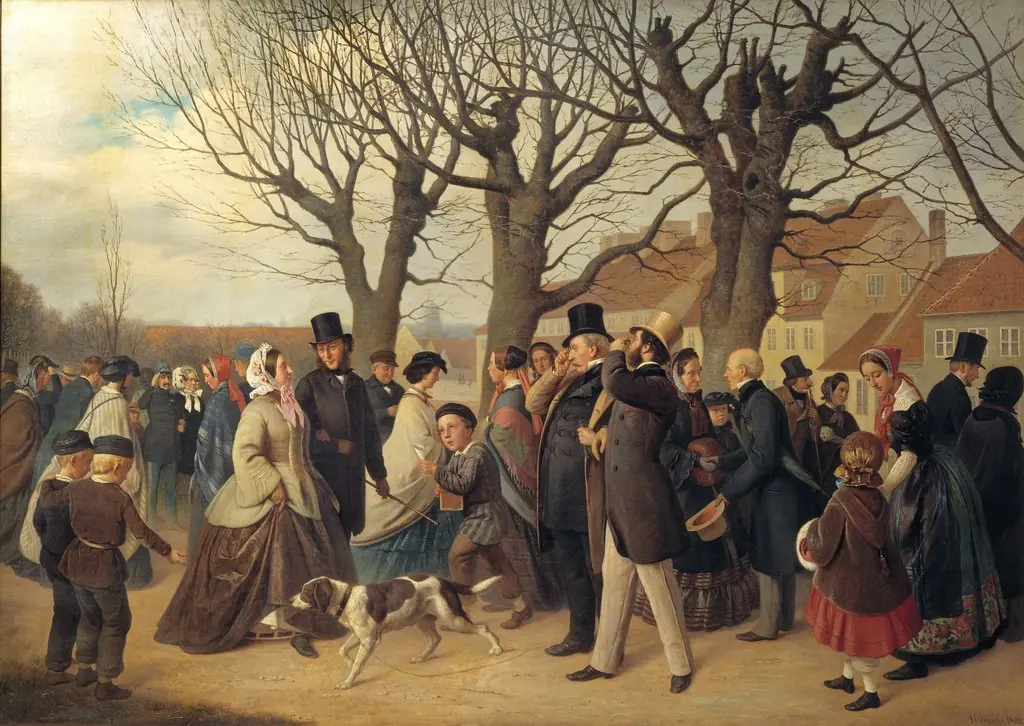 Promenading on the Ramparts of Copenhagen on the Evening of a Public Holiday in Spring
 Cityscape in winter
 Winter Scene
 Funeral of a Pauper in Germany