Artwork
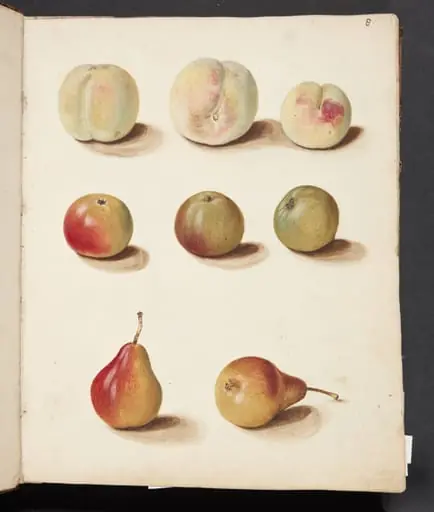
Studie af æbler og pærer
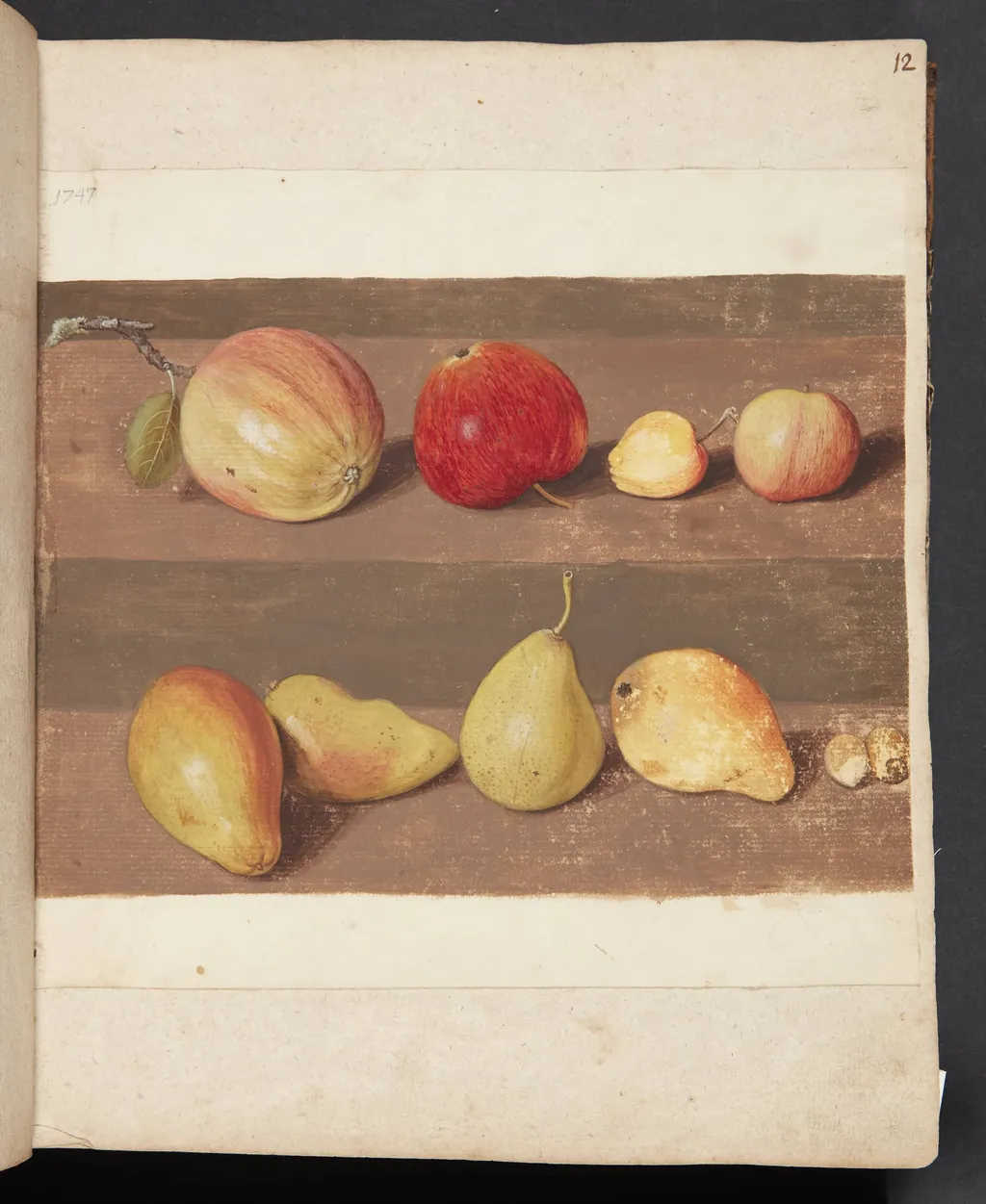
Studie af æbler og pærer is an unspecified work on paper by the Baroque artist Unknown. It dates from 1747 and is held in the collection of the Statens Museum for Kunst.
About this work
Overview
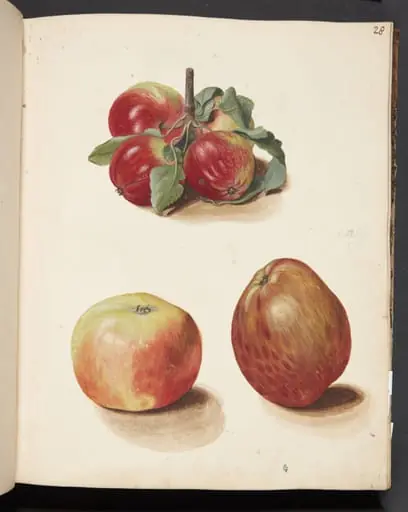
Created in 1747 by 1342_person, this watercolor study depicts a quiet arrangement of six fruits—four apples and two pears—on a muted brown surface.
Created in 1747 by 1342_person, this watercolor study depicts a quiet arrangement of six fruits—four apples and two pears—on a muted brown surface. The composition suggests a naturalistic observation rather than a formal still life, with elements arranged simply and without ornament. The work is preserved in the Museum of Ethnography, where it is regarded as a specimen of observational art from the 18th century.
Subject & Meaning
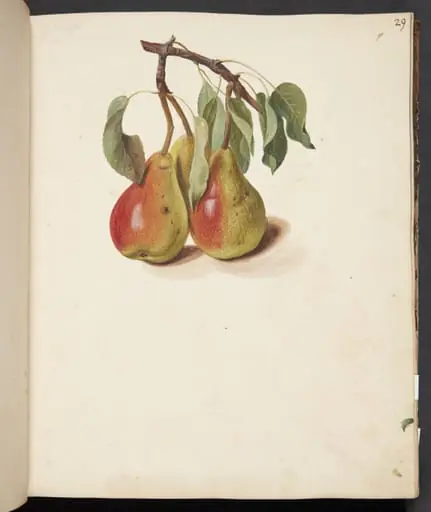
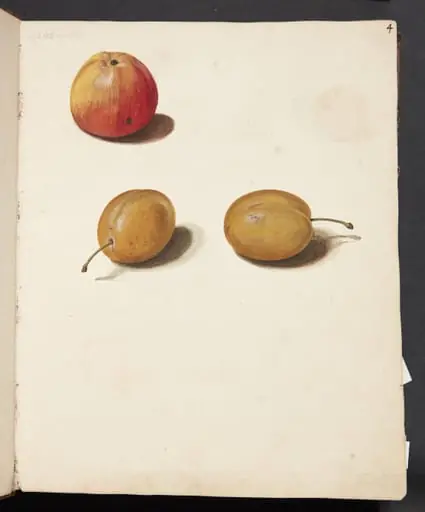
The subject consists of common orchard fruits, presented without symbolic or allegorical intent. Apples, some halved, and pears, one sliced, reveal their internal structure, emphasizing the artist’s interest in botanical detail. Faint green leaves add a touch of organic context. The focus on everyday produce suggests a study rooted in empirical observation, possibly for educational or scientific documentation rather than decorative purposes.
Technique & Style
Watercolor was applied with precision to capture subtle variations in skin tone and texture: the blush on apple surfaces, the soft fuzz of pears, and the translucency of cut flesh. Layers of pigment create gentle gradations, while the absence of strong outlines enhances realism. The background, a faded brown wash, recedes quietly, directing attention to the fruits’ form and surface detail without distraction.
History & Provenance
The work has remained in the collection of the Museum of Ethnography since at least the early 20th century, though its earlier ownership is undocumented. Its classification as a study rather than a finished painting implies it may have served as a reference for botanical illustration or teaching. The paper support and medium suggest it was produced in a domestic or academic setting, not a commercial studio.
Context
In mid-18th-century Europe, detailed natural studies of flora and fauna were increasingly valued within scientific and educational circles. This work aligns with a broader trend of empirical observation, where artists documented the natural world with accuracy. Unlike ornamental still lifes, this piece lacks theatrical lighting or symbolic objects, reflecting a shift toward systematic visual recording.
Legacy
Though not widely exhibited, the study contributes to understanding how artists engaged with natural forms before the rise of photography. Its restrained aesthetic and technical discipline offer insight into pre-modern methods of visual documentation. The work remains a quiet example of how watercolor could serve both scientific curiosity and artistic precision in the 18th century.
Artist & collection

 Domestic Scene
 Giacomo and Cardinal Marco, investing Andrea, Abbot of San Zeno, with his Benefice
 The Nymph of Fontainebleau
 Portrait of a Woman
 Madonna and Child with Saints in the Enclosed Garden
 Venus and Minerva
 Family Group of Four on Sofa
 Wall painting from Room H of the Villa of P. Fannius Synistor at Boscoreale