Artwork
Studier af blommer
Studier af blommer is an unspecified work on paper by the Rococo painting artist Unknown. It dates from 1750 and is held in the collection of the Statens Museum for Kunst.
About this work
This was drawn in 1750 using watercolor, a technique that lets light show through the paint.
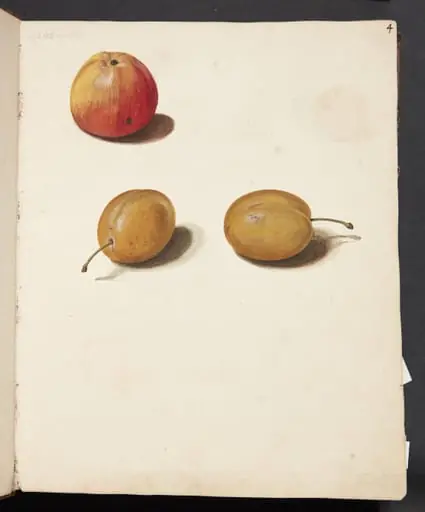
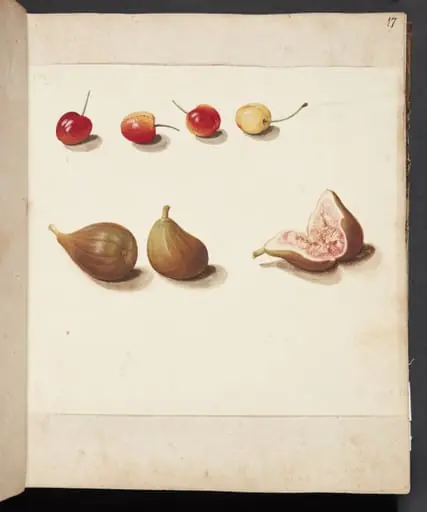
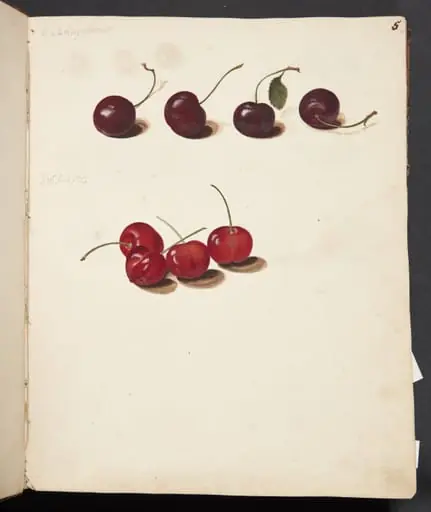
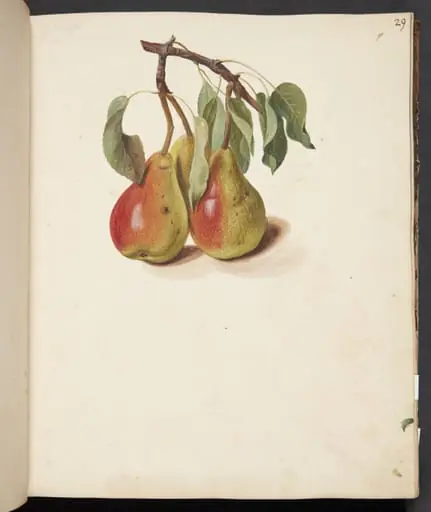
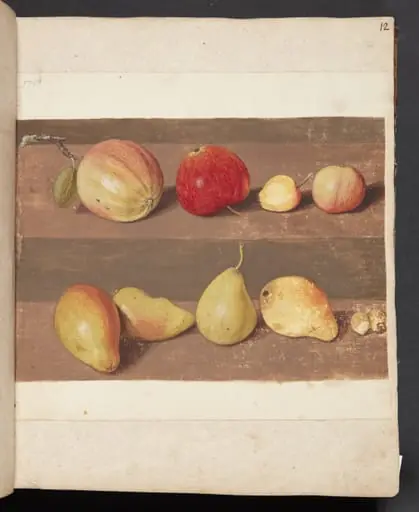
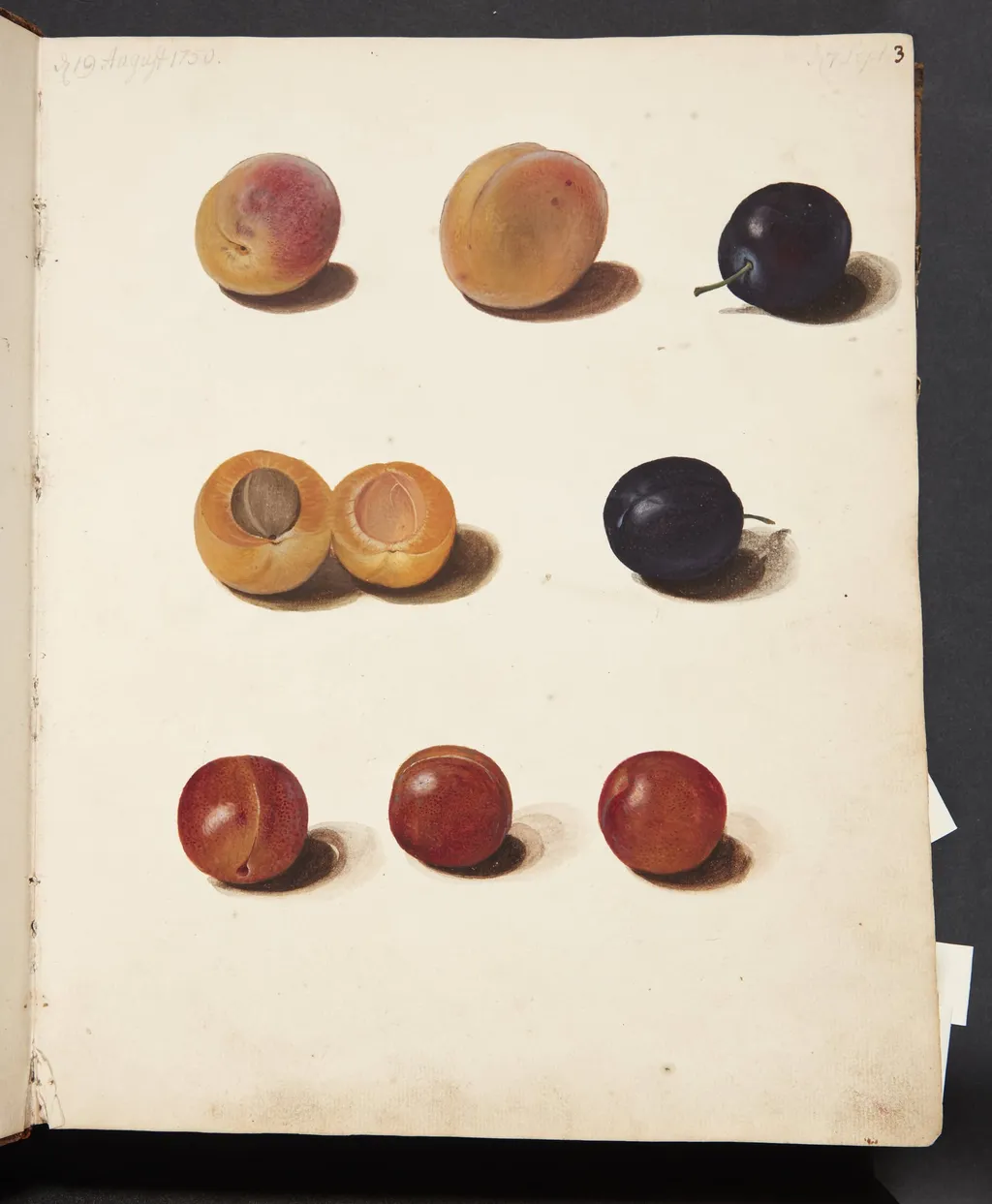
This page shows six painted fruits arranged in three rows. The top row has two peaches and a dark plum. The middle row shows two halved peaches and another plum. The bottom row has three bright red plums. Shadows under each fruit make them look real.
The artist focused on small details like the peach pits and the fuzzy skin of the plum. This was drawn in 1750 using watercolor, a technique that lets light show through the paint.
Next, check out how artists used watercolor, glazing to create depth in their work.
Overview
Studier af blommer, executed in 1750 by the artist identified as 1342_person, is a watercolor composition presently conserved by the Museum of Ethnography. The work presents a modest arrangement of six fruit studies, organized in three horizontal tiers, each fruit rendered with a subtle play of light and shadow that enhances its three‑dimensional presence.
Subject & Meaning
The composition focuses on a selection of stone fruits—peaches and plums—displayed in various stages of completeness. By juxtaposing whole and halved specimens, the artist invites close observation of texture, ripeness, and internal structure, emphasizing the fleeting, tactile qualities of the fruits rather than any narrative content.
Technique & Style
Executed in transparent watercolor, the piece exploits the medium’s capacity for luminous washes. Fine brushwork delineates the fuzzy surface of the plum and the delicate pits of the peaches, while layered glazing builds depth and a sense of volume. The subtle shadows beneath each fruit further reinforce a realistic spatial illusion.
History & Provenance
Created in the mid‑18th century, the work entered the collection of the Museum of Ethnography, where it remains on display. Its attribution to 1342_person is based on archival records linking the artist to a series of botanical studies produced around the same period.
Context
The painting belongs to a broader tradition of European fruit studies that served both decorative and instructional purposes. In the 1750s, watercolor was increasingly employed for detailed natural studies, allowing artists to capture the translucency and color variations of organic subjects with immediacy.
Artist & collection

 Domestic Scene
 Giacomo and Cardinal Marco, investing Andrea, Abbot of San Zeno, with his Benefice
 The Nymph of Fontainebleau
 Portrait of a Woman
 Madonna and Child with Saints in the Enclosed Garden
 Venus and Minerva
 Family Group of Four on Sofa
 Wall painting from Room H of the Villa of P. Fannius Synistor at Boscoreale