Artwork
Fighting Stags in a Forest
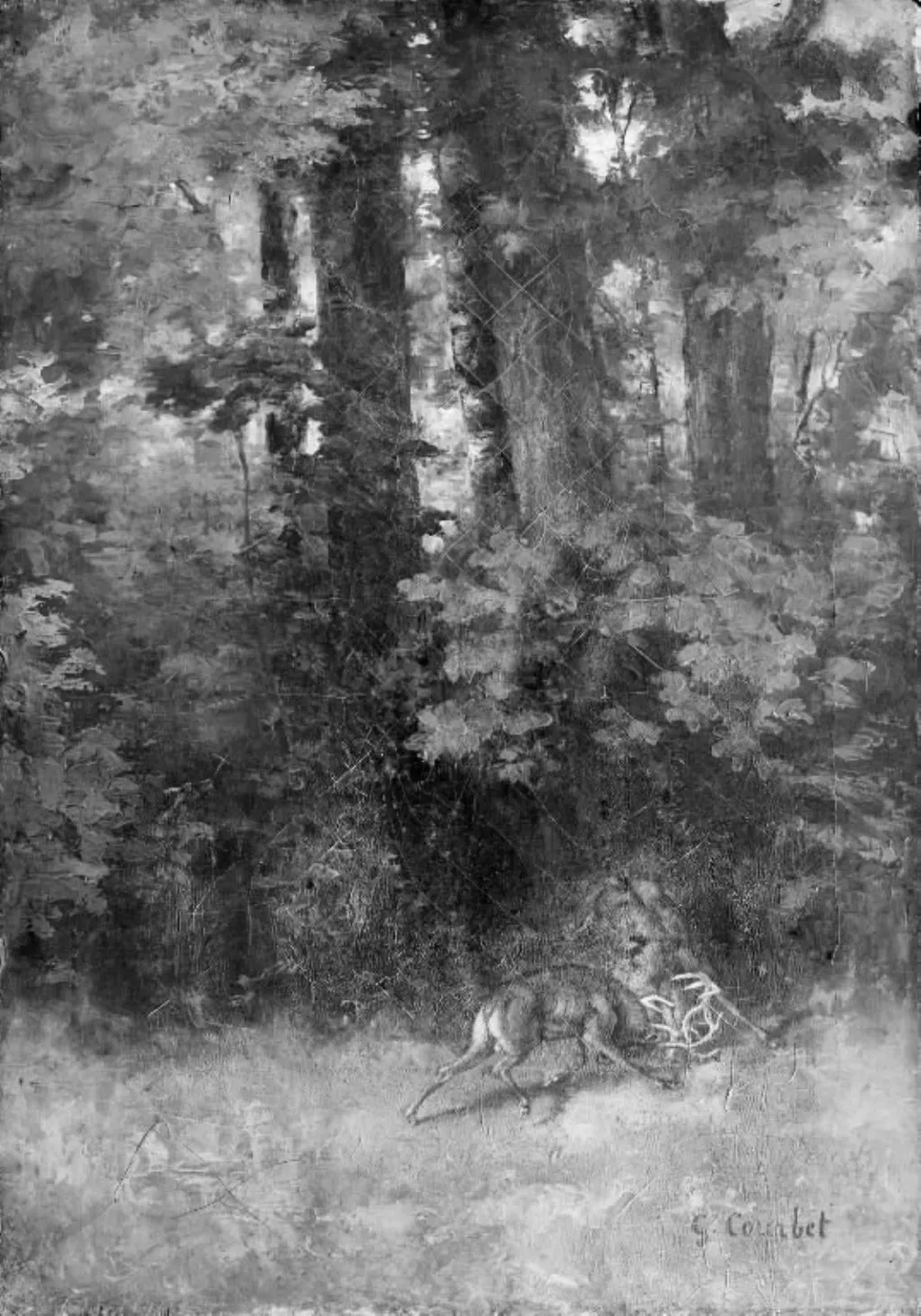
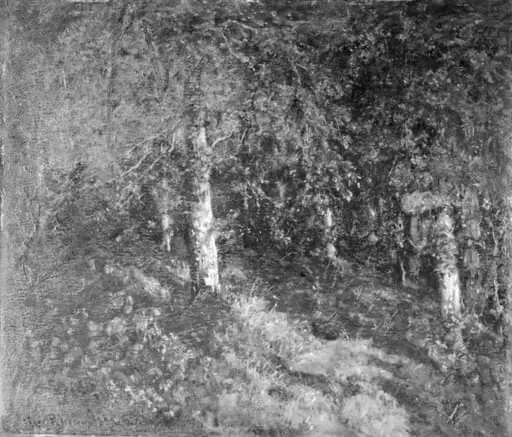
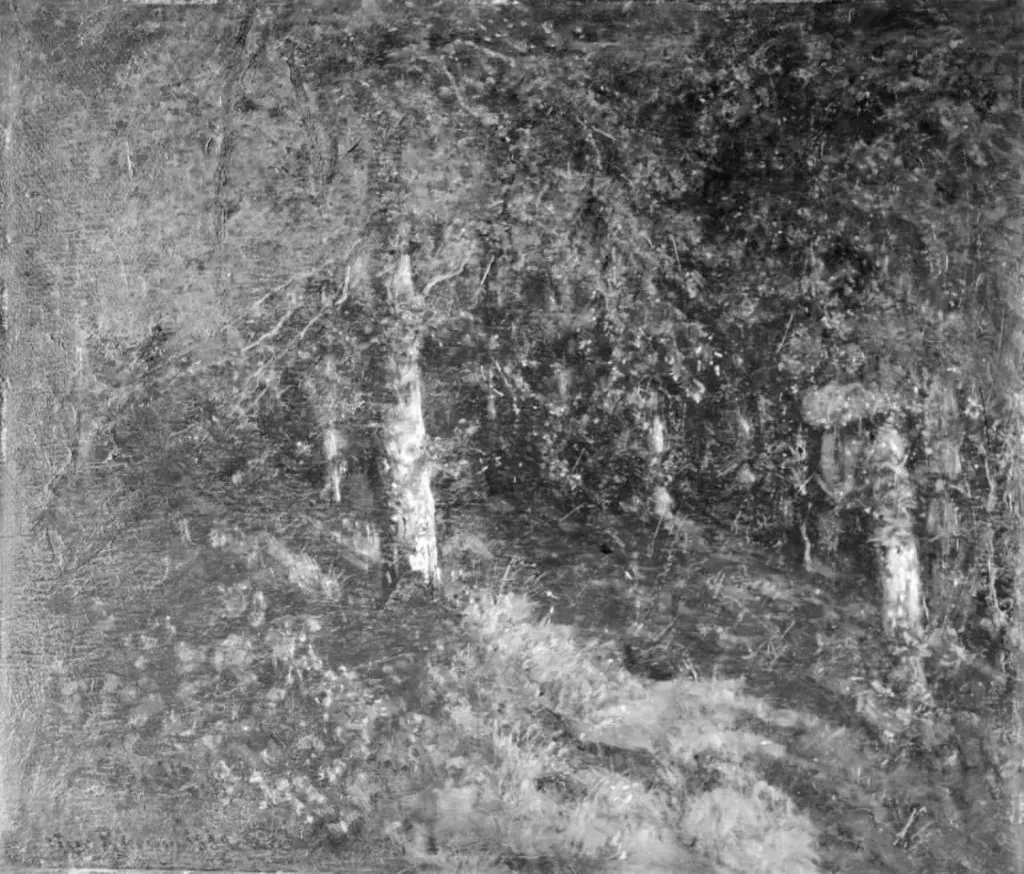
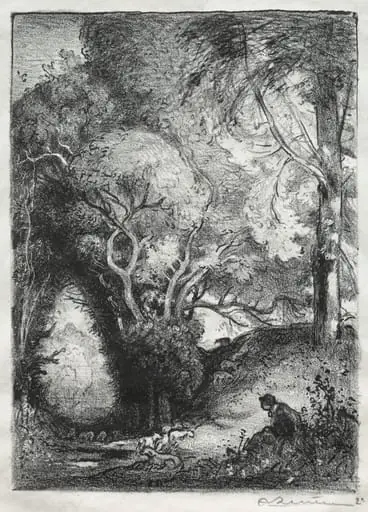
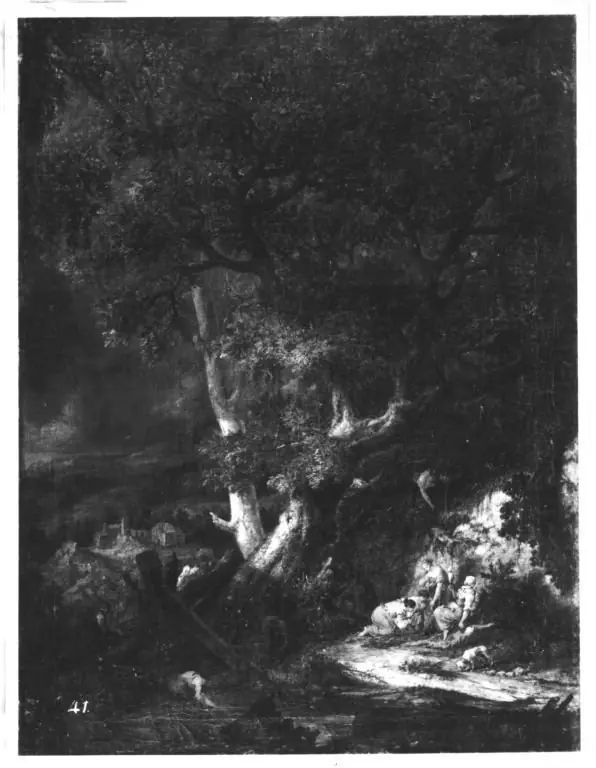
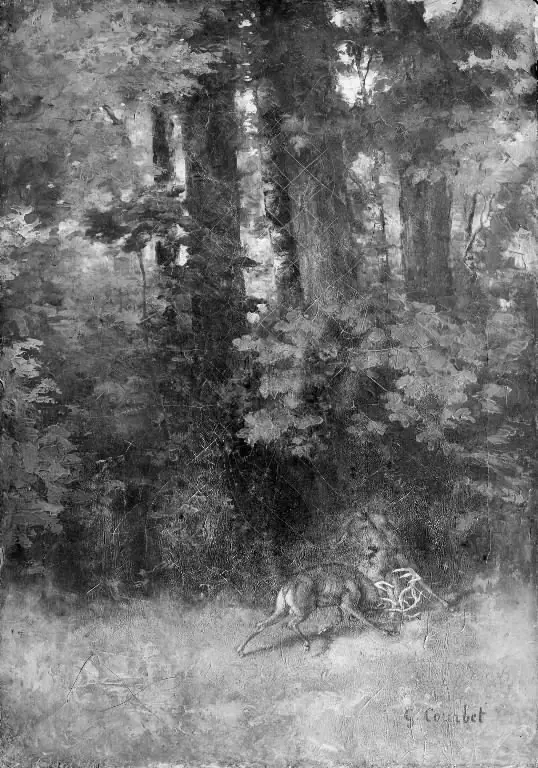
Fighting Stags in a Forest is a photography by Unknown. It dates from 1850 and is held in the collection of the Statens Museum for Kunst. Created around 1850, this black-and-white image depicts two male deer locked in combat within an enclosed woodland.
About this work
Overview
Created around 1850, this black-and-white image depicts two male deer locked in combat within an enclosed woodland. The work is held by the Museum of Ethnography and is rendered with photographic precision, lacking visible brushwork. The composition isolates the animals against a dark, dense forest, emphasizing tension and physical struggle without contextual embellishment.
Subject & Meaning
The scene captures a moment of natural conflict between stags during mating season, a recurring theme in naturalist observation. The absence of human figures or narrative cues suggests an intent to portray raw, unmediated animal behavior. The intensity of their locked antlers and entangled limbs conveys instinctual rivalry, framed as a silent, primal event within the wilderness.
Technique & Style
The image employs sharp tonal contrasts and meticulous detail to simulate photographic clarity. Chiaroscuro is used to model the animals’ forms, with deep shadows enhancing the texture of fur and antlers. The lack of brushstrokes and the uniform grayscale suggest a process akin to lithography or early photographic reproduction, prioritizing accuracy over expressive brushwork.
History & Provenance
The work was produced in the mid-19th century and entered the collection of the Museum of Ethnography shortly thereafter. Its origin as a reproduction—possibly from a field sketch or photograph—remains undocumented. It was likely acquired as an ethnographic record of wildlife behavior, reflecting contemporary scientific interest in natural phenomena.
Context
In the 1850s, natural history illustration was shifting toward empirical precision, influenced by advances in photography and print technology. This image aligns with efforts to document animal behavior without romanticization. Its starkness reflects a broader trend in scientific visualization, where clarity and objectivity replaced artistic embellishment.
Legacy
Though not widely exhibited, the image endures as an example of 19th-century naturalist documentation. Its technical fidelity and compositional restraint influenced later wildlife studies that sought to depict animals in their habitats without anthropocentric framing. It remains a quiet artifact of science’s growing visual language.
Artist & collection

 Domestic Scene
 Giacomo and Cardinal Marco, investing Andrea, Abbot of San Zeno, with his Benefice
 The Nymph of Fontainebleau
 Portrait of a Woman
 Madonna and Child with Saints in the Enclosed Garden
 Venus and Minerva
 Family Group of Four on Sofa
 Wall painting from Room H of the Villa of P. Fannius Synistor at Boscoreale