Artwork
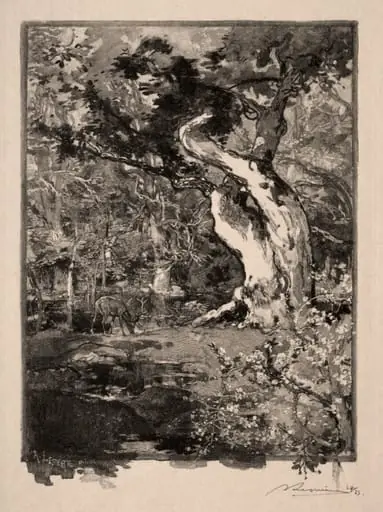
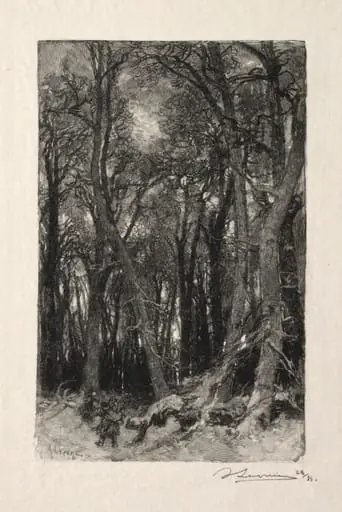
Le Matin, carrefour des Forts Marlotte
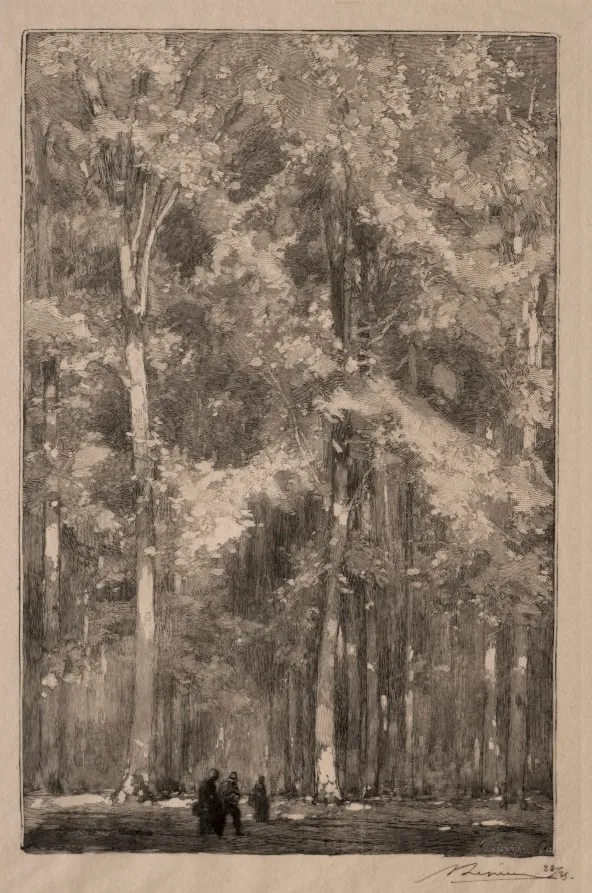
Le Matin, carrefour des Forts Marlotte is a print by the Impressionist artist Auguste Lepère. It dates from 1889 and is held in the collection of the Cleveland Museum of Art.
About this work
Overview
Lepère, recognized for his role in revitalizing the woodcut technique in 19th-century Europe, used fine, controlled lines to render a serene rural crossroads.
Created in 1889 by French artist Auguste Louis Lepère, *Le Matin, carrefour des Forts Marlotte* is a wood engraving capturing a quiet winter landscape. Lepère, recognized for his role in revitalizing the woodcut technique in 19th-century Europe, used fine, controlled lines to render a serene rural crossroads. The print is part of the Cleveland Museum of Art’s collection, reflecting his commitment to elevating printmaking as a serious artistic medium.
Subject & Meaning
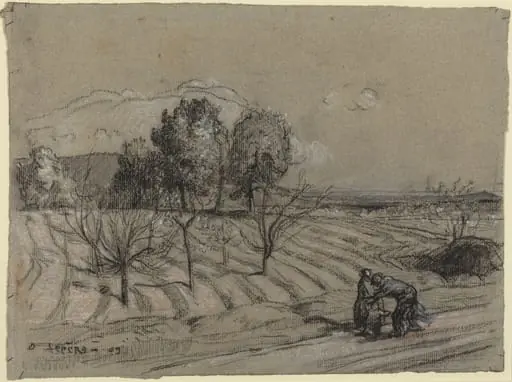
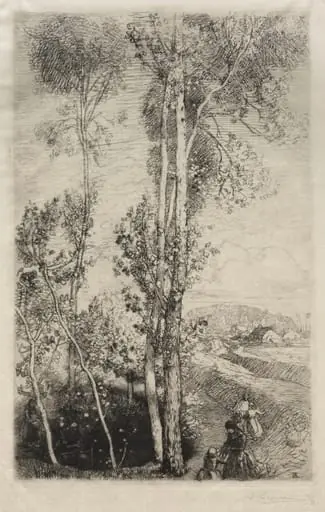
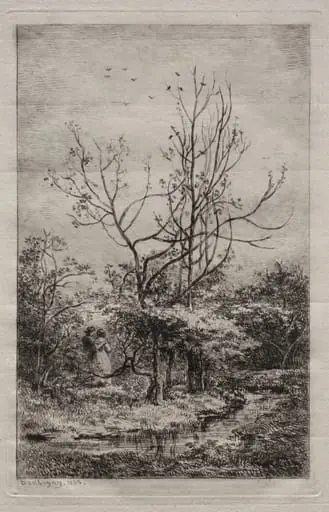
The scene depicts a solitary morning at the intersection near Forts Marlotte, with bare trees framing a snow-covered path. Small, indistinct figures move along the road, emphasizing solitude over narrative. The stillness and muted tones suggest a pause in daily life, evoking the quiet rhythm of rural winter. Lepère avoids dramatic action, instead inviting contemplation of nature’s subdued presence in the everyday.
Technique & Style
Lepère employed wood engraving with meticulous precision, carving fine lines to suggest texture in bark, frost, and sky. The dark, vertical trunks contrast with a pale, granular background, achieved through delicate dotting and hatching. Branches are rendered with sharp, angular strokes, while the ground appears softly brushed with minimal tonal variation. The technique prioritizes subtlety over boldness, aligning with the scene’s tranquil mood.
History & Provenance
The print was produced during a period when Lepère was actively promoting wood engraving as a fine art form, distinct from mass reproduction. It entered the Cleveland Museum of Art’s collection in the 20th century, likely through acquisitions focused on European graphic arts. Its preservation reflects institutional recognition of Lepère’s contribution to the revival of traditional print methods in the late 1800s.
Context
In the late 19th century, artists across Europe sought alternatives to industrialized printmaking, turning to hand-carved woodblocks for their expressive potential. Lepère’s work emerged alongside broader interest in Japanese prints and the Arts and Crafts movement. His focus on quiet, natural scenes aligned with a growing preference for intimate, non-heroic subjects in an era of rapid urbanization.
Legacy
Lepère’s prints, including this one, influenced later generations of printmakers who valued craftsmanship and tonal nuance. While not widely known today, his technical rigor helped reestablish wood engraving as a legitimate artistic practice in France. The work remains a quiet example of how traditional methods could convey modern sensibilities—calm, observational, and deeply attuned to atmosphere.
Artist & collection
Artist
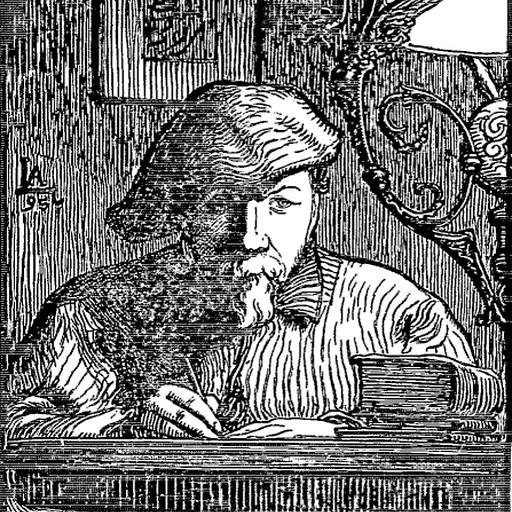
Louis-Auguste Lepère (30 November 1849 – 20 November 1918) was a French painter and etcher. Lepère is also considered a leader in the creative revival of wood engraving in Europe.