Artwork
River Landscape
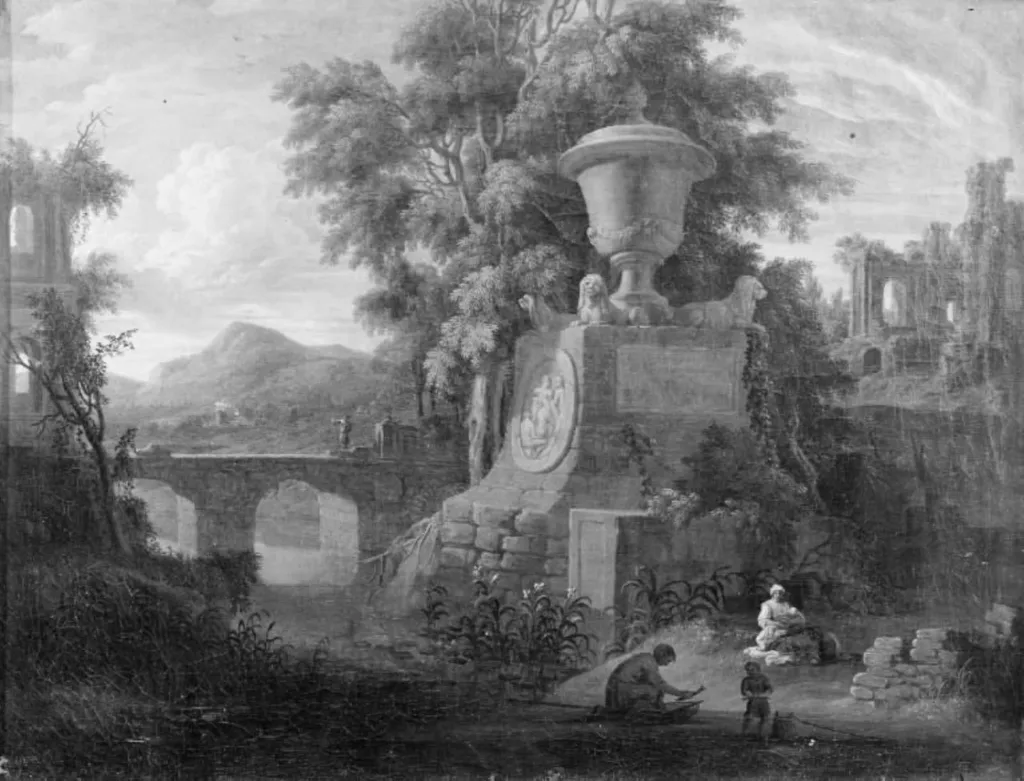
River Landscape is an unspecified painting by Unknown. It dates from 1713 and is held in the collection of the Statens Museum for Kunst. Created around 1713, this landscape painting depicts a tranquil rural scene with subtle human presence.
About this work
Overview
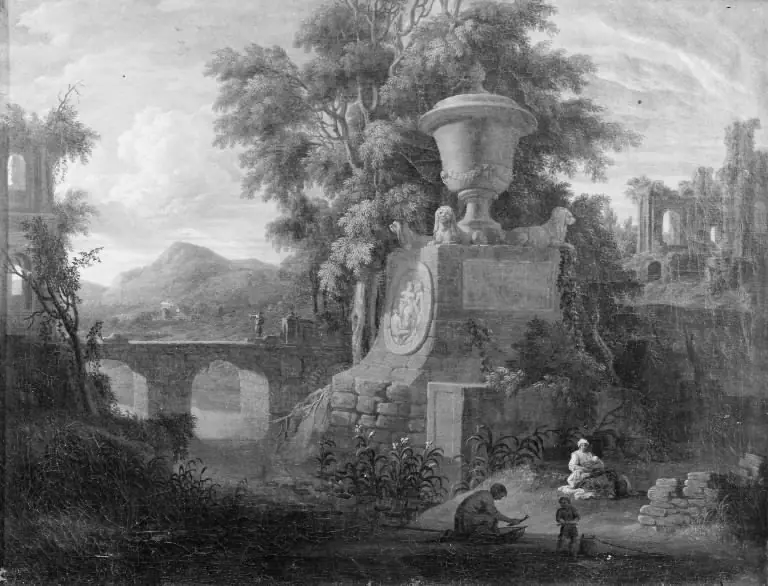
Created around 1713, this landscape painting depicts a tranquil rural scene with subtle human presence. It is part of the collection at the Museum of Ethnography. The composition centers on a stone vase atop a pedestal, flanked by foliage and framed by distant hills and a bridge crossing a river. The atmosphere is quiet and contemplative, emphasizing harmony between nature and human activity.
Subject & Meaning
The scene features a woman seated on a rock, a man leaning as if sketching or reading, and a child standing nearby.
The scene features a woman seated on a rock, a man leaning as if sketching or reading, and a child standing nearby. These figures suggest a moment of quiet reflection rather than labor or narrative drama. The ornate vase, positioned prominently, may symbolize cultivated taste or the passage of time. The overall tone conveys serenity and order, reflecting ideals of peaceful coexistence with the natural world.
Technique & Style
The artist employs soft chiaroscuro to model forms and suggest depth, particularly in the play of light across foliage and stone. Shadows are gently rendered, avoiding harsh contrasts, which enhances the calm mood. Brushwork is precise yet unobtrusive, with attention to texture in the vase’s carving and the layered foliage. The spatial recession toward distant hills is achieved through atmospheric perspective rather than linear precision.
History & Provenance
The painting’s early history is undocumented, but it entered the Museum of Ethnography’s collection in the 20th century. Its attribution to a specific artist from 1488 is likely an error; the style and date align with early 18th-century European landscape traditions. The work was likely acquired as part of a broader collection of regional or colonial-era art, though its exact origin remains unclear.
Context
This work emerged during a period when European landscape painting increasingly valued quiet, intimate scenes over grand narratives. The inclusion of a carved vase and orderly garden reflects contemporary interest in cultivated nature, influenced by classical ideals and emerging botanical studies. Such scenes were often intended for private contemplation, contrasting with the dramatic landscapes of earlier Baroque traditions.
Legacy
Though not widely exhibited, the painting contributes to understanding how landscape art in the early 1700s balanced naturalism with symbolic restraint. Its preservation in an ethnographic museum highlights its role as a cultural artifact, representing aesthetic values of its time rather than artistic fame. It remains a quiet example of how everyday moments in nature were rendered with deliberate calm.
Artist & collection

 Domestic Scene
 Giacomo and Cardinal Marco, investing Andrea, Abbot of San Zeno, with his Benefice
 The Nymph of Fontainebleau
 Portrait of a Woman
 Madonna and Child with Saints in the Enclosed Garden
 Venus and Minerva
 Family Group of Four on Sofa
 Wall painting from Room H of the Villa of P. Fannius Synistor at Boscoreale
 Southern Harbour
 Italienisch-klassische Landschaft
 Southern Harbour
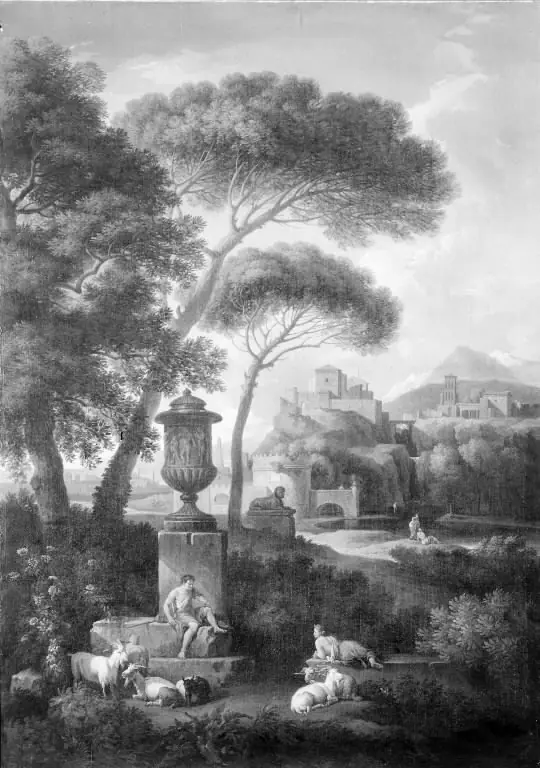 Landscape with the Tomb of Cecilia Metella
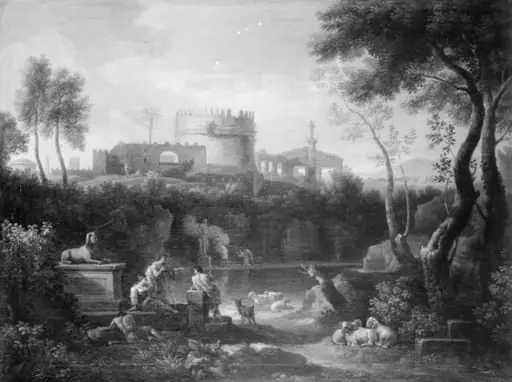 Landscape with the Tomb of Cecilia Metella
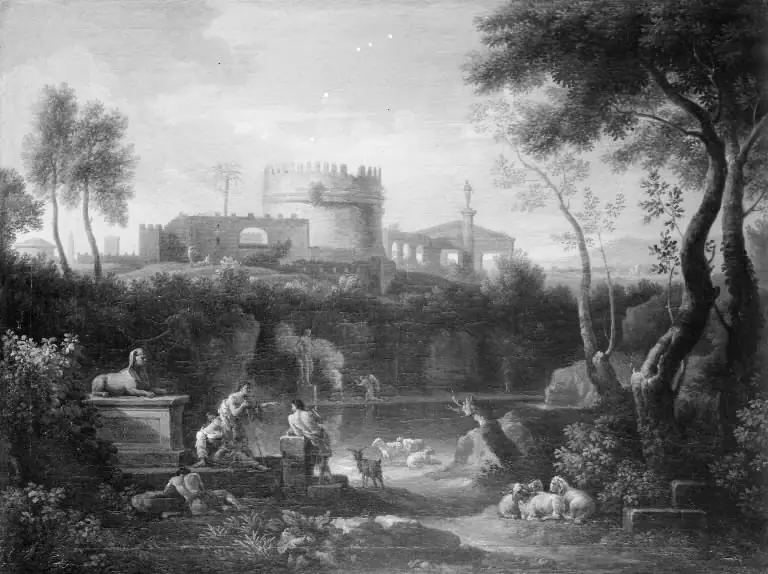 Landscape with the Tomb of Cecilia Metella
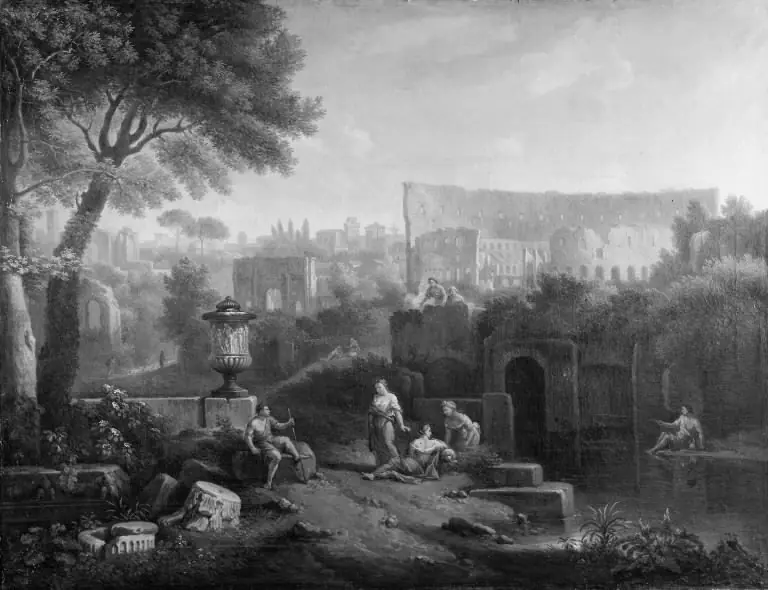 Landscape with the Colosseum and the Arch of Constantine
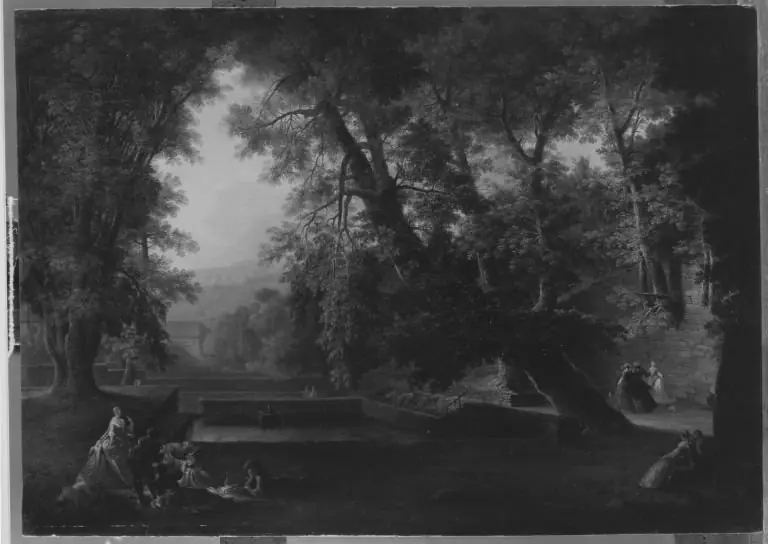 Der Wolfsbrunnen bei Heidelberg
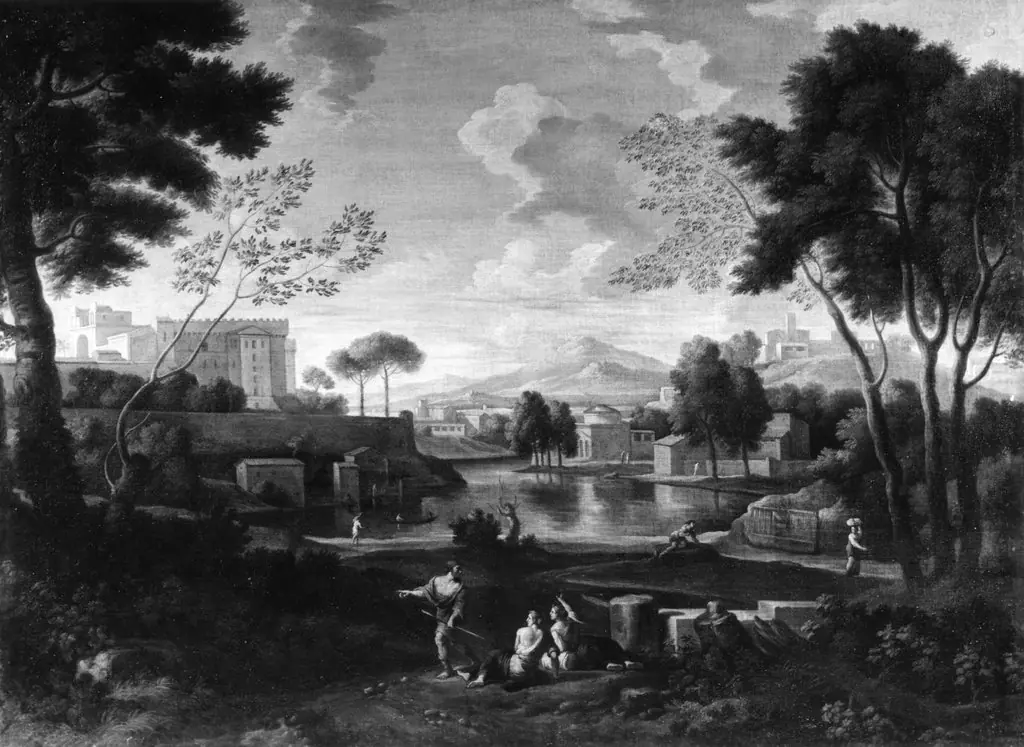 Classical Landscape with the Vatican Belvedere
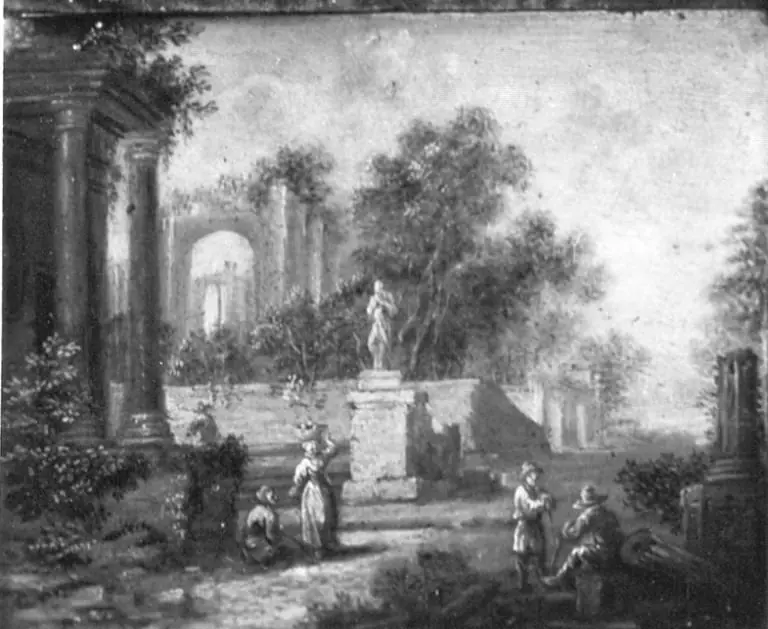 Landschaft mit Ruinen
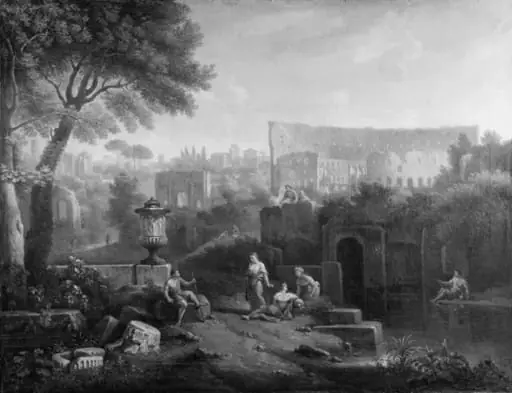 Landscape with the Colosseum and the Arch of Constantine
 River Landscape