Artwork
Landscape with the Colosseum and the Arch of Constantine
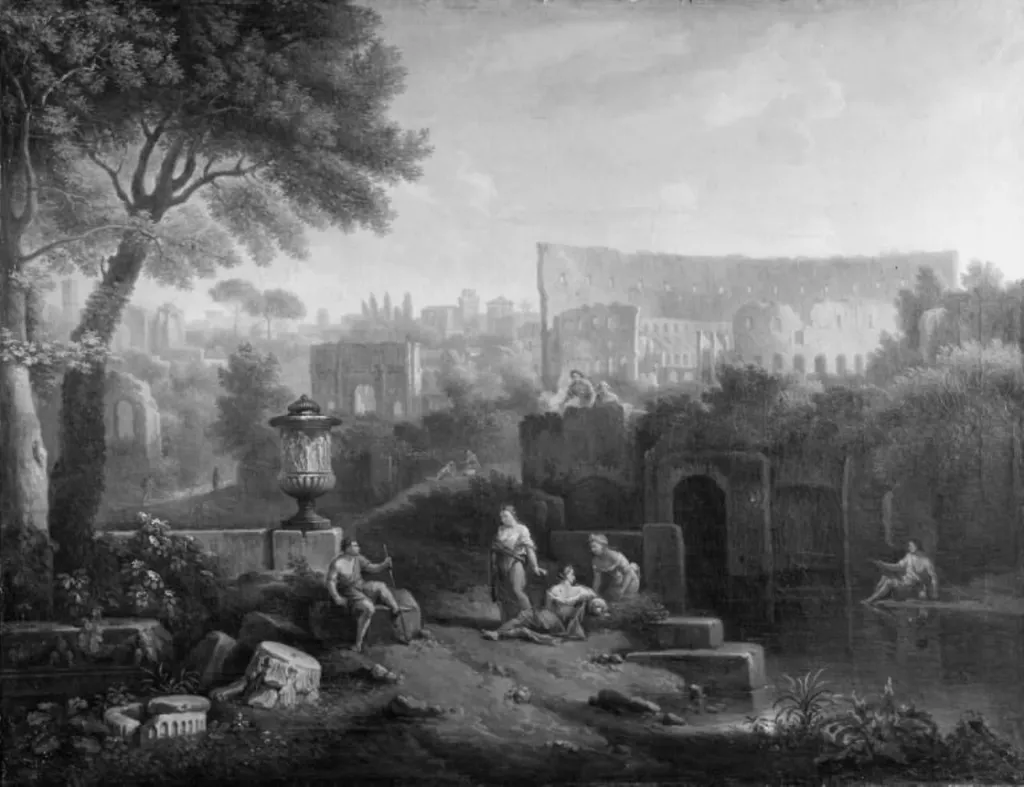
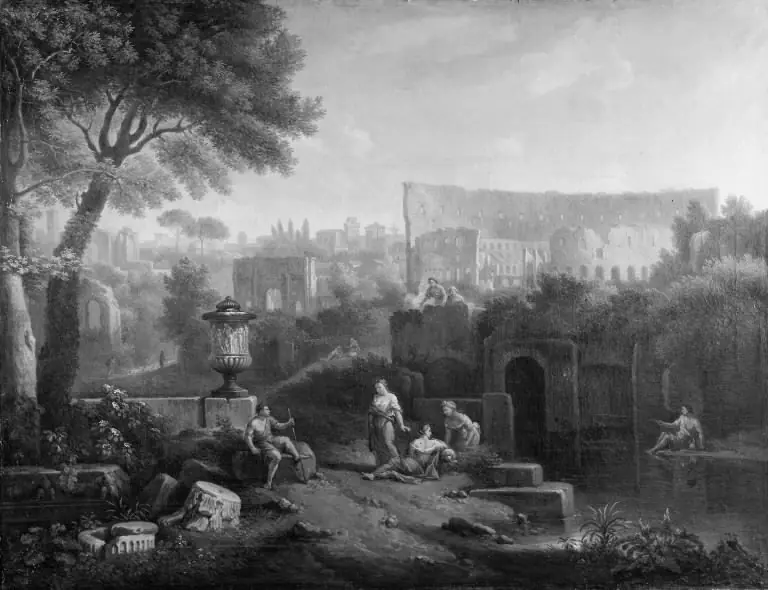
Landscape with the Colosseum and the Arch of Constantine is an unspecified painting by Unknown. It dates from 1750 and is held in the collection of the Statens Museum for Kunst. This landscape painting, dated around 1750, depicts a tranquil scene centered on ancient Roman ruins nestled within a cultivated garden.
About this work
Overview
Figures are scattered subtly throughout, engaged in quiet, unremarkable activities, reinforcing the atmosphere of stillness and contemplation.
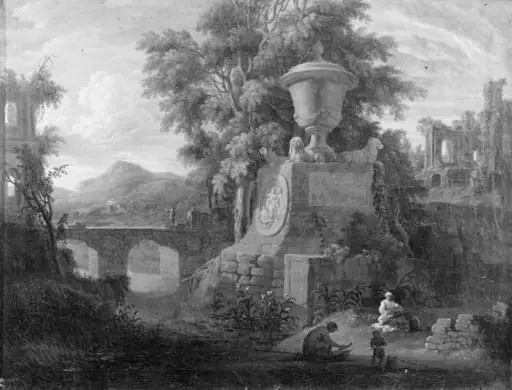
This landscape painting, dated around 1750, depicts a tranquil scene centered on ancient Roman ruins nestled within a cultivated garden. The composition integrates architectural fragments—columns, an urn, and a distant arch—with natural elements like trees and soft earth. Figures are scattered subtly throughout, engaged in quiet, unremarkable activities, reinforcing the atmosphere of stillness and contemplation. The work belongs to the collection of the Museum of Ethnography, though its origins lie in the European tradition of topographical painting.
Subject & Meaning
The scene presents ruins not as monuments to be revered, but as integrated parts of everyday life. Figures interact with the remnants of antiquity without ceremony—leaning, kneeling, standing—as if the past is a natural extension of the present. The absence of narrative or dramatic action suggests a meditation on time, decay, and continuity. The garden becomes a space where history is not displayed, but lived within, quietly absorbed by nature and human routine.
Technique & Style
The painting employs a restrained use of light and shadow to model forms and suggest depth, with soft transitions between illuminated and shaded areas. Brushwork is delicate, avoiding sharp definition in favor of atmospheric harmony. Distant structures are rendered with muted tones, enhancing spatial recession, while foreground details remain tactile but unembellished. The approach aligns with 18th-century landscape conventions that favored mood over grandeur, emphasizing subtlety over spectacle.
History & Provenance
The painting’s authorship remains unconfirmed, though it is attributed to an artist active in the mid-18th century. It entered the Museum of Ethnography’s collection in the late 19th or early 20th century, likely as part of a broader acquisition of European topographical works. Its journey from private collection to institutional custody reflects shifting attitudes toward landscape art—not as heroic or idealized, but as a record of place and quiet human presence.
Context
Created during a period when European travelers increasingly visited Rome’s ruins, this work reflects a growing interest in antiquity as a lived environment rather than a sacred relic. Unlike grand historical paintings, it avoids myth or spectacle, instead capturing the mundane coexistence of nature and decay. Such scenes were popular among artists and patrons drawn to the poetic potential of ruins, particularly in the decades before Romanticism fully embraced dramatic ruins as symbols of sublime loss.
Legacy
The painting contributes to a quieter strand of 18th-century landscape art that prioritized observation over rhetoric. Its influence lies not in fame, but in its quiet consistency with later realist and impressionist approaches to nature and architecture. It stands as a modest but persistent example of how ruins were perceived not as distant relics, but as familiar, weathered elements of the everyday world.
Artist & collection

 Domestic Scene
 Giacomo and Cardinal Marco, investing Andrea, Abbot of San Zeno, with his Benefice
 The Nymph of Fontainebleau
 Portrait of a Woman
 Madonna and Child with Saints in the Enclosed Garden
 Venus and Minerva
 Family Group of Four on Sofa
 Wall painting from Room H of the Villa of P. Fannius Synistor at Boscoreale
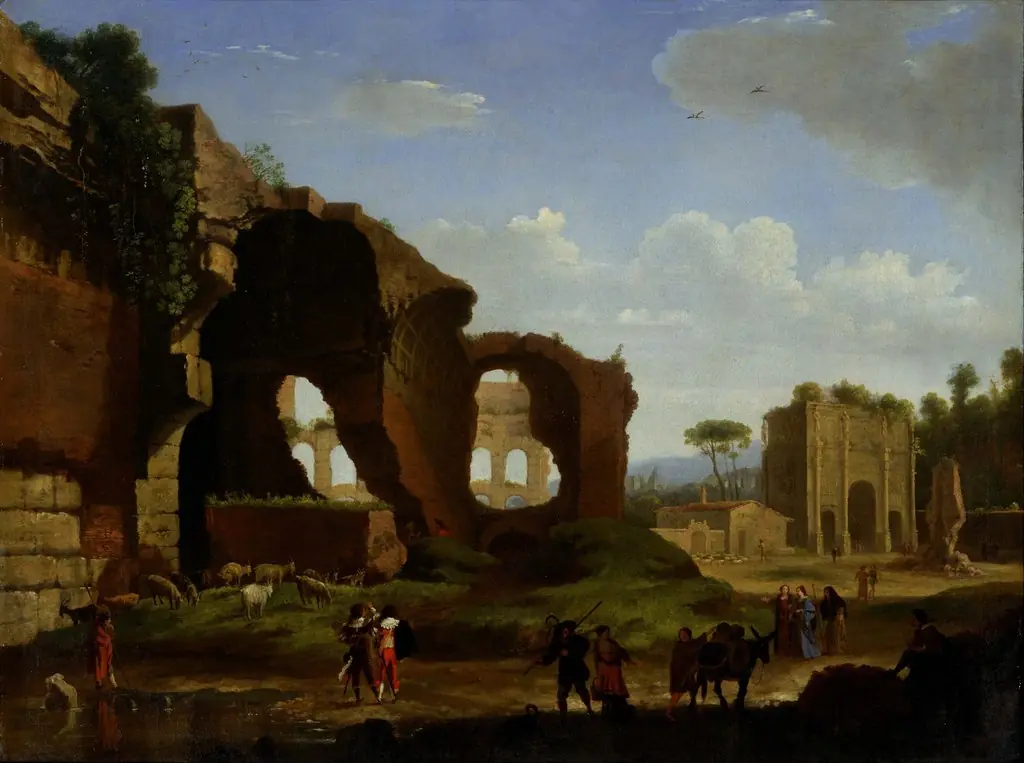 A Roman View of the Ruins of the Temple of Venus and Rome with the Colosseum and the Arch of Constantine
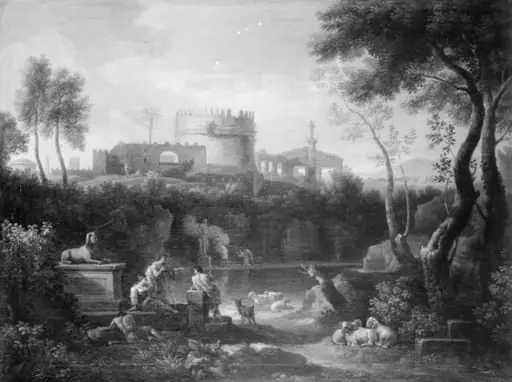 Landscape with the Tomb of Cecilia Metella
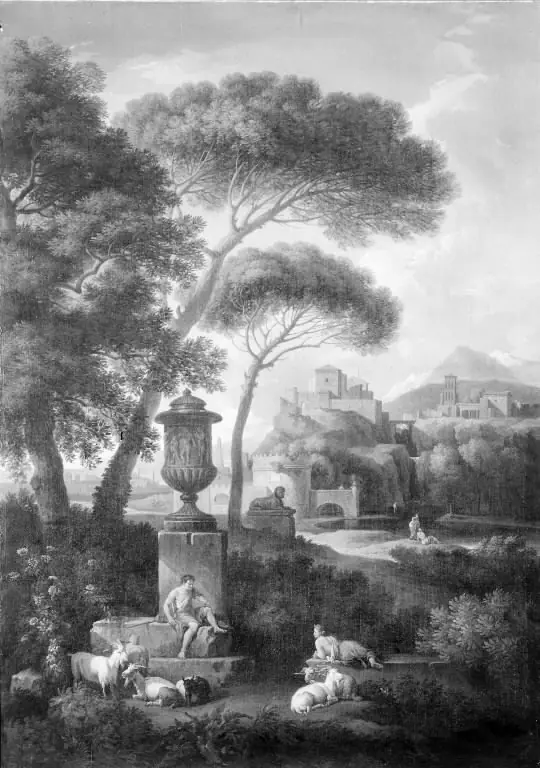 Landscape with the Tomb of Cecilia Metella
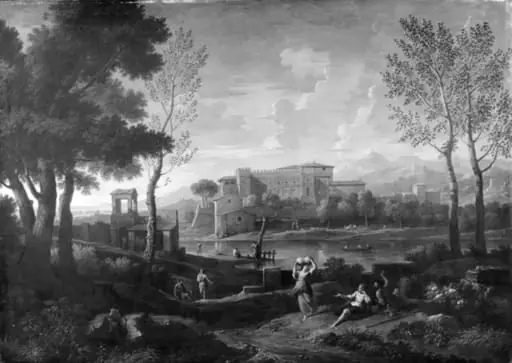 Roman Landscape with the Tiber and the Casino Belvedere
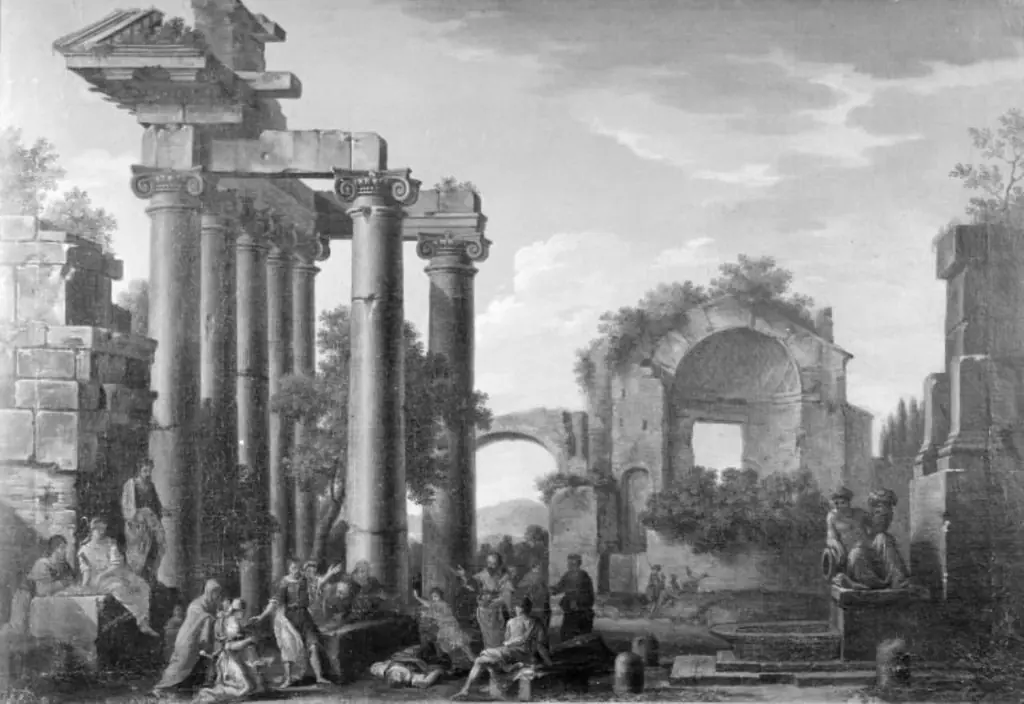 Ruiner af et græsk-romersk tempel med mange figurer
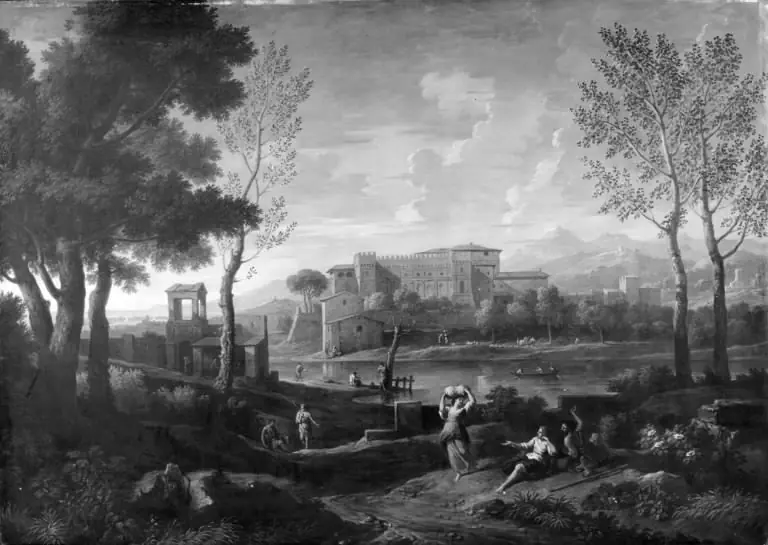 Roman Landscape with the Tiber and the Casino Belvedere
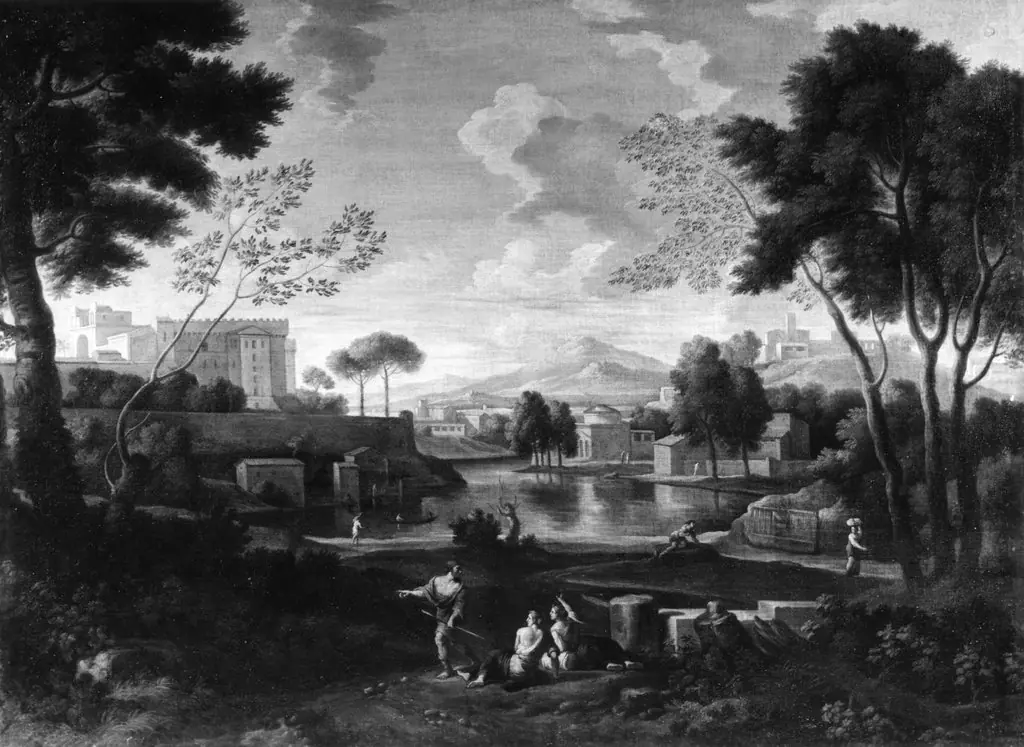 Classical Landscape with the Vatican Belvedere
 River Landscape
 Italian Landscape
 Italian Landscape
 Et mådeligt maleri, forestillende en venetiansk søhavn
 Landscape with the Colosseum and the Arch of Constantine