Artwork
Classical Landscape with the Vatican Belvedere
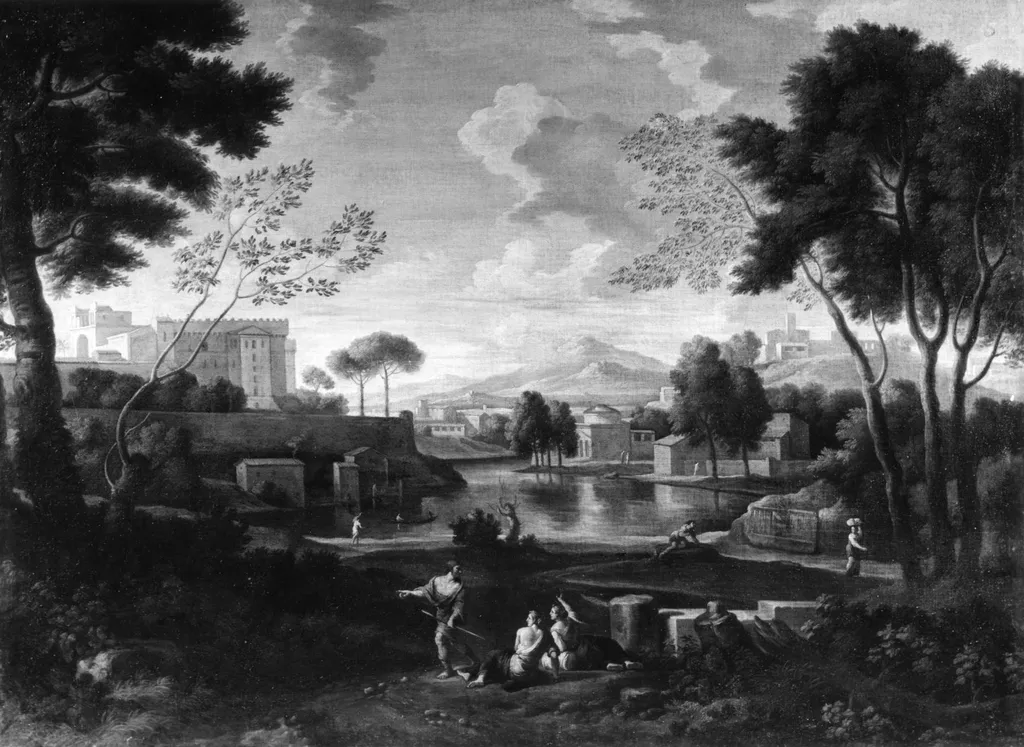
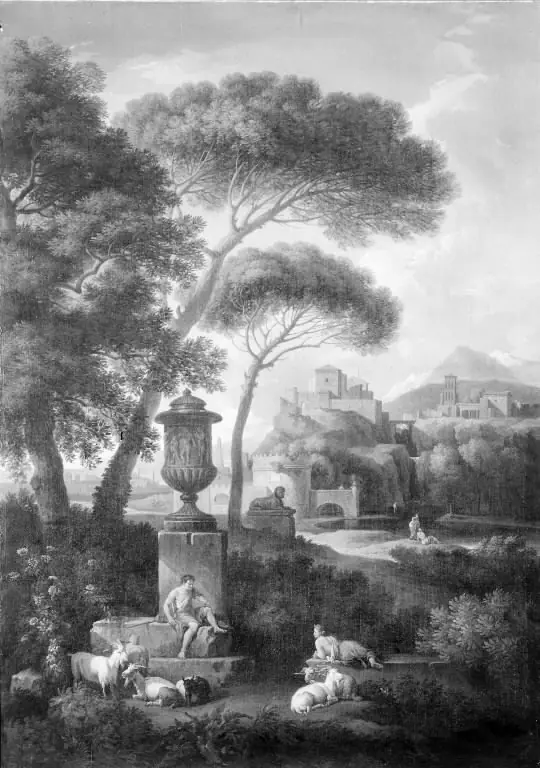
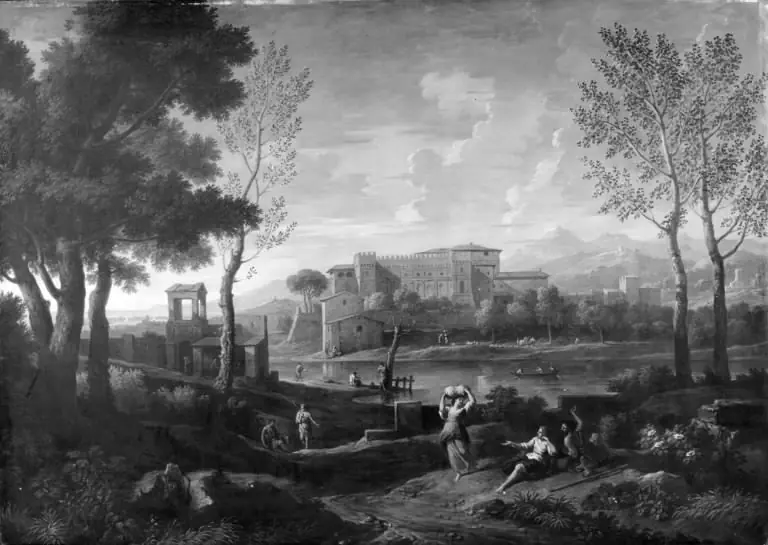
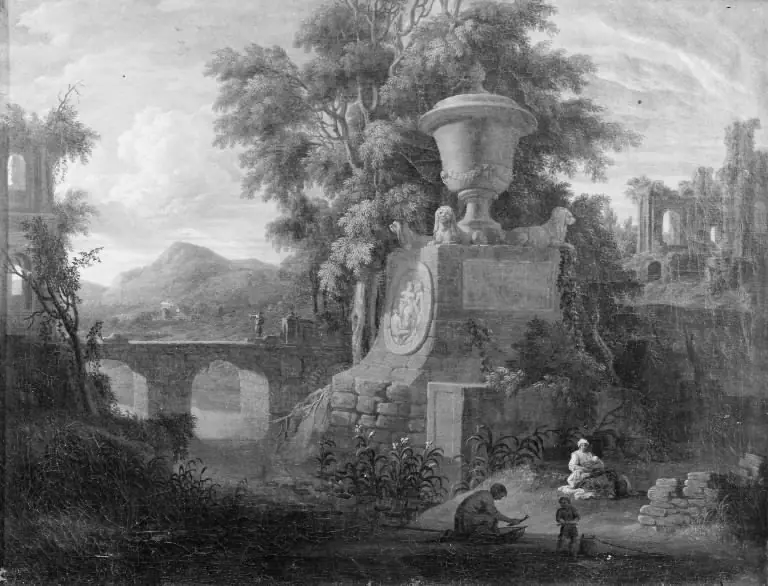
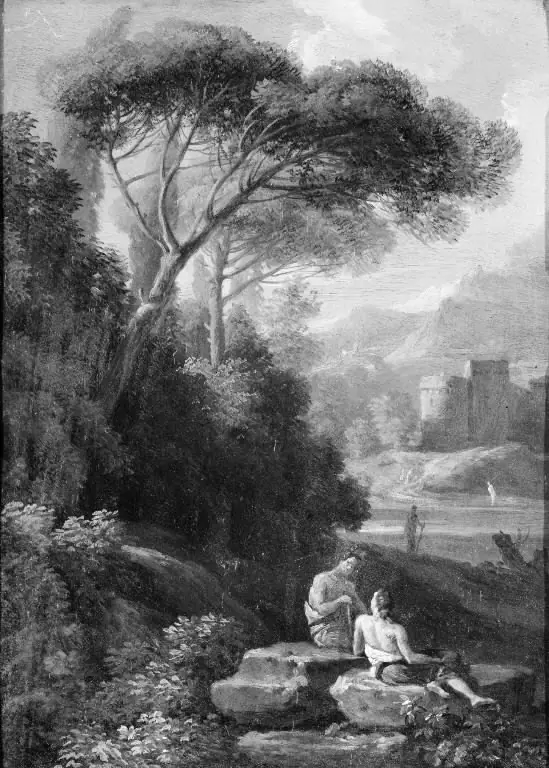
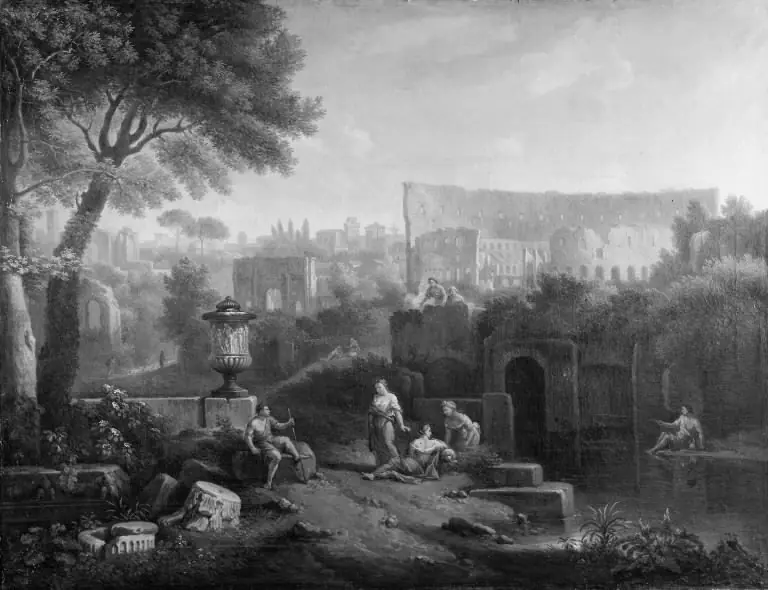
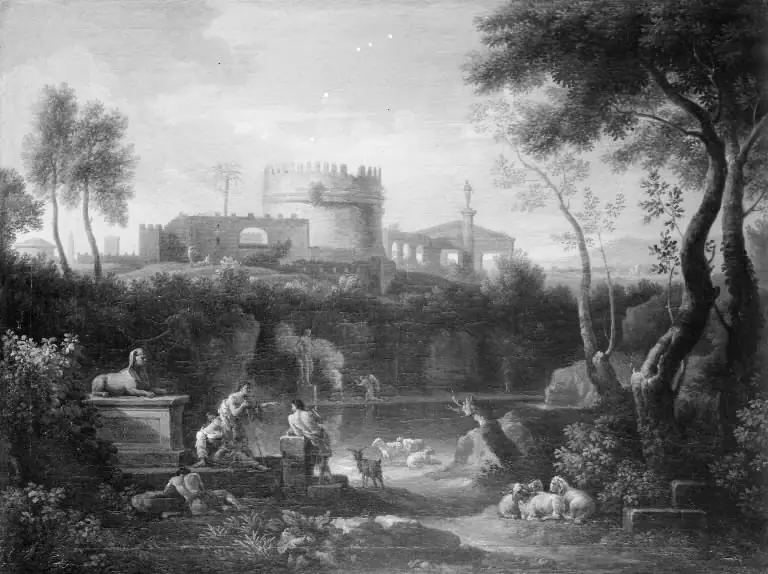
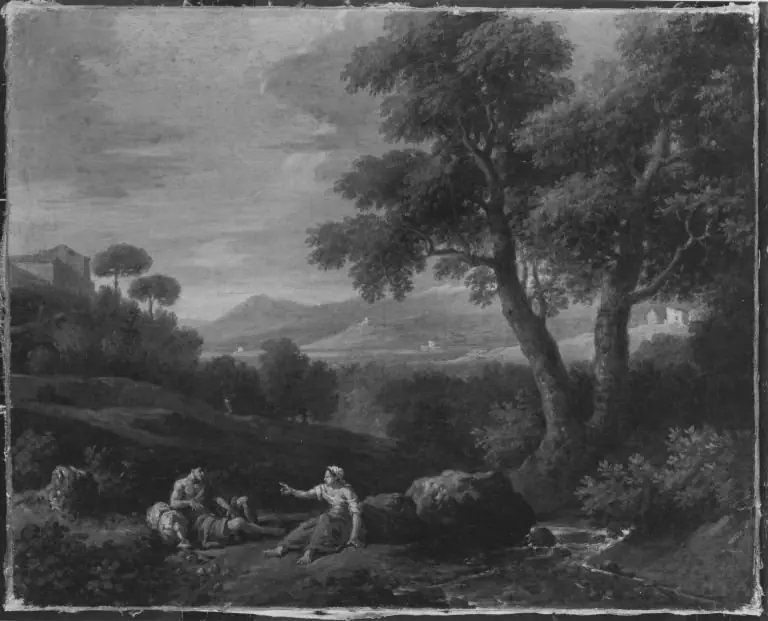
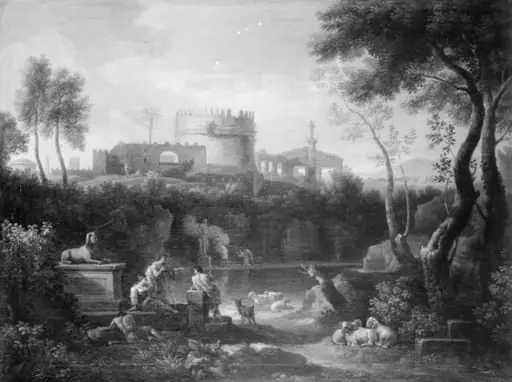
Classical Landscape with the Vatican Belvedere is an oil painting by the Rococo painting artist Jan Frans van Bloemen. It is held in the collection of the Walters Art Museum.
About this work
Overview
Van Bloemen, who spent much of his career in Rome, specialized in idealized landscapes that blended observed topography with classical allusions.
Painted in 1767 by the Flemish artist Jan Frans van Bloemen, this oil on canvas depicts a tranquil Roman countryside scene. Van Bloemen, who spent much of his career in Rome, specialized in idealized landscapes that blended observed topography with classical allusions. The work is part of the Rococo tradition, emphasizing harmony and gentle atmosphere over dramatic intensity. It is currently held in the Walters Art Museum’s collection.
Subject & Meaning
The painting presents a serene view of the Roman Campagna, centered on a reflective body of water with the Vatican Belvedere visible in the distance. Figures, including nude bathers, are arranged along the shore, evoking pastoral ideals from antiquity. The scene does not document a specific location but constructs an imagined antiquity, where nature, architecture, and human activity coexist in quiet balance, reflecting 18th-century tastes for classical renewal.
Technique & Style
Van Bloemen employed subtle gradations of light and soft brushwork to create atmospheric depth. The sky, lightly clouded, diffuses natural illumination across the landscape, enhancing the sense of spatial recession. Details in foliage, architecture, and human figures are rendered with precision but without harshness, aligning with Rococo sensibilities. The composition is carefully balanced, guiding the viewer’s eye from foreground figures toward the distant classical ruins.
History & Provenance
Created during van Bloemen’s mature period in Rome, the painting reflects his established reputation for vedute—detailed, idealized views of the Italian countryside. It entered the Walters Art Museum’s collection in the early 20th century, likely through the acquisition of private European holdings. Its survival in good condition offers insight into how Northern European artists interpreted Roman antiquity for an international audience.
Context
In mid-18th-century Rome, artists like van Bloemen catered to Grand Tour travelers seeking idealized images of antiquity. His landscapes responded to a demand for picturesque, morally neutral scenes that evoked classical harmony. Unlike topographical records, these works synthesized real sites with literary and artistic conventions, reinforcing a cultural narrative that linked contemporary Europe to the glory of ancient Rome.
Legacy
Van Bloemen’s approach influenced later landscape painters who sought to merge observation with idealization. While not widely known today, his works remain important examples of how Northern European artists adapted Italian scenery to suit Enlightenment-era aesthetics. The painting continues to serve as a reference for understanding the visual culture of the Grand Tour and the persistence of classical themes in 18th-century art.
Own this work as a print
Artist & collection
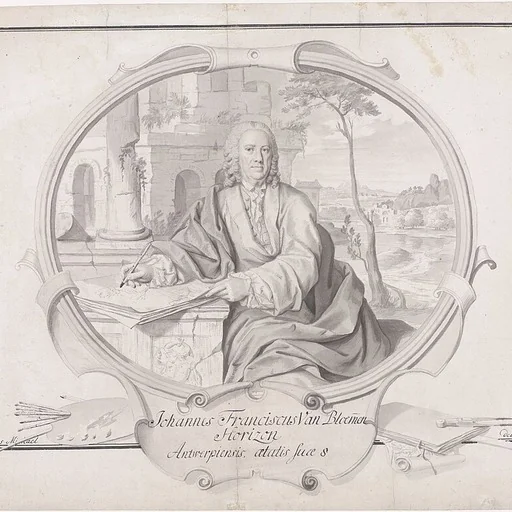
Artist
Jan Frans van Bloemen (baptized 12 May 1662 - buried 13 June 1749) was a Flemish landscape painter mainly active in Rome.