Artwork
Portrait of the Duchess Barbara of Saxony, 1478-1534 (wife of George the Bearded)
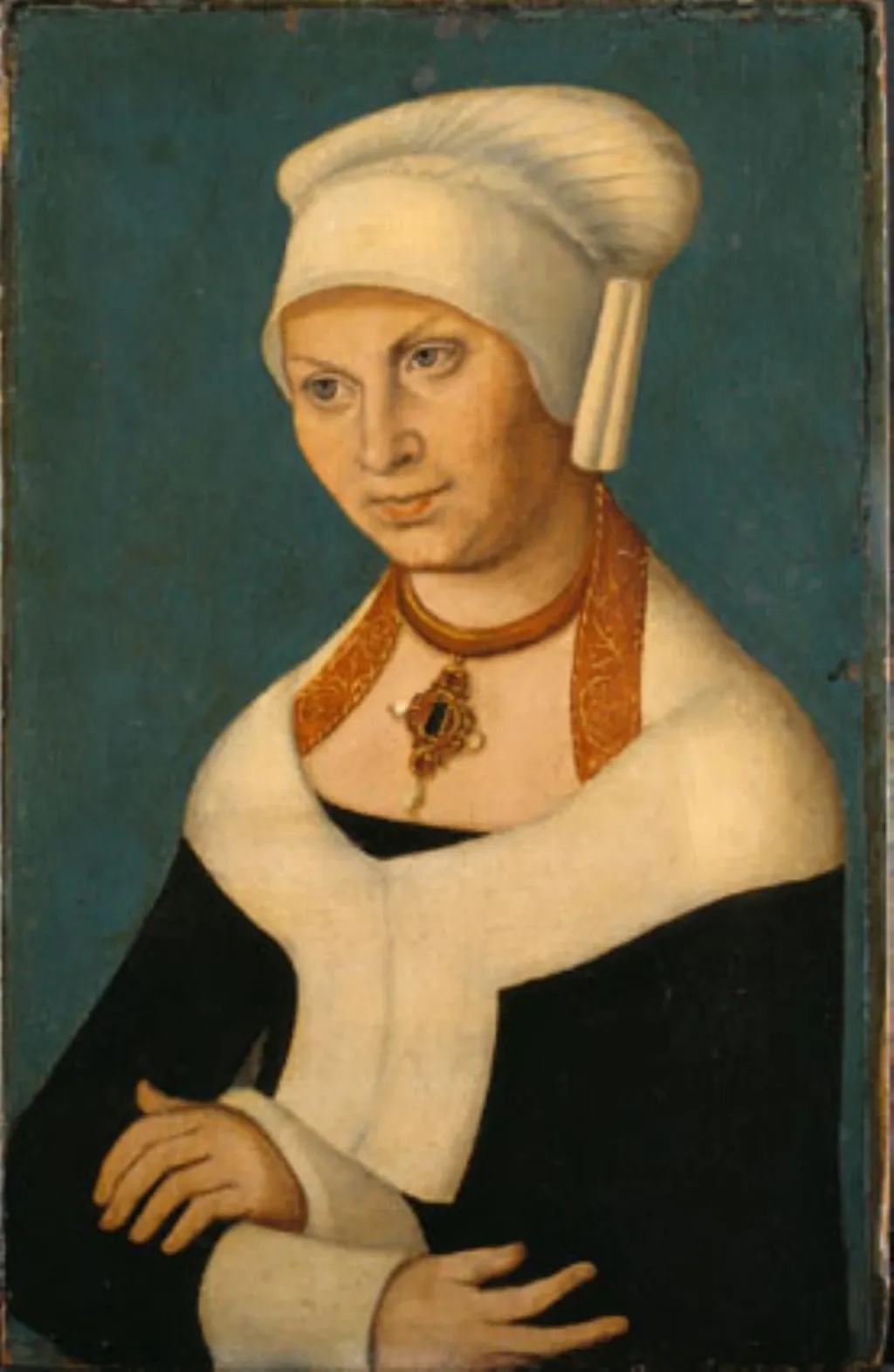
Portrait of the Duchess Barbara of Saxony, 1478-1534 (wife of George the Bearded) is an unspecified painting by Unknown. It dates from 1545 and is held in the collection of the Statens Museum for Kunst. This portrait depicts Barbara of Saxony, duchess consort of Saxony, painted around 1545.
About this work
Overview
Though her husband, George the Bearded, died in 1539, the image was created several years later, likely to commemorate her status.
This portrait depicts Barbara of Saxony, duchess consort of Saxony, painted around 1545. Though her husband, George the Bearded, died in 1539, the image was created several years later, likely to commemorate her status. The work is held in the Museum of Ethnography, though its origins suggest a courtly rather than ethnographic context. The composition emphasizes stillness and dignity, typical of noble portraiture in mid-16th-century Germany.
Subject & Meaning
Barbara is portrayed without ornamentation or symbols of power, reflecting a preference for quiet authority. Her plain white cap and high-collared dress signal modesty and piety, values associated with Lutheran nobility after the Reformation. The absence of jewelry beyond a small pendant underscores restraint. Her hands, gently folded, convey composure and inner calm, reinforcing an ideal of virtuous womanhood in a time of religious and political change.
Technique & Style
The artist employs chiaroscuro to model the duchess’s face and hands, drawing attention to her expression and posture against a dark green background. Fabric folds are rendered with precise, subtle brushwork, suggesting texture without excess detail. The lighting isolates her form, creating a sense of presence without theatricality. This restrained approach aligns with Northern Renaissance traditions that valued observation over idealization.
History & Provenance
Painted after Barbara’s husband’s death and likely during her widowhood, the portrait may have been commissioned to affirm her continued social standing. Its current location in the Museum of Ethnography is unusual for a noble portrait, suggesting a later transfer or misclassification. No definitive records trace its path from the Saxon court to its present home, leaving its early provenance partially obscure.
Context
Created in the decades following the Protestant Reformation, the portrait reflects the shift in aristocratic self-presentation among German nobility. Elaborate displays of wealth gave way to understated elegance, mirroring Lutheran ideals. Barbara’s attire and demeanor align with other portraits of Lutheran noblewomen, emphasizing moral character over lineage or status symbols, a notable departure from earlier Renaissance conventions.
Legacy
The portrait endures as a quiet testament to the evolving identity of noblewomen in post-Reformation Germany. Its simplicity invites comparison with contemporaneous works, revealing broader trends in portraiture that prioritized psychological presence over heraldic display. Though not widely exhibited, it remains a valuable example of how personal dignity was visually articulated during a period of profound cultural transformation.
Artist & collection

 Domestic Scene
 Giacomo and Cardinal Marco, investing Andrea, Abbot of San Zeno, with his Benefice
 The Nymph of Fontainebleau
 Portrait of a Woman
 Madonna and Child with Saints in the Enclosed Garden
 Venus and Minerva
 Family Group of Four on Sofa
 Wall painting from Room H of the Villa of P. Fannius Synistor at Boscoreale
 Portrait of a Woman
 Bildnis einer Frau
 Portrait of a Lady
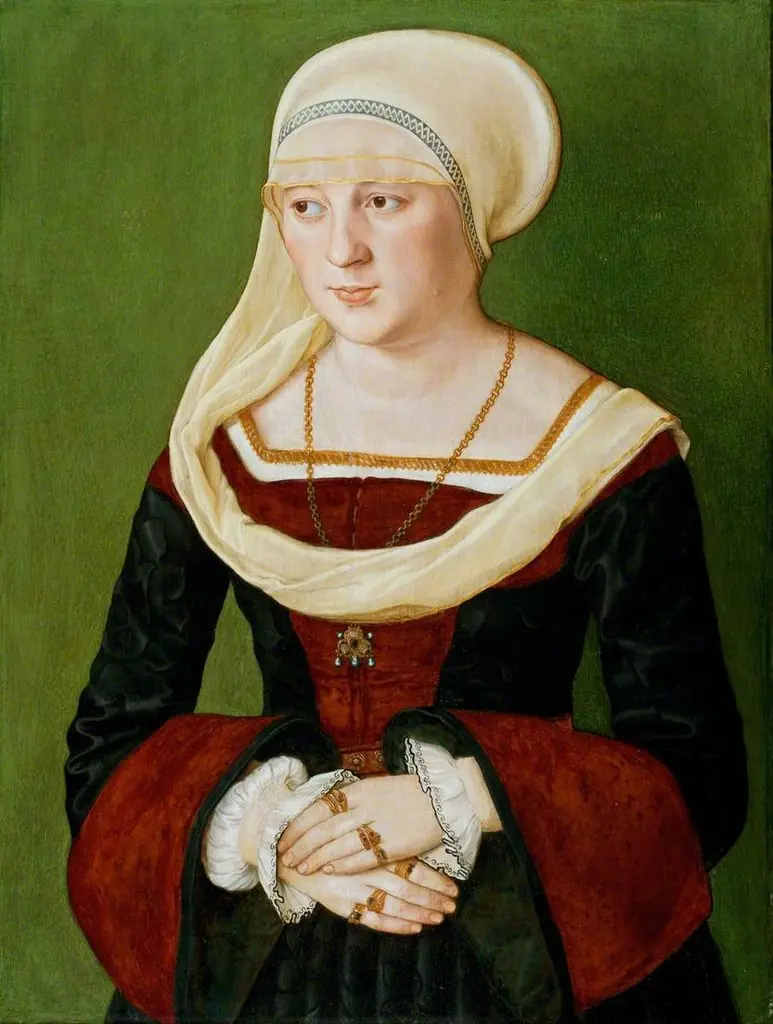 Portrait of Anna Scheit, née Mem(m)inger
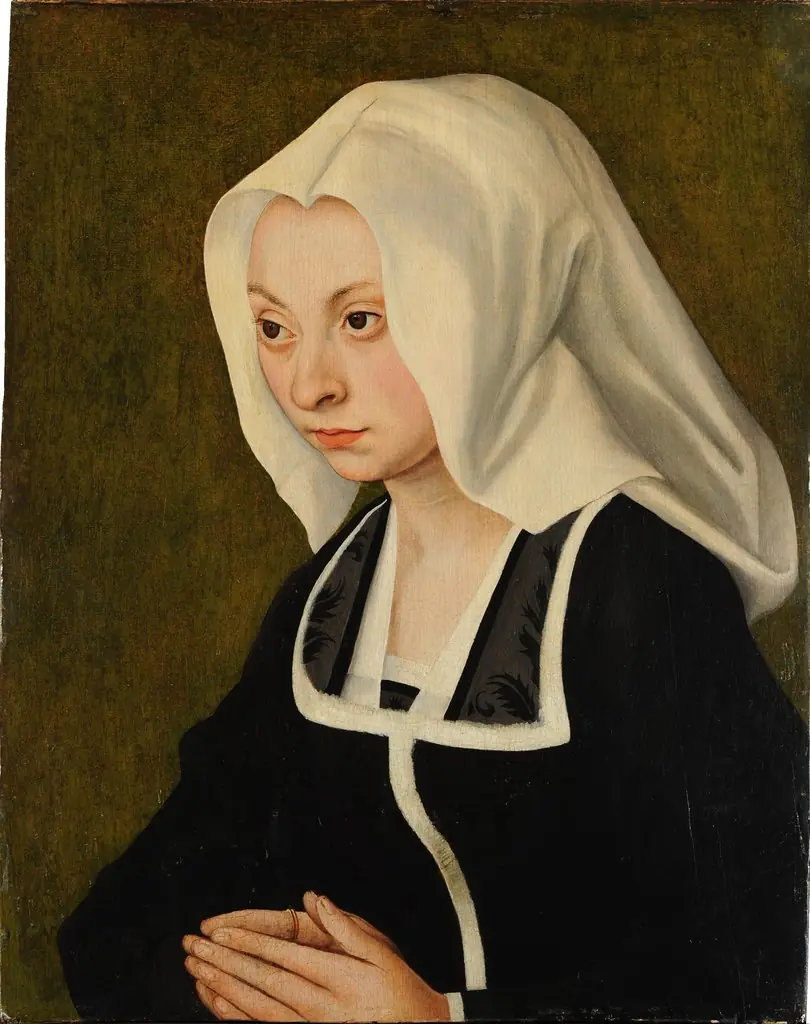 Portrait of a Woman
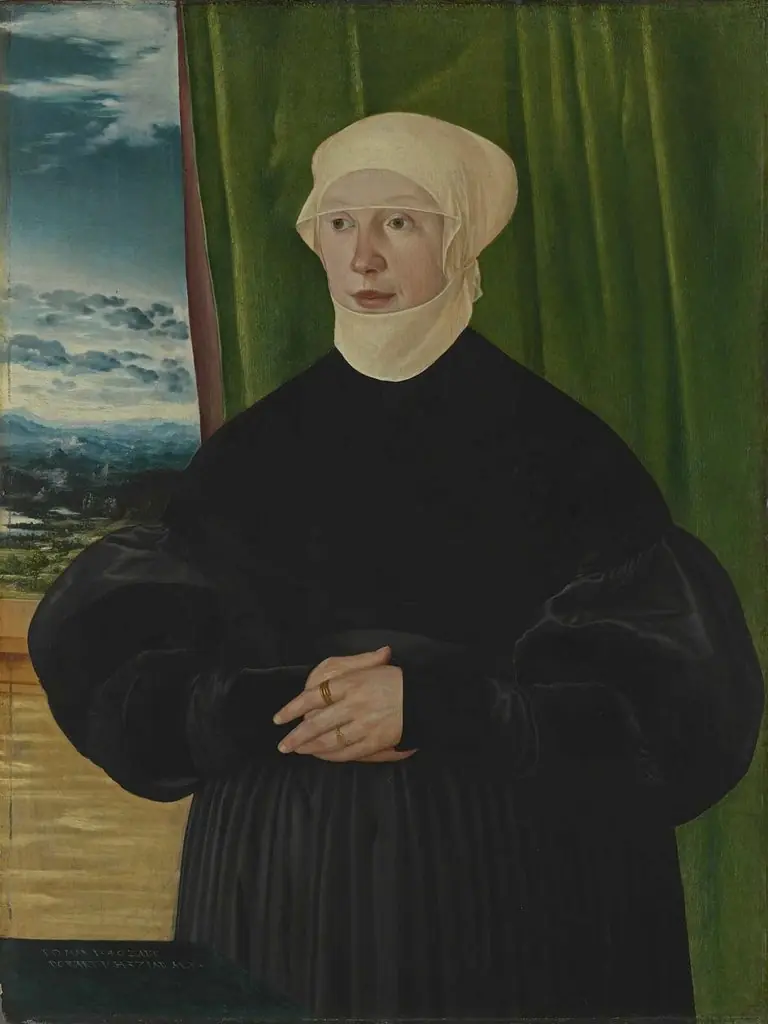 Ligsalz-Bildnisdiptychon: Apollonia Ligsalz, geb. Ridler
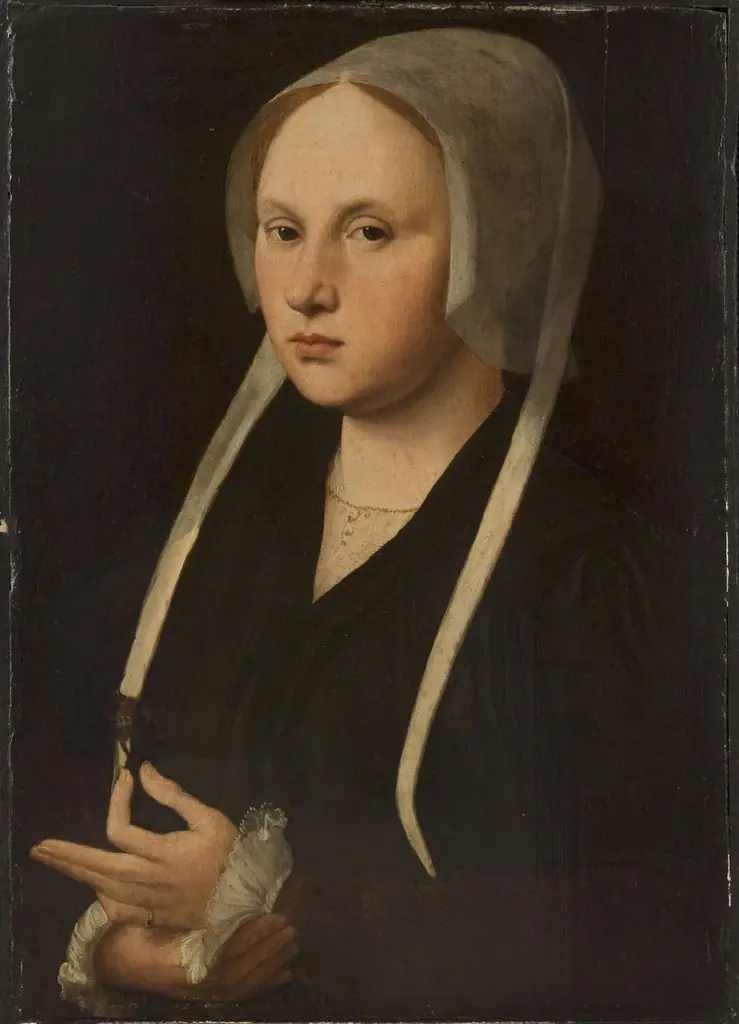 Portrait of a Lady
 Jacoba of Bavaria, Countess of Holland and Zeeland
 Jorg Zörer’s Wife (?)
 Kunigunde of Austria, wife of Duke Albrecht IV of Bavaria