Artwork
Fra et atelier
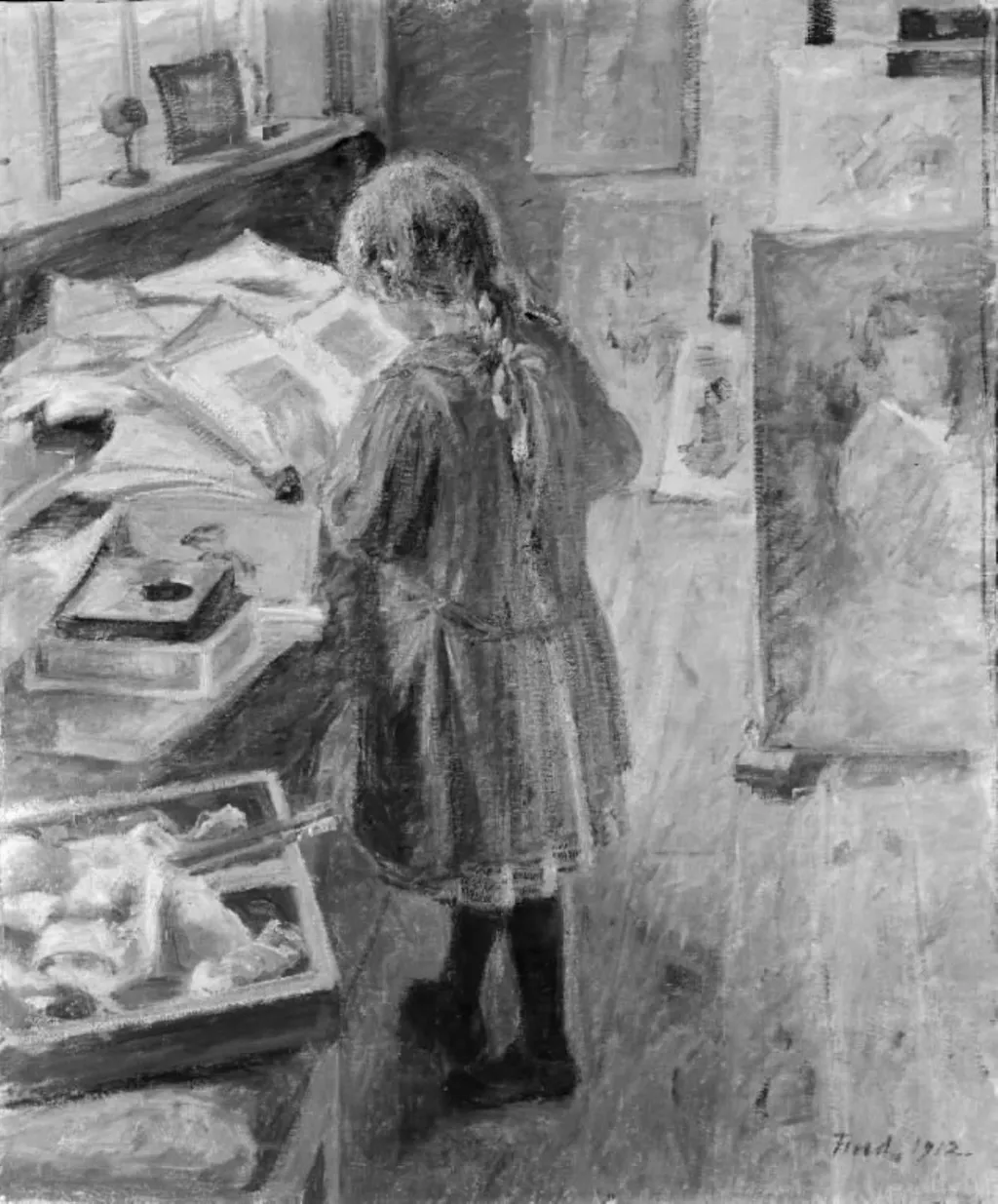
Fra et atelier is a photography by Unknown. It dates from 1912 and is held in the collection of the Statens Museum for Kunst.
About this work
Overview
The image captures a solitary figure standing with their back turned, surrounded by an array of tools and partially completed objects.
Created in 1912, Fra et atelier is a black-and-white photograph taken in a working studio. The image captures a solitary figure standing with their back turned, surrounded by an array of tools and partially completed objects. The scene is unadorned and functional, reflecting the daily reality of artisan labor. The photograph is part of the collection at the Museum of Ethnography, where it serves as a record of material culture and craft practices from the early 20th century.
Subject & Meaning
The figure, dressed in a long coat with a bow at the neck, is engaged in quiet concentration, their posture suggesting immersion in a tactile task. The cluttered environment implies a space of continuous making—tools arranged by use, materials in various stages of completion. The absence of a face invites viewers to consider the worker as representative rather than individual, emphasizing the anonymity of skilled labor in that era.
Technique & Style
The photograph employs natural, uneven lighting to model form and depth, with sharp contrasts between shadowed corners and illuminated surfaces. This interplay of light and dark enhances the texture of wood, metal, and fabric, grounding the scene in physical reality. The composition avoids theatricality, favoring a documentary approach that prioritizes authenticity over aesthetic embellishment.
History & Provenance
The photograph was taken in 1912 and entered the collection of the Museum of Ethnography shortly thereafter. Its origin as part of a broader ethnographic survey suggests it was intended to document working conditions and craft traditions. No specific artist is credited, and its acquisition likely stemmed from institutional efforts to preserve visual records of industrial and artisanal life in early modern Europe.
Context
In the early 20th century, ethnographic institutions increasingly turned to photography to catalog labor practices before industrialization transformed them. This image aligns with efforts to preserve knowledge of handcrafts amid rising mechanization. The workshop’s disarray reflects a pre-industrial rhythm of work, where tools and materials coexisted in a state of constant use rather than organized storage.
Legacy
Fra et atelier endures as a quiet testament to the dignity of manual labor. Its value lies not in artistic flourish but in its unvarnished record of a working space and its inhabitant. It contributes to broader scholarly understanding of craft economies and the material conditions of everyday life in the early 1900s, offering a reference point for studies in labor history and material culture.
Artist & collection

 Domestic Scene
 Giacomo and Cardinal Marco, investing Andrea, Abbot of San Zeno, with his Benefice
 The Nymph of Fontainebleau
 Portrait of a Woman
 Madonna and Child with Saints in the Enclosed Garden
 Venus and Minerva
 Family Group of Four on Sofa
 Wall painting from Room H of the Villa of P. Fannius Synistor at Boscoreale