Artwork
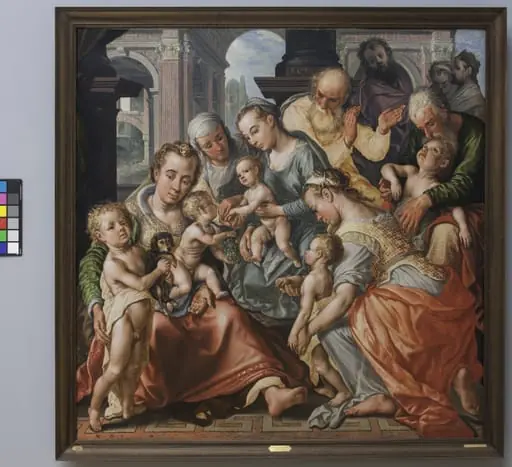
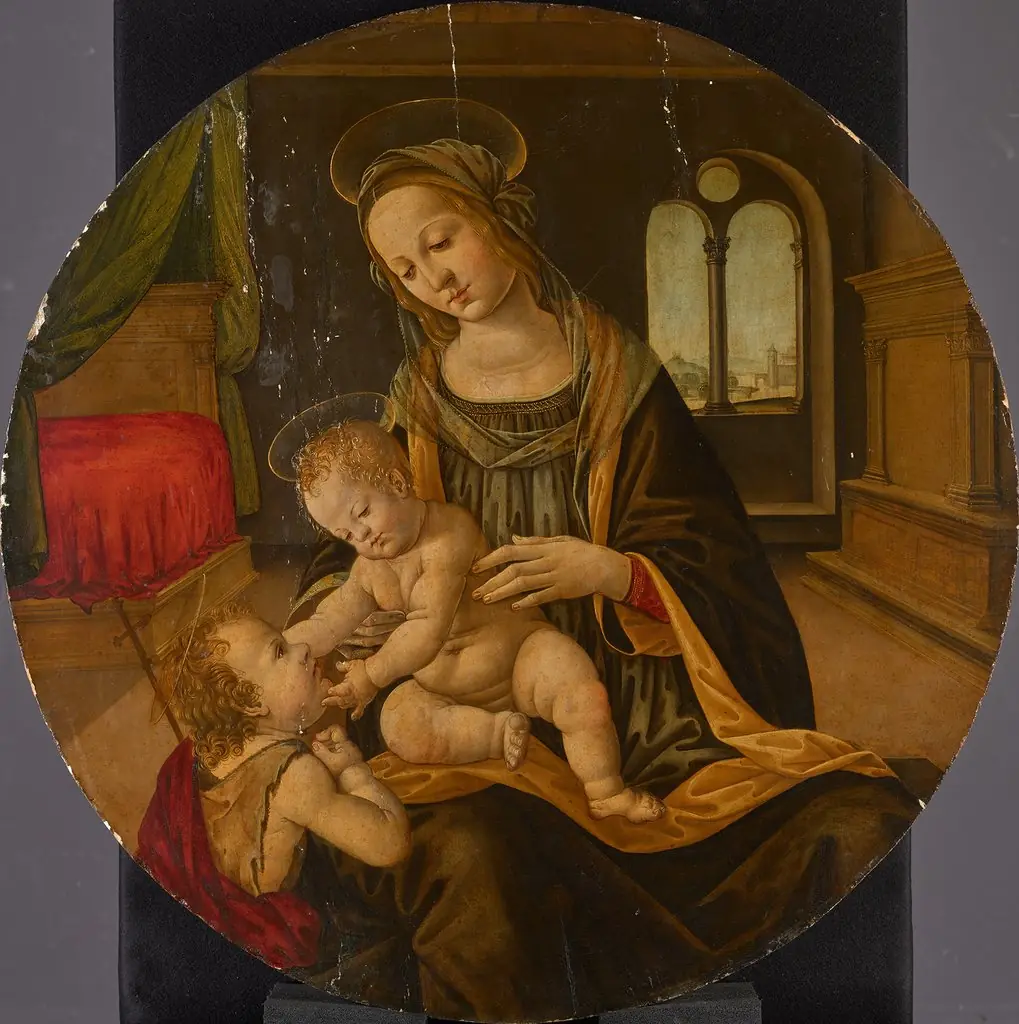
The Holy Family
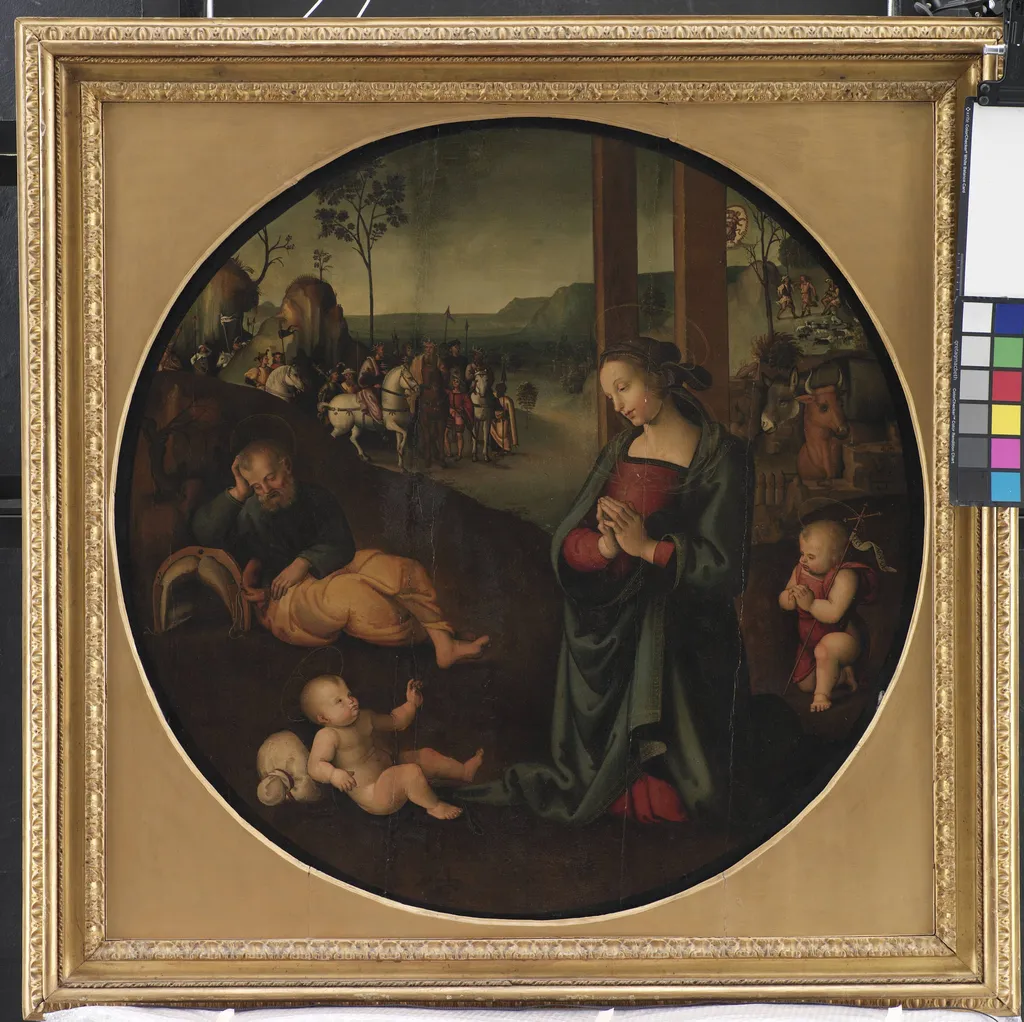
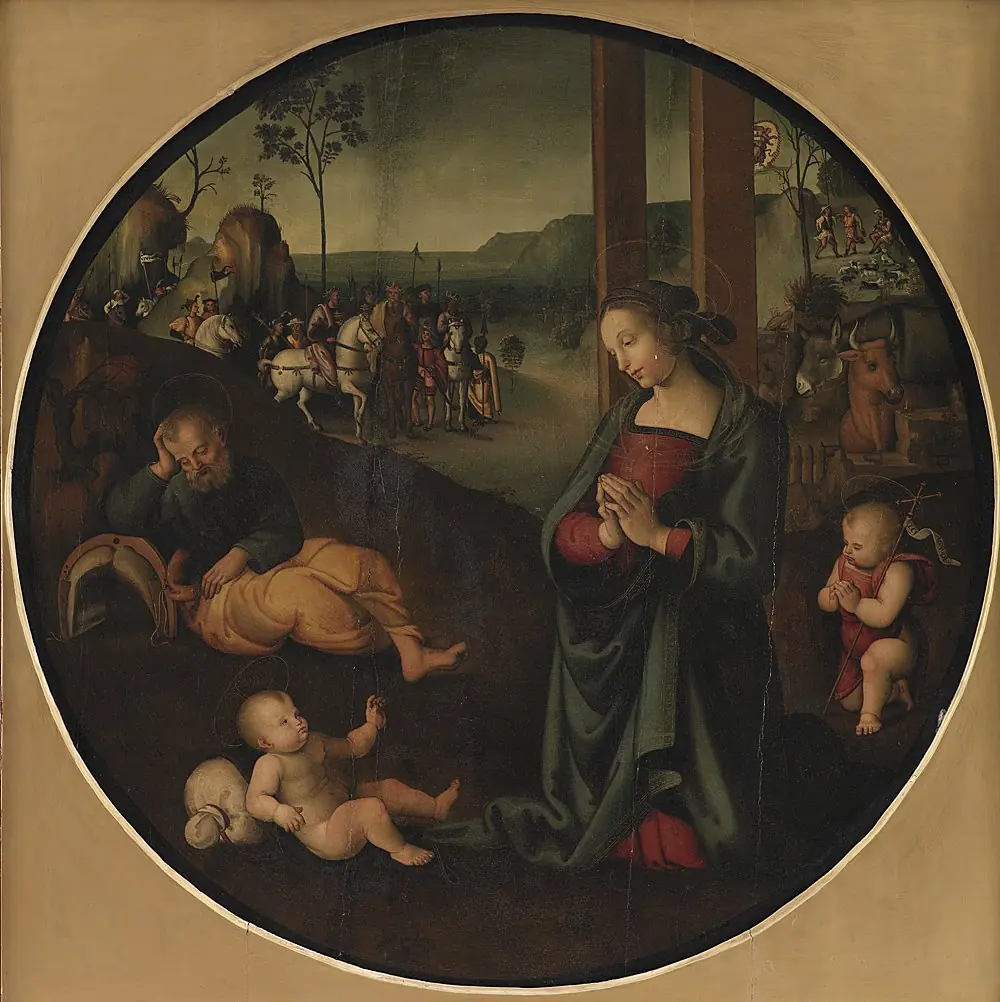
The Holy Family is a photography by Unknown. It dates from 1450 and is held in the collection of the Statens Museum for Kunst.
About this work
Overview
A devotional panel painted around 1450, this work depicts the Holy Family within a circular composition. It is attributed to an artist active in the mid-15th century, though the specific hand remains unidentified. The painting is preserved in the Museum of Ethnography, where its intimate scale and detailed rendering reflect its use in private worship rather than public liturgy.
Subject & Meaning
The scene centers on Mary kneeling in prayer, Joseph resting nearby, and the infant Christ interacting with a small animal—likely a lamb, symbolizing sacrifice. The quiet domesticity suggests a moment of contemplation, emphasizing humility and familial tenderness. The inclusion of distant figures on horseback may allude to the journey to Egypt or the broader world beyond the sacred circle.
Technique & Style
The artist employed tempera on wood, with fine brushwork capturing fabric folds, facial expressions, and natural textures. The palette is restrained, dominated by earthy reds, muted greens, and browns, enhancing the scene’s solemnity. The circular format, common in devotional panels, focuses attention inward, reinforcing the spiritual intimacy of the moment.
History & Provenance
The painting entered the Museum of Ethnography’s collection in the late 19th century, likely as part of a broader acquisition of European religious art. Its origins are undocumented prior to this, though stylistic elements suggest a Northern Italian or Central European origin. No records of earlier ownership or commission have been verified.
Context
Created during the early Renaissance, the work reflects a shift toward naturalistic detail and emotional nuance in religious imagery. While not aligned with major artistic centers like Florence or Bruges, it shares traits with regional workshops producing devotional art for private patrons. The emphasis on quiet domesticity aligns with growing lay piety in the 15th century.
Legacy
Though not widely known outside institutional circles, the painting exemplifies the quiet, detailed tradition of small-scale religious panels that sustained devotional practice beyond grand altarpieces. Its preservation offers insight into how ordinary believers engaged with sacred imagery, valuing intimacy over spectacle in their spiritual lives.
Artist & collection

 Domestic Scene
 Giacomo and Cardinal Marco, investing Andrea, Abbot of San Zeno, with his Benefice
 The Nymph of Fontainebleau
 Portrait of a Woman
 Madonna and Child with Saints in the Enclosed Garden
 Venus and Minerva
 Family Group of Four on Sofa
 Wall painting from Room H of the Villa of P. Fannius Synistor at Boscoreale