Artwork
The Holy Kinship
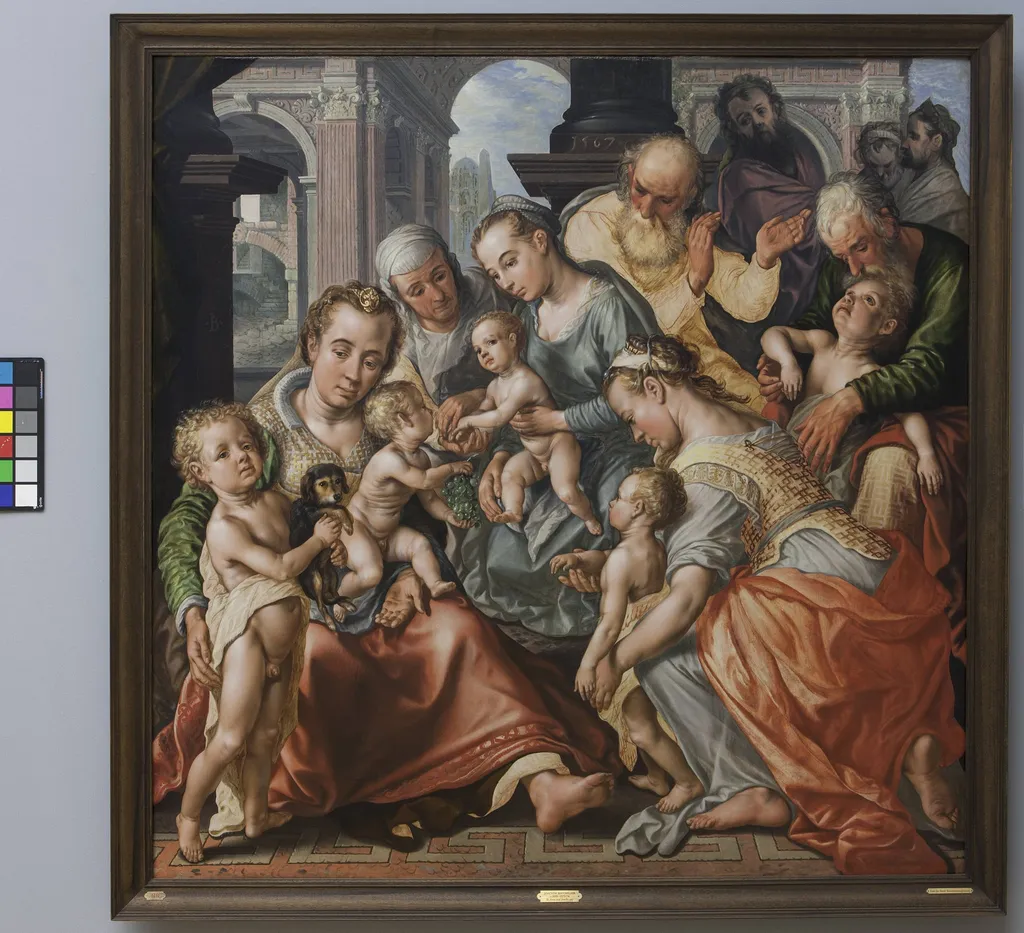
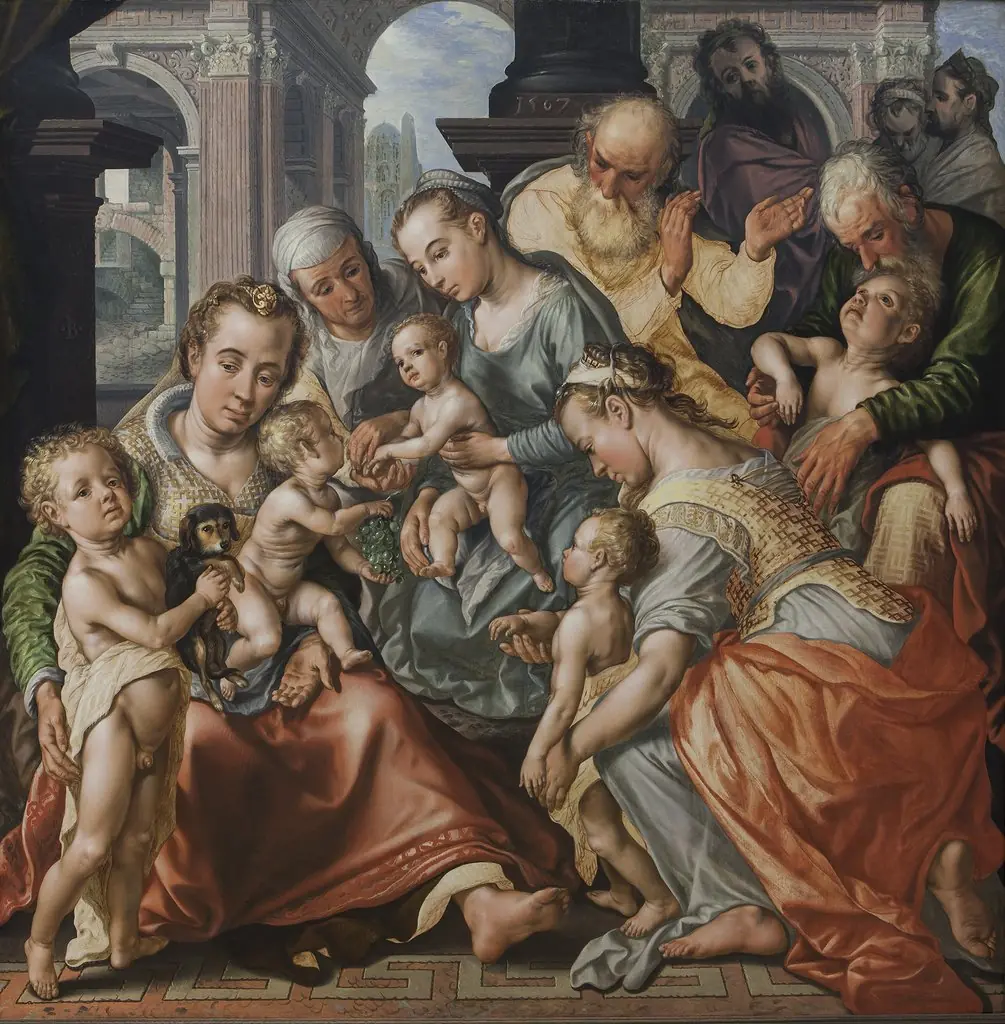
The Holy Kinship is a photography by the Renaissance artist Unknown. It dates from 1567 and is held in the collection of the Statens Museum for Kunst.
About this work
Overview
The Holy Kinship, painted in 1567 by the artist known as 1521_person, is a large-scale composition that gathers an extended family group within an interior setting. The work is currently part of the collection of the Museum of Ethnography, where it is displayed as an example of late‑Renaissance portraiture of religious subjects.
Subject & Meaning
The scene depicts a multigenerational family, with women seated on steps or the floor cradling infants and small children, one of whom is accompanied by a dog. Male figures stand behind the women, their expressions solemn, suggesting a narrative linked to the biblical Holy Family and its broader kin network, emphasizing lineage and devotion.
Technique & Style
The artist employs chiaroscuro to separate the figures from the architectural backdrop, allowing the illuminated forms to advance toward the viewer. A warm palette dominated by reds and earth tones unifies the composition, while careful modeling of drapery and flesh conveys a tactile sense of texture typical of mid‑sixteenth‑century Northern Renaissance painting.
History & Provenance
Created in 1567, the painting entered the Museum of Ethnography’s holdings through a donation in the early twentieth century, though earlier ownership records remain sparse. Its attribution to 1521_person has been affirmed by stylistic comparison with other documented works by the same hand.
Context
The Holy Kinship belongs to a broader trend of Renaissance artists rendering extended holy families, reflecting contemporary interest in genealogical representation and devotional intimacy. Its architectural elements and spatial organization echo the period’s fascination with perspective, while the inclusion of everyday details, such as the dog, grounds the sacred narrative in familiar domestic life.
Artist & collection

 Domestic Scene
 Giacomo and Cardinal Marco, investing Andrea, Abbot of San Zeno, with his Benefice
 The Nymph of Fontainebleau
 Portrait of a Woman
 Madonna and Child with Saints in the Enclosed Garden
 Venus and Minerva
 Family Group of Four on Sofa
 Wall painting from Room H of the Villa of P. Fannius Synistor at Boscoreale
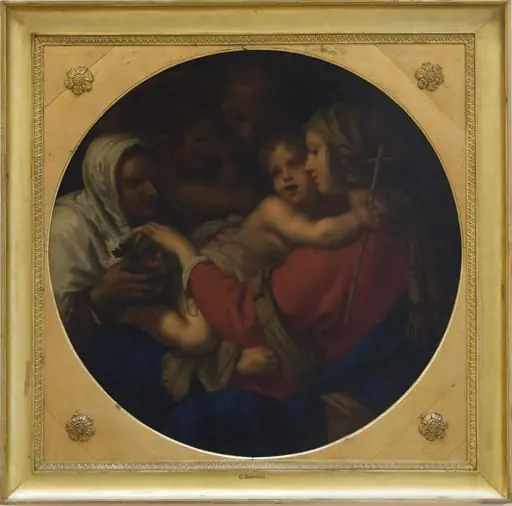 The Holy Family
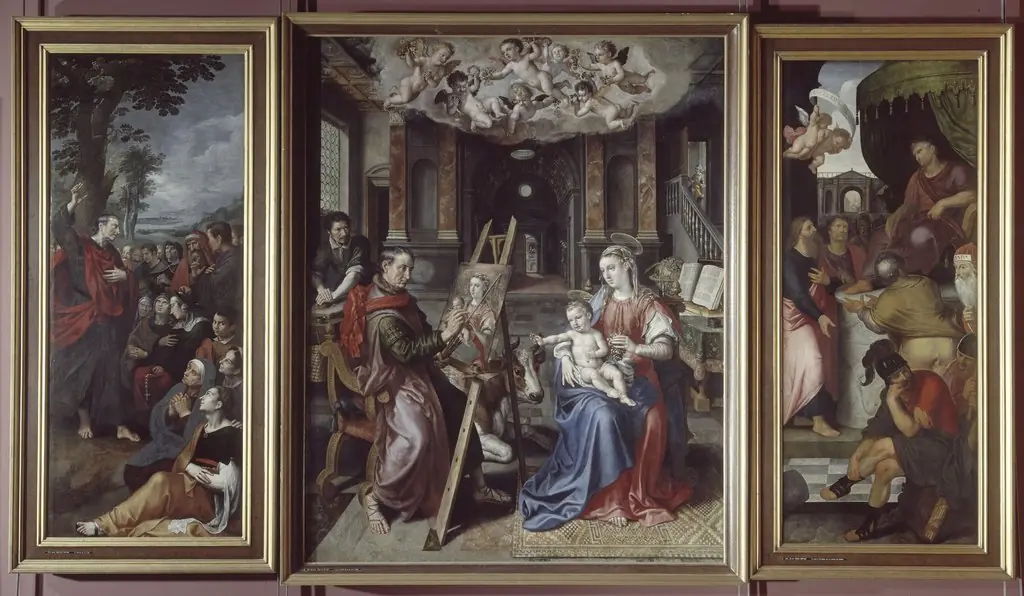 Altarpiece of the Guild of Saint Luke
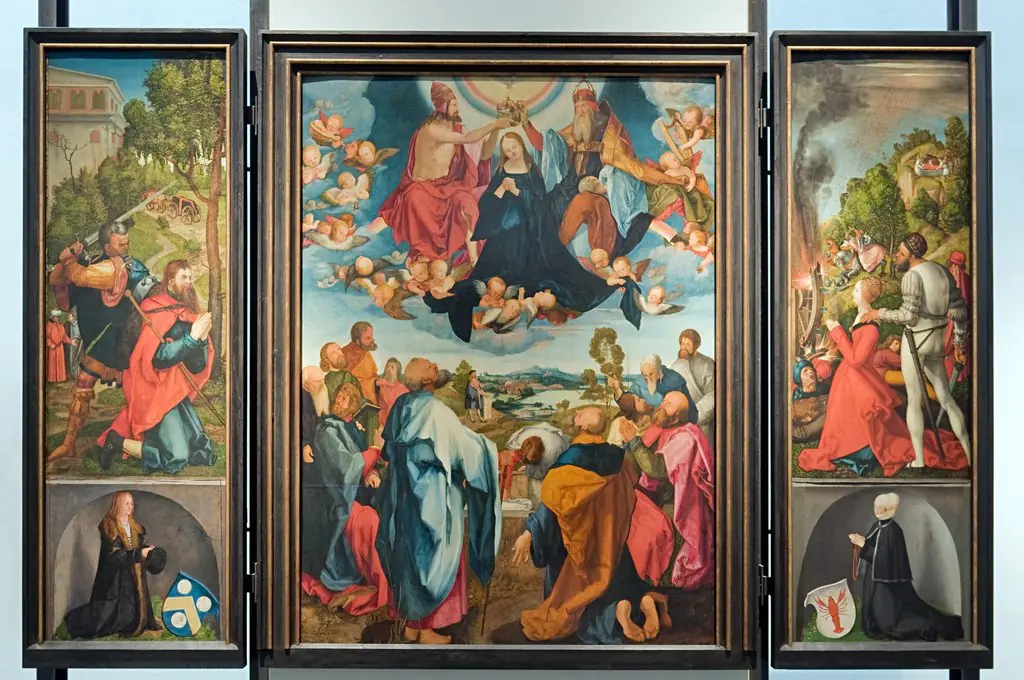 Heller Altarpiece
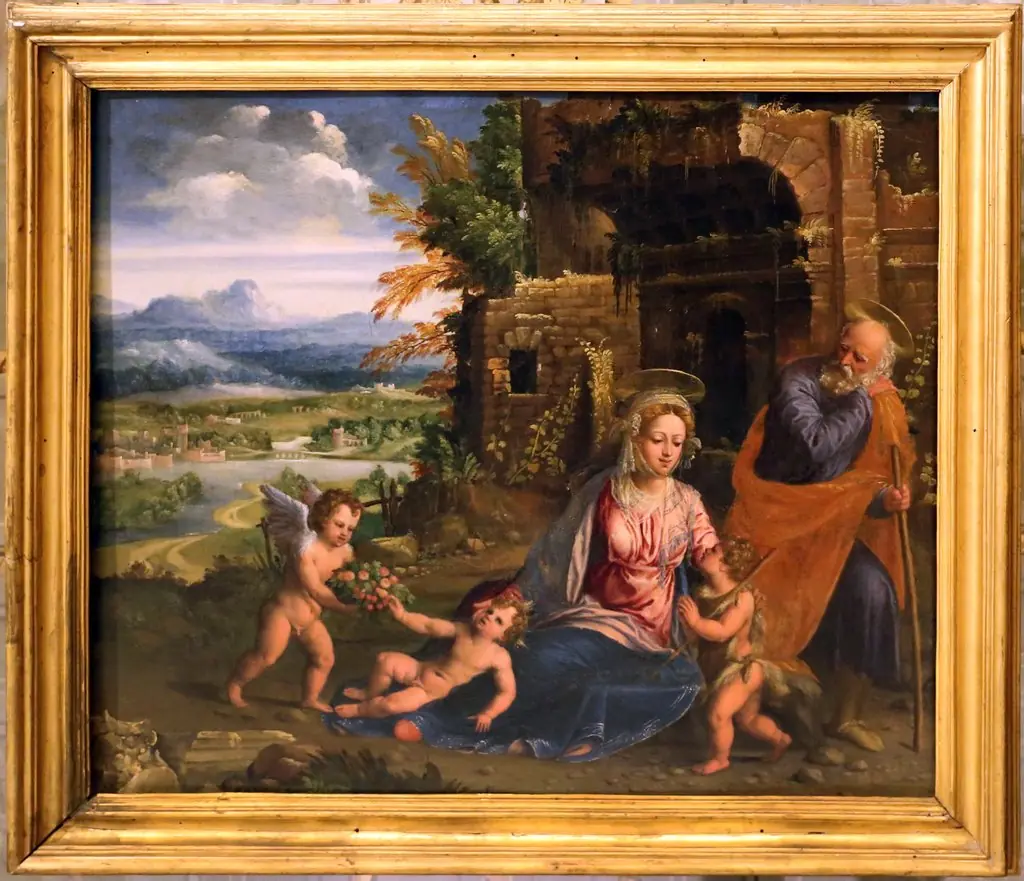 Holy Family with St. John and Angels
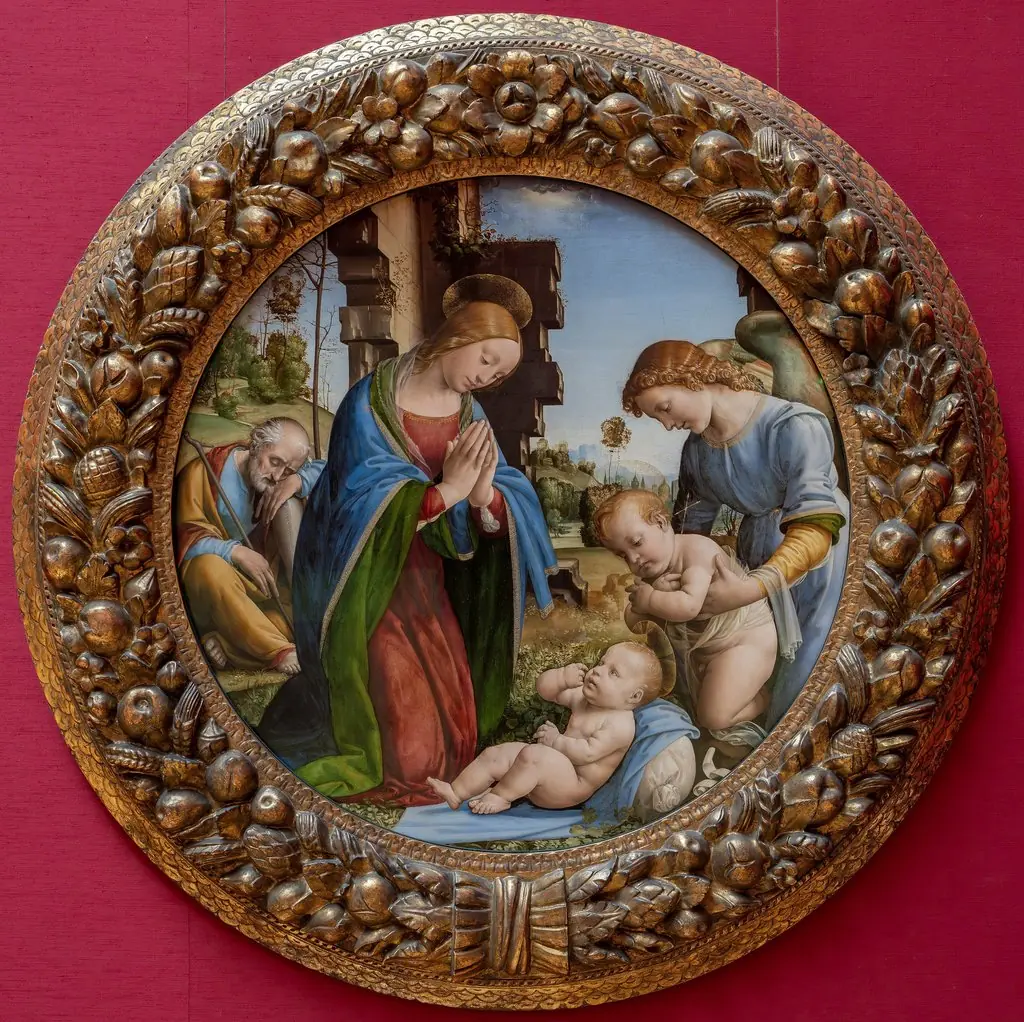 Adoration of the Child - Holy Family with child St. John
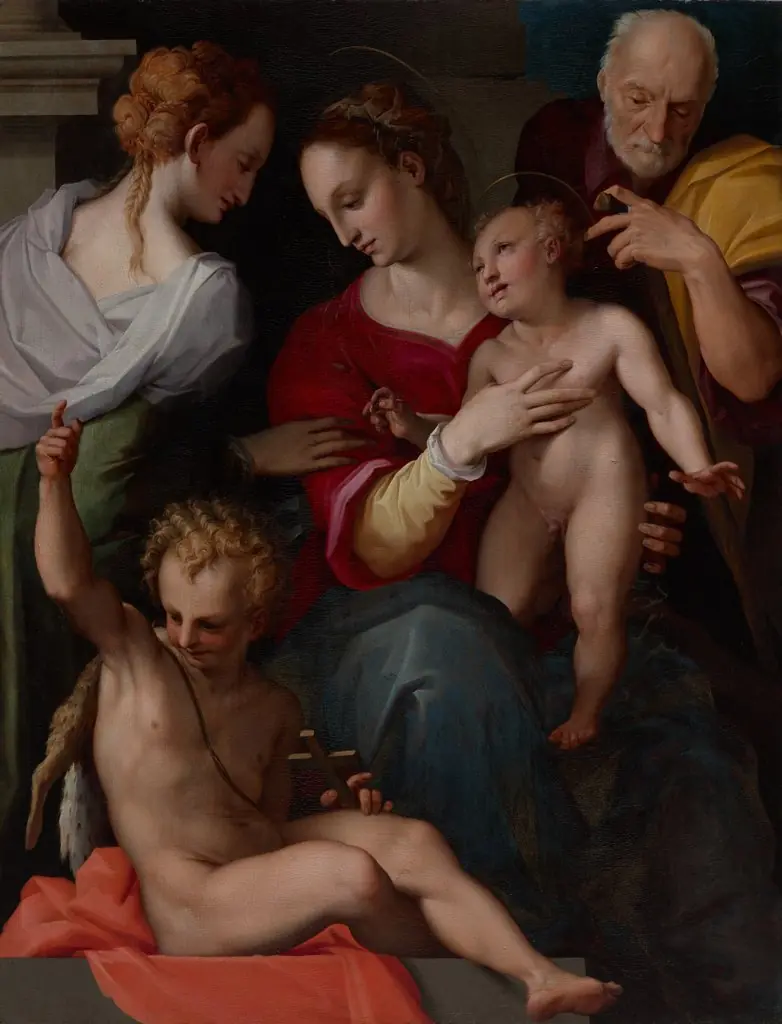 Holy Family with the Mystic Marriage of Saint Catherine
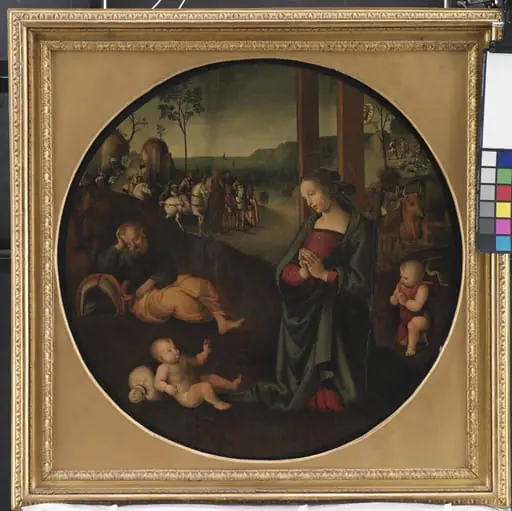 The Holy Family
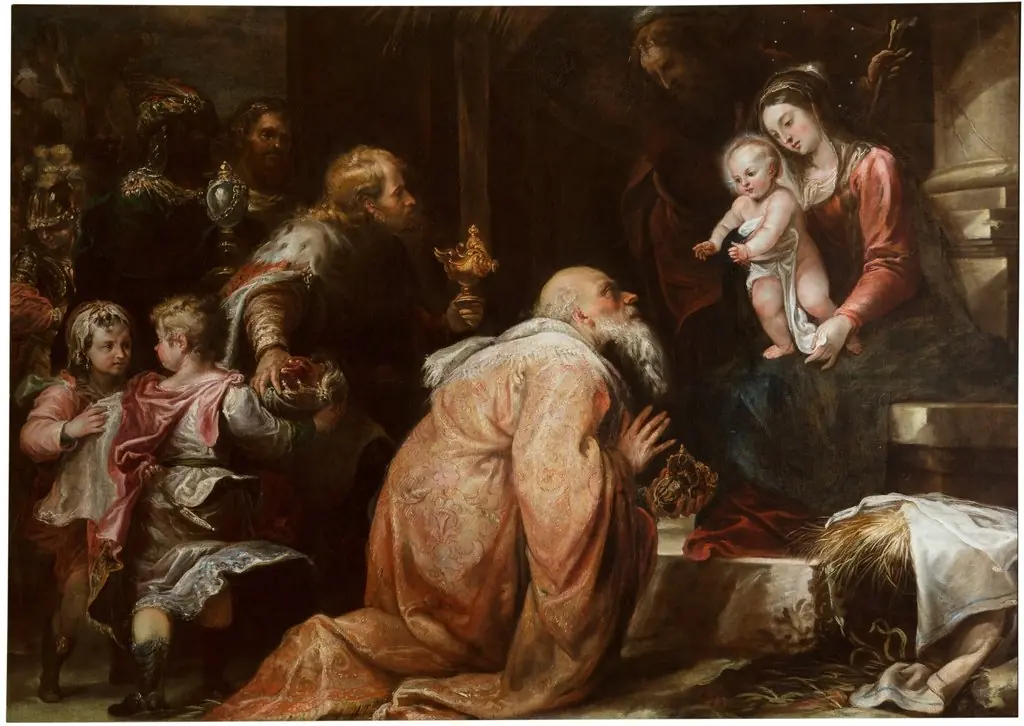 Adoración de los Reyes Magos
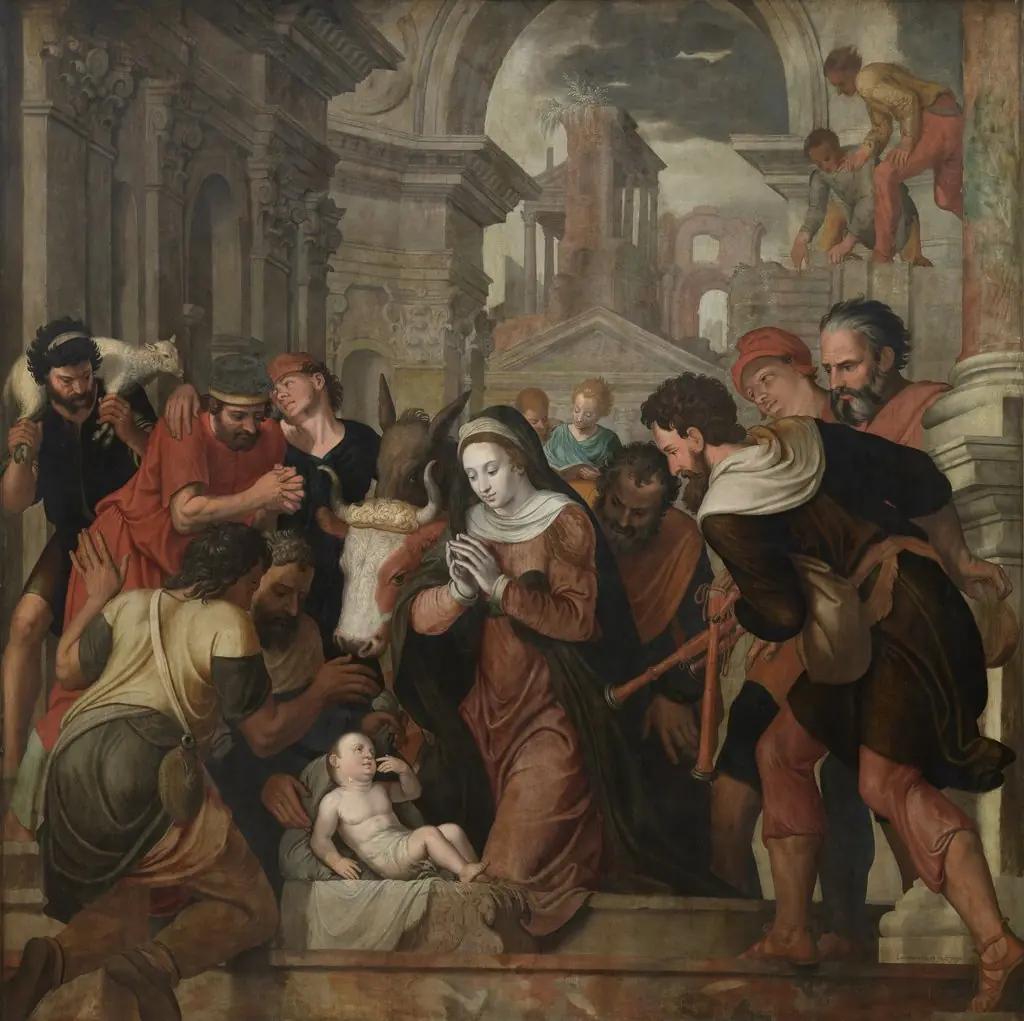 The Adoration of the Shepherds
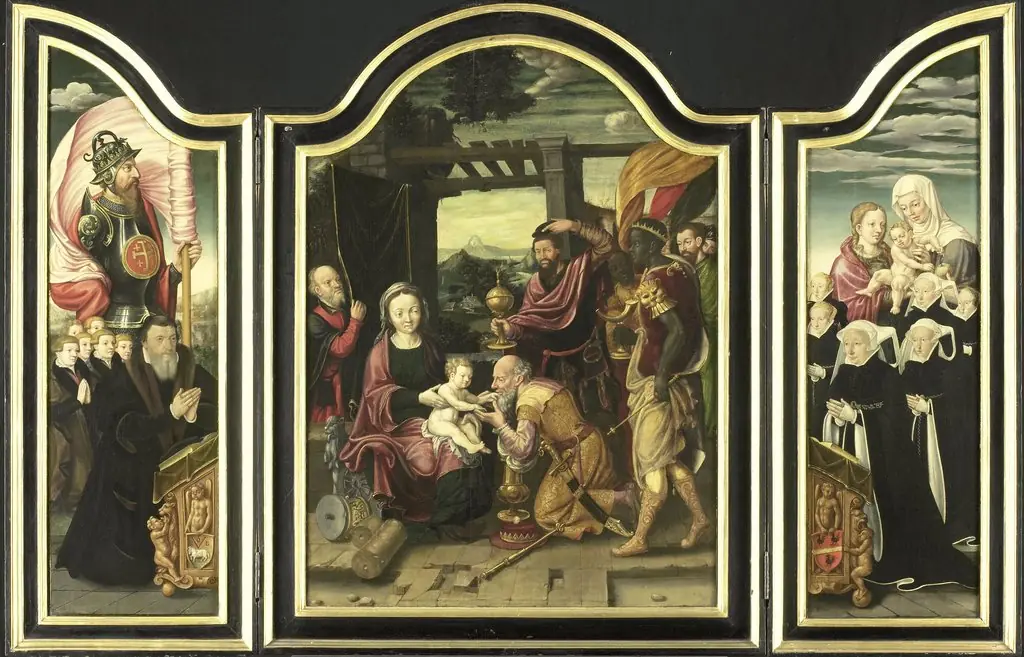 Triptych with the Adoration of the Magi
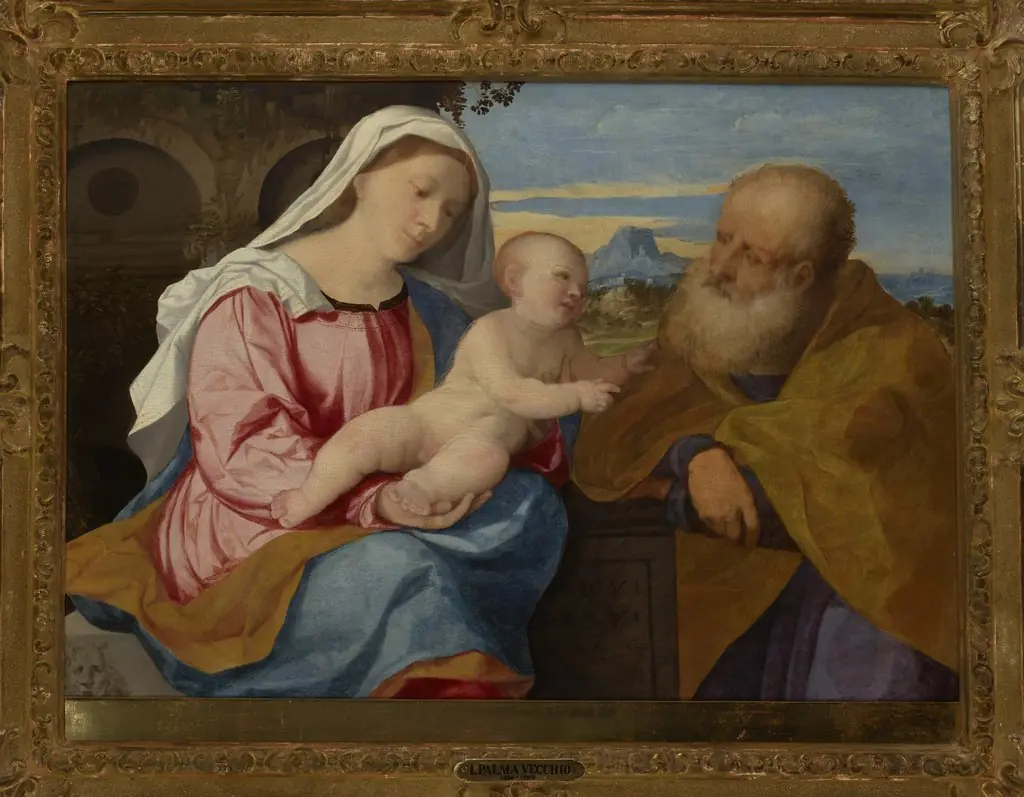 The Holy Family
 The Holy Kinship