Artwork
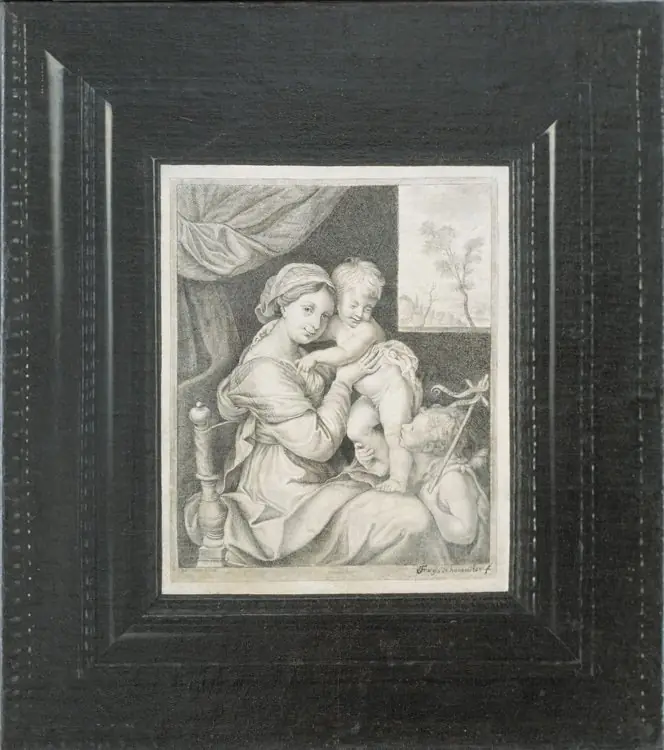
Trompe l'Oeil of a Framed Print of Mary with the Child
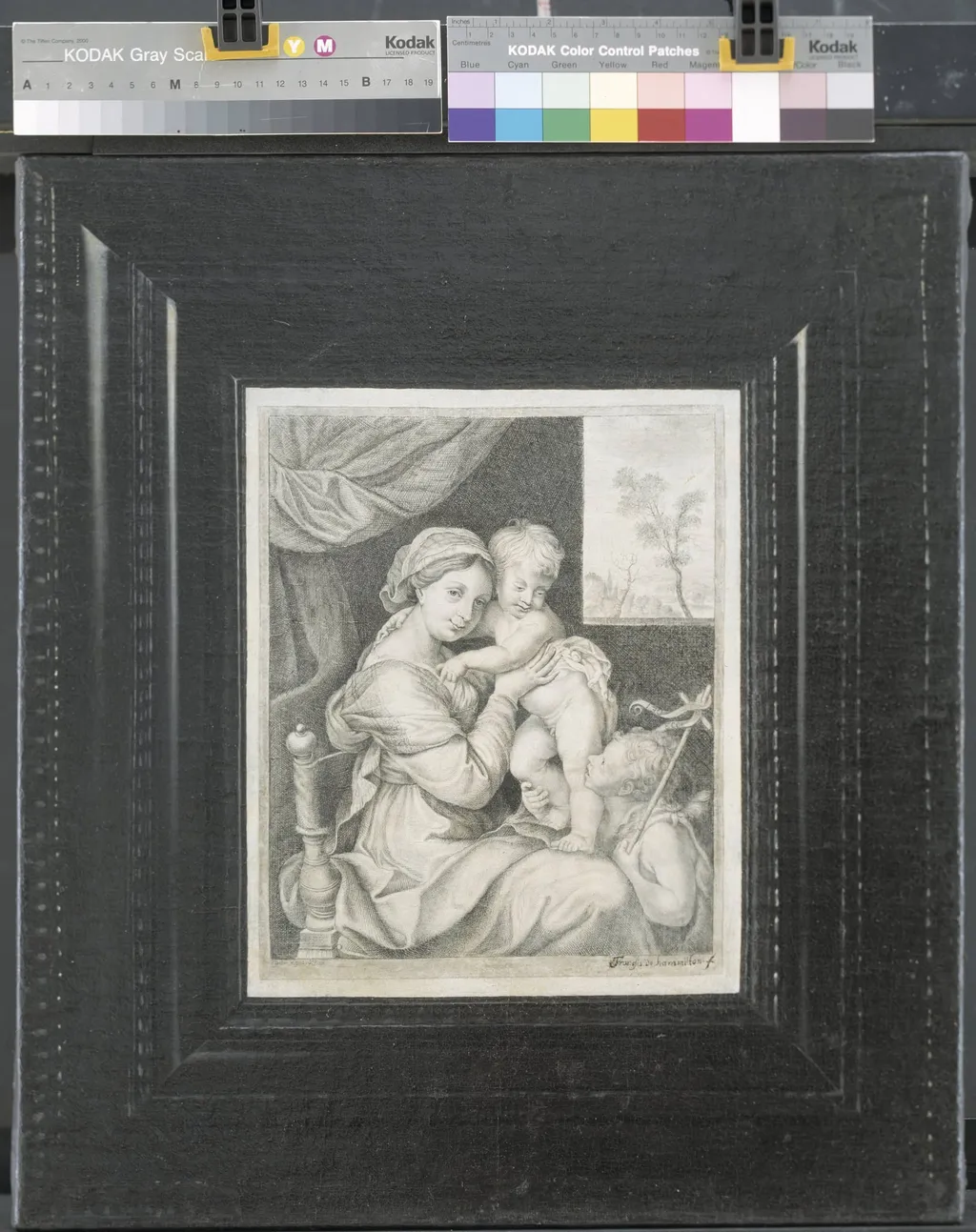
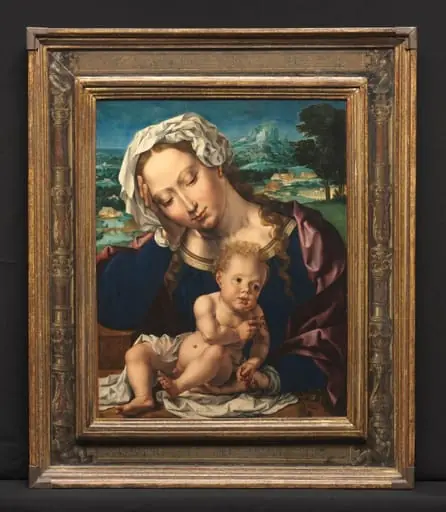
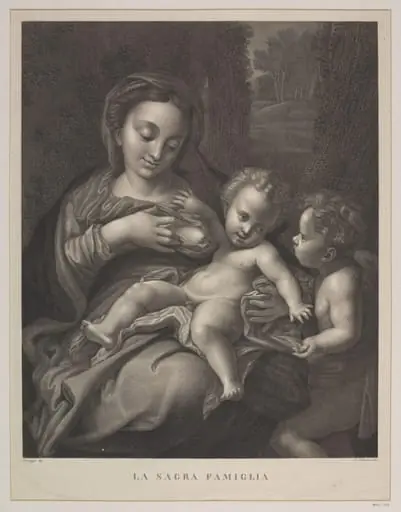
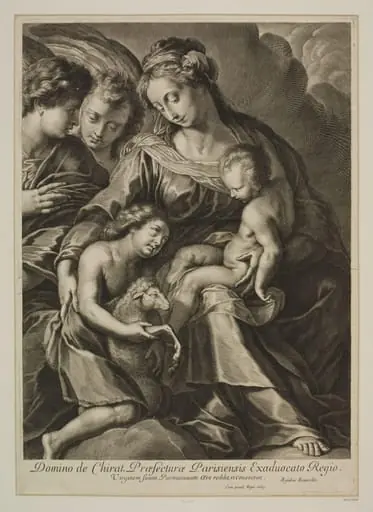
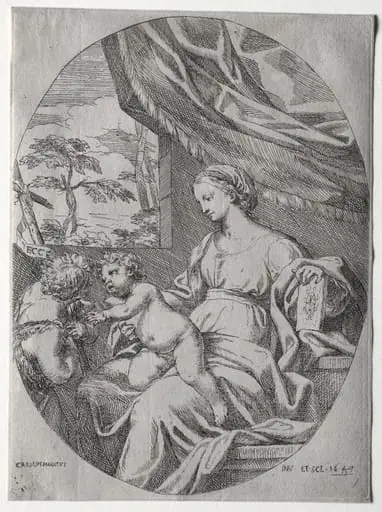
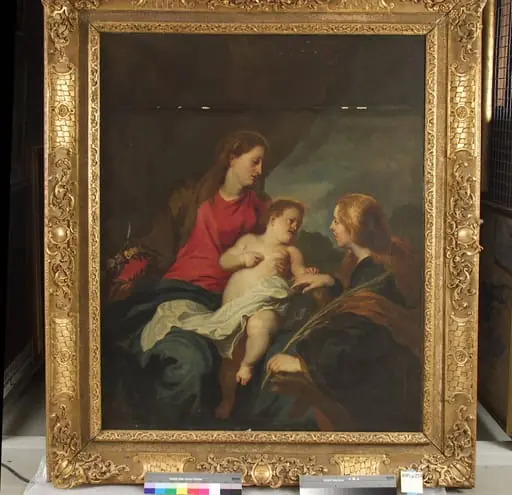
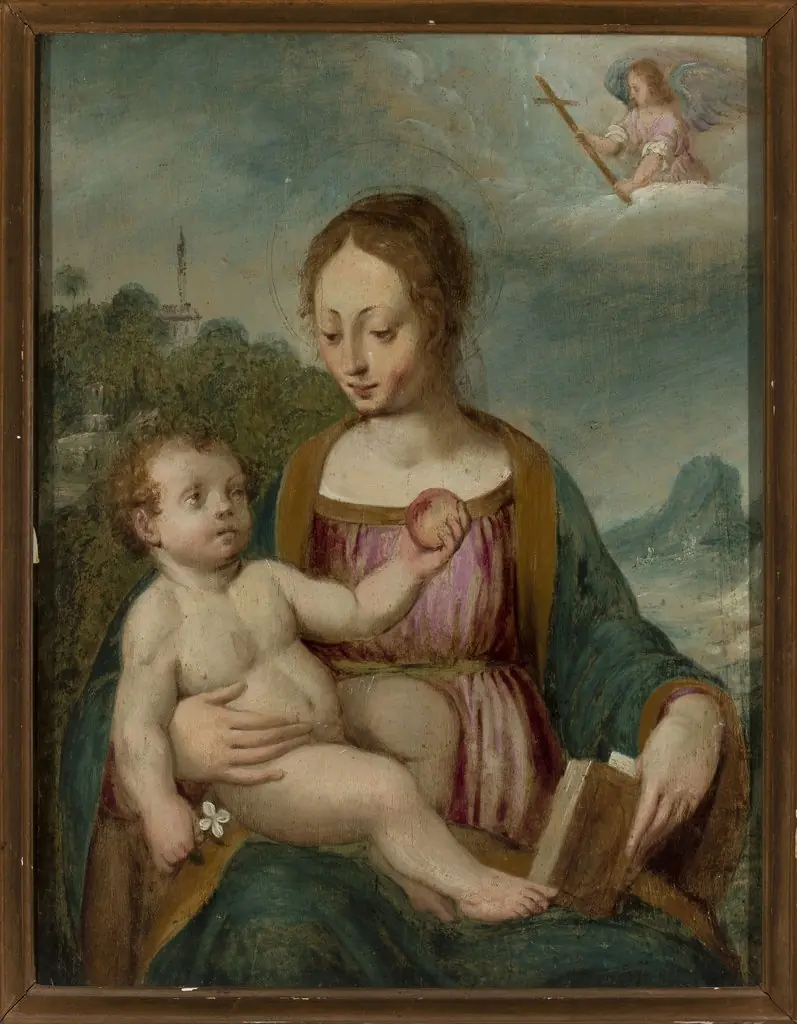
Trompe l'Oeil of a Framed Print of Mary with the Child is a print by Unknown. It dates from 1650 and is held in the collection of the Statens Museum for Kunst. Created around 1650, this work presents a painted illusion of a framed religious print depicting the Virgin Mary with two children.
About this work
Overview
Created around 1650, this work presents a painted illusion of a framed religious print depicting the Virgin Mary with two children.
Created around 1650, this work presents a painted illusion of a framed religious print depicting the Virgin Mary with two children. The artist rendered the image with such precision that it mimics a two-dimensional artwork mounted within a physical frame, challenging perceptions of surface and depth. It resides in the Museum of Ethnography, where its function as a visual trick rather than devotional object is emphasized.
Subject & Meaning
The scene portrays Mary seated with two young children—one nestled beside her, the other engaged with a small object. Her modest attire and domestic setting suggest a quiet, intimate moment rather than a formal sacred icon. The inclusion of a landscape painting on the wall behind them introduces a layered narrative, possibly hinting at the spiritual realm beyond the domestic space.
Technique & Style
The artist employed chiaroscuro to model forms through subtle gradations of light and shadow, giving the figures a sculptural presence on a flat surface. Fabric folds, facial contours, and the texture of the curtain are rendered with careful tonal transitions. The illusion of a framed print is heightened by the depiction of a wooden frame and the suggestion of a wall behind it, reinforcing the trompe l'oeil effect.
History & Provenance
The work’s creator remains unidentified, known only by a catalog number. It was likely produced in a region where devotional imagery was commonly adapted into decorative arts. Acquired by the Museum of Ethnography, its origin may reflect domestic use in a private setting, later repurposed as an artifact of visual culture rather than religious practice.
Context
In mid-17th-century Europe, trompe l'oeil paintings often served as demonstrations of technical skill and intellectual play. While religious subjects were common in devotional art, their reproduction as illusions in domestic interiors suggests a blending of piety and aesthetic curiosity. This piece fits within a broader tradition of visual deception in Northern European art.
Legacy
Though not widely known outside museum collections, the work exemplifies how illusionistic techniques were used to mediate sacred imagery in secular spaces. Its preservation in an ethnographic context underscores its value as a cultural artifact—evidence of how ordinary households engaged with religious iconography through artifice rather than ritual.
Artist & collection

 Domestic Scene
 Giacomo and Cardinal Marco, investing Andrea, Abbot of San Zeno, with his Benefice
 The Nymph of Fontainebleau
 Portrait of a Woman
 Madonna and Child with Saints in the Enclosed Garden
 Venus and Minerva
 Family Group of Four on Sofa
 Wall painting from Room H of the Villa of P. Fannius Synistor at Boscoreale