Artwork
The Board Game Players
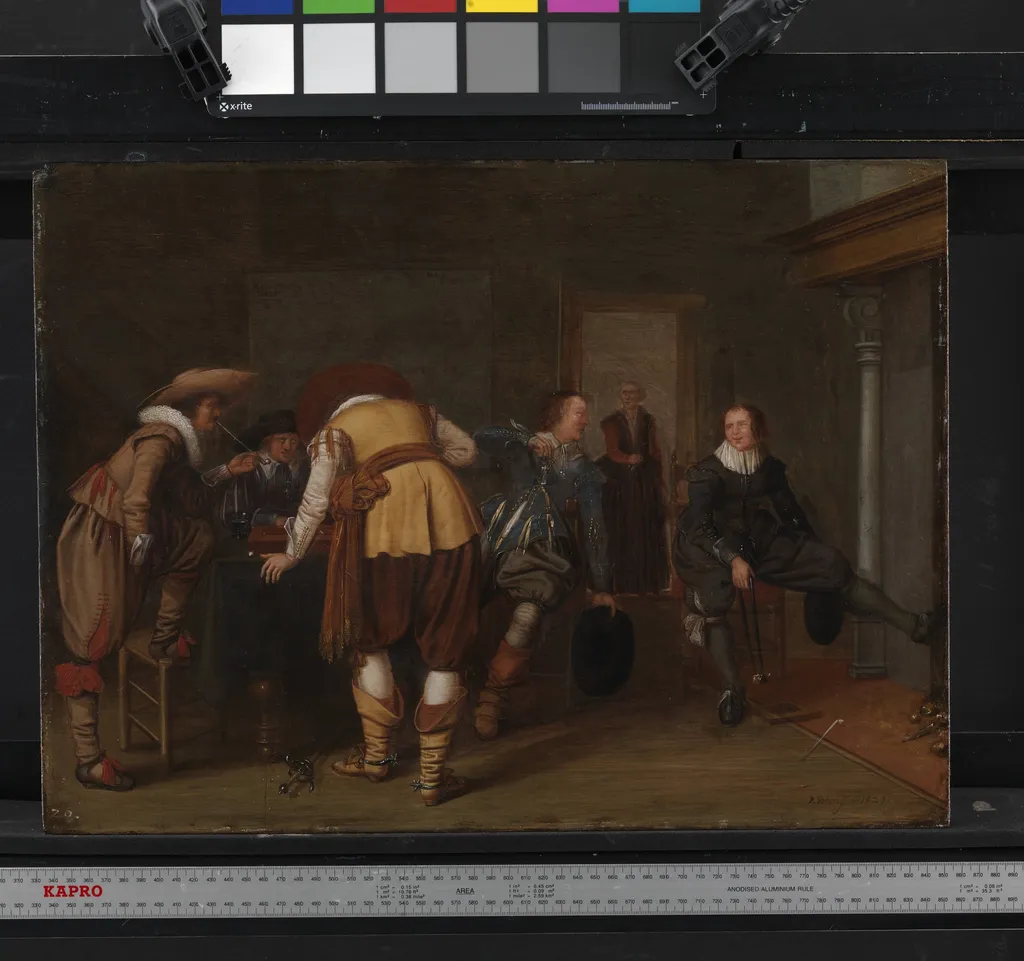
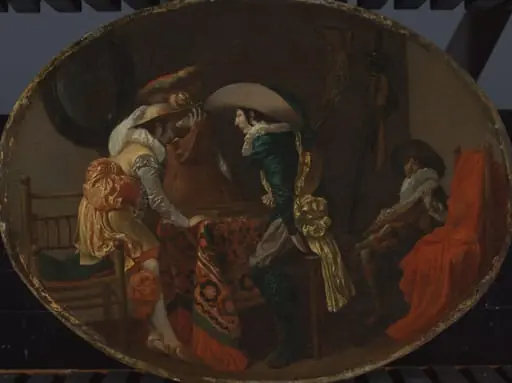
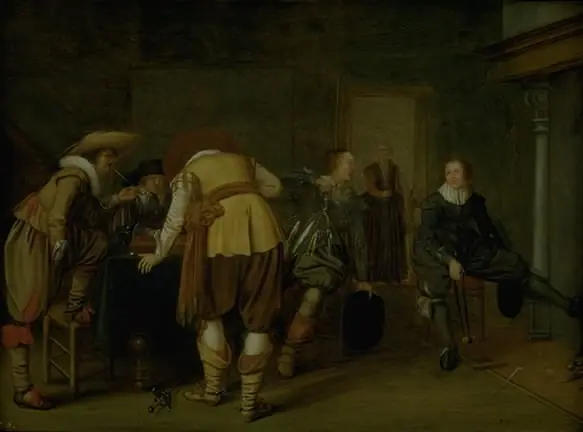
The Board Game Players is a photography by the Baroque artist Unknown. It dates from 1629 and is held in the collection of the Statens Museum for Kunst. Painted in 1629, this work depicts five men engaged in a board game within a modest interior.
About this work
Overview
The composition centers on a wooden table around which the figures gather, their postures suggesting concentration and informal camaraderie.
Painted in 1629, this work depicts five men engaged in a board game within a modest interior. Rendered in oil, the scene captures a quiet moment of leisure among men of modest means. The composition centers on a wooden table around which the figures gather, their postures suggesting concentration and informal camaraderie. The palette is restrained, dominated by earth tones, with subtle highlights drawing attention to key figures and objects.
Subject & Meaning
The painting portrays an everyday social ritual rather than a grand narrative. The men, dressed in period attire, are absorbed in the game, their expressions and gestures conveying quiet engagement. No overt symbolism is present; the focus is on the dignity of ordinary life. The inclusion of a single red hat introduces a visual anchor without disrupting the scene’s realism, suggesting individuality within a shared activity.
Technique & Style
The artist employs chiaroscuro to model forms through sharp contrasts between light and shadow, enhancing the three-dimensionality of faces and fabrics. Fine attention is paid to the texture of woolen coats, the creases of linen, and the play of ambient light across surfaces. The dim interior, partially illuminated by a distant window, creates a sense of intimacy and spatial depth, grounding the scene in tangible reality.
History & Provenance
The painting has been held since at least the late 19th century by the Museum of Ethnography, where it is cataloged as part of a collection documenting domestic life in early modern Europe. Its attribution to the artist active in 1629 is based on stylistic analysis and archival records, though little is known of its ownership prior to museum acquisition.
Context
In early 17th-century Northern Europe, scenes of domestic leisure became increasingly common among artists seeking to portray the lives of non-elite subjects. This work aligns with a broader trend of genre painting that valued observation over idealization. The setting, with its simple furnishings and muted lighting, reflects the modest homes of urban or provincial townspeople during this period.
Legacy
Though not widely exhibited outside its institutional home, the painting contributes to scholarly understanding of social customs and visual culture in the Dutch and Flemish regions. Its unembellished realism and careful rendering of light have influenced later studies of everyday life in early modern art, serving as a quiet but persistent reference in the history of genre painting.
Artist & collection

 Domestic Scene
 Giacomo and Cardinal Marco, investing Andrea, Abbot of San Zeno, with his Benefice
 The Nymph of Fontainebleau
 Portrait of a Woman
 Madonna and Child with Saints in the Enclosed Garden
 Venus and Minerva
 Family Group of Four on Sofa
 Wall painting from Room H of the Villa of P. Fannius Synistor at Boscoreale
 Absolute Monarchy Assigned to Frederik III in 1660
 Tanzgesellschaft
 The Prodigal Son Wasting his Inheritance
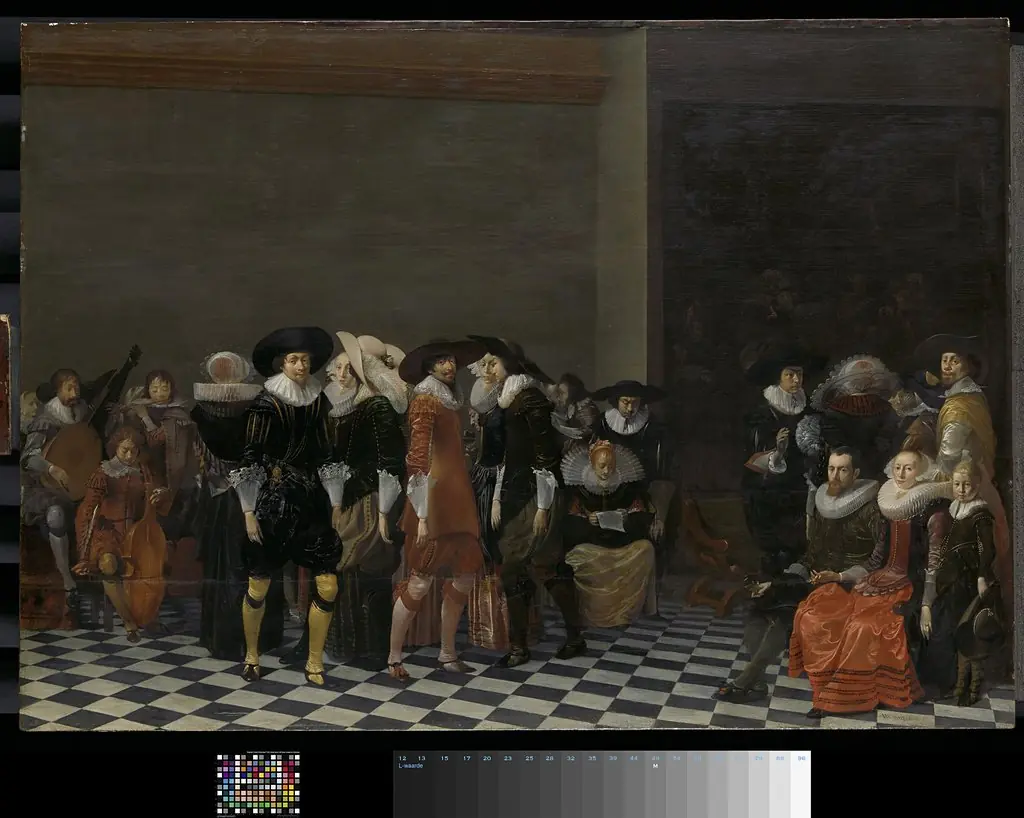 A wedding feast, traditionally called 'The wedding of Adriaen Ploos van Amstel and Agnes van Bijler', 1616
 Reading a letter
 In der Schenke
 An Inn
 Untitled
 The Miser
 The Vision of the Sunday Child
 Jephta's Daughter Being Led to the Altar
 The Board Game Players