Artwork
Absolute Monarchy Assigned to Frederik III in 1660
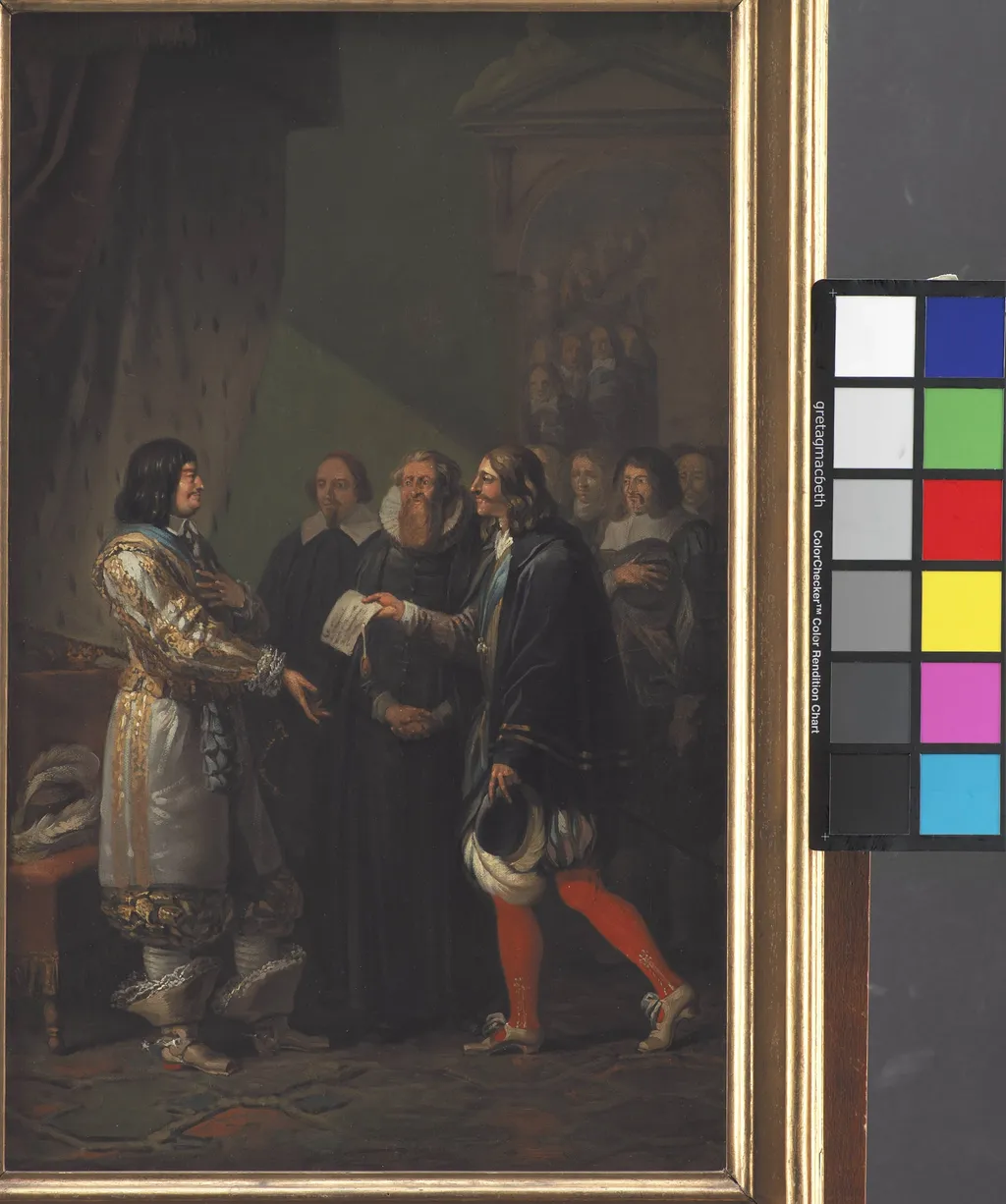
Absolute Monarchy Assigned to Frederik III in 1660 is a photography by the Romanticist artist Unknown. It dates from 1783 and is held in the collection of the Statens Museum for Kunst.
About this work
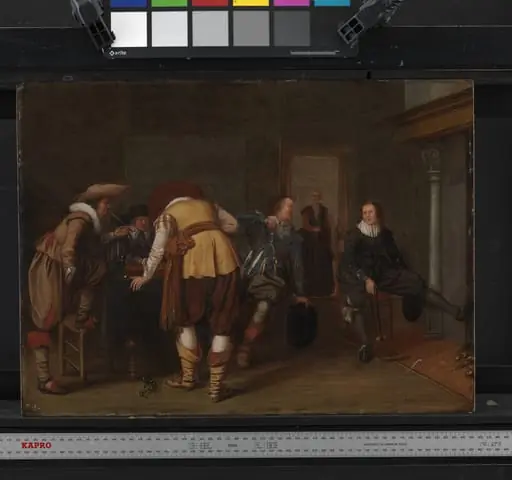
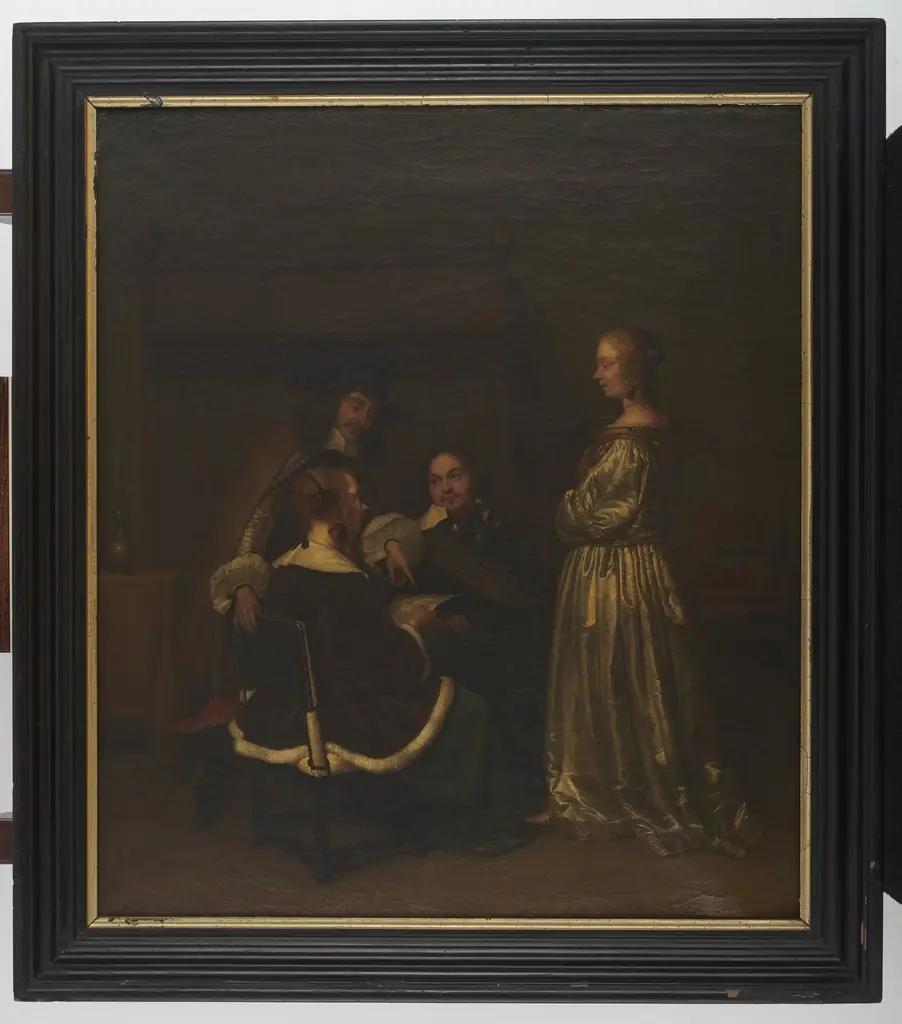
One man in a shiny silver outfit and red stockings leans on a chair, while others in dark robes and white collars watch him.
This photo shows a group of men in old-fashioned clothes standing indoors. One man in a shiny silver outfit and red stockings leans on a chair, while others in dark robes and white collars watch him. The room looks dim, with a dark background and a faint staircase behind them.
The photo was taken in 1783 to show a historical event from 1660, where power was handed over to Frederik III. The artist used strong light and shadow to make the scene dramatic.
Look up *chiaroscuro* to see how this lighting technique works.
Overview
Created in 1783, the work titled *Absolute Monarchy Assigned to Frederik III in 1660* is part of the collection of the Museum of Ethnography. It presents an indoor tableau of several men in period dress, centered on a figure in a reflective silver costume with red stockings who leans on a chair while his companions observe.
Subject & Meaning
The scene dramatizes the moment in 1660 when the Danish crown passed into absolute rule under King Frederik III. The central figure, distinguished by his bright attire, symbolizes the monarch’s newly consolidated authority, while the surrounding men in darker robes represent the nobility and officials witnessing the transfer of power.
Technique & Style
The artist employs a pronounced chiaroscuro effect, using a strong light source to illuminate the foreground figures against a deep, shadowed backdrop. This contrast heightens the dramatic tension of the event, emphasizing the gleam of the silver costume and the subdued tones of the surrounding participants.
History & Provenance
Although the depicted event occurred in 1660, the image was produced over a century later, in 1783, likely as a historical illustration. It entered the Museum of Ethnography’s holdings at an unspecified date, where it remains a visual record of Denmark’s shift to absolute monarchy.
Context
The composition reflects Enlightenment-era interests in documenting pivotal national moments through visual means. By portraying the 1660 power transition, the work connects 18th‑century audiences with a formative episode in Danish political history, reinforcing narratives of sovereign authority that were prevalent at the time.
Artist & collection

 Domestic Scene
 Giacomo and Cardinal Marco, investing Andrea, Abbot of San Zeno, with his Benefice
 The Nymph of Fontainebleau
 Portrait of a Woman
 Madonna and Child with Saints in the Enclosed Garden
 Venus and Minerva
 Family Group of Four on Sofa
 Wall painting from Room H of the Villa of P. Fannius Synistor at Boscoreale